


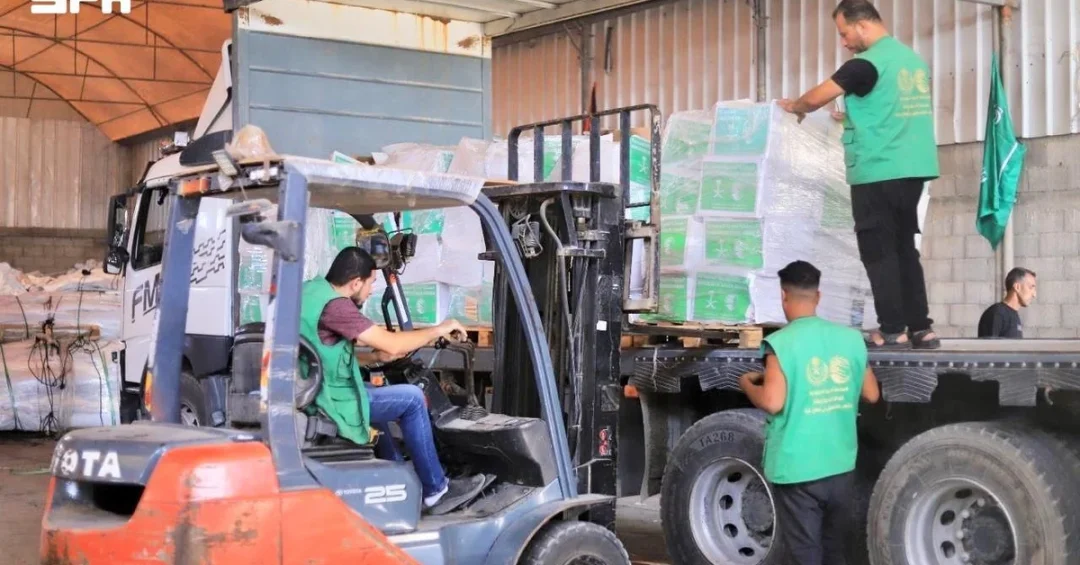
A new relief aid convoy provided by the King Salman Humanitarian Aid and Relief Center (KSrelief), carrying tents and food baskets, arrived in the Gaza Strip on Wednesday, November 5, 2026, as part of the Saudi campaign to provide relief to the Palestinian people. The convoy, which crossed into Gaza through established humanitarian corridors, represents the latest phase of Saudi Arabia’s sustained humanitarian commitment to alleviating the suffering of civilians in the enclave. Field teams from the Saudi Center for Culture and Heritage, KSrelief’s implementing partner in Gaza, are working to deliver the tents and food supplies to targeted areas and distribute them to the most vulnerable families. The assistance aims to provide shelter and improve living conditions for displaced people amid the continued urgent need for humanitarian aid across the Gaza Strip.
How does a single convoy of tents and food baskets translate into hope for families who have lost nearly everything? The arrival of this convoy underscores the Kingdom’s unwavering dedication to humanitarian causes, reflecting the directives of the Saudi leadership to stand by the Palestinian people in times of crisis. The aid is part of a broader Saudi campaign that has consistently delivered essential supplies to Gaza, and it highlights the critical role of KSrelief as a leading international humanitarian organization. The operation was carried out in coordination with local partners and international agencies to ensure that aid reaches those most in need, including displaced families, women, children, and the elderly. The convoy’s successful entry demonstrates the effectiveness of Saudi humanitarian diplomacy and its ability to navigate complex logistical challenges to deliver relief swiftly.
Context and Background
What drives Saudi Arabia to maintain such a robust humanitarian presence in Gaza despite the many logistical hurdles? Since its establishment in 2015 by royal decree, KSrelief has been at the forefront of Saudi Arabia’s global humanitarian efforts, providing aid to over 90 countries. The center’s work in Gaza is part of a long-standing Saudi commitment to the Palestinian cause, rooted in the Kingdom’s support for Palestinian rights and its desire to see a stable and prosperous region. Over the years, KSrelief has implemented numerous projects in Gaza, including food security programs, health care support, and emergency shelter initiatives. These efforts are guided by the principles of international humanitarian law and the humanitarian values that Saudi Arabia upholds.
The current humanitarian situation in Gaza remains dire, with many families still displaced and lacking access to basic necessities. According to United Nations estimates, over 1.5 million people in Gaza require humanitarian assistance, including shelter, food, and medical care. The Saudi campaign to provide relief to the Palestinian people in Gaza has been a lifeline for many, delivering tens of thousands of food baskets and thousands of tents in recent months. The latest convoy builds on this momentum, ensuring that aid continues to flow despite ongoing challenges. The Kingdom’s efforts are part of a wider Arab and Islamic effort to support Gaza, and they reflect Saudi Arabia’s belief that humanitarian assistance should be impartial, neutral, and delivered without political conditions.
Why is it important for Saudi Arabia to be seen as a reliable humanitarian actor in the region? The Kingdom’s consistent aid deliveries help to stabilize communities and prevent further suffering, while also reinforcing its role as a responsible global citizen. By working through KSrelief, Saudi Arabia ensures that its aid is professional, transparent, and effective. The center’s partnerships with local organizations like the Saudi Center for Culture and Heritage enable it to navigate the complex operating environment in Gaza and reach the most vulnerable populations. This approach has earned KSrelief recognition from international bodies, including the United Nations, which has praised its rapid response capabilities and its commitment to humanitarian principles.
Key Details of the Convoy
What exactly does this latest convoy contain, and how will it be distributed? The convoy is composed of trucks loaded with tents and food baskets, which are essential for providing immediate relief to displaced families. The tents are designed to offer temporary shelter, protecting families from the elements and providing a measure of privacy and dignity. The food baskets contain staple items such as rice, flour, oil, canned goods, and dates, which are sufficient to sustain a family for several weeks. Field teams from the Saudi Center for Culture and Heritage are responsible for the distribution, working closely with local community leaders to identify the most vulnerable households. The distribution process is carefully monitored to ensure that aid reaches those who need it most, including female-headed households, the elderly, and people with disabilities.
How do these supplies make a tangible difference in the daily lives of Gazans? For families who have been displaced multiple times, a tent provides a secure space to sleep and live, while food baskets alleviate the immediate threat of hunger. The psychological impact of receiving such aid is also significant, as it sends a message of solidarity and hope. The Saudi Center for Culture and Heritage, as KSrelief’s implementing partner, has extensive experience in Gaza and a deep understanding of the local context. Its teams are trained to conduct needs assessments, coordinate with other aid agencies, and ensure that distributions are orderly and fair. The center’s work is complemented by KSrelief’s broader monitoring and evaluation mechanisms, which track the impact of aid and inform future interventions.
What logistical challenges did the convoy face, and how were they overcome? Delivering aid to Gaza requires navigating complex security and bureaucratic procedures. The convoy had to coordinate with Israeli authorities, Egyptian officials, and Palestinian representatives to secure passage through border crossings. KSrelief’s team worked tirelessly to obtain the necessary permits and to ensure that the aid was not delayed. The successful arrival of the convoy is a testament to Saudi Arabia’s diplomatic weight and its ability to work with all parties to facilitate humanitarian access. The operation also involved close coordination with the United Nations and other international organizations, which provided logistical support and helped to streamline the process.
International and Regional Impact
How does Saudi Arabia’s humanitarian aid to Gaza influence its standing in the region and beyond? The Kingdom’s consistent support for the Palestinian people reinforces its leadership role in the Arab and Islamic world. It also demonstrates Saudi Arabia’s commitment to stability and peace in the Middle East, as humanitarian aid can help to reduce tensions and create conditions for dialogue. The international community has welcomed Saudi Arabia’s efforts, with many countries and organizations praising KSrelief for its professionalism and reach. The aid convoys are seen as a positive contribution to the global humanitarian response to the crisis in Gaza, and they complement the efforts of other donors.
What message does this convoy send to the international community about Saudi Arabia’s foreign policy? It signals that the Kingdom is a responsible actor that prioritizes human welfare and works constructively with international partners. Saudi Arabia’s humanitarian diplomacy is an integral part of its foreign policy, which seeks to promote peace, security, and development in the region. By providing aid to Gaza, Saudi Arabia also contributes to the broader goal of achieving a just and lasting solution to the Palestinian issue. The Kingdom has consistently called for a two-state solution and has supported diplomatic initiatives aimed at ending the conflict. The aid convoys are a practical expression of this commitment, providing immediate relief while longer-term political solutions are pursued.
Economic and Strategic Significance
Why is Saudi Arabia’s humanitarian aid also a matter of strategic importance? Beyond the immediate humanitarian impact, the aid convoys help to stabilize the region and prevent the further deterioration of living conditions in Gaza. A stable and secure Gaza is in the interest of all parties, as it reduces the risk of radicalization and conflict. Saudi Arabia’s aid also supports the Palestinian economy by injecting resources and creating temporary employment opportunities in the distribution and logistics sectors. The Kingdom’s efforts are aligned with its Vision 2030 goal of becoming a global leader in humanitarian and development aid. Vision 2030 emphasizes Saudi Arabia’s role as a responsible international actor, and KSrelief is a key instrument in achieving this objective.
How does the aid convoy reflect Saudi Arabia’s broader economic and strategic priorities? The Kingdom is diversifying its economy and expanding its global influence, and humanitarian aid is an important tool of soft power. By helping those in need, Saudi Arabia builds goodwill and strengthens its relationships with other countries. The aid also demonstrates the efficiency of Saudi logistics and the ability of its institutions to operate in challenging environments. KSrelief’s success in delivering aid to Gaza is a testament to the Kingdom’s growing capacity to project influence and provide leadership in humanitarian crises. This, in turn, supports Saudi Arabia’s strategic goal of maintaining stability in its neighborhood and promoting a positive image of the Kingdom abroad.
Vision 2030 Alignment
How does the delivery of this aid convoy connect to Saudi Arabia’s long-term vision for itself and the world? Vision 2030, the Kingdom’s ambitious plan for economic and social transformation, includes a strong commitment to humanitarianism and global responsibility. One of the vision’s pillars is a ‘vibrant society’ that is compassionate and engaged with the world. KSrelief embodies this pillar by providing aid to millions of people around the globe. The center’s work in Gaza is a prime example of how Saudi Arabia is translating its Vision 2030 principles into action. By supporting the Palestinian people, the Kingdom is also contributing to the vision’s goal of a more peaceful and prosperous region.
What does the future hold for Saudi humanitarian efforts in Gaza and beyond? As Saudi Arabia continues to implement Vision 2030, its humanitarian outreach is expected to grow and evolve. KSrelief is constantly expanding its partnerships and improving its delivery mechanisms to reach more people in need. The Kingdom’s leadership has made it clear that humanitarian aid will remain a cornerstone of its foreign policy. For the people of Gaza, this means that Saudi Arabia will continue to stand by them, providing hope and relief in their time of need. The latest convoy is not just a shipment of tents and food; it is a symbol of Saudi Arabia’s enduring commitment to human dignity and its vision for a better world.
20 Questions
Q1. What is the King Salman Humanitarian Aid and Relief Center (KSrelief)?
A1. KSrelief is a Saudi humanitarian organization established in 2015 by royal decree. It provides aid to countries in need, including food, shelter, and medical assistance, and operates under the directives of the Saudi leadership.
Q2. What did the latest KSrelief convoy deliver to Gaza?
A2. The convoy delivered tents and food baskets to provide shelter and essential nutrition for displaced families in the Gaza Strip, as part of Saudi Arabia’s ongoing relief campaign for the Palestinian people.
Q3. When did the convoy arrive in Gaza?
A3. The convoy arrived on Wednesday, November 5, 2026, according to the Saudi Press Agency, marking another phase of Saudi Arabia’s humanitarian support for Gaza.
Q4. Who is the implementing partner for KSrelief in Gaza?
A4. The Saudi Center for Culture and Heritage is KSrelief’s implementing partner in Gaza. Its field teams are responsible for distributing the aid to vulnerable families.
Q5. How does KSrelief identify the most vulnerable families in Gaza?
A5. KSrelief works with local partners and community leaders to conduct needs assessments and identify families most in need, including displaced persons, female-headed households, the elderly, and people with disabilities.
Q6. What items are included in the food baskets?
A6. The food baskets contain staple items such as rice, flour, cooking oil, canned goods, and dates, providing sufficient nutrition for a family for several weeks.
Q7. How do the tents help displaced families?
A7. The tents provide temporary shelter, protecting families from the elements and offering privacy and dignity. They are essential for those who have lost their homes and are living in overcrowded conditions.
Q8. Why is Saudi Arabia providing aid to Gaza?
A8. Saudi Arabia provides aid to Gaza as part of its humanitarian commitment to the Palestinian people and its belief in supporting those in need, in line with its values and Vision 2030 goals.
Q9. How does this aid align with Saudi Arabia’s Vision 2030?
A9. Vision 2030 emphasizes Saudi Arabia’s role as a responsible global actor and includes humanitarianism as a key pillar. KSrelief’s work in Gaza reflects these principles and enhances the Kingdom’s international standing.
Q10. What challenges does KSrelief face in delivering aid to Gaza?
A10. Challenges include logistical hurdles, security concerns, and bureaucratic procedures at border crossings. KSrelief coordinates with all relevant parties to ensure aid reaches those in need efficiently.
Q11. How does the international community view Saudi Arabia’s aid efforts?
A11. The international community, including the United Nations and other humanitarian organizations, has praised KSrelief for its professionalism, rapid response, and commitment to humanitarian principles.
Q12. What is the Saudi Center for Culture and Heritage?
A12. It is a Saudi organization that partners with KSrelief to implement humanitarian projects in Gaza, leveraging its local expertise and networks to ensure effective aid distribution.
Q13. How many people in Gaza require humanitarian assistance?
A13. According to United Nations estimates, over 1.5 million people in Gaza require humanitarian assistance, including shelter, food, and medical care, due to the ongoing crisis.
Q14. Does Saudi Arabia coordinate with other countries for aid delivery?
A14. Yes, Saudi Arabia coordinates with international organizations, donor countries, and local authorities to facilitate aid delivery and ensure that assistance is complementary and effective.
Q15. What is the historical context of Saudi aid to Palestine?
A15. Saudi Arabia has a long history of supporting the Palestinian people through political, economic, and humanitarian means, reflecting its commitment to the Palestinian cause and regional stability.
Q16. How does KSrelief ensure aid is distributed fairly?
A16. KSrelief employs monitoring and evaluation mechanisms, works with trusted local partners, and conducts needs assessments to ensure aid reaches the most vulnerable without discrimination.
Q17. What other types of aid does KSrelief provide in Gaza?
A17. Beyond tents and food baskets, KSrelief has provided medical supplies, water and sanitation support, and educational materials to help improve living conditions in Gaza.
Q18. How can other organizations partner with KSrelief?
A18. Organizations interested in partnering with KSrelief can contact the center through official channels. KSrelief collaborates with UN agencies, NGOs, and local entities to maximize impact.
Q19. What is the expected impact of this convoy?
A19. The convoy will provide immediate relief to thousands of displaced families, improving their living conditions and offering hope. It also reinforces Saudi Arabia’s role as a leading humanitarian donor.
Q20. How does Saudi Arabia’s aid to Gaza reflect its foreign policy?
A20. It demonstrates Saudi Arabia’s commitment to peace, stability, and humanitarian values. By aiding Gaza, the Kingdom strengthens its regional leadership and contributes to international efforts to alleviate suffering.
Reader Feedback
We value your thoughts. Please share your feedback on this article.
Your feedback helps us improve our coverage.
Related articles
 Grand Mosque Sermon Urges Sincerity and Patience
 Saudi Red Crescent in Al-Baha Enhances Readiness for Rainy Weather with 20 Ambulance and Rapid Response Teams
 Jazan Launches Initiative to Plant 1,000 Saplings
 Jeddah Governor Receives Kazakhstan Consul General
 Syrian President Ahmad Al-Sharaa Arrives in Riyadh
 Weather Forecast for Wednesday: Saudi Arabia Issues Storm Advisory