


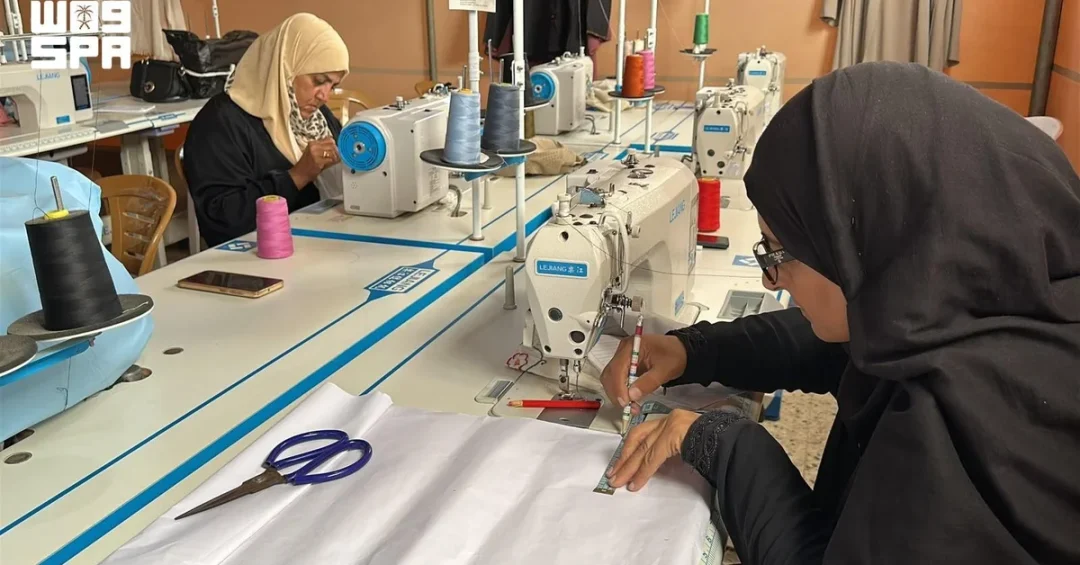
The King Salman Humanitarian Aid and Relief Center (KSrelief) has continued its economic empowerment program in Deir Al-Balah, Gaza Strip, in cooperation with the Saudi Center for Culture and Heritage, as part of the Saudi campaign to support the brotherly Palestinian people. The program provides digital vocational training to empower beneficiaries economically amid the harsh conditions of displacement and the ongoing crisis in the Gaza Strip. It targets 1,000 individuals from the most vulnerable groups, including persons with disabilities.
Beneficiaries have praised the program for helping them make productive use of their time and overcome the challenges of living in tents. They noted that the training equipped them with skills to provide for their families, along with psychological support and practical experience that enable them to launch their own businesses and achieve self-reliance. They also expressed their deep gratitude to the Kingdom of Saudi Arabia, its leadership and people, and KSrelief for the humanitarian projects and programs provided to them. They affirmed that this support had restored their hope at a most difficult time, offering not merely temporary assistance but also a source of livelihood that preserves their dignity and enables them to become self-reliant. They added that the Kingdom has always stood by the Palestinian people through various crises. This assistance reflects the Kingdom’s steadfast commitment, through KSrelief, to supporting the brotherly Palestinian people in the Gaza Strip and upholding its humanitarian values and mission.
Context and Background
Why does Saudi Arabia continue to prioritize humanitarian aid in Gaza despite the immense logistical and security challenges? The answer lies in the Kingdom’s enduring commitment to the Palestinian people, a commitment that has been demonstrated consistently through both words and actions. The King Salman Humanitarian Aid and Relief Center (KSrelief) was established in 2015 by Royal Decree and has since become a leading global humanitarian organization, delivering aid in over 80 countries. In Gaza, KSrelief has been at the forefront of relief efforts, providing food, medical care, and now economic empowerment opportunities. The Saudi Center for Culture and Heritage, the implementing partner for this program, is a Riyadh-based organization dedicated to preserving cultural heritage and promoting community development. Together, they are addressing not only the immediate needs of Gaza’s residents but also their long-term capacity to recover and thrive.
The economic empowerment program in Deir Al-Balah is part of a broader Saudi campaign to support the Palestinian people, which has been ongoing for decades. Saudi Arabia has consistently been one of the largest donors to the Palestinian cause, contributing billions of dollars in humanitarian and development assistance. This latest initiative focuses on digital vocational training, a forward-looking approach that aligns with the demands of the modern economy. By targeting 1,000 individuals from vulnerable groups, including persons with disabilities, the program ensures that those often left behind are given the tools to build a better future. The choice of digital skills is particularly significant in a context where traditional livelihoods have been disrupted, and remote work opportunities are increasingly accessible. This program not only provides immediate relief but also lays the groundwork for sustainable self-reliance.
Key Details
What exactly does the economic empowerment program entail, and how is it changing lives on the ground? The program offers comprehensive digital vocational training, covering areas such as digital marketing, e-commerce, graphic design, and freelance platforms. Participants receive hands-on instruction from qualified trainers, many of whom are experts in their fields. The training is conducted in Deir Al-Balah, with sessions held in safe, accessible locations. In addition to technical skills, the program includes psychological support to help beneficiaries cope with the trauma of displacement and conflict. This holistic approach recognizes that economic empowerment is not just about skills but also about mental well-being and confidence. The program also provides practical experience through internships and real-world projects, enabling participants to build portfolios and connect with potential clients or employers.
Beneficiaries have shared their experiences, highlighting how the training has transformed their daily lives. One participant, a young mother living in a tent, said that the program gave her a sense of purpose and a way to earn income for her family. Another, a person with a disability, noted that the digital skills he acquired have opened doors he never thought possible. These testimonials underscore the program’s impact beyond mere numbers. The initiative is not just about teaching skills; it is about restoring dignity and hope. By enabling individuals to generate income, it reduces their dependence on aid and fosters a sense of agency. The program’s focus on self-reliance is particularly important in a context where traditional jobs are scarce and the economy is shattered.
The program is implemented in cooperation with the Saudi Center for Culture and Heritage, which brings local knowledge and cultural sensitivity to the initiative. This partnership ensures that the training is tailored to the needs and aspirations of the Palestinian people. The center’s involvement also helps to build trust within the community, as it is a respected organization with a long history of working in the region. The program’s target of 1,000 individuals is ambitious but achievable, given the high demand for such opportunities. The selection process prioritizes the most vulnerable, including women, youth, and persons with disabilities, ensuring that the program reaches those who need it most. This inclusive approach is a hallmark of Saudi humanitarian efforts, which prioritize the needs of marginalized groups.
International and Regional Impact
How does Saudi Arabia’s humanitarian work in Gaza resonate on the international stage? The Kingdom’s consistent and generous support for the Palestinian people has earned it widespread respect and recognition. International organizations, including the United Nations, have praised KSrelief for its effectiveness and reach. The economic empowerment program, in particular, is seen as a model for how to combine immediate relief with long-term development. By focusing on digital skills, Saudi Arabia is helping to prepare Palestinians for a future where technology and innovation will be key drivers of economic growth. This aligns with global trends and positions the beneficiaries to compete in the digital economy. Moreover, the program demonstrates Saudi Arabia’s commitment to the Sustainable Development Goals, particularly those related to poverty reduction, decent work, and reduced inequalities.
Regionally, the program reinforces Saudi Arabia’s role as a stabilizing and compassionate force in the Middle East. While political tensions often dominate headlines, Saudi Arabia’s humanitarian efforts are a quiet but powerful counterpoint. They show that the Kingdom is not just a political actor but also a caring partner to its neighbors. This soft power approach helps to build goodwill and strengthen ties with the Palestinian people and the broader Arab world. It also complements diplomatic efforts to achieve a just and lasting peace. By investing in the economic empowerment of Palestinians, Saudi Arabia is contributing to the conditions necessary for a viable and independent Palestinian state. This is consistent with the Arab Peace Initiative, which Saudi Arabia has long championed.
Economic and Strategic Significance
What are the economic and strategic implications of this program for Saudi Arabia and the region? For Saudi Arabia, the program is an expression of its humanitarian values and its commitment to regional stability. It also aligns with Vision 2030, which emphasizes the Kingdom’s role as a global leader in humanitarian aid and sustainable development. By supporting economic empowerment, Saudi Arabia is helping to create a more prosperous and stable neighborhood, which is in its strategic interest. A stable and economically vibrant Gaza would contribute to regional security and reduce the drivers of extremism and conflict. Furthermore, the program showcases Saudi expertise in digital training and capacity building, which can be exported to other regions in need. This enhances the Kingdom’s reputation as a provider of innovative solutions to complex problems.
From an economic perspective, the program is an investment in human capital. By equipping 1,000 individuals with digital skills, it is creating a pool of talent that can contribute to the Palestinian economy. These individuals will be able to find employment, start businesses, and support their families, which in turn stimulates local economic activity. The multiplier effect of such investments is significant, as each beneficiary can support an average of five family members. Moreover, the program’s focus on self-reliance reduces the long-term need for humanitarian assistance, making it a cost-effective approach. This is particularly important given the protracted nature of the crisis in Gaza. By helping Palestinians to help themselves, Saudi Arabia is fostering sustainable development and dignity, which are core principles of its aid philosophy.
Vision 2030 Alignment
How does the economic empowerment program in Gaza reflect the goals of Saudi Vision 2030? Vision 2030, launched in 2016 by Crown Prince Mohammed bin Salman, aims to diversify the Saudi economy, empower citizens, and enhance the Kingdom’s global role. A key pillar of Vision 2030 is the promotion of humanitarian and charitable work, with KSrelief as a central vehicle. The program in Gaza embodies the Vision’s emphasis on innovation, skills development, and international cooperation. It also demonstrates Saudi Arabia’s commitment to the United Nations Sustainable Development Goals, particularly Goal 8 (Decent Work and Economic Growth) and Goal 10 (Reduced Inequalities). By supporting digital vocational training, the program is helping to build a knowledge-based economy, which is a core objective of Vision 2030. This initiative also strengthens Saudi Arabia’s soft power and its reputation as a responsible global citizen.
Looking ahead, the success of this program can serve as a model for future Saudi humanitarian interventions. It shows how the Kingdom can leverage its expertise and resources to create lasting change. As Saudi Arabia continues to implement Vision 2030, its humanitarian efforts will remain a vital component of its foreign policy and its identity. The program in Gaza is a testament to the Kingdom’s enduring commitment to the Palestinian people and to its broader mission of promoting peace, stability, and prosperity in the region and beyond. Through KSrelief, Saudi Arabia is not only providing aid but also building hope and opportunity for those in need. This is the essence of the Kingdom’s humanitarian vision, and it will continue to guide its actions for years to come.
20 Questions
Q1. What is the KSrelief economic empowerment program in Gaza?
A1. The KSrelief economic empowerment program in Gaza provides digital vocational training to vulnerable individuals, including persons with disabilities, to help them achieve self-reliance and financial independence. It is part of Saudi Arabia’s humanitarian campaign for the Palestinian people.
Q2. Where is the program taking place?
A2. The program is taking place in Deir Al-Balah, in the Gaza Strip. It is implemented by the Saudi Center for Culture and Heritage, KSrelief’s partner on the ground.
Q3. How many people does the program target?
A3. The program targets 1,000 individuals from the most vulnerable groups in Gaza, including persons with disabilities. This number reflects the program’s focus on reaching those most in need.
Q4. What kind of training is provided?
A4. The program offers digital vocational training, covering areas such as digital marketing, e-commerce, graphic design, and freelance work. Participants also receive psychological support and practical experience.
Q5. Why is digital vocational training important in Gaza?
A5. Digital skills are in high demand globally and can be performed remotely, making them ideal for Gaza’s context where traditional jobs are scarce. This training enables beneficiaries to access online work opportunities and build sustainable livelihoods.
Q6. Who is implementing the program on the ground?
A6. The Saudi Center for Culture and Heritage is the implementing partner. This Riyadh-based organization has expertise in community development and cultural preservation, ensuring the program is culturally appropriate and effective.
Q7. How have beneficiaries responded to the program?
A7. Beneficiaries have praised the program for helping them make productive use of their time, overcome challenges, and gain skills to support their families. They expressed deep gratitude to Saudi Arabia’s leadership and people.
Q8. What is the role of KSrelief in this program?
A8. KSrelief, the King Salman Humanitarian Aid and Relief Center, oversees and funds the program. It is Saudi Arabia’s primary humanitarian agency, delivering aid in over 80 countries worldwide.
Q9. How does this program reflect Saudi Arabia’s commitment to the Palestinian people?
A9. The program is part of Saudi Arabia’s long-standing support for the Palestinian people, providing not just temporary aid but also sustainable livelihood opportunities. It upholds the Kingdom’s humanitarian values and mission.
Q10. What is the significance of targeting persons with disabilities?
A10. Targeting persons with disabilities ensures inclusivity and addresses the specific challenges they face. It empowers them to overcome barriers and achieve economic independence, which is a key goal of the program.
Q11. How does the program provide psychological support?
A11. The program includes psychological support sessions to help beneficiaries cope with trauma and stress. This holistic approach recognizes that economic empowerment requires mental well-being and confidence.
Q12. What practical experience do beneficiaries gain?
A12. Beneficiaries gain practical experience through internships and real-world projects, building portfolios and connecting with potential clients. This prepares them for the job market or self-employment.
Q13. How does the program align with Saudi Vision 2030?
A13. The program aligns with Vision 2030 by promoting innovation, skills development, and international cooperation. It reflects the Kingdom’s commitment to humanitarian work and sustainable development goals.
Q14. What impact does the program have on the local economy?
A14. By equipping individuals with income-generating skills, the program stimulates local economic activity. Beneficiaries can support their families, and the multiplier effect benefits the broader community.
Q15. How does the program ensure sustainability?
A15. The program focuses on self-reliance, reducing long-term dependence on aid. By teaching marketable skills, it creates lasting livelihoods that can endure beyond the program’s duration.
Q16. What challenges does the program face in Gaza?
A16. The program operates amid displacement and crisis, with logistical and security challenges. However, KSrelief and its partners have adapted to ensure delivery, demonstrating resilience and commitment.
Q17. How can other organizations learn from this program?
A17. The program’s holistic approach—combining digital skills, psychological support, and practical experience—serves as a model for effective humanitarian intervention. It shows how to integrate relief with development.
Q18. What is the Saudi Center for Culture and Heritage?
A18. The Saudi Center for Culture and Heritage is a Riyadh-based organization that promotes cultural heritage and community development. It partners with KSrelief to implement programs in Gaza.
Q19. How does this program contribute to regional stability?
A19. By fostering economic empowerment and hope, the program reduces the drivers of extremism and conflict. It contributes to a more stable and prosperous region, which benefits all countries.
Q20. What is the future outlook for KSrelief’s work in Gaza?
A20. KSrelief remains committed to supporting the Palestinian people through various programs. The success of this initiative will likely lead to further investments in economic empowerment and humanitarian aid in Gaza.
Reader Feedback
We value your thoughts. Please share your feedback on this article.
Your feedback helps us improve our coverage.
Related articles
 KSrelief Distributes Shelter Aid to Displaced Yemenis
 RCRC Constructs New Underpass at King Abdulaziz, Anas bin Malik Roads Intersection
 KSrelief Distributes 998 Food Baskets in Marib, Yemen
 KSrelief Serves 24,500 Meals in Gaza Relief Effort
 KSrelief Provides Safe Water to Displaced Families in Aden
 Prince Naif Quran Competition Preliminaries Continue in Jazan