


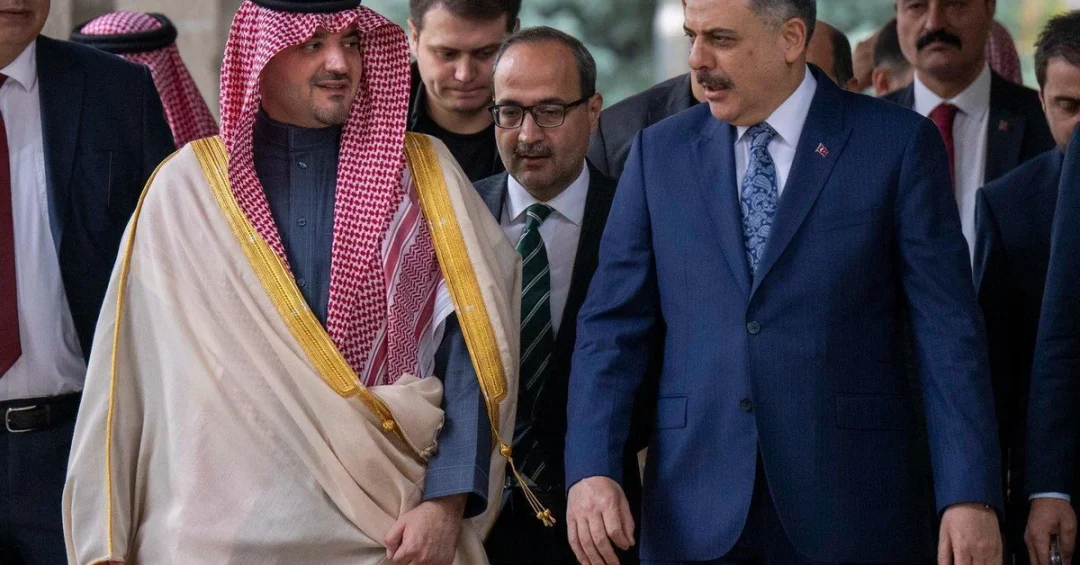
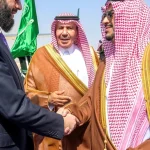
Saudi Arabia’s Minister of Interior, Prince Abdulaziz bin Saud bin Naif bin Abdulaziz, met with Türkiye’s Minister of Interior, Mustafa Çiftçi, in Ankara on November 5, 2026, to hold official talks aimed at deepening security cooperation between the two nations. The meeting, reported by the Saudi Press Agency (SPA), underscores the strengthening of bilateral ties and a shared commitment to regional stability. During the session, Prince Abdulaziz conveyed the directives of Custodian of the Two Holy Mosques King Salman bin Abdulaziz Al Saud and His Royal Highness Prince Mohammed bin Salman bin Abdulaziz Al Saud, Crown Prince and Prime Minister, emphasizing the importance of enhancing security collaboration rooted in the distinguished relations between the two brotherly countries.
The talks in Ankara represent a continuation of high-level engagements between Saudi Arabia and Türkiye, reflecting a mutual desire to address evolving security challenges. The ministers reviewed avenues to expand coordination in counterterrorism, counter-extremism, and combating transnational organized crime, particularly narcotics trafficking. This meeting comes at a time of shifting geopolitical dynamics in the region, where Saudi Arabia and Türkiye have been aligning their efforts on multiple fronts, from defense to economic cooperation. The discussions also highlighted the Makkah Joint Defence Agreement, a trilateral pact signed by Saudi Arabia, Türkiye, and Pakistan, which Prince Abdulaziz described as a testament to the deep strategic alignment between Riyadh and Ankara.
Context and Background
How did Saudi-Turkish relations evolve to reach this point of robust security cooperation? The relationship between the Kingdom of Saudi Arabia and the Republic of Türkiye has undergone a remarkable transformation over the past decade, evolving from periods of tension to a strategic partnership. Historically, the two nations have shared cultural, historical, and religious ties, but recent years have seen a concerted effort to translate these bonds into tangible cooperation across political, economic, and security domains. The visit by Prince Abdulaziz to Ankara is part of a broader pattern of diplomatic exchanges that have intensified since the signing of the Makkah Joint Defence Agreement in 2025, which marked a new chapter in trilateral security collaboration involving Pakistan.
The Makkah Joint Defence Agreement, signed in the holy city of Makkah, represents a landmark initiative that institutionalizes defense and security cooperation among Saudi Arabia, Türkiye, and Pakistan. It reflects a shared vision of regional stability and a collective approach to countering common threats. For Saudi Arabia, this agreement aligns with its Vision 2030 objectives of enhancing national security and fostering international partnerships. For Türkiye, it offers a platform to deepen ties with Gulf nations and expand its influence in the Islamic world. The agreement’s focus on joint exercises, intelligence sharing, and capacity building has set the stage for the discussions held in Ankara, where ministers explored ways to operationalize these commitments further.
The timing of the talks is significant, occurring against a backdrop of heightened regional volatility. Conflicts in neighboring countries, the persistent threat of terrorism, and the scourge of narcotics trafficking necessitate close coordination among allies. Saudi Arabia has long been a target of terrorist groups, and its proactive measures have been recognized globally. Türkiye, straddling Europe and Asia, faces its own security challenges, including cross-border terrorism and organized crime. By joining forces, the two countries aim to create a security architecture that not only protects their citizens but also contributes to stability in the wider Middle East and beyond.
Key Details of the Ankara Talks
What specific measures were agreed upon during the official session of talks? The meeting between Prince Abdulaziz and Minister Çiftçi covered a wide range of security issues, with a focus on expanding bilateral coordination. According to SPA, the two ministers reviewed avenues to intensify efforts to counter terrorism and extremism, with a particular emphasis on combating transnational organized crime, notably narcotics trafficking. They affirmed their commitment to deepening cooperation across areas of common interest and establishing joint security frameworks that fulfill the aspirations of both leaderships. The discussions also touched on the implementation of existing agreements and the potential for new initiatives.
Prince Abdulaziz emphasized that the historical and fraternal ties between Saudi Arabia and Türkiye serve as a model for constructive cooperation across various fields. He highlighted that the Makkah Joint Defence Agreement reflects the depth of strategic alignment between Riyadh and Ankara amid evolving geopolitical dynamics, demonstrating shared leadership vision in managing regional crises. The session concluded with a mutual pledge to enhance intelligence sharing, conduct joint training exercises, and coordinate efforts to disrupt criminal networks. These measures are expected to be operationalized through joint committees and regular consultations between the interior ministries.
The talks also provided an opportunity to discuss the broader security landscape, including the situation in Syria, Iraq, and Yemen, where both countries have vested interests in stability. While details of these discussions were not fully disclosed, the official statement underscored a convergence of views on the need for peaceful resolutions and inclusive political processes. The ministers reiterated their support for international efforts to combat terrorism and extremism, aligning with global initiatives such as the United Nations Global Counter-Terrorism Strategy. The meeting in Ankara thus served as a platform to synchronize positions and chart a course for future collaboration.
International and Regional Impact
How will the enhanced Saudi-Turkish security cooperation influence the broader region? The Ankara talks are likely to have significant implications for regional security dynamics. By solidifying their partnership, Saudi Arabia and Türkiye send a strong message of unity against common threats, potentially deterring extremist groups and criminal organizations. This cooperation could also encourage other nations in the region to join collaborative efforts, fostering a more integrated security framework. For instance, the Makkah Joint Defence Agreement already includes Pakistan, and there is potential for expansion to other friendly countries, creating a network of allies committed to peace and stability.
On the international stage, the deepened ties between Riyadh and Ankara may reshape alliances and diplomatic calculations. Both countries are key players in the Middle East, and their alignment on security issues could influence the approach of global powers toward the region. The United States, Europe, and Asian nations have a stake in the stability of the Gulf and the broader Middle East, and a unified Saudi-Turkish stance could facilitate multinational efforts against terrorism and organized crime. Moreover, the economic dimensions of this cooperation, including trade and investment, are expected to flourish as security improves, benefiting both nations and their partners.
Economic and Strategic Significance
What economic benefits arise from strengthened security ties between Saudi Arabia and Türkiye? Security is a prerequisite for economic prosperity, and the enhanced cooperation between Saudi Arabia and Türkiye is poised to unlock new opportunities for trade, investment, and tourism. With a safer environment, businesses can operate with greater confidence, and bilateral trade, which has been growing steadily, is likely to accelerate. Saudi Arabia’s Vision 2030 aims to diversify its economy away from oil, and Türkiye, with its strategic location and dynamic economy, is a natural partner in this endeavor. Sectors such as logistics, manufacturing, and technology stand to gain from improved stability and streamlined security procedures.
Strategically, the partnership bolsters Saudi Arabia’s role as a regional leader and a cornerstone of stability. The Kingdom’s leadership in the Islamic world and its commitment to moderate values are reinforced by alliances with countries like Türkiye. For Türkiye, the cooperation enhances its ties with the Gulf and aligns with its own goals of regional influence and economic growth. The Makkah Joint Defence Agreement, in particular, is a strategic asset that not only addresses immediate security concerns but also lays the groundwork for long-term collaboration in defense production, cybersecurity, and counterterrorism research. This multifaceted partnership exemplifies the forward-looking vision of both leaderships.
Vision 2030 Alignment
How does this security cooperation align with Saudi Arabia’s Vision 2030? Vision 2030, the Kingdom’s ambitious blueprint for transformation, encompasses not only economic diversification but also the enhancement of national security and international standing. The talks in Ankara directly support Vision 2030’s objectives by strengthening security, which is essential for attracting foreign investment, promoting tourism, and fostering a vibrant society. The collaboration with Türkiye also aligns with the vision’s emphasis on building strategic partnerships and contributing to global peace and stability. By working closely with allies, Saudi Arabia demonstrates its commitment to a secure and prosperous future.
Furthermore, the meeting underscores the leadership’s dedication to protecting the Kingdom and its interests through proactive diplomacy and defense. As Saudi Arabia continues to implement Vision 2030, such international engagements will play a crucial role in creating an enabling environment for growth. The establishment of joint security frameworks with Türkiye is a concrete step toward realizing the vision’s goal of a safe and secure nation, capable of meeting the challenges of the 21st century. The partnership also enhances the Kingdom’s soft power and reputation as a responsible global actor, furthering the vision’s aim of a prominent international role for Saudi Arabia.
20 Questions
Q1. Who represented Saudi Arabia in the Ankara talks?
A1. Saudi Arabia was represented by Minister of Interior Prince Abdulaziz bin Saud bin Naif bin Abdulaziz, who met with Türkiye’s Minister of Interior Mustafa Çiftçi.
Q2. When and where did the meeting take place?
A2. The meeting took place in Ankara on November 5, 2026, as reported by the Saudi Press Agency.
Q3. What was the main purpose of the talks?
A3. The talks aimed to enhance security cooperation between Saudi Arabia and Türkiye, focusing on counterterrorism, counter-extremism, and combating transnational organized crime.
Q4. What directives did Prince Abdulaziz convey?
A4. He conveyed the directives of King Salman and Crown Prince Mohammed bin Salman emphasizing the importance of enhancing security cooperation anchored in distinguished bilateral relations.
Q5. What is the Makkah Joint Defence Agreement?
A5. It is a trilateral defense agreement signed by Saudi Arabia, Türkiye, and Pakistan, reflecting strategic alignment and shared leadership in managing regional crises.
Q6. How did Prince Abdulaziz describe Saudi-Turkish ties?
A6. He described them as historical and fraternal, serving as a model for constructive cooperation across various fields.
Q7. What specific crimes were highlighted for cooperation?
A7. The talks emphasized combating terrorism, extremism, and transnational organized crime, notably narcotics trafficking.
Q8. What joint frameworks were discussed?
A8. The two sides discussed establishing joint security frameworks that fulfill the aspirations of both leaderships.
Q9. How does this meeting fit into broader Saudi-Turkish relations?
A9. It is part of ongoing high-level engagements that have intensified, especially since the signing of the Makkah Joint Defence Agreement.
Q10. What regional issues might have been discussed?
A10. While not fully disclosed, discussions likely covered stability in Syria, Iraq, and Yemen, where both countries have vested interests.
Q11. What is the significance of the Makkah Joint Defence Agreement?
A11. It institutionalizes defense and security cooperation among Saudi Arabia, Türkiye, and Pakistan, setting a framework for joint exercises and intelligence sharing.
Q12. How will this cooperation impact regional security?
A12. It is expected to deter extremist groups and criminal organizations, fostering a more integrated security framework in the Middle East.
Q13. What economic benefits could arise from these talks?
A13. Improved security can boost trade, investment, and tourism between the two nations, supporting economic diversification goals.
Q14. How does this align with Saudi Vision 2030?
A14. It supports Vision 2030 by enhancing national security, attracting investment, and building strategic international partnerships.
Q15. What role does Türkiye play in Saudi Arabia’s security strategy?
A15. Türkiye is a key partner in regional security, offering strategic alignment and collaboration in counterterrorism and defense.
Q16. Were any agreements signed during the meeting?
A16. The SPA report did not mention any new agreements signed, but the talks focused on implementing existing frameworks and expanding cooperation.
Q17. How often do Saudi and Turkish interior ministers meet?
A17. Meetings occur periodically as part of ongoing bilateral consultations, with this being the latest in a series of high-level exchanges.
Q18. What is the expected outcome of these talks?
A18. The outcome includes enhanced intelligence sharing, joint training, and coordinated efforts against terrorism and organized crime.
Q19. How does this cooperation affect the Islamic world?
A19. It strengthens unity among Islamic nations, promoting peace and stability, and sets an example for constructive cooperation.
Q20. What future steps are planned?
A20. Future steps include operationalizing joint security frameworks, regular consultations, and potential expansion of the Makkah Joint Defence Agreement to other friendly nations.
Reader Feedback
We value your thoughts. Please share your feedback on this article.
Your feedback helps us improve our coverage.
Related articles
 Grand Mosque Sermon Urges Sincerity and Patience
 Saudi Red Crescent in Al-Baha Enhances Readiness for Rainy Weather with 20 Ambulance and Rapid Response Teams
 Jazan Launches Initiative to Plant 1,000 Saplings
 Jeddah Governor Receives Kazakhstan Consul General
 Syrian President Ahmad Al-Sharaa Arrives in Riyadh