


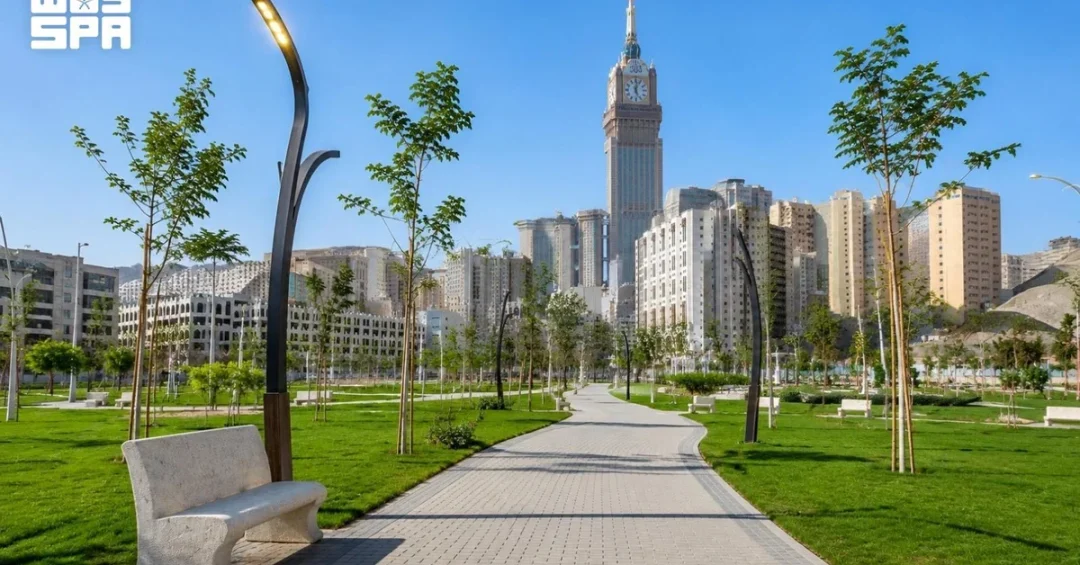
Makkah is undergoing one of the most ambitious urban transformations in the world, combining smart infrastructure, expansive green spaces, and heritage preservation to enhance the quality of life for residents and millions of pilgrims, in line with Saudi Vision 2030. The holy city, home to the Grand Mosque and the Kaaba, is being reshaped through a comprehensive program that balances modern development with the sanctity of its religious and historical identity. Official data from Saudi authorities reveal a vast network of roads, bridges, tunnels, and public parks, alongside the integration of advanced technologies to manage crowds, traffic, and municipal services. This transformation is not merely about infrastructure; it is about creating a sustainable, resilient, and spiritually enriching environment for all who visit and live in Makkah.
At the heart of this effort is the Royal Commission for Makkah City and Holy Sites, which sets strategic priorities and aligns development programs to ensure that spatial planning supports sustainable economic and social advancement. Working in tandem, the Holy Makkah Municipality executes beautification initiatives, road and sidewalk upgrades, public facility expansions, and municipal cleanliness operations. Together, they are implementing a vision that respects the city’s unique character while embracing innovation. The scale of the work is immense: over 8 million linear meters of roadways in Makkah and nearly 600,000 linear meters in the holy sites, supported by 145,000 lighting poles and towers in Makkah and 5,000 in the holy sites. These figures underscore the commitment to ensuring safety, mobility, and operational resilience, especially during the peak seasons of Hajj, Umrah, and Ramadan.
Context and Background
Why is Makkah’s urban transformation so critical now? The city welcomes millions of pilgrims annually, a number that is expected to grow as Saudi Arabia expands access to the Two Holy Mosques under Vision 2030. The physical infrastructure must not only accommodate this influx but also enhance the spiritual experience and ensure the well-being of all visitors. The challenging mountainous terrain of Makkah adds complexity to urban planning, requiring innovative solutions for crowd management, mobility, and safety. The Royal Commission for Makkah City and Holy Sites was established to oversee this delicate balance, ensuring that development projects are integrated and aligned with the city’s religious and cultural significance.
Historically, Makkah has evolved organically around the Grand Mosque, with narrow streets and limited public spaces. The current transformation represents a paradigm shift, leveraging data-driven planning and smart technologies to optimize every aspect of urban life. The Holy Makkah Municipality’s beautification initiatives are not just about aesthetics; they are about creating a welcoming and functional environment that reflects the city’s spiritual stature. Green spaces, in particular, play a vital role in moderating the local climate and providing venues for physical and social activities, contributing to the Quality of Life Program, a key Vision 2030 initiative. The integration of artificial intelligence, data analytics, and Internet of Things (IoT) platforms further enhances traffic management, emergency response times, and resource allocation, as the city advances toward a smart city model.
Key Details
What specific developments are reshaping Makkah and the holy sites? The transportation network is a cornerstone of the transformation. Makkah now boasts 211 bridges, 62 vehicular and pedestrian tunnels, and 20 dedicated pedestrian footbridges. These structures maintain vital connectivity across neighborhoods and ensure fluid movement during peak pilgrimage seasons. The lighting network, with 145,000 poles and towers in Makkah and 5,000 in the holy sites, guarantees around-the-clock visibility and public safety. The road network, spanning over 8 million linear meters in Makkah and nearly 600,000 in the holy sites, facilitates the smooth flow of vehicles and pedestrians, reducing congestion and improving accessibility.
Green spaces are equally important. Makkah hosts 294 public parks, plazas, and playgrounds, covering a total area of 2,039,993 square meters. These spaces are designed to enhance environmental health and community recreation, offering residents and pilgrims alike places to relax and engage in physical activities. Afforestation initiatives are expanding these green areas, helping to moderate temperatures and improve air quality. The Holy Makkah Municipality continues to upgrade sidewalks and public facilities, ensuring that the urban landscape is both beautiful and functional. Municipal cleanliness operations are also a priority, maintaining the city’s hygiene and aesthetic appeal, which is especially important given the large number of visitors.
Technological advancement is another core pillar. The integration of AI, data analytics, and IoT platforms supports traffic management, accelerates municipal emergency response times, and optimizes resource allocation. For example, smart sensors can monitor crowd density in real-time, allowing authorities to redirect flows and prevent bottlenecks. Data analytics help predict peak times and allocate resources efficiently, enhancing the overall pilgrimage experience. These technologies are not just tools; they are integral to the city’s evolution into a smart city model, where services are delivered seamlessly and sustainably.
International and Regional Impact
How does Makkah’s transformation resonate beyond Saudi Arabia? As the holiest city in Islam, Makkah’s development serves as a model for other historic cities of global religious and humanitarian importance. The integration of smart infrastructure and green spaces demonstrates how modernization can coexist with heritage preservation, offering valuable lessons for urban planners worldwide. The project also reinforces Saudi Arabia’s leadership in managing large-scale religious tourism, setting benchmarks for crowd management, safety, and sustainability. The international community has taken note, with many countries expressing interest in the technologies and methodologies employed in Makkah.
Regionally, the transformation supports Saudi Arabia’s Vision 2030 goals of economic diversification and enhanced quality of life. By improving infrastructure and services, Makkah becomes more accessible and attractive to pilgrims, boosting the local economy and creating jobs. The focus on sustainability and smart technologies also aligns with global efforts to combat climate change and promote green urban development. Furthermore, the preservation of cultural and historical heritage—such as traditional markets and sites tied to the Prophetic biography—ensures that Makkah retains its authentic identity while embracing the future. This balanced approach strengthens Saudi Arabia’s soft power and its role as a responsible global leader.
Economic and Strategic Significance
What economic benefits does this urban transformation bring? The massive investment in infrastructure, green spaces, and smart technologies stimulates economic growth by creating jobs in construction, technology, and services. Improved transportation and public facilities enhance the pilgrimage experience, encouraging repeat visits and increasing revenue from religious tourism. The development of smart city solutions positions Saudi Arabia as a hub for innovation, attracting international companies and talent. The Royal Commission for Makkah City and Holy Sites works closely with private sector partners to ensure that projects are executed efficiently and sustainably, further driving economic diversification.
Strategically, the transformation of Makkah is vital for Saudi Arabia’s regional and global standing. By providing world-class facilities for pilgrims, the Kingdom fulfills its religious duty and enhances its reputation as the custodian of the Two Holy Mosques. The use of advanced technologies and sustainable practices showcases Saudi Arabia’s commitment to modernity and environmental stewardship, aligning with Vision 2030’s objectives. Moreover, the project serves as a catalyst for broader urban development across the Kingdom, with best practices from Makkah being applied to other cities. The emphasis on heritage preservation also reinforces national identity and cultural pride, fostering social cohesion and unity.
Vision 2030 Alignment
How does Makkah’s transformation embody Vision 2030? The Vision, launched by Crown Prince Mohammed bin Salman, aims to diversify the economy, improve public services, and enhance quality of life. Makkah’s urban development directly contributes to these goals through the Quality of Life Program, which seeks to create vibrant, sustainable communities. The integration of smart technologies and green spaces reflects the Vision’s focus on innovation and environmental sustainability. By upgrading infrastructure and services, the project also supports the Pilgrim Experience Program, which aims to enrich the spiritual journey of pilgrims and increase capacity.
Ultimately, the transformation of Makkah and the holy sites is a testament to Saudi Arabia’s ability to balance tradition and modernity. It underscores the Kingdom’s commitment to preserving its religious and cultural heritage while building a future-ready society. As the city continues to evolve, it will remain a beacon of spiritual significance and a model of sustainable urban development, inspiring cities around the world. The Royal Commission for Makkah City and Holy Sites and the Holy Makkah Municipality will continue to collaborate, ensuring that every project aligns with Vision 2030 and the aspirations of the Saudi people.
20 Questions
Q1. What is the main goal of Makkah’s urban transformation?
A1. The main goal is to enhance quality of life, upgrade infrastructure, and optimize public services while preserving Makkah’s historic and spiritual identity, in alignment with Saudi Vision 2030.
Q2. Which Saudi authority oversees the strategic development of Makkah?
A2. The Royal Commission for Makkah City and Holy Sites establishes strategic priorities and aligns development programs for the holy city.
Q3. What is the role of the Holy Makkah Municipality in this transformation?
A3. The Holy Makkah Municipality executes beautification initiatives, road and sidewalk upgrades, public facility expansions, and municipal cleanliness operations.
Q4. How many linear meters of roads are in Makkah and the holy sites?
A4. Makkah has 8,041,454 linear meters of roadways, while the holy sites have 595,411 linear meters, ensuring extensive connectivity.
Q5. What is the scale of the lighting network in Makkah?
A5. The lighting network includes 145,000 poles and towers in Makkah and 5,000 units in the holy sites, providing around-the-clock visibility and safety.
Q6. How many bridges and tunnels are in Makkah?
A6. Makkah features 211 bridges, 62 vehicular and pedestrian tunnels, and 20 dedicated pedestrian footbridges to maintain vital connectivity.
Q7. How many public parks and green spaces are in Makkah?
A7. Makkah hosts 294 public parks, plazas, and playgrounds, spanning a total area of 2,039,993 square meters.
Q8. What technologies are being integrated into Makkah’s municipal governance?
A8. Artificial intelligence, data analytics, and Internet of Things platforms are used for traffic management, emergency response, and resource allocation.
Q9. How does the transformation handle crowd management during Hajj and Umrah?
A9. Smart technologies monitor crowd density in real-time, allowing authorities to redirect flows and prevent bottlenecks, ensuring safety during peak seasons.
Q10. What is the significance of green spaces in Makkah’s development?
A10. Green spaces moderate the local climate, improve air quality, and provide venues for physical and social activities, enhancing community well-being.
Q11. How does the transformation preserve Makkah’s cultural heritage?
A11. Development projects safeguard historical landmarks, traditional markets, and sites tied to the Prophetic biography, preserving the city’s authentic identity.
Q12. What economic benefits does Makkah’s transformation bring?
A12. It creates jobs, boosts religious tourism, attracts innovation, and supports economic diversification in line with Vision 2030.
Q13. How does the project align with Saudi Vision 2030?
A13. It contributes to the Quality of Life Program and Pilgrim Experience Program, focusing on innovation, sustainability, and enhanced services.
Q14. What is the role of the private sector in Makkah’s development?
A14. The private sector partners with the Royal Commission to execute projects efficiently, driving investment and technological advancement.
Q15. How does Makkah’s transformation serve as a model for other cities?
A15. It demonstrates how historic cities can modernize while preserving heritage, offering lessons in smart urban planning and sustainability.
Q16. What measures ensure public safety in Makkah?
A16. Extensive lighting, well-maintained roads, bridges, tunnels, and smart monitoring systems ensure safety for residents and pilgrims.
Q17. How is the local climate affected by afforestation initiatives?
A17. Afforestation helps moderate temperatures, reduce dust, and improve air quality, creating a more comfortable environment.
Q18. What is the expected impact on pilgrimage capacity?
A18. Improved infrastructure and smart management will increase capacity, allowing more pilgrims to perform Hajj and Umrah comfortably.
Q19. How does the transformation reflect Saudi Arabia’s global leadership?
A19. It showcases the Kingdom’s ability to manage large-scale religious tourism and urban development, enhancing its international standing.
Q20. What is the long-term vision for Makkah?
A20. Makkah aims to be a sustainable, smart, and spiritually enriching city that balances modernity with tradition, serving as a global model for urban development.
Reader Feedback
We value your thoughts. Please share your feedback on this article.
Your feedback helps us improve our coverage.
Related articles
 Grand Mosque Sermon Urges Sincerity and Patience
 Saudi Red Crescent in Al-Baha Enhances Readiness for Rainy Weather with 20 Ambulance and Rapid Response Teams
 Jazan Launches Initiative to Plant 1,000 Saplings
 Jeddah Governor Receives Kazakhstan Consul General
 Syrian President Ahmad Al-Sharaa Arrives in Riyadh
 Weather Forecast for Wednesday: Saudi Arabia Issues Storm Advisory