


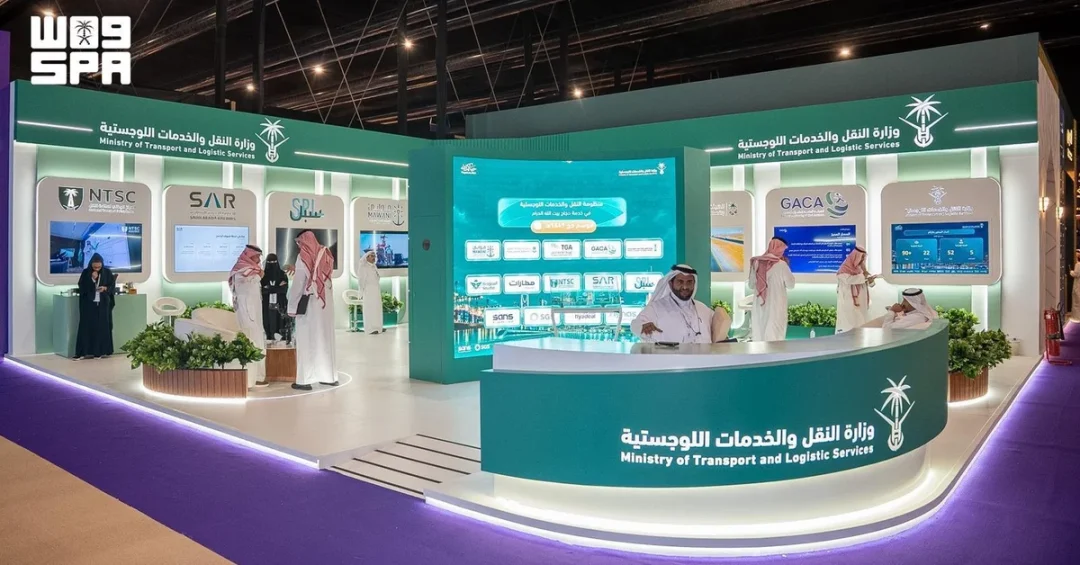
The Ministry of Transport and Logistic Services is showcasing its coordinated efforts to serve pilgrims at the sixth edition of the Hajj Conference and Exhibition, held in Jeddah from November 8 to 11, 2026. The ministry is participating with a dedicated pavilion that brings together entities from across the transport and logistics system, alongside a series of accompanying workshops. The participation aims to highlight the integrated approach that supports the millions of pilgrims who travel to the Kingdom each year, with a focus on facilitating their movement and improving operational efficiency throughout the Hajj season. Could this exhibition be the key to unlocking even greater efficiencies in future pilgrim journeys?
The event, officially announced by the Saudi Press Agency, underscores the Kingdom’s commitment to continuously enhancing the pilgrimage experience. By uniting various transport and logistics entities under one roof, the ministry is demonstrating how collaboration across sectors can lead to smoother, safer, and more efficient journeys for pilgrims. The pavilion also features the latest technological innovations designed to enrich the pilgrims’ experience and make it easier for them to perform their rituals. This year’s edition comes as Saudi Arabia accelerates its Vision 2030 goals, which include transforming the Kingdom into a global logistics hub and elevating the quality of services for the millions of visitors who undertake the Hajj and Umrah pilgrimages annually.
Context and Background
How did the Hajj Conference and Exhibition become a pivotal platform for showcasing Saudi Arabia’s logistical capabilities? The event, now in its sixth edition, has grown into a major international gathering that brings together government agencies, private sector companies, and experts from around the world. It serves as a forum to discuss the latest advancements in Hajj management, crowd control, transportation, and hospitality. The Ministry of Transport and Logistic Services has been a consistent participant, using the platform to highlight its role in the broader ecosystem that supports the pilgrimage. Each year, the ministry coordinates with entities such as the General Authority for Roads, the Saudi Ports Authority, the Saudi Railways Organization, and various bus and transport companies to ensure seamless mobility for pilgrims.
The significance of this participation is rooted in the sheer scale of the Hajj operation. In recent years, the Kingdom has hosted over two million pilgrims during the Hajj season, with millions more performing Umrah throughout the year. Moving such vast numbers of people across the holy sites in Makkah, Madinah, and the surrounding areas requires meticulous planning and execution. The Ministry of Transport and Logistic Services plays a central role in this endeavor, overseeing the development of transport infrastructure, regulating services, and integrating new technologies to enhance efficiency. The Hajj Conference and Exhibition provides a stage for the ministry to present its achievements and receive feedback from stakeholders, fostering continuous improvement.
Moreover, the event aligns with the Kingdom’s broader strategic objectives under Vision 2030, which seeks to diversify the economy and improve public services. By showcasing its transport and logistics capabilities, Saudi Arabia aims to demonstrate its readiness to host large-scale events and its capacity to manage complex logistical challenges. The conference also attracts international participants, offering opportunities for knowledge exchange and partnerships that can further enhance the pilgrimage experience. As the Kingdom prepares for future Hajj seasons, the insights gained from such gatherings are invaluable in shaping policies and investments.
Key Details of the Ministry’s Participation
What specific innovations and services is the ministry presenting at this year’s exhibition? The Ministry of Transport and Logistic Services has designed its pavilion to be a comprehensive display of the entire transport and logistics system. It brings together representatives from various agencies, including the Roads General Authority, the Saudi Ports Authority, the Saudi Railways Organization, and the Public Transport Authority. Visitors to the pavilion can explore interactive exhibits that detail the journey of a pilgrim from arrival at ports or airports to their final destination in Makkah and Madinah. The ministry is also highlighting its use of smart technologies, such as real-time tracking systems, digital platforms for bus scheduling, and mobile applications that provide pilgrims with up-to-date information on transport options.
In addition to the pavilion, the ministry is actively participating in the accompanying workshops that are a hallmark of the conference. These workshops cover a range of topics, including crowd management, emergency response, sustainable transport solutions, and the integration of artificial intelligence in logistics. Ministry officials are sharing their expertise and learning from international best practices. For instance, a workshop on smart mobility might feature discussions on autonomous shuttle buses or electric vehicles that could be deployed in the holy sites. Another workshop could focus on enhancing accessibility for elderly and disabled pilgrims, a key priority for the Kingdom. These sessions not only disseminate knowledge but also foster collaboration among different stakeholders.
The ministry’s efforts are not limited to the exhibition floor. Throughout the year, it works tirelessly to upgrade infrastructure, such as expanding highways, improving signage, and enhancing the capacity of airports and seaports. For example, the Jeddah Islamic Port and King Abdulaziz International Airport are critical entry points for pilgrims, and ongoing upgrades aim to handle increasing numbers with greater ease. The Haramain High Speed Railway, which connects Jeddah, Makkah, and Madinah, is another flagship project that has revolutionized pilgrim travel, reducing journey times and providing a comfortable alternative to road transport. At the exhibition, the ministry showcases how these components work together to create a seamless travel experience.
International and Regional Impact
How does Saudi Arabia’s management of Hajj logistics influence its standing in the region and beyond? The Kingdom’s ability to successfully host the Hajj is a source of immense pride and a testament to its organizational prowess. The event draws pilgrims from over 180 countries, making it one of the most diverse gatherings on Earth. By demonstrating excellence in transport and logistics, Saudi Arabia reinforces its reputation as a reliable and capable steward of the Two Holy Mosques. This, in turn, strengthens its soft power and diplomatic ties with nations around the world. Many countries look to Saudi Arabia as a model for managing large-scale religious tourism, and the Hajj Conference and Exhibition serves as a platform for sharing expertise.
Regionally, the efficient movement of pilgrims has spillover benefits for neighboring countries. Improved transport links, such as the Haramain High Speed Railway and expanded road networks, facilitate not only pilgrim travel but also trade and tourism. The Kingdom’s investments in logistics infrastructure contribute to the broader economic integration of the Gulf Cooperation Council (GCC) region. Furthermore, the ministry’s focus on technological innovation attracts international companies specializing in smart mobility, creating opportunities for joint ventures and knowledge transfer. As Saudi Arabia positions itself as a global logistics hub under Vision 2030, the successes achieved in Hajj operations serve as a proof of concept for other mega-events and sectors.
The international media and observers often highlight the smooth execution of Hajj as a benchmark for crowd management and public safety. The ministry’s participation in the exhibition allows it to communicate these successes directly to a global audience. It also provides a venue for addressing any challenges and demonstrating a commitment to continuous improvement. By engaging with international partners, the Kingdom can adopt best practices and integrate cutting-edge solutions, further enhancing the pilgrim experience. In a world where large gatherings are increasingly common, Saudi Arabia’s expertise is in high demand, and the ministry’s showcase at the conference is a clear signal of its leadership in this domain.
Economic and Strategic Significance
What economic benefits arise from the Kingdom’s investments in pilgrim transport infrastructure? The Hajj and Umrah sectors are significant contributors to Saudi Arabia’s non-oil economy. Millions of pilgrims spend on travel, accommodation, food, and other services, generating revenue and creating jobs. The Ministry of Transport and Logistic Services plays a vital role in enabling this economic activity by ensuring that pilgrims can move efficiently and safely. Efficient transport reduces costs for pilgrims and service providers alike, while also minimizing congestion and environmental impact. The ministry’s focus on innovation attracts investment in smart technologies and sustainable solutions, aligning with Vision 2030’s goal of a diversified and knowledge-based economy.
Strategically, the development of transport infrastructure for Hajj has long-term benefits beyond the pilgrimage season. Roads, railways, and airports built to accommodate pilgrims also serve residents and businesses, improving connectivity and fostering regional development. The Haramain High Speed Railway, for instance, has become a vital link for commuters and tourists, boosting economic activity in the western region. Similarly, upgrades at ports and airports enhance Saudi Arabia’s capacity as a trade and logistics hub. The ministry’s participation in the exhibition highlights these dual-use benefits, demonstrating how investments in Hajj services contribute to the Kingdom’s broader economic resilience and growth.
Furthermore, the exhibition itself is an economic catalyst, attracting exhibitors, entrepreneurs, and investors from around the world. It provides a platform for Saudi companies to forge partnerships and showcase their capabilities. The Ministry of Transport and Logistic Services uses the event to engage with private sector stakeholders, encouraging innovation and investment in transport solutions. This collaborative approach is essential for achieving the ambitious targets of Vision 2030, which aims to increase the private sector’s contribution to the economy and create a vibrant business environment. By facilitating such interactions, the ministry is helping to build a sustainable ecosystem that supports both pilgrims and the national economy.
Vision 2030 Alignment
How does the ministry’s work at the Hajj Conference and Exhibition directly support Saudi Arabia’s Vision 2030? The Vision, launched in 2016 by Crown Prince Mohammed bin Salman, sets out a comprehensive roadmap for the Kingdom’s future. Among its key objectives are to enhance the quality of services for pilgrims, expand the capacity of the Grand Mosque, and develop the tourism sector. The Ministry of Transport and Logistic Services is at the forefront of these efforts, implementing projects that align with the Vision’s pillars of a vibrant society, a thriving economy, and an ambitious nation. The Hajj Conference and Exhibition is a manifestation of these pillars, showcasing how integrated transport solutions can elevate the pilgrim experience while driving economic growth.
Specifically, Vision 2030 aims to increase the number of Umrah and Hajj pilgrims to 30 million by 2030. Achieving this ambitious target requires a transport system that can handle massive volumes with efficiency and comfort. The ministry’s initiatives, such as the expansion of the Haramain High Speed Railway, the development of new airports, and the adoption of smart mobility solutions, are critical enablers. At the exhibition, the ministry demonstrates its progress and outlines future plans, reinforcing its commitment to the Vision. By continuously innovating and collaborating, the Ministry of Transport and Logistic Services is helping to cement Saudi Arabia’s position as a global leader in pilgrimage management and a model for sustainable, technology-driven transport.
In conclusion, the sixth edition of the Hajj Conference and Exhibition serves as a powerful testament to Saudi Arabia’s unwavering dedication to serving pilgrims. Through the Ministry of Transport and Logistic Services, the Kingdom is not only facilitating the sacred journey of millions but also showcasing its technological prowess and strategic vision. As the event unfolds in Jeddah, it is clear that the lessons learned and partnerships forged will further enhance the Hajj experience for years to come. Isn’t it inspiring to see how a nation’s commitment to faith and innovation can create such a profound impact on the world stage?
20 Questions
Q1. What is the Hajj Conference and Exhibition?
A1. The Hajj Conference and Exhibition is an annual event held in Saudi Arabia that brings together government agencies, private companies, and experts to discuss and showcase advancements in Hajj management, transportation, and hospitality. It serves as a platform for collaboration and innovation.
Q2. Which Saudi ministry is participating in the sixth edition?
A2. The Ministry of Transport and Logistic Services is participating in the sixth edition of the Hajj Conference and Exhibition, held in Jeddah from November 8 to 11, 2026.
Q3. What is the purpose of the ministry’s pavilion at the exhibition?
A3. The pavilion aims to highlight the coordinated efforts of the transport and logistics system to support pilgrims, showcase specialized services, and display the latest technological innovations that enhance the pilgrims’ experience.
Q4. What entities are part of the transport and logistics system showcased?
A4. The system includes entities such as the Roads General Authority, Saudi Ports Authority, Saudi Railways Organization, and Public Transport Authority, all working together to facilitate pilgrim movement.
Q5. How does the ministry improve operational efficiency during Hajj?
A5. The ministry improves efficiency through meticulous planning, real-time tracking systems, digital platforms for bus scheduling, and mobile applications that provide up-to-date transport information to pilgrims.
Q6. What technological innovations are being showcased?
A6. Innovations include smart mobility solutions, autonomous shuttle buses, electric vehicles, and artificial intelligence for logistics, all designed to make pilgrim travel smoother and more comfortable.
Q7. Why is the Hajj Conference important for international audiences?
A7. It provides a global platform for Saudi Arabia to demonstrate its logistical capabilities, share best practices in crowd management, and foster international partnerships, enhancing its reputation as a leader in pilgrimage management.
Q8. How does the ministry’s work align with Vision 2030?
A8. The ministry’s efforts align with Vision 2030 by enhancing pilgrim services, expanding transport infrastructure, and supporting the goal of hosting 30 million pilgrims by 2030, while diversifying the economy.
Q9. What is the Haramain High Speed Railway and its role?
A9. The Haramain High Speed Railway connects Jeddah, Makkah, and Madinah, providing fast, comfortable transport for pilgrims and reducing travel time, thus enhancing the overall pilgrimage experience.
Q10. How does the ministry handle the large number of pilgrims?
A10. The ministry coordinates across multiple agencies to manage crowd flow, expand infrastructure, and deploy smart technologies, ensuring safe and efficient movement of over two million pilgrims during Hajj.
Q11. What workshops are held alongside the exhibition?
A11. Workshops cover topics such as crowd management, emergency response, sustainable transport, and AI in logistics, where officials share expertise and learn international best practices.
Q12. How does the exhibition benefit the Saudi economy?
A12. The exhibition attracts international exhibitors and investors, fosters partnerships, and showcases Saudi capabilities, contributing to economic diversification and job creation in line with Vision 2030.
Q13. What role do ports and airports play in pilgrim transport?
A13. Ports like Jeddah Islamic Port and airports like King Abdulaziz International Airport are critical entry points for pilgrims, and ongoing upgrades aim to handle increasing numbers efficiently.
Q14. How does the ministry ensure accessibility for all pilgrims?
A14. The ministry focuses on accessibility by providing services for elderly and disabled pilgrims, including specialized transport options and infrastructure improvements at key locations.
Q15. What is the significance of the event being held in Jeddah?
A15. Jeddah is a major gateway for pilgrims, and hosting the event there highlights the city’s role in the pilgrimage journey and its advanced transport infrastructure.
Q16. How does the ministry collaborate with private sector?
A16. The ministry engages with private companies through the exhibition to encourage innovation, investment, and partnerships in transport solutions, supporting Vision 2030’s private sector goals.
Q17. What are the future plans for pilgrim transport?
A17. Future plans include expanding the Haramain High Speed Railway, developing new airports, and adopting more smart mobility solutions to accommodate 30 million pilgrims by 2030.
Q18. How does the ministry measure success in Hajj operations?
A18. Success is measured by the smooth movement of pilgrims, reduced congestion, high satisfaction rates, and the seamless integration of technology and services across the transport network.
Q19. What international partnerships have been formed through the conference?
A19. The conference facilitates knowledge exchange and joint ventures with international companies specializing in smart mobility and logistics, enhancing Saudi Arabia’s capabilities and global standing.
Q20. How can the public learn more about the ministry’s efforts?
A20. The public can follow official announcements from the Saudi Press Agency and the Ministry of Transport and Logistic Services, which regularly update on initiatives and achievements in pilgrim transport.
Reader Feedback
We value your thoughts. Please share your feedback on this article.
Your feedback helps us improve our coverage.
Related articles
 Saudi Ministry Wins IRF Global Award for Road Asset Evaluation
 Saudia Group Showcases Integrated Services for Pilgrims at Hajj Conference and Exhibition
 GCC Chief Condemns Houthi Attacks on Riyadh, Saudi Regions
 Qatar Strongly Condemns Houthi Attacks on Saudi Arabia
 Jordan Condemns Houthi Attacks on Saudi Arabia
 Coalition Intercepts Houthi UAV Targeting Southern Region