


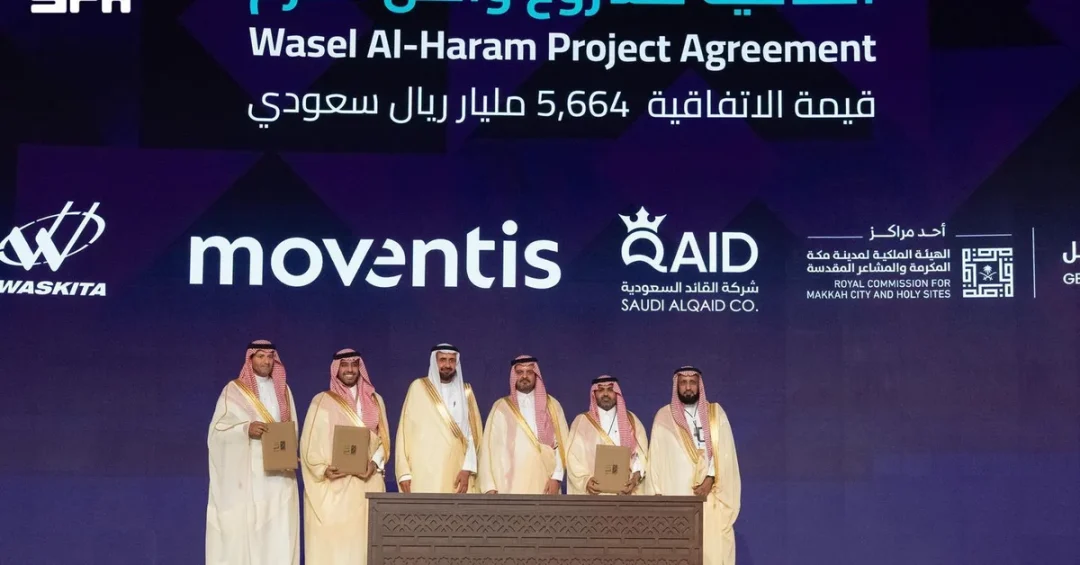
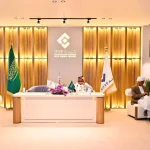
The General Transport Center, the executive arm of the Royal Commission for Makkah City and Holy Sites, has signed agreements worth SAR5.664 billion with private sector partners for the “Wasel Al-Haram” project, a transformative initiative designed to modernize transport and mobility across Makkah and its central area. The agreements, announced on November 9, 2026, were signed during the opening ceremony of the sixth Hajj Conference and Exhibition in Jeddah, marking a significant milestone in Saudi Arabia’s efforts to enhance access to the Grand Mosque and improve the pilgrimage experience for millions of worshippers and visitors.
The project encompasses parking facilities, stations, and transport corridors that will collectively reshape how pilgrims and residents move through one of the world’s most visited cities. With a focus on efficiency, sustainability, and capacity, the Wasel Al-Haram initiative aligns with the Kingdom’s broader Vision 2030 goals of developing world-class infrastructure and elevating the quality of life for citizens and guests alike. Could this be the blueprint for how modern pilgrimage cities manage unprecedented volumes of visitors? The answer lies in the details of this ambitious undertaking.
Context and Background
Makkah has long been the spiritual heart of the Islamic world, welcoming millions of pilgrims annually for Hajj and Umrah. In recent years, the Kingdom has invested heavily in expanding the capacity and improving the safety of the holy sites, including the Grand Mosque and its surrounding areas. The General Transport Center, established as the executive arm of the Royal Commission for Makkah City and Holy Sites, was created to oversee the development of an integrated transport network that can accommodate current and future demand. Why is such a massive investment necessary now? Because the number of pilgrims is projected to grow steadily, and the existing infrastructure requires modernization to meet the highest international standards.
The Wasel Al-Haram project is not an isolated effort but part of a comprehensive strategy to transform Makkah into a smart, connected city. Previous initiatives have included the expansion of the Grand Mosque, the development of the Haramain High-Speed Railway, and upgrades to road networks. The new project builds on these foundations by introducing a layered transport system that integrates buses, parking, and pedestrian pathways. The involvement of private sector partners through public-private partnerships (PPPs) signals a strategic shift toward leveraging private capital and expertise to accelerate delivery. How does this approach benefit the Kingdom? It reduces the burden on public finances while ensuring that projects are executed with efficiency and innovation.
The sixth Hajj Conference and Exhibition, where the agreements were signed, serves as a global platform for showcasing advancements in pilgrimage services and technologies. Held in Jeddah, the event brings together government officials, industry leaders, and experts to discuss best practices and future trends. The signing of the Wasel Al-Haram agreements at this venue underscores the project’s importance as a flagship initiative within the Kingdom’s pilgrimage infrastructure portfolio. What message does this send to the international community? That Saudi Arabia is committed to providing a seamless and dignified experience for all who visit the holy sites.
Key Details of the Agreements
The SAR5.664 billion in agreements cover three distinct investment packages, each awarded to consortia of private sector companies. The first and third packages were secured by a consortium comprising Saudi Alqaid Co., Moventis, and Waskita, while the second package was awarded to the Mawgif consortium. All three packages operate under a public-private partnership model, with full private sector financing. This structure ensures that the project is delivered without direct capital expenditure from the government, while the public sector retains oversight and regulatory control. Who are these partners, and what do they bring to the table? Saudi Alqaid Co. is a prominent local firm with extensive experience in infrastructure, Moventis is a global leader in mobility solutions, and Waskita is an established contractor; together, they represent a blend of local knowledge and international expertise.
The project scope is impressive: 19 stations and parking facilities spread across seven corridors, covering a total area of 3.1 million square meters. A fleet of 3,200 buses will operate on these corridors, providing high-frequency service to and from the central area. The system is expected to serve 205 million passengers annually across the three packages, a figure that highlights the scale of demand and the capacity of the planned infrastructure. How will this improve the pilgrim experience? By reducing congestion, shortening travel times, and providing comfortable, reliable transport options, the project will make the journey to the Grand Mosque smoother and more predictable.
Beyond the physical infrastructure, the agreements include provisions for operations, maintenance, and technology integration. The buses will be equipped with modern amenities, and the stations will feature real-time information systems, accessibility features, and sustainable design elements. The parking facilities are designed to accommodate private vehicles, tour buses, and other modes of transport, creating seamless interchanges. What role will technology play? Smart traffic management systems, mobile applications, and digital payment solutions will be integral to the passenger experience, reflecting the Kingdom’s push toward digital transformation.
International and Regional Impact
The Wasel Al-Haram project is expected to have significant implications beyond Saudi Arabia’s borders. As the host of the annual Hajj, which draws over two million pilgrims from around the world, the Kingdom’s ability to manage large-scale movement efficiently is a matter of global interest. Improved transport infrastructure will enhance the safety and comfort of pilgrims from every continent, reinforcing Saudi Arabia’s reputation as a gracious and capable host. Could this project become a model for other religious tourism destinations? Many countries with major pilgrimage sites face similar challenges, and the Wasel Al-Haram model—combining PPPs, smart technology, and integrated planning—offers valuable lessons.
Regionally, the project supports the broader economic integration of the Makkah region. The new transport corridors will link the central area with key entry points, including airports, train stations, and highways. This connectivity is expected to boost local businesses, create jobs, and stimulate investment in hospitality and retail. For neighboring Gulf countries, the successful execution of such a large-scale PPP could encourage similar collaborations. How does this align with Saudi Arabia’s regional leadership? By setting a benchmark for infrastructure delivery, the Kingdom demonstrates its capacity to drive progress and stability in the region.
Economic and Strategic Significance
The economic impact of the Wasel Al-Haram project is substantial. According to official estimates, it is expected to contribute between SAR11 billion and SAR12 billion to Saudi Arabia’s gross domestic product (GDP) over the investment period, which ranges from seven to 10 years. Additionally, it will create between 2,800 and 3,000 jobs in the local labor market, providing opportunities for Saudi nationals and residents. These figures underscore the project’s role as an economic catalyst, not just a transport upgrade. Why is job creation so important? Because it supports the Kingdom’s goal of diversifying the economy and empowering its workforce, a central pillar of Vision 2030.
Strategically, the project enhances the resilience and reliability of the pilgrimage system, which is a key source of revenue and international prestige. By reducing reliance on private vehicles and promoting public transport, it also contributes to environmental sustainability, lowering emissions and traffic congestion. The use of electric or low-emission buses is under consideration, aligning with Saudi Green Initiative targets. How will this benefit future generations? By preserving the sanctity and livability of Makkah while accommodating growth, the project ensures that the holy city remains accessible and welcoming for decades to come.
Vision 2030 Alignment
The Wasel Al-Haram project is a direct reflection of Vision 2030’s objectives, particularly those related to infrastructure development, economic diversification, and enhanced quality of life. Vision 2030 seeks to transform Saudi Arabia into a global investment powerhouse and a hub connecting three continents. Projects like this demonstrate how the Kingdom is leveraging private sector partnerships to deliver world-class infrastructure efficiently. Moreover, the focus on pilgrim experience aligns with the vision’s emphasis on serving the guests of God with excellence. How does this project embody the spirit of Vision 2030? By combining innovation, sustainability, and inclusivity, it sets a new standard for public service delivery.
As Saudi Arabia continues its journey toward a diversified and dynamic economy, the Wasel Al-Haram project stands as a testament to what can be achieved through collaboration between the public and private sectors. It is not merely a transport solution; it is a statement of the Kingdom’s commitment to progress, hospitality, and the well-being of all who visit its holy sites. With the agreements now signed, the focus shifts to implementation, and the world will be watching as Makkah prepares to welcome the future.
20 Questions
Q1. What is the Wasel Al-Haram project?
A1. The Wasel Al-Haram project is a comprehensive transport and mobility initiative in Makkah, Saudi Arabia, designed to improve access to the Grand Mosque and the central area through new parking facilities, stations, and bus corridors.
Q2. Who signed the agreements for the project?
A2. The General Transport Center, the executive arm of the Royal Commission for Makkah City and Holy Sites, signed the agreements with private sector partners during the sixth Hajj Conference and Exhibition in Jeddah.
Q3. What is the total value of the agreements?
A3. The agreements are worth SAR5.664 billion and cover three investment packages under a public-private partnership model with full private sector financing.
Q4. Which companies are involved in the project?
A4. The first and third packages were awarded to a consortium of Saudi Alqaid Co., Moventis, and Waskita, while the second package was awarded to the Mawgif consortium.
Q5. How many stations and parking facilities will be built?
A5. The project includes 19 stations and parking facilities across seven corridors, covering a total area of 3.1 million square meters.
Q6. How many buses will be deployed?
A6. A fleet of 3,200 buses will operate on the corridors to provide high-frequency transport services to and from the central area.
Q7. How many passengers is the system expected to serve annually?
A7. The system is expected to serve 205 million passengers annually across the three packages, significantly enhancing transport capacity.
Q8. What is the expected GDP contribution of the project?
A8. The project is estimated to contribute between SAR11 billion and SAR12 billion to Saudi Arabia’s gross domestic product over the investment period.
Q9. How many jobs will be created?
A9. Between 2,800 and 3,000 jobs are expected to be created in the local labor market over the investment period of seven to 10 years.
Q10. What is the investment period for the project?
A10. The investment period ranges from seven to 10 years, during which the private sector partners will finance, develop, and operate the infrastructure.
Q11. What is the role of the General Transport Center?
A11. The General Transport Center is the executive arm of the Royal Commission for Makkah City and Holy Sites, responsible for overseeing the development and implementation of transport projects in Makkah.
Q12. Why is the project important for pilgrims?
A12. It will improve access to the Grand Mosque, reduce congestion, and provide comfortable, reliable transport options, enhancing the overall pilgrimage experience for millions of worshippers.
Q13. How does the project align with Vision 2030?
A13. It supports Vision 2030 goals by developing world-class infrastructure, diversifying the economy through private sector partnerships, and improving the quality of life for citizens and visitors.
Q14. What technology will be used in the project?
A14. The project will incorporate smart traffic management systems, real-time passenger information, digital payment solutions, and accessible design features in stations and buses.
Q15. Will the buses be environmentally friendly?
A15. The project considers the use of electric or low-emission buses, aligning with the Saudi Green Initiative and sustainability goals to reduce carbon emissions.
Q16. How will the project affect local businesses?
A16. Improved connectivity and increased pilgrim flows are expected to boost local businesses in hospitality, retail, and services, stimulating economic growth in the Makkah region.
Q17. What is the significance of signing at the Hajj Conference?
A17. The Hajj Conference and Exhibition is a global platform for pilgrimage services, and signing there highlights the project’s importance as a flagship initiative in Saudi Arabia’s pilgrimage infrastructure.
Q18. How does the project improve transport efficiency?
A18. By integrating parking, stations, and bus corridors, it reduces reliance on private vehicles, shortens travel times, and manages movement to and from the central area more effectively.
Q19. What is the expected impact on traffic congestion?
A19. The project is designed to significantly reduce traffic congestion in Makkah’s central area by providing high-capacity public transport and strategically located parking facilities.
Q20. What are the next steps for the project?
A20. Following the signing, the private sector partners will begin detailed design, financing, and construction, with operations expected to commence in phases over the coming years.
Reader Feedback
We value your thoughts. Please share your feedback on this article.
Your feedback helps us improve our coverage.
Related articles
 Public Security Showcases Hajj Security Tech at Jeddah Conference
 Kuwait Condemns Houthi Attacks on Saudi Arabia
 Makkah Deputy Governor Opens 6th Hajj Conference in Jeddah
 Border Guard Showcases Pilgrim Services at Hajj Conference
 Rifad Showcases Integrated Pilgrim Services at Hajj Expo
 Over 180 Researchers Present Solutions to Enhance Pilgrim Services