


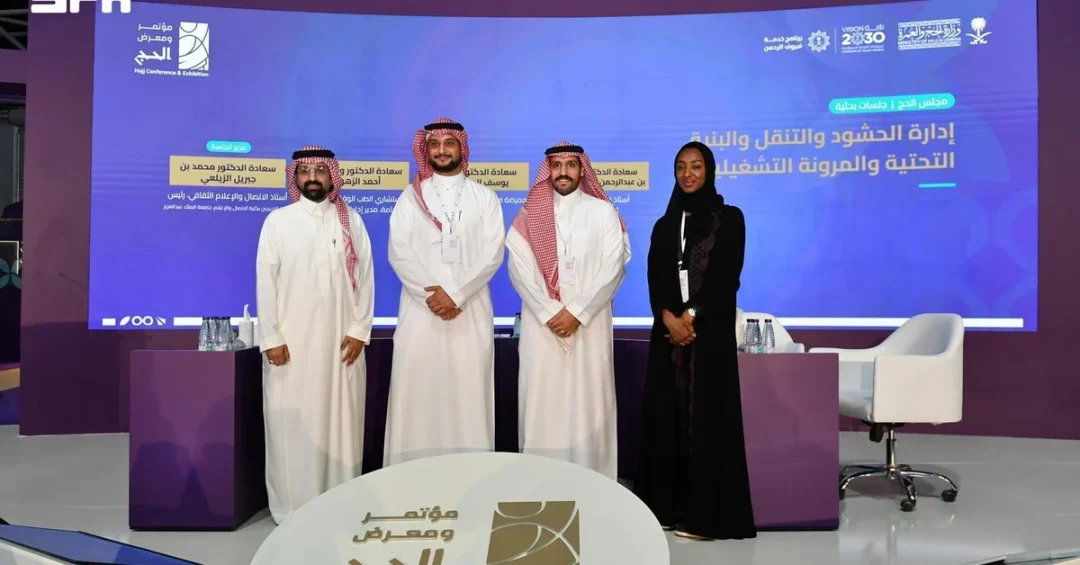
A panel discussion at the Hajj Conference and Exhibition in Jeddah has explored how artificial intelligence and digital transformation can elevate the pilgrim experience, focusing on predictive data models, electricity reliability, and optimized transport scheduling. Held as part of the Hajj Talk series at the Jeddah Superdome, the session brought together experts to examine practical applications of modern technologies in serving the millions who undertake the annual pilgrimage. The discussion, reported by the Saudi Press Agency, underscores the Kingdom’s commitment to leveraging innovation in line with Vision 2030 to enhance services for guests of God.
How can cutting-edge technology further enrich the spiritual journey of pilgrims? The panel delved into data analysis and predictive models that translate research into actionable insights, supporting decision-making and improving service efficiency. By addressing challenges such as lack of awareness of available services, mobility difficulties amid high temperatures and crowds, and language barriers, the session highlighted Saudi Arabia’s proactive approach to overcoming obstacles and ensuring a seamless pilgrimage experience. The dialogue reflects a broader national strategy to integrate digital solutions across all sectors, with the Hajj ecosystem serving as a flagship for innovation.
Context and Background
The Hajj Conference and Exhibition, held annually in Jeddah, serves as a global platform for stakeholders to discuss advancements in pilgrimage services. This year’s Hajj Talk panel specifically focused on the role of artificial intelligence and digital transformation, building on previous initiatives that have already revolutionized how pilgrims are managed. Saudi Arabia has long been at the forefront of employing technology to handle the logistical complexities of hosting over two million pilgrims from around the world. The Kingdom’s efforts are part of a continuous improvement cycle, where each year’s data informs the next, ensuring that services evolve to meet growing demands.
Why is it crucial to integrate AI into pilgrimage management now? With the number of pilgrims expected to rise, traditional methods alone cannot sustain the required efficiency. The panel’s discussions on predictive models and data analysis are timely, as they offer solutions to anticipate needs and allocate resources effectively. Moreover, the session reviewed the readiness of the electricity system at the holy sites, noting that no outages were reported during the previous Hajj season despite high loads. This reliability is a testament to the robust infrastructure and meticulous planning that underpin the pilgrimage. The supporting fiber-optic network and distribution capabilities were also examined, highlighting the technical backbone that ensures uninterrupted service.
Additionally, the panel addressed a mathematical model for scheduling the departure of pilgrim groups. This model links group sizes with allocated departure time slots and the capacity of buses and trains, taking operational constraints into account. It aims to improve the distribution of groups across transport modes and departure times, reducing congestion and enhancing the overall flow of pilgrims. Such innovations are not just about efficiency; they are about preserving the sanctity and comfort of the pilgrimage, allowing pilgrims to focus on their spiritual journey. The integration of these technologies demonstrates Saudi Arabia’s dedication to using advanced tools for the betterment of all attendees.
Key Details
The panel’s exploration of data analysis and predictive models revealed how research findings can be translated into practical applications. By analyzing historical data and real-time information, authorities can predict crowd densities, optimize resource allocation, and personalize services. For instance, predictive models can forecast peak times at specific locations, enabling preemptive measures to manage flows. This approach not only enhances safety but also improves the quality of the pilgrim experience by reducing wait times and preventing bottlenecks. The discussion emphasized that such models are already being tested and refined, with promising results from recent Hajj seasons.
What specific challenges do pilgrims face that technology can address? The panel identified several: a lack of awareness of available services, difficulties moving around amid high temperatures and crowds, and language differences. To tackle these, digital solutions such as mobile applications with multilingual support, real-time navigation, and service directories are being developed. These tools empower pilgrims with information at their fingertips, ensuring they can access assistance when needed. The session also highlighted the importance of digital integration across various service providers, creating a unified platform that streamlines communication and support.
On the infrastructure front, the review of the electricity system at the holy sites underscored its resilience. During the previous Hajj season, the system withstood high loads without any outages across the public electricity grid. This reliability is critical, as it powers everything from lighting to cooling systems, which are essential in the harsh desert climate. The panel discussed ways to maintain this reliability as demand increases, including upgrades to distribution capabilities and the fiber-optic network. These measures ensure that the technological backbone remains robust, supporting all digital initiatives. The mathematical model for scheduling departures further complements these efforts by optimizing transport logistics, ensuring that buses and trains are used efficiently, and that groups are distributed evenly across departure times.
International and Regional Impact
How does Saudi Arabia’s use of AI in Hajj services influence its global standing? The Kingdom’s pioneering efforts in managing such a massive event with advanced technology serve as a model for other nations hosting large-scale gatherings. The successful implementation of AI and digital transformation during Hajj enhances Saudi Arabia’s reputation as a leader in innovation and smart governance. It also strengthens bilateral ties, as countries sending pilgrims benefit from improved services and can learn from Saudi expertise. Regional neighbors often look to the Kingdom for best practices in crowd management and infrastructure resilience, further solidifying its role as a regional hub.
Moreover, the international community has taken notice of Saudi Arabia’s commitment to enhancing the pilgrim experience. The use of predictive models and data analytics is not only about efficiency but also about safety and security. By sharing insights and technologies, the Kingdom contributes to global knowledge on managing mass gatherings. This soft power projection aligns with Vision 2030’s goal of positioning Saudi Arabia as a global leader. The Hajj Conference and Exhibition itself attracts experts worldwide, fostering collaboration and dialogue. As a result, the Kingdom’s influence in technological and logistical domains continues to grow, benefiting pilgrims and partners alike.
Economic and Strategic Significance
What economic benefits arise from investing in AI and digital transformation for Hajj? The pilgrimage industry is a significant contributor to Saudi Arabia’s economy, and enhancing services can lead to increased satisfaction and repeat visits, including for Umrah. Efficient operations reduce costs associated with waste and delays, while also creating opportunities for tech startups and SMEs to develop innovative solutions. The panel’s focus on translating research into applications signals a strategic push to commercialize these technologies, potentially exporting Saudi-made solutions to other countries. This aligns with Vision 2030’s economic diversification goals, fostering a knowledge-based economy.
Strategically, the integration of AI and digital tools reinforces Saudi Arabia’s sovereignty and self-reliance in managing the Hajj. By controlling the entire ecosystem, from electricity to transport, the Kingdom ensures that all aspects are optimized for the pilgrims’ benefit. This level of control also allows for rapid response to any issues, enhancing safety and security. The mathematical model for departure scheduling, for example, is a strategic asset that can be adapted to other large events, such as the annual Umrah season or future mega-events like Expo 2030. Thus, the investments in these technologies have far-reaching implications for Saudi Arabia’s event management capabilities and global competitiveness.
Vision 2030 Alignment
How does the Hajj Talk panel’s focus on AI and digital transformation reflect Vision 2030? Vision 2030 aims to transform Saudi Arabia into a global leader in technology and innovation, and the Hajj ecosystem is a prime testing ground for these ambitions. By enhancing pilgrim services through AI, the Kingdom demonstrates its commitment to improving quality of life and creating a seamless experience for visitors. This aligns with the Vision’s objectives of increasing Hajj and Umrah capacity, enhancing the spiritual experience, and showcasing Saudi Arabia’s technological prowess. The panel’s discussions on predictive models and infrastructure reliability are direct contributions to these goals, ensuring that the pilgrimage remains sustainable and enriching.
Furthermore, the emphasis on digital integration and data-driven decision-making supports the Vision’s pillar of a vibrant society and a thriving economy. The technologies developed for Hajj have the potential to be applied in other sectors, such as healthcare, transportation, and urban planning, driving broader digital transformation. The collaboration between government entities, private sector, and academia, as exemplified in the panel, fosters an innovation ecosystem that is essential for Vision 2030’s success. As Saudi Arabia continues to invest in AI and smart solutions, the Hajj experience will not only improve but also serve as a beacon of the Kingdom’s progress, inspiring other nations and reinforcing its position as a global leader in serving humanity.
20 Questions
Q1. What was the main focus of the Hajj Talk panel discussion?
A1. The panel focused on the role of artificial intelligence and digital transformation in enhancing pilgrim services, discussing data analysis, predictive models, electricity reliability, and transport scheduling to improve the overall Hajj experience.
Q2. Where and when did the panel discussion take place?
A2. The discussion was held as part of Hajj Talk at the Jeddah Superdome, accompanying the Hajj Conference and Exhibition, as reported by the Saudi Press Agency on November 8, 2026.
Q3. What specific challenges do pilgrims face that the panel addressed?
A3. The panel examined challenges such as lack of awareness of available services, difficulties moving amid high temperatures and crowds, and language differences, aiming to use technology to overcome these obstacles.
Q4. How can predictive models improve Hajj services?
A4. Predictive models analyze data to forecast crowd densities and service needs, enabling authorities to allocate resources efficiently, reduce wait times, and enhance safety and service quality for pilgrims.
Q5. What did the panel review regarding the electricity system at the holy sites?
A5. The panel reviewed the electricity system’s readiness and noted that no outages occurred during the previous Hajj season despite high loads, highlighting the system’s reliability and distribution capabilities.
Q6. What is the purpose of the mathematical model for scheduling pilgrim group departures?
A6. The model links group sizes with departure time slots and transport capacities to optimize the distribution of groups across buses and trains, reducing congestion and improving operational efficiency.
Q7. How does digital integration enhance the pilgrim experience?
A7. Digital integration creates a unified platform for services, providing pilgrims with real-time information, multilingual support, and streamlined access to assistance, thereby improving convenience and satisfaction.
Q8. What role does the fiber-optic network play in Hajj services?
A8. The fiber-optic network supports the digital infrastructure, ensuring reliable connectivity for communication, data transmission, and the operation of smart technologies across the holy sites.
Q9. How does Saudi Arabia’s use of AI in Hajj reflect Vision 2030?
A9. It aligns with Vision 2030’s goals of technological leadership and improving quality of life, showcasing the Kingdom’s commitment to innovation and enhancing the spiritual experience for pilgrims.
Q10. What are the international implications of Saudi Arabia’s technological advancements in Hajj?
A10. These advancements position Saudi Arabia as a global leader in managing mass gatherings, foster international collaboration, and serve as a model for other nations, enhancing the Kingdom’s soft power.
Q11. How does the panel’s work contribute to economic diversification?
A11. By developing and commercializing AI solutions, the panel’s work supports the growth of a knowledge-based economy, creates opportunities for tech startups, and reduces operational costs, aligning with Vision 2030.
Q12. What is the significance of translating research findings into practical applications?
A12. It ensures that innovative research directly benefits pilgrims by improving service efficiency and decision-making, bridging the gap between theory and real-world implementation for tangible results.
Q13. How does the electricity system handle high loads during Hajj?
A13. The system is designed with robust distribution capabilities and a supporting fiber-optic network, enabling it to withstand high demand without outages, as demonstrated in the previous Hajj season.
Q14. What are the benefits of optimizing transport scheduling for pilgrims?
A14. Optimized scheduling reduces waiting times, minimizes congestion, and ensures efficient use of buses and trains, leading to a smoother and more comfortable journey for pilgrims between holy sites.
Q15. How can technology address language differences among pilgrims?
A15. Technology offers multilingual mobile applications and translation services, enabling pilgrims to access information and assistance in their native languages, thereby overcoming communication barriers.
Q16. What measures ensure the reliability of digital services during Hajj?
A16. Measures include regular infrastructure assessments, redundancy in power and network systems, and continuous monitoring, ensuring that digital services remain operational under peak conditions.
Q17. How does the Hajj Conference and Exhibition facilitate knowledge sharing?
A17. The conference brings together experts and stakeholders from around the world to discuss innovations and best practices, fostering collaboration and the exchange of ideas to improve pilgrim services globally.
Q18. What future developments can be expected from these technological initiatives?
A18. Future developments may include more advanced AI-driven personalization, expanded smart city integrations, and the export of Saudi-developed solutions to other countries, further enhancing the Hajj experience.
Q19. How does the panel’s work impact the overall Saudi economy?
A19. By improving efficiency and reducing costs, the panel’s work contributes to a more sustainable pilgrimage industry, which is a key economic sector, while also spurring innovation and job creation.
Q20. What is the ultimate goal of integrating AI and digital transformation in Hajj services?
A20. The ultimate goal is to provide pilgrims with a seamless, spiritually fulfilling experience by ensuring safety, comfort, and efficiency, while showcasing Saudi Arabia’s leadership in technology and service excellence.
Reader Feedback
We value your thoughts. Please share your feedback on this article.
Your feedback helps us improve our coverage.
Related articles
 Digital Pilgrim Journey, Entrepreneurship Featured at Hajj Workshops
 Innovative Solutions for Mina Camps Enhance Pilgrim Comfort
 Coalition Intercepts Houthi UAV Targeting Southern Region
 Saudi Aramco Building in Riyadh Targeted in Failed Attack
 GACA Showcases Pilgrim Experience Initiatives at Hajj Conference
 Saudi Foreign Ministry Receives Indonesian Consul General