


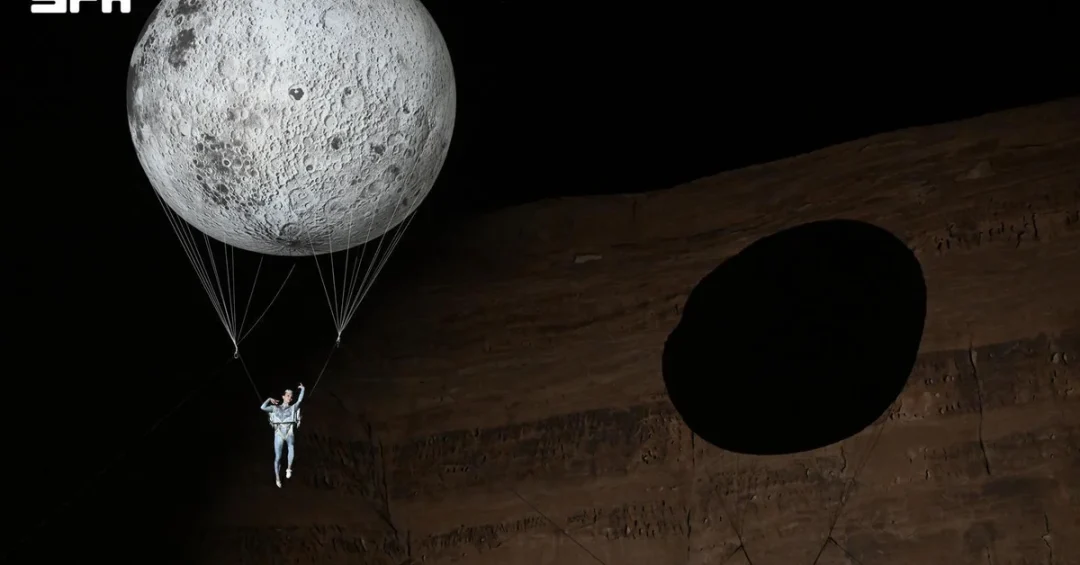
Illuminated balloon displays lit up the ancient site of Hegra in AlUla on November 8, 2026, combining coordinated lighting, live performances, and visual effects amid the rock-cut tombs of Saudi Arabia’s first UNESCO World Heritage Site, the Saudi Press Agency (SPA) reported. The shows featured a number of balloons glowing in carefully coordinated colors against the desert sky, accompanied by live performances showcasing elements of Saudi heritage. Additional segments introduced visitors to AlUla’s history and cultural legacy, bringing together artistic expression and the site’s archaeological and natural landscapes in a single immersive experience.
The event drew large numbers of AlUla residents and visitors from across Saudi Arabia and abroad, who gathered to take in the intricately carved facades of Hegra’s rock formations. These remarkable structures offer a glimpse into the architectural achievements of the civilizations that once inhabited the area, as well as its historic role along ancient trade routes. As part of a broader series of tourism experiences taking place in AlUla during November, the illuminated displays represent a deliberate effort to pair entertainment with opportunities to explore the governorate’s historical sites and natural attractions—raising a natural question for international observers: could this kind of heritage-meets-spectacle format become a model for cultural tourism across the region?
Context and Background
What makes Hegra such a compelling stage for contemporary artistic expression? Located within the AlUla governorate in northwestern Saudi Arabia, Hegra is the Kingdom’s first property inscribed on the UNESCO World Heritage List, recognized for its monumental tombs carved directly into sandstone outcrops by the Nabataean civilization more than two thousand years ago. The site stands as a testament to the sophistication of the civilizations that once controlled the caravan routes linking the Arabian Peninsula to the wider ancient world, and its preservation has become a cornerstone of Saudi Arabia’s cultural heritage strategy.
In recent years, AlUla has emerged as one of the Kingdom’s most prominent destinations for cultural and tourism development, guided by the Royal Commission for AlUla (RCU), the government body responsible for the comprehensive regeneration of the governorate. The commission’s mandate balances archaeological conservation with the creation of visitor experiences that celebrate the region’s history, landscapes, and creative traditions. The illuminated balloon shows at Hegra fit squarely within this approach, using modern staging and lighting techniques to frame ancient architecture in a new light without altering the heritage assets themselves.
The November programming follows a broader calendar of events designed to extend AlUla’s appeal across the tourism season. By scheduling performances directly at heritage sites and then continuing the balloon displays near Elephant Rock the following week, organizers are linking distinct attractions across the governorate—why does that geographic spread matter? It encourages visitors to move through the wider AlUla landscape, distributing activity across multiple sites and deepening engagement with the region’s natural and cultural assets.
A Convergence of Art, Heritage, and Light
How do lighting, live performance, and visual effects combine to reshape a visitor’s encounter with an ancient site? According to the Saudi Press Agency, the displays featured balloons glowing in carefully coordinated colors, synchronized with live performances that highlighted elements of Saudi heritage. Rather than treating the archaeological setting as a static backdrop, the production integrated the carved facades and surrounding rock formations into the experience itself, highlighting what the report described as the interplay between nature’s artistry and human creativity.
The surrounding rock formations added another dimension to the spectacle, underscoring the dramatic scale of the Hegra landscape. Visitors were able to appreciate both the illuminated displays and the intricately carved facades of the tombs, structures that reveal the architectural achievements and trade-route importance of the civilizations that once inhabited the area. Segments of the program also introduced audiences to AlUla’s wider history and cultural legacy, ensuring that entertainment served as a gateway to learning rather than a substitute for it.
The event underscores a central principle of AlUla’s development approach: heritage is not only preserved but activated. By staging contemporary performances at a World Heritage Site, organizers create moments that resonate with younger audiences and international travelers alike, while keeping the historical narrative at the center of the experience. Does this suggest that the future of heritage tourism lies in immersive storytelling? The turnout at Hegra—drawing residents and visitors from Saudi Arabia and abroad—offers encouraging evidence that such formats can attract diverse audiences without compromising the integrity of the site.
International and Regional Impact
What does an event like this signal to international travelers considering a visit to the Kingdom? The illuminated balloon shows contribute to AlUla’s growing profile as a global cultural destination, one that is increasingly featured in international travel itineraries alongside the Kingdom’s broader tourism offering. For regional audiences, the event reinforces AlUla’s position as a shared cultural treasure of the Arabian Peninsula, with heritage connections that extend across borders and resonate with visitors from neighboring countries.
The presence of international visitors at Hegra reflects the steady expansion of Saudi Arabia’s tourism sector under Vision 2030, which has prioritized the development of cultural and heritage destinations as part of a diversified economy. Events that blend spectacle with scholarship can become powerful ambassadors for the Kingdom’s heritage agenda, generating media coverage and word-of-mouth interest that extends far beyond the event itself. Regional tourism stakeholders are likely to watch such programming closely, given its potential to set benchmarks for how heritage sites across the Middle East can host contemporary cultural experiences responsibly.
Economic and Strategic Significance
Why does pairing cultural programming with heritage sites matter economically? AlUla’s development strategy rests on building a sustainable visitor economy—one that supports local employment, attracts investment, and creates year-round demand for hospitality and services. By extending the destination’s event calendar into November and linking multiple attractions such as Hegra and Elephant Rock, organizers strengthen the case for longer stays and repeat visits, which in turn supports the growth of hotels, restaurants, and tour operators across the governorate.
The strategic significance extends beyond tourism receipts. Heritage-led development positions Saudi Arabia as a custodian of world-class cultural assets, reinforcing its diplomatic and soft-power standing in international forums. AlUla’s programs demonstrate that the Kingdom can host globally oriented cultural events while safeguarding archaeological treasures, an important message for partners in conservation, education, and the creative industries. As the calendar of experiences continues to expand, the governorate’s model of integrating entertainment with exploration of historical and natural attractions offers a template for balanced, sustainable destination growth.
Vision 2030 Alignment
How does an evening of illuminated balloons connect to a national transformation strategy? Saudi Arabia’s Vision 2030 places cultural heritage and tourism at the heart of its drive to diversify the economy and enhance quality of life, identifying the Kingdom’s historical and natural assets as sources of national pride and global engagement. AlUla, with Hegra as its centerpiece, embodies this vision in concrete terms: a place where conservation, creativity, and visitor experience converge to create economic opportunity and cultural exchange.
The illuminated balloon displays at Hegra—and their continuation near Elephant Rock next week—reflect a forward-looking approach to heritage that honors the past while welcoming the world. By transforming ancient landmarks into stages for contemporary artistry, AlUla invites international audiences to discover the depth of Saudi Arabia’s cultural legacy and the ambition of its modernization journey. In doing so, the Kingdom continues to demonstrate that protecting history and building the future are not competing goals, but complementary pillars of a shared national vision.
20 Questions
Q1. Where did the illuminated balloon displays take place?
A1. The displays took place at Hegra in AlUla, Saudi Arabia’s first UNESCO World Heritage Site, known for its ancient rock-cut tombs and archaeological landmarks.
Q2. When did the event occur?
A2. The event took place on November 8, 2026, according to the Saudi Press Agency, which reported on the illuminated displays at the historic site.
Q3. What elements made up the shows?
A3. The shows featured balloons glowing in carefully coordinated colors, accompanied by live performances showcasing Saudi heritage, along with visual effects and segments introducing AlUla’s history and culture.
Q4. Who attended the event?
A4. Large numbers of AlUla residents and visitors from across Saudi Arabia and abroad attended, gathering to view the illuminated displays and the carved facades of Hegra’s rock formations.
Q5. What is significant about Hegra?
A5. Hegra is Saudi Arabia’s first UNESCO World Heritage Site, famous for its intricately carved rock facades that reflect the architectural achievements of ancient civilizations and their role along trade routes.
Q6. How did the rock formations contribute to the experience?
A6. The surrounding rock formations added another dimension to the spectacle, highlighting the interplay between nature’s artistry and human creativity during the illuminated displays.
Q7. What heritage elements were showcased in the performances?
A7. Live performances showcased elements of Saudi heritage, while other segments introduced visitors to AlUla’s history and cultural legacy, blending art with the site’s archaeological landscape.
Q8. Are the shows part of a larger program?
A8. Yes, the shows are part of a series of tourism experiences taking place in AlUla in November, combining entertainment with opportunities to explore the governorate’s historical sites and natural attractions.
Q9. Where will the displays continue next?
A9. The illuminated balloon displays will continue next week near Elephant Rock, a well-known natural landmark in the AlUla area, extending the programming across the governorate.
Q10. Which official source reported the event?
A10. The Saudi Press Agency (SPA) reported the event, providing details about the illuminated displays, live performances, and the attendance of residents and international visitors.
Q11. What did visitors see at the event?
A11. Visitors took in the intricately carved facades of Hegra’s rock formations, illuminated balloons, live performances, and visual effects set against the desert landscape and ancient tombs.
Q12. Why is Hegra important for understanding ancient trade?
A12. Hegra offers a glimpse into the civilizations that once inhabited the area and its role along ancient trade routes, reflecting the region’s historical significance in early commerce.
Q13. What organization oversees AlUla’s development?
A13. The Royal Commission for AlUla (RCU) is the government body responsible for the comprehensive regeneration of the governorate, balancing conservation with visitor experiences.
Q14. How does the event support tourism in AlUla?
A14. By combining entertainment with exploration of historical and natural attractions, the event helps attract visitors from Saudi Arabia and abroad and supports the growth of the local visitor economy.
Q15. What visual effects were part of the show?
A15. The shows included carefully coordinated balloon lighting and visual effects that integrated with the archaeological setting, enhancing the presentation of Hegra’s carved facades.
Q16. How does the event relate to Saudi heritage promotion?
A16. The performances and storytelling segments highlighted Saudi heritage and AlUla’s cultural legacy, presenting the Kingdom’s history to both domestic and international audiences.
Q17. Does the event alter the heritage site?
A17. The event uses lighting and staging to frame the ancient architecture without altering the heritage assets, preserving the integrity of the World Heritage Site.
Q18. What natural landmark is mentioned for the next display?
A18. Elephant Rock is mentioned as the location for the continuation of the illuminated balloon displays next week, linking another of AlUla’s attractions to the program.
Q19. Why is AlUla significant in Saudi Arabia’s tourism strategy?
A19. AlUla is a prominent cultural and heritage destination developed under Vision 2030, using its historical sites and landscapes to attract international visitors and support economic diversification.
Q20. How does the event connect to Vision 2030?
A20. The event aligns with Vision 2030’s goals of promoting cultural heritage and tourism, enhancing quality of life, and showcasing Saudi Arabia’s historical assets to global audiences.
Reader Feedback
We value your thoughts. Please share your feedback on this article.
Your feedback helps us improve our coverage.
Related articles
 Arak Shrubs Complement Najran’s Mud-Brick Houses and Palm Groves
 Madinah’s Mountain Parks Draw Visitors with Scenic Views
 Makkah’s Scent Identity Enhances Pilgrim Experience
 Wadi Al-Ghar: Jazan’s New Nature Tourism Gem
 Fog and Rain Draw Visitors to Al-Baha Highlands
 A Night Among Juniper Trees Reveals Another Side of Taif’s Mountains