


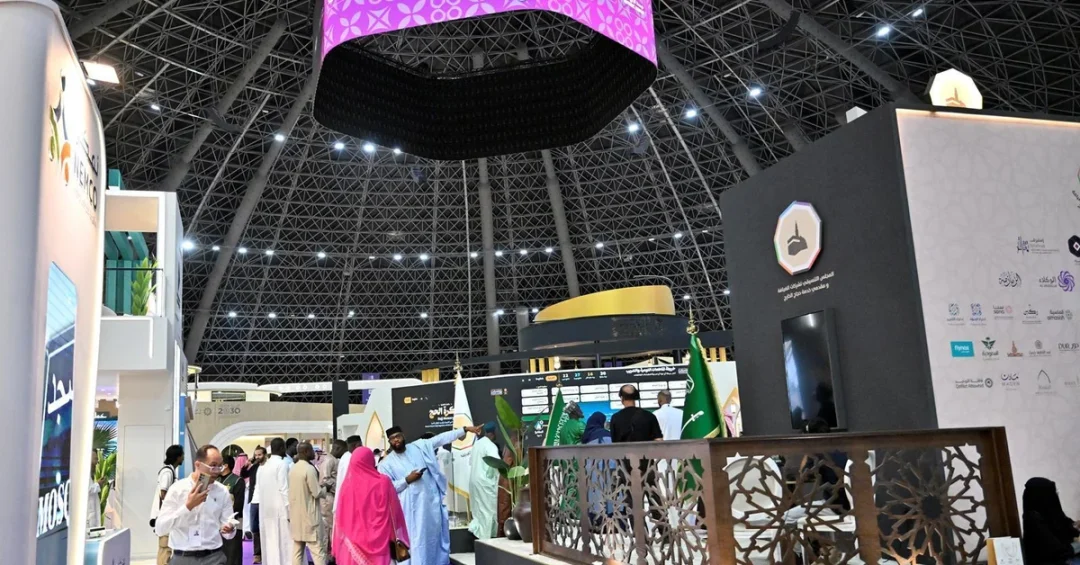
Field health teams deployed across Makkah and the holy sites play a central role in guiding pilgrims and strengthening health awareness, a senior Saudi health official said during a session at the Hajj Talk platform accompanying the Hajj Conference and Exhibition at the Jeddah Superdome. Dr. Hatem bin Ahmed Al-Omari, Chief Executive Officer of the Makkah Health Cluster, reviewed the contribution of these teams during a session titled “The Field Role and Its Impact on Changing Behavior and Strengthening Awareness among the Guests of Allah,” according to the Saudi Press Agency. The session examined how coordinated field work supports the health and wellbeing of the millions of pilgrims who travel to the Kingdom each year.
The discussion forms part of a broader program of expert dialogue hosted on the Hajj Talk platform, which runs alongside the Hajj Conference and Exhibition in Jeddah. Bringing together health specialists, administrators, and field practitioners, the platform serves as a forum for sharing operational experience and improving services for pilgrims. For an international audience, the session offers a detailed look at how Saudi Arabia organizes preventive health care at one of the world’s largest annual gatherings.
Context and Background
How does a health system prepare for the arrival of millions of visitors in a matter of weeks? The answer, as presented at the Jeddah session, lies in layered planning that begins long before pilgrims reach the Kingdom. Dr. Al-Omari explained that health awareness accompanies pilgrims throughout their entire journey, from remote awareness campaigns before arrival to multilingual messaging in Makkah accommodations and organized preventive health tours. This continuum of care reflects the scale and complexity of the Hajj season and the institutional coordination required to manage it.
The Makkah Health Cluster is one of the key bodies responsible for delivering health services in the Makkah region, and its leadership role in the session underscores the priority Saudi authorities place on pilgrim welfare. The session also addressed the broader scope of field teams’ work in community health, risk assessment, and public health operations, including epidemiological surveillance, infection control, and vaccination programs. Together, these functions form an integrated system designed to anticipate health risks and respond quickly when they arise.
Such preparation is not new, but it has become increasingly sophisticated as Saudi Arabia continues to invest in the quality of services provided to the Guests of Allah. The Hajj Conference and Exhibition itself illustrates this commitment, offering a venue where government agencies, health institutions, and service providers can align their efforts and share best practice.
Field Operations and Awareness Tools
What does health awareness look like on the ground during Hajj? According to Dr. Al-Omari, the answer combines human expertise with practical tools tailored to a highly international population. Awareness efforts extend to health education in pilgrims’ accommodations and camps, as well as to environmental health and vector control measures that protect public health in crowded settings. These activities are carried out by field teams who work directly among pilgrims, observing conditions and responding to needs in real time.
Communication is central to this effort. The CEO noted that awareness materials are delivered in pilgrims’ own languages, including multilingual health content displayed on billboards and health assistant cards featuring an interactive map that guides users to the nearest health facility. This approach recognizes that clear, accessible information in a pilgrim’s native language can make the difference between timely care and avoidable complications. By meeting pilgrims where they are, both linguistically and geographically, the field teams help translate health guidance into everyday behavior.
The session also highlighted that these efforts extend to the holy sites, where targeted awareness and field interventions address specific risks. Among the challenges discussed were managing heat stress in Mina and treating foot injuries, common concerns during the physically demanding rituals of Hajj. Field interventions of this kind demonstrate how health authorities adapt their messaging and services to the particular conditions of each stage of the pilgrimage.
International and Regional Impact
Why should the international community take note of these field-level efforts? Pilgrims arrive in Saudi Arabia from more than a hundred countries, making the Hajj season a genuinely global public health undertaking. The multilingual awareness campaigns, epidemiological surveillance, and infection control measures described at the session are designed to protect not only individual pilgrims but also the broader goal of preventing the cross-border spread of disease. This dimension gives Saudi Arabia’s pilgrim health work significance well beyond its borders.
The session comes as Saudi authorities continue to expand the range of services available to pilgrims and to document their approach through international forums. By presenting its field methodology at the Hajj Conference and Exhibition, the Kingdom shares operational knowledge with partners and demonstrates the maturity of its health infrastructure. For regional neighbors and international health organizations alike, the Makkah model offers a reference point for managing mass gatherings safely and humanely.
Economic and Strategic Significance
What do these investments mean for Saudi Arabia’s wider ambitions? Efficient, well-organized health services are an essential component of the Kingdom’s efforts to host larger numbers of pilgrims comfortably and safely, a priority that carries both religious and economic weight. The Hajj and Umrah sectors support a wide network of service industries, and the quality of care available to pilgrims influences the Kingdom’s reputation as a destination. Reliable field health operations therefore contribute directly to the sustainability of this vital sector.
Beyond the pilgrimage itself, the systems developed for Hajj — surveillance networks, multilingual communication platforms, and rapid field response — have broader applications in public health management. The emphasis on data-driven risk assessment and coordinated field teams reflects a strategic approach that strengthens institutional capacity across the health sector. These capabilities align with the Kingdom’s long-term objective of building world-class services that serve both residents and visitors.
Vision 2030 Alignment
How does this work connect to the Kingdom’s long-term vision? Saudi Arabia’s Vision 2030 places the wellbeing of citizens and visitors at the center of national development, and the pilgrim health initiatives described at the Jeddah session embody that principle in concrete terms. By investing in preventive care, multilingual awareness, and professional field teams, the Kingdom is enhancing the quality of life for the millions who undertake the pilgrimage each year while reinforcing its role as a trusted steward of the holy sites.
The Hajj Talk platform and the Hajj Conference and Exhibition demonstrate how Saudi institutions are translating Vision 2030 into action through collaboration, innovation, and a commitment to continuous improvement. As the Kingdom prepares for future seasons, the lessons shared at this session will help shape even more effective services for the Guests of Allah, ensuring that pilgrims from around the world can perform their rituals in safety, dignity, and comfort.
20 Questions
Q1. What was the main topic of the session held at the Hajj Talk platform?
A1. The session reviewed the role of field teams in guiding pilgrims and enhancing health awareness, under the title “The Field Role and Its Impact on Changing Behavior and Strengthening Awareness among the Guests of Allah.”
Q2. Who led the session at the Hajj Conference and Exhibition?
A2. Dr. Hatem bin Ahmed Al-Omari, Chief Executive Officer of the Makkah Health Cluster, led the session, according to the Saudi Press Agency.
Q3. Where was the Hajj Talk platform held?
A3. The platform accompanied the Hajj Conference and Exhibition at the Jeddah Superdome in Jeddah.
Q4. What areas of public health work did the session address?
A4. The session addressed community health, risk assessment, epidemiological surveillance, infection control, vaccination, and environmental health and vector control.
Q5. How does health awareness follow pilgrims throughout their journey?
A5. It begins with remote awareness before arrival, continues with multilingual messaging in Makkah accommodations, and includes preventive health tours.
Q6. What specific risks are addressed at the holy sites?
A6. Targeted awareness and field interventions manage heat stress in Mina and treat foot injuries, which are common concerns during the pilgrimage.
Q7. In what format is health information made available to pilgrims?
A7. Awareness materials include multilingual health content on billboards and health assistant cards with an interactive map to the nearest health facility.
Q8. Why is multilingual communication important in pilgrim health care?
A8. Pilgrims come from many countries, so clear information in their own languages helps them understand guidance and seek care promptly when needed.
Q9. What is the role of field teams during Hajj?
A9. Field teams work directly among pilgrims to educate, assess risks, support infection control, and respond to health needs in accommodations, camps, and holy sites.
Q10. What is the Makkah Health Cluster?
A10. It is a key Saudi health body responsible for delivering and coordinating health services in the Makkah region, including services for pilgrims.
Q11. Where does health education take place for pilgrims?
A11. Health education is provided in pilgrims’ accommodations and camps, as well as through preventive tours and field interventions at the holy sites.
Q12. How does the session’s work support infection control?
A12. Field teams conduct epidemiological surveillance and infection control measures to protect public health in crowded settings during the Hajj season.
Q13. What is the significance of the health assistant cards mentioned?
A13. The cards feature an interactive map that guides pilgrims to the nearest health facility, making it easier to access care quickly.
Q14. Why is environmental health part of the field teams’ work?
A14. Environmental health and vector control protect pilgrims from preventable risks and help maintain safe, clean conditions in camps and accommodations.
Q15. Who benefits from these awareness efforts?
A15. The efforts benefit the Guests of Allah, the millions of pilgrims who travel to the Kingdom, by supporting their health and safety throughout the pilgrimage.
Q16. What does the Hajj Conference and Exhibition provide?
A16. It provides a forum for health specialists, government agencies, and service providers to share expertise and improve services for pilgrims.
Q17. How do field interventions adapt to conditions at Mina?
A17. Field teams provide targeted awareness and interventions to manage heat stress, helping pilgrims cope with the demanding physical conditions at the holy sites.
Q18. What does the session reveal about Saudi Arabia’s approach to pilgrim care?
A18. It reveals a coordinated, preventive approach that combines planning, multilingual communication, and on-the-ground field teams to safeguard pilgrims’ health.
Q19. Why is this session important for an international audience?
A19. Because pilgrims come from around the world, Saudi Arabia’s health measures have global public health relevance and demonstrate a model for mass gatherings.
Q20. How does this work connect to Vision 2030?
A20. Vision 2030 prioritizes the wellbeing of citizens and visitors, and these health initiatives enhance quality of life for pilgrims and reinforce the Kingdom’s role as steward of the holy sites.
Reader Feedback
We value your thoughts. Please share your feedback on this article.
Your feedback helps us improve our coverage.
Related articles
 Hajj Conference Highlights Healthcare Volunteering Growth
 Four Aseer Health Centers Earn Baby-Friendly Designation
 Madinah Health Cluster Wins Six ICXA 2026 Awards in London
 Saudi NIH Launches GrantLens for Research Transparency
 Najran Health Cluster Wins Silver at London CX Awards
 KSrelief Supports Mogadishu Blood Bank, Aiding 413