



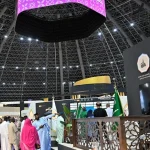
Jeddah Second Health Cluster has spotlighted its achievements in delivering healthcare services to pilgrims during the 1447 AH Hajj season, presenting its work at the Hajj Conference and Exhibition. The cluster is participating within the pavilion dedicated to Saudi Arabia’s health clusters, operating under the umbrella of the Health Holding Company, where it is showcasing the breadth of the Kingdom’s healthcare ecosystem, its available resources, key performance indicators, and the major milestones recorded throughout the pilgrimage season.
The presentation reflects a coordinated national effort to safeguard the health of millions of worshippers who travel to the holy sites each year. By sharing its operational data and clinical outcomes at a dedicated exhibition, the cluster offers international observers a transparent view of how Saudi Arabia organizes large-scale medical care during one of the world’s most logistically demanding annual gatherings. Could any undertaking demand more precise coordination than caring for millions of pilgrims in a compressed window of time and space?
Context and Background
The Jeddah Second Health Cluster operates as part of an integrated healthcare system that brings together five clusters serving the western region and the holy sites: Jeddah First Health Cluster, Makkah Health Cluster, Taif Health Cluster, and Madinah Health Cluster. Together, these five entities manage a vast network that includes 44 general hospitals, 13 specialized hospitals, 473 primary healthcare centers, and two medical cities, with a combined capacity of 12,406 beds. This infrastructure is designed to provide comprehensive care to pilgrims across every stage of their journey.
The Hajj Conference and Exhibition serves as a platform where these clusters present their collective capabilities to an international audience of health professionals, researchers, and policymakers. The event underscores how Saudi Arabia’s health sector has evolved from isolated facilities into a unified, data-driven network capable of responding to seasonal surges in demand. Why does such integration matter so much during the Hajj season, when patient volumes can multiply within days?
The cluster’s participation is framed under the Health Holding Company, a structure established to modernize the management of public hospitals and health services across the Kingdom. By aligning the five clusters beneath a single corporate umbrella, Saudi Arabia has created a model in which resources, expertise, and performance metrics can be shared and benchmarked. This approach allows each cluster to learn from the others and to standardize quality of care across the entire pilgrimage corridor.
Key Details of the Cluster’s Hajj Operations
At the exhibition, the Jeddah Second Health Cluster is detailing the range of services it provided during the 1447 AH Hajj season, including emergency care, preventive screenings, chronic disease management, and specialized treatment for vulnerable pilgrim groups such as the elderly. The cluster’s pavilion highlights the resources deployed, the staffing levels maintained, and the performance indicators used to monitor patient outcomes in real time. These disclosures demonstrate a commitment to accountability and continuous improvement in service delivery.
The cluster’s stated strategic objectives guide this work: improving healthcare delivery, strengthening preventive care, enhancing the patient experience, increasing operational efficiency, and facilitating access to care in line with the highest standards of quality and safety. Each of these pillars is reflected in the operational data presented at the conference. How else can a health system prove its readiness than by opening its performance records to peer review and public scrutiny?
The exhibition also provides a venue for knowledge exchange. Health leaders from the five clusters can compare protocols, discuss emerging challenges, and identify opportunities to refine the pilgrim care model for future seasons. This collaborative dynamic is central to the Kingdom’s approach, in which lessons learned in one facility are rapidly transmitted across the network to raise standards everywhere. The result is a continuously improving system that treats each Hajj season as both a test and an opportunity to advance.
International and Regional Impact
The scale of the healthcare operation presented by the Jeddah Second Health Cluster carries implications well beyond Saudi Arabia’s borders. Pilgrims arrive from more than 180 countries, many with pre-existing medical conditions or specific cultural and linguistic needs. The cluster’s ability to deliver integrated, high-quality care to such a diverse population offers a model that international health organizations and other host nations can study. Regional neighbors managing large seasonal gatherings or mass events may find valuable lessons in the Saudi approach.
Moreover, the transparency demonstrated at the Hajj Conference and Exhibition reinforces the Kingdom’s reputation as a capable and responsible steward of the annual pilgrimage. International media, medical delegations, and global health bodies observe these presentations closely, and the data shared helps build confidence in the safety and reliability of the Hajj experience. In a world where public health credibility is earned through evidence, Saudi Arabia’s willingness to publish its metrics speaks volumes about its institutional maturity.
Economic and Strategic Significance
The healthcare achievements highlighted by the cluster also carry economic weight. A well-functioning health system during Hajj protects the Kingdom’s tourism and pilgrimage economy by ensuring that the millions of visitors who contribute to local commerce, hospitality, and transportation can travel and worship with confidence. Reducing medical emergencies through preventive care and early intervention lowers the burden on hospitals and improves overall efficiency, freeing resources for other priorities.
Strategically, the integrated cluster model supports the broader modernization of Saudi Arabia’s health sector, attracting investment, talent, and international partnerships. By demonstrating operational excellence at scale, the clusters strengthen the case for continued reform and for the expansion of digital health tools, telemedicine, and data analytics across the network. When a system can perform under the pressure of Hajj, what limit remains on what it can achieve the rest of the year?
Vision 2030 Alignment
These efforts directly support the objectives of the Health Sector Transformation Program, a key initiative under Saudi Vision 2030 aimed at providing integrated, high-quality healthcare services to pilgrims and citizens alike. The program seeks to shift the health system from fragmented care toward a coordinated, patient-centered model, and the five-cluster structure serving the holy sites is a concrete expression of that ambition. The cluster’s work during the 1447 AH Hajj season is thus both an operational success and a validation of the Vision 2030 blueprint.
Looking ahead, the Jeddah Second Health Cluster’s participation in the Hajj Conference and Exhibition signals a forward-looking commitment to continuous improvement, international cooperation, and the highest standards of care. As Saudi Arabia continues to welcome growing numbers of pilgrims, the lessons captured this season will inform future planning and investment. In doing so, the Kingdom reaffirms its role as a global leader in large-scale public health management and a faithful custodian of the pilgrimage experience for generations to come.
20 Questions
Q1. What is the Jeddah Second Health Cluster highlighting at the Hajj Conference and Exhibition?
A1. It is highlighting its efforts and achievements in providing healthcare services to pilgrims during the 1447 AH Hajj season, including resources, key performance indicators, and major achievements.
Q2. Under whose umbrella is the Jeddah Second Health Cluster participating?
A2. It is participating in the pavilion dedicated to Saudi Arabia’s health clusters under the umbrella of the Health Holding Company.
Q3. Which five health clusters form the integrated healthcare system serving pilgrims?
A3. Jeddah Second Health Cluster, Jeddah First Health Cluster, Makkah Health Cluster, Taif Health Cluster, and Madinah Health Cluster.
Q4. How many general hospitals do the five clusters operate together?
A4. Together, the five clusters operate a network of 44 general hospitals serving pilgrims and residents across the western region and holy sites.
Q5. How many specialized hospitals are part of this network?
A5. The network includes 13 specialized hospitals, providing advanced care for pilgrims requiring specialized treatment during the Hajj season.
Q6. How many primary healthcare centers are operated by the clusters?
A6. The five clusters operate 473 primary healthcare centers, offering accessible first-line care to pilgrims throughout their journey.
Q7. What is the total bed capacity of the five-cluster network?
A7. The network has a total capacity of 12,406 beds, distributed across hospitals, specialized facilities, and two medical cities.
Q8. How many medical cities are included in the network?
A8. The network includes two medical cities, which provide comprehensive and specialized care to pilgrims during the Hajj season.
Q9. What are the strategic objectives of the Jeddah Second Health Cluster?
A9. Its objectives include improving healthcare delivery, strengthening preventive care, enhancing the patient experience, increasing operational efficiency, and facilitating access to care.
Q10. What standards does the cluster aim to uphold in service delivery?
A10. The cluster aims to uphold the highest standards of quality and safety in providing integrated healthcare services to pilgrims.
Q11. What does the pavilion showcase to visitors?
A11. The pavilion showcases the healthcare ecosystem, available resources, key performance indicators, and major achievements during the Hajj season.
Q12. Which Vision 2030 initiative does this work support?
A12. The efforts support the Health Sector Transformation Program, a key initiative under Saudi Vision 2030 to provide integrated healthcare services to pilgrims.
Q13. Why is the Hajj Conference and Exhibition significant?
A13. It serves as a platform for the health clusters to present their capabilities, share performance data, and exchange knowledge before an international audience.
Q14. How do the clusters benefit from operating under one umbrella?
A14. Operating under the Health Holding Company allows the clusters to share resources, expertise, and performance metrics, standardizing quality of care.
Q15. What role does preventive care play in the cluster’s strategy?
A15. Preventive care is a core objective, helping reduce medical emergencies and improving outcomes for pilgrims through early intervention and screenings.
Q16. How does the cluster enhance the patient experience?
A16. The cluster focuses on patient-centered care, facilitating access to services and improving comfort and outcomes throughout the pilgrimage journey.
Q17. What does increased operational efficiency mean in this context?
A17. It means optimizing resources, staffing, and workflows so that hospitals and centers can meet seasonal demand while maintaining quality and safety.
Q18. Who benefits from the cluster’s integrated healthcare model?
A18. Pilgrims from many countries benefit, along with residents, as the clusters provide comprehensive care across the western region and holy sites.
Q19. What is the broader significance of presenting metrics at the exhibition?
A19. It demonstrates transparency, accountability, and a commitment to continuous improvement, reinforcing confidence in the Kingdom’s healthcare capabilities.
Q20. How does this work reflect Saudi Arabia’s long-term vision?
A20. It advances Vision 2030’s Health Sector Transformation Program, positioning the Kingdom as a global leader in large-scale public health management.
Reader Feedback
We value your thoughts. Please share your feedback on this article.
Your feedback helps us improve our coverage.
Related articles
 Hajj Talk Session Reviews Field Teams’ Pilgrim Health Role
 Hajj Conference Highlights Healthcare Volunteering Growth
 Four Aseer Health Centers Earn Baby-Friendly Designation
 Madinah Health Cluster Wins Six ICXA 2026 Awards in London
 Saudi NIH Launches GrantLens for Research Transparency
 Najran Health Cluster Wins Silver at London CX Awards