


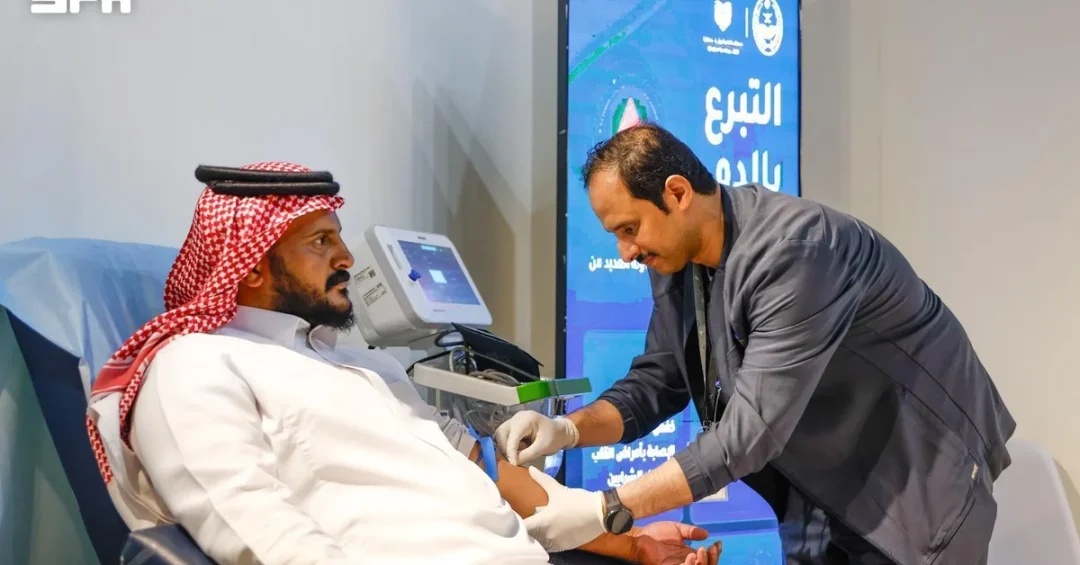
The Ministry of Interior’s General Department of Medical Services is operating a field clinic at the ministry’s pavilion during the sixth Hajj Conference and Exhibition, held at Jeddah Superdome from November 8 to 11, 2026. The clinic provides healthcare services and seasonal influenza vaccinations to visitors and participants, and is organizing a blood donation drive as part of the department’s efforts to promote public health and raise health awareness, according to the Saudi Press Agency (SPA).
Held under the patronage of the Ministry of Hajj and Umrah, the sixth Hajj Conference and Exhibition brings together a wide range of stakeholders from Saudi Arabia and around the world to discuss innovations, best practices, and strategic planning for the annual pilgrimage. The Ministry of Interior’s participation, through its General Department of Medical Services, underscores the integrated approach that Saudi Arabia takes to ensure the well-being of all those involved in Hajj operations. By offering on-site medical support and preventive care, the ministry is demonstrating its commitment to the health and safety of pilgrims, workers, and visitors alike. This initiative is not merely a logistical detail; it reflects the Kingdom’s broader dedication to public health as a cornerstone of its national development. How often do large-scale events prioritize the health of every attendee? At this conference, that priority is evident from the moment visitors step into the pavilion.
Context and Background
The Hajj Conference and Exhibition, now in its sixth edition, has become a key platform for showcasing the latest technologies, services, and research related to the Hajj pilgrimage. Organized by the Ministry of Hajj and Umrah, the event attracts thousands of participants, including government officials, private sector companies, academics, and health experts. The Ministry of Interior’s General Department of Medical Services has consistently played a vital role in safeguarding the health of pilgrims during Hajj, and its presence at the conference highlights the importance of proactive health measures. This year, the field clinic at the ministry’s pavilion offers a range of services, from general medical consultations to seasonal influenza vaccinations, addressing the specific health needs that arise during mass gatherings. Is it not essential to prepare for health challenges before they occur? The ministry’s approach exemplifies such foresight.
Seasonal influenza poses a particular risk in crowded environments like Hajj, where millions of people from diverse regions come together. Vaccination is a proven method to reduce the spread of the virus and prevent complications, especially among the elderly and those with pre-existing conditions. By providing these vaccinations at the conference, the Ministry of Interior is not only protecting individual attendees but also contributing to the overall resilience of the Hajj ecosystem. The blood donation drive further amplifies this impact, as it helps maintain adequate blood supplies for emergencies during Hajj and beyond. These efforts are part of a long-standing tradition of Saudi hospitality and care for visitors, which is deeply rooted in the Kingdom’s values and reinforced by its modern healthcare infrastructure.
Key Details
The field clinic is located at the Ministry of Interior’s pavilion within the Jeddah Superdome, a state-of-the-art venue that hosts the four-day conference and exhibition. Visitors and participants can receive free healthcare services, including check-ups and consultations, without the need for prior appointments. The seasonal influenza vaccinations are administered by qualified medical professionals, ensuring safety and efficacy. In addition, the blood donation drive invites attendees to contribute to a noble cause, with all collected units being processed and stored according to international standards. The ministry’s General Department of Medical Services has a track record of managing health services during Hajj, and its experience is evident in the smooth operation of these activities. What better way to demonstrate care than by offering tangible health benefits? The clinic’s presence at the conference is a practical extension of the ministry’s year-round commitment to public health.
The sixth Hajj Conference and Exhibition itself features numerous workshops, seminars, and exhibitions focused on enhancing the pilgrim experience. Topics range from crowd management and transportation to digital solutions and health services. The Ministry of Interior’s participation aligns with the conference’s overarching theme of innovation and collaboration. By providing direct health services, the ministry is also gathering valuable data and feedback that can inform future planning. For instance, the uptake of influenza vaccinations and the number of blood donations can help assess public engagement and guide awareness campaigns. This dual approach—service delivery and data collection—is characteristic of Saudi Arabia’s evidence-based policymaking. How can we improve without measuring? The ministry’s efforts are a model for integrating health services into large-scale events.
International and Regional Impact
The Hajj Conference and Exhibition attracts an international audience, with delegations from various countries and international organizations. The Ministry of Interior’s health initiatives at the event send a positive message about Saudi Arabia’s capabilities in managing mass gatherings and ensuring public health. For regional neighbors, especially those with large Muslim populations, the Kingdom’s best practices serve as a valuable reference. The blood donation drive, in particular, highlights the universal importance of altruism and community support. By showcasing these services, Saudi Arabia reinforces its role as a global leader in pilgrimage management and healthcare. Is it not inspiring to see a nation lead by example? The international community has consistently recognized Saudi Arabia’s efforts in this domain.
Moreover, the conference provides a platform for knowledge exchange. Health experts from different countries can observe the ministry’s operations and share their own experiences. This cross-pollination of ideas can lead to improved health protocols for mass gatherings worldwide. The Ministry of Interior’s field clinic is a tangible representation of Saudi Arabia’s soft power—its ability to positively influence through service and expertise. In a world where health security is a shared concern, such initiatives foster goodwill and cooperation. The Kingdom’s commitment to the well-being of all visitors, regardless of nationality, is a testament to its humanitarian values and its adherence to international health standards.
Economic and Strategic Significance
While the provision of healthcare services at the conference may appear primarily humanitarian, it also has economic and strategic dimensions. A healthy Hajj season is crucial for the Kingdom’s economy, as Hajj and Umrah generate significant revenue and support thousands of jobs. By preventing disease outbreaks and ensuring the health of pilgrims and workers, the Ministry of Interior helps safeguard this vital sector. The blood donation drive contributes to the readiness of the healthcare system, potentially reducing the need for costly emergency interventions. Furthermore, the positive image generated by such initiatives can enhance Saudi Arabia’s attractiveness as a destination for religious tourism and international events. Does a healthy nation not prosper more? The linkage between public health and economic vitality is undeniable.
Strategically, the ministry’s involvement in the conference reinforces the integrated governance approach that Saudi Arabia has adopted for Hajj. Multiple ministries and agencies work together under the umbrella of Vision 2030 to deliver a seamless experience. The General Department of Medical Services, with its specialized expertise, plays a critical role in this ecosystem. Its presence at the conference also signals to potential partners and investors that the Kingdom is serious about maintaining high standards in all aspects of Hajj operations. This can lead to further collaborations in healthcare technology, training, and infrastructure. The strategic value of such soft power should not be underestimated.
Vision 2030 Alignment
The Ministry of Interior’s health services at the Hajj Conference and Exhibition are closely aligned with Saudi Vision 2030, particularly its goals of enhancing the quality of life, improving public health, and strengthening the Kingdom’s position as a global leader in serving pilgrims. Vision 2030 emphasizes the development of a robust healthcare system and the promotion of preventive care, both of which are exemplified by the field clinic and vaccination drive. Additionally, the conference itself supports the vision’s objective of attracting more visitors and facilitating a smooth Hajj experience. By participating actively, the Ministry of Interior contributes to the realization of these ambitious targets. How can a nation achieve greatness without caring for its people and guests? Saudi Arabia’s leadership understands that health is the foundation of prosperity.
Looking ahead, the ministry’s initiatives at the conference are likely to expand and evolve, incorporating more advanced technologies and data-driven approaches. The feedback and data collected will inform future Hajj planning, ensuring continuous improvement. As the Kingdom prepares for even larger numbers of pilgrims in the coming years, such proactive health measures will be indispensable. The Ministry of Interior’s dedication to public health and safety is a shining example of Saudi Arabia’s forward-looking vision and its unwavering commitment to the well-being of all. In every vaccination administered and every blood unit donated, there is a story of care, competence, and national pride.
20 Questions
Q1. What is the Ministry of Interior’s General Department of Medical Services doing at the sixth Hajj Conference and Exhibition?
A1. It is operating a field clinic at the ministry’s pavilion, providing healthcare services, seasonal influenza vaccinations, and organizing a blood donation drive for visitors and participants.
Q2. Where and when is the sixth Hajj Conference and Exhibition taking place?
A2. The event is held at Jeddah Superdome from November 8 to 11, 2026, bringing together local and international stakeholders in Hajj operations.
Q3. What specific health services are offered at the field clinic?
A3. The clinic offers general medical consultations, check-ups, and seasonal influenza vaccinations, all administered by qualified medical professionals at no cost to attendees.
Q4. Why is seasonal influenza vaccination important during Hajj-related events?
A4. It helps prevent the spread of influenza in crowded environments, protecting vulnerable individuals and reducing the risk of complications among pilgrims and workers.
Q5. Who can benefit from the field clinic’s services?
A5. All visitors and participants at the conference can benefit, including government officials, exhibitors, health experts, and support staff from various countries.
Q6. What is the purpose of the blood donation drive?
A6. It aims to collect blood units to maintain adequate supplies for emergencies during Hajj and to promote a culture of altruism and community support.
Q7. How does this initiative reflect Saudi Arabia’s commitment to public health?
A7. It demonstrates the Kingdom’s proactive approach to health care, ensuring the well-being of all involved in Hajj activities and aligning with Vision 2030 health goals.
Q8. Is the clinic’s presence at the conference a new initiative?
A8. The Ministry of Interior has a long history of providing medical services during Hajj; this is an extension of its ongoing efforts at a major industry event.
Q9. What role does the Ministry of Hajj and Umrah play in the conference?
A9. The Ministry of Hajj and Umrah organizes the conference, which serves as a platform for innovation, collaboration, and planning to enhance the pilgrim experience.
Q10. How does the blood donation drive support Hajj operations?
A10. It helps ensure that hospitals and clinics have sufficient blood supplies to handle any emergencies during the Hajj season, contributing to overall health security.
Q11. Are the vaccinations free of charge?
A11. Yes, the seasonal influenza vaccinations are provided free of charge to all visitors and participants at the ministry’s pavilion.
Q12. What qualifications do the medical staff at the clinic have?
A12. The staff are qualified medical professionals from the Ministry of Interior’s General Department of Medical Services, experienced in providing care during mass gatherings.
Q13. How does this initiative align with Saudi Vision 2030?
A13. It supports Vision 2030’s objectives of improving public health, enhancing quality of life, and strengthening the Kingdom’s capacity to host Hajj and Umrah.
Q14. Can international participants also receive services at the clinic?
A14. Yes, the clinic is open to all attendees, regardless of nationality, reflecting Saudi Arabia’s inclusive approach to health care.
Q15. What other activities is the Ministry of Interior involved in at the conference?
A15. The ministry showcases its various services and technologies related to Hajj security, crowd management, and emergency response, in addition to the health clinic.
Q16. How does the conference benefit from the ministry’s participation?
A16. It adds a practical dimension to the event, allowing participants to experience firsthand the integrated health and safety measures that support Hajj operations.
Q17. What happens to the blood collected during the drive?
A17. The blood is processed, tested, and stored according to international standards, then distributed to hospitals and blood banks for use during Hajj and other emergencies.
Q18. Is there a limit to the number of vaccinations or blood donations?
A18. The clinic aims to serve as many attendees as possible within the conference hours, with sufficient supplies and staff to meet demand.
Q19. How does this initiative contribute to Saudi Arabia’s global image?
A19. It showcases the Kingdom’s advanced healthcare capabilities and its dedication to the well-being of all, reinforcing its reputation as a responsible global leader.
Q20. What is the ultimate goal of these health services at the Hajj Conference?
A20. The goal is to promote public health, prevent disease, and ensure the safety of all participants, while supporting the continuous improvement of Hajj services in line with Vision 2030.
Reader Feedback
We value your thoughts. Please share your feedback on this article.
Your feedback helps us improve our coverage.
Related articles
 Najran Health Branch Wins Four International CX Awards in London
 KFSH Receives Gold Accreditation from IC-OS
 Jeddah Second Health Cluster Showcases Hajj Care Efforts
 Hajj Talk Session Reviews Field Teams’ Pilgrim Health Role
 Hajj Conference Highlights Healthcare Volunteering Growth
 Four Aseer Health Centers Earn Baby-Friendly Designation