


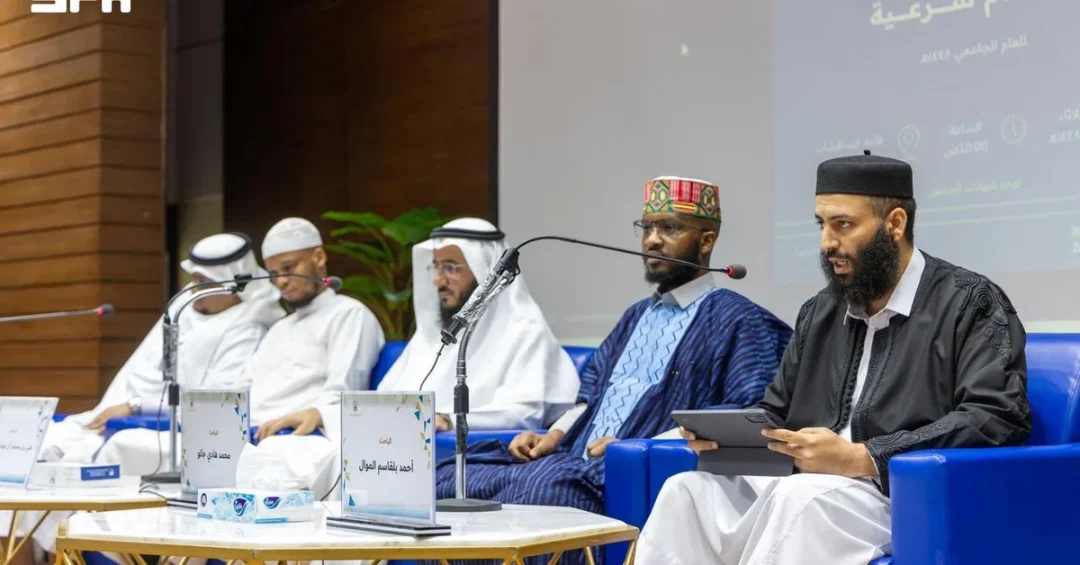
The Islamic University of Madinah convened a specialized forum titled “Artificial Intelligence (AI): Contemporary Issues and Shariah Rulings” on Tuesday, bringing together researchers to examine how Islamic jurisprudence, law, and the judiciary should respond to the rapid spread of artificial intelligence across modern life. The event, held as part of the university’s second Graduate Studies Week, was reported by the Saudi Press Agency and reflects a growing institutional effort in the Kingdom to align technological progress with Sharia principles.
The forum was organized around three research themes covering jurisprudential, legal, and judicial studies, delivered through five research papers. These papers examined Shariah rulings related to AI applications and assessed the impact of modern technologies on contracts, liability, fatwas, and the judiciary. The gathering underlines how Saudi Arabia’s academic institutions are engaging proactively with frontier technologies rather than reacting to them, a posture consistent with the Kingdom’s wider modernization agenda. For an international audience, the forum offers a window into how Islamic legal scholarship is adapting to the age of intelligent machines.
Context and Background
Why does a university forum on artificial intelligence matter beyond the lecture hall? The answer lies in the sheer reach of AI into daily transactions, from automated contracts to algorithmic advisory tools, which raises questions that existing legal frameworks are only beginning to address. The Islamic University of Madinah, long recognized as a center for Sharia scholarship, positioned the forum within its Graduate Studies Week to connect emerging research with the practical challenges facing jurists, lawyers, and judges.
The university’s decision to dedicate a forum to this subject reflects a broader recognition across Saudi institutions that technology governance cannot be separated from legal and ethical reasoning. Islamic jurisprudential principles, including the objectives of Sharia, offer a framework for assessing whether and how AI tools should be adopted in matters of contract, obligation, and dispute resolution. By grounding the discussion in these principles, the forum sought to provide scholarly guidance that can inform regulation and practice.
The event also builds on a tradition of academic deliberation in the Kingdom, where universities serve as forums for examining contemporary issues through the lens of Islamic scholarship. The participation of researchers across jurisprudential, legal, and judicial specialties indicates that the conversation is not confined to one discipline. Instead, it brings together complementary perspectives that together can produce a more complete understanding of how AI intersects with Islamic law and the institutions that apply it.
Key Details and Research Themes
What exactly did the five research papers examine? According to the Saudi Press Agency, the papers focused on Shariah rulings connected to AI applications and on how modern technologies affect contracts, liability, fatwas, and the judiciary. These four areas represent some of the most consequential points of contact between AI and Islamic legal practice, and each carries implications for how individuals and institutions conduct their affairs.
On contracts, the papers considered how automated systems and algorithmic decision-making might alter the formation and execution of agreements, raising questions about consent, clarity, and the role of human agency. On liability, researchers examined who bears responsibility when an AI system causes harm, a question that becomes more pressing as autonomous tools take on tasks once performed by people. These deliberations matter because they help establish principles that can guide future legislation and judicial reasoning.
The papers also explored the impact of modern technologies on fatwas, the scholarly opinions issued to address religious and practical questions. As AI tools become more accessible, the process of seeking and issuing religious guidance may itself be affected, prompting scholars to consider how tradition and technology can coexist. Finally, the research addressed the judiciary, examining how courts might handle disputes involving AI and how judicial reasoning can remain grounded in Sharia objectives while adapting to new forms of evidence and transaction.
A further theme concerned the role of Islamic jurisprudential principles and the objectives of Sharia in regulating AI use. Rather than treating technology as inherently problematic, the research framed the objectives of Sharia as a guiding framework that can help distinguish beneficial applications from those that require caution. This approach emphasizes balance, public interest, and the preservation of core values as criteria for evaluating AI adoption.
International and Regional Impact
How might a scholarly forum in Madinah resonate beyond Saudi Arabia? The Kingdom’s academic and religious institutions carry significant influence across the Islamic world, and deliberations on AI and Sharia are likely to be watched closely by scholars, regulators, and policymakers in many countries. By articulating principles for evaluating AI through Islamic jurisprudence, the forum contributes to a global conversation about technology ethics that is not limited to Western legal traditions.
For international observers, the event signals that Saudi Arabia is actively shaping the ethical dimensions of the AI era rather than simply importing frameworks developed elsewhere. This aligns with the Kingdom’s growing role in global dialogues on technology governance, where it has increasingly emphasized responsible innovation. The forum’s emphasis on contracts, liability, and the judiciary offers concrete themes that other jurisdictions may study as they develop their own approaches to AI regulation.
The regional dimension is equally important. As Gulf economies accelerate digital transformation, legal and religious institutions must keep pace with new forms of commerce and communication. The forum’s findings could inform how courts and regulatory bodies across the region approach disputes involving automated systems, providing a shared reference point grounded in Islamic legal reasoning. This collaborative scholarly effort strengthens the region’s capacity to manage technological change with confidence.
Economic and Strategic Significance
Why should economic observers pay attention to a jurisprudence forum? Legal certainty is a foundation of economic activity, and the emergence of AI in contracts and transactions requires clear rules so that businesses and individuals can act with confidence. By examining how Sharia principles apply to AI, the forum contributes to the legal clarity that investors and entrepreneurs need as they adopt new technologies in Saudi Arabia and across the region.
The strategic significance extends to the Kingdom’s broader modernization journey. As Saudi Arabia advances its digital economy, the alignment of legal and religious scholarship with technological change helps ensure that innovation proceeds on a stable and trusted foundation. The forum demonstrates that the Kingdom’s institutions are thinking ahead, anticipating the legal questions that AI will raise and preparing scholarly guidance before those questions become urgent. This forward planning supports a business environment where technology can be adopted responsibly.
Furthermore, the emphasis on the objectives of Sharia as a regulatory guide reflects a mature approach to governance that balances openness to innovation with the preservation of societal values. For international partners, this signals predictability and principle in how Saudi Arabia will approach emerging technologies. Such signals are valuable in attracting investment and fostering collaboration in fields such as fintech, automated services, and digital platforms, where legal clarity is essential to growth.
Vision 2030 Alignment
How does a university forum connect to Saudi Arabia’s long-term vision? Vision 2030 places education, innovation, and the empowerment of national institutions at the heart of the Kingdom’s transformation, and the Islamic University of Madinah’s initiative reflects these priorities in action. By convening scholars to address contemporary AI issues, the university contributes to the knowledge economy that Vision 2030 seeks to build, while reinforcing the ethical and legal foundations that sustain it.
The forum also embodies the vision’s emphasis on leadership in the Islamic world and on responsible modernization. Saudi Arabia’s institutions are demonstrating that tradition and technology can advance together, with Sharia principles serving as a compass rather than an obstacle. As the Kingdom continues to invest in artificial intelligence and digital infrastructure, scholarly deliberations of this kind help ensure that progress remains aligned with national values and the aspirations of Vision 2030.
Looking forward, the Islamic University of Madinah’s forum stands as an example of how academic research can inform public policy and professional practice. The questions raised about contracts, liability, fatwas, and the judiciary will continue to evolve as AI systems grow more capable, and ongoing scholarly engagement will be essential. The Kingdom’s commitment to this dialogue positions it as a constructive voice in the global conversation on technology and ethics, consistent with its vision of a prosperous and forward-looking society.
20 Questions
Q1. What was the title of the forum held by the Islamic University of Madinah?
A1. The forum was titled “Artificial Intelligence (AI): Contemporary Issues and Shariah Rulings.” It was held on Tuesday as part of the university’s second Graduate Studies Week, according to the Saudi Press Agency.
Q2. How many research themes and papers were featured at the forum?
A2. The forum addressed three research themes covering jurisprudential, legal, and judicial studies. These themes were delivered through five research papers examining Shariah rulings and modern technologies.
Q3. Which specific areas did the research papers examine?
A3. The papers examined Shariah rulings related to AI applications and the impact of modern technologies on contracts, liability, fatwas, and the judiciary. They also explored Islamic jurisprudential principles for regulating AI.
Q4. Why is the Islamic University of Madinah well suited to host this discussion?
A4. The university is a recognized center for Sharia scholarship. Its Graduate Studies Week provides a forum for connecting emerging research with practical challenges facing jurists, lawyers, and judges in the modern era.
Q5. What role do the objectives of Sharia play in regulating AI?
A5. The objectives of Sharia serve as a guiding framework for evaluating AI use. They help distinguish beneficial applications from those requiring caution, emphasizing balance, public interest, and preservation of core values.
Q6. How might AI affect the formation of contracts under Islamic law?
A6. Researchers considered how automated systems and algorithmic decision-making might alter the formation and execution of agreements. Questions about consent, clarity, and human agency were central to these deliberations.
Q7. What liability questions arise when AI systems cause harm?
A7. The papers examined who bears responsibility when an AI system causes harm. This question grows more pressing as autonomous tools take on tasks once performed by people.
Q8. How could AI influence the issuance of fatwas?
A8. As AI tools become more accessible, the process of seeking and issuing religious guidance may be affected. Scholars are considering how tradition and technology can coexist responsibly.
Q9. What did the research say about the judiciary and AI?
A9. The research examined how courts might handle disputes involving AI and how judicial reasoning can remain grounded in Sharia objectives while adapting to new forms of evidence and transaction.
Q10. Why does this forum matter to an international audience?
A10. Saudi Arabia’s academic and religious institutions carry influence across the Islamic world. The forum contributes to a global conversation about technology ethics grounded in Islamic jurisprudence.
Q11. How does the forum reflect Saudi Arabia’s approach to technology?
A11. It shows the Kingdom engaging proactively with frontier technologies. Institutions are anticipating legal and ethical questions rather than reacting to them after the fact.
Q12. What economic value comes from clarifying AI rules in contracts and liability?
A12. Legal certainty is a foundation of economic activity. Clear rules help businesses and individuals adopt new technologies with confidence, supporting investment and growth.
Q13. How does the forum connect to Vision 2030?
A13. Vision 2030 emphasizes education, innovation, and empowered national institutions. The forum contributes to the knowledge economy while reinforcing the ethical and legal foundations that sustain it.
Q14. Does the forum treat technology as a threat?
A14. No. The research framed the objectives of Sharia as a guiding framework that can help distinguish beneficial applications from those requiring caution, reflecting a balanced approach.
Q15. What regional impact could the forum’s findings have?
A15. As Gulf economies accelerate digital transformation, the forum’s findings could inform how courts and regulatory bodies approach disputes involving automated systems, providing a shared reference point.
Q16. Which institution reported on the forum?
A16. The Saudi Press Agency reported on the forum, identifying the event and its research themes in an official dispatch from Madinah dated November 11.
Q17. What does the forum suggest about tradition and modernization?
A17. It suggests that tradition and technology can advance together. Sharia principles serve as a compass for evaluating innovation rather than as an obstacle to progress.
Q18. Why is interdisciplinary participation important at the forum?
A18. The participation of jurisprudential, legal, and judicial specialists brings complementary perspectives. Together these disciplines produce a more complete understanding of AI’s intersection with Islamic law.
Q19. What future work might follow from this forum?
A19. The questions raised about contracts, liability, fatwas, and the judiciary will evolve as AI grows more capable. Ongoing scholarly engagement will be essential to inform policy and practice.
Q20. How does the forum support Saudi Arabia’s global role?
A20. It positions the Kingdom as a constructive voice in the global conversation on technology and ethics, consistent with its vision of a prosperous, forward-looking society and responsible modernization.
Reader Feedback
We value your thoughts. Please share your feedback on this article.
Your feedback helps us improve our coverage.
Related articles
 Light to Moderate Rain Falls in Riyadh, SPA Reports
 Hail Governor Launches Quality and Sustainability Forum 2026
 Saudi Consumer Protection Law Boosts Rights, Curb
 Madinah Buses Now Accepts Tawakkalna App Tickets
 Hadiyah Association Celebrates Serving Over 300 Million Pilgrims and Visitors
 Moderate Rainfall Recorded in Hafar Al-Batin