


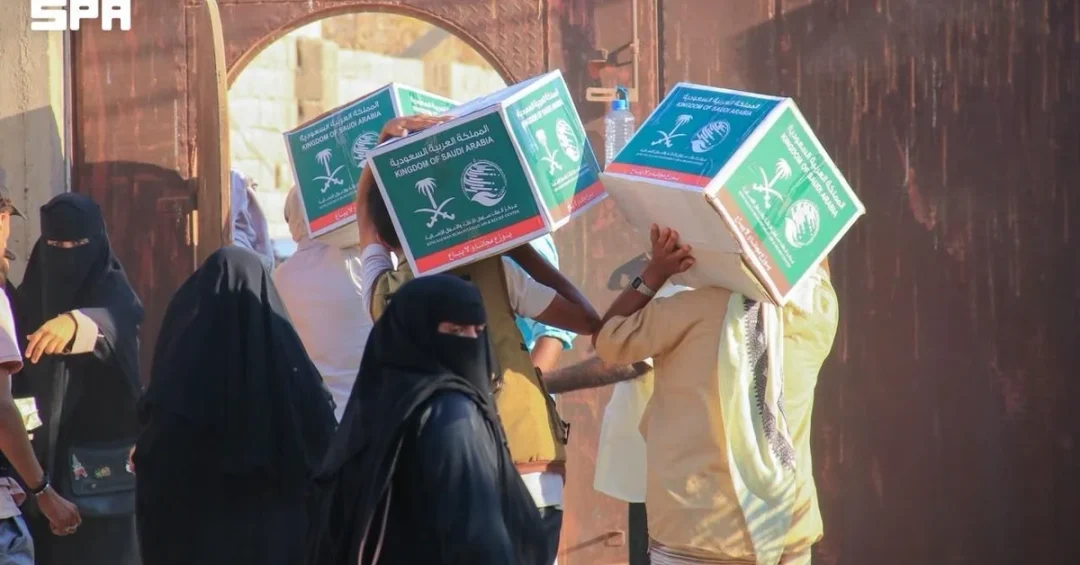
The King Salman Humanitarian Aid and Relief Center (KSrelief) distributed 690 food baskets on Friday to displaced and host families in Al-Buraiqa and Al-Mansoura districts of Aden Governorate, Yemen, benefiting 3,214 people from 613 families, according to the Saudi Press Agency. The distribution is part of the 2026 emergency response project in Yemen and reflects the Kingdom of Saudi Arabia’s ongoing relief efforts through KSrelief to help the Yemeni people through the humanitarian crisis.
This latest delivery of food assistance underscores Saudi Arabia’s sustained commitment to alleviating suffering in Yemen, a neighboring country that has faced years of conflict and economic hardship. How does such targeted aid translate into tangible improvements for families struggling to meet basic needs? The distribution of food baskets provides immediate nutritional support to vulnerable households, many of whom have been displaced from their homes and are living in temporary settlements or with host communities. By focusing on Al-Buraiqa and Al-Mansoura, two densely populated districts in Aden, KSrelief is addressing acute needs in urban areas where displaced families often seek refuge. The operation is one of many carried out under the 2026 emergency response project, which aims to provide life-saving assistance to millions of Yemenis affected by the crisis.
Context and Background
Yemen has been grappling with a severe humanitarian crisis for nearly a decade, exacerbated by conflict, economic instability, and recurring natural disasters. The United Nations has described the situation as one of the world’s worst humanitarian emergencies, with millions of people requiring urgent assistance. In this context, Saudi Arabia has been a leading donor, providing billions of dollars in aid through KSrelief and other channels. The King Salman Humanitarian Aid and Relief Center, established in 2015, has become a cornerstone of Saudi humanitarian diplomacy, operating in dozens of countries worldwide. Its work in Yemen is particularly significant given the geographical and cultural ties between the two nations.
Why does Aden remain a focal point for humanitarian operations? The governorate, which serves as Yemen’s temporary capital, hosts a large number of internally displaced persons (IDPs) who have fled conflict from other regions. These families often live in overcrowded conditions with limited access to food, water, and healthcare. The 690 food baskets distributed on Friday are designed to meet the immediate dietary needs of 613 families, each basket containing essential staples such as flour, rice, oil, and sugar. By targeting both displaced and host families, KSrelief recognizes the burden placed on communities that have opened their homes to those in need. This dual approach helps foster social cohesion and ensures that assistance reaches the most vulnerable, regardless of their displacement status.
Key Details
The distribution took place in the Al-Buraiqa and Al-Mansoura districts of Aden, areas that have seen an influx of displaced families over the years. Each food basket is carefully assembled to provide a family with a month’s supply of basic food items, offering a measure of stability amid uncertainty. According to the Saudi Press Agency, the operation benefited 3,214 individuals from 613 families, reflecting a family-centered approach that prioritizes household food security. The 2026 emergency response project is a continuation of KSrelief’s broader strategy in Yemen, which includes not only food aid but also health, education, and infrastructure support. How does KSrelief ensure that aid reaches those most in need? The center works closely with local authorities and community leaders to identify beneficiaries, conducting needs assessments and maintaining transparent distribution mechanisms.
What distinguishes this intervention from other humanitarian efforts? KSrelief’s operations are characterized by rapid response and adherence to international humanitarian principles. The center often coordinates with UN agencies and international NGOs to avoid duplication and maximize impact. In Aden, the distribution was likely carried out in partnership with local humanitarian partners, ensuring that aid is delivered efficiently and reaches the intended recipients. The food baskets themselves are procured regionally where possible, supporting local economies and reducing logistical delays. This approach not only provides immediate relief but also contributes to the resilience of local markets.
International and Regional Impact
Saudi Arabia’s humanitarian efforts in Yemen have been widely recognized by the international community. The Kingdom is one of the largest donors to the Yemen humanitarian response, having contributed more than $18 billion in aid since 2015, according to official figures. This assistance has helped prevent famine, curb disease outbreaks, and provide essential services to millions of Yemenis. The distribution of food baskets in Aden is a small but vital component of this larger effort, demonstrating Saudi Arabia’s role as a responsible regional power committed to stability and prosperity in its neighborhood. How does such aid influence regional perceptions of the Kingdom? By consistently providing humanitarian support, Saudi Arabia reinforces its image as a compassionate and reliable partner, countering narratives that seek to undermine its standing.
Moreover, the operation highlights the importance of sustained international engagement in Yemen. While progress has been made in some areas, the humanitarian needs remain immense. The United Nations estimates that more than 20 million Yemenis require humanitarian assistance, with food insecurity affecting millions. Saudi Arabia’s continued support through KSrelief serves as a call to action for other donors to step up their contributions. The Kingdom has also been actively involved in diplomatic efforts to resolve the Yemeni conflict, supporting UN-led peace initiatives and hosting talks between parties. Humanitarian aid and diplomacy go hand in hand, as lasting peace is essential to address the root causes of the crisis.
Economic and Strategic Significance
From an economic perspective, the distribution of food baskets has a stabilizing effect on local communities. Access to sufficient food reduces the risk of malnutrition, particularly among children and pregnant women, which in turn lowers healthcare costs and improves productivity. By supporting displaced and host families, KSrelief helps prevent negative coping mechanisms such as child labor or the sale of assets. This contributes to the long-term resilience of Yemeni society and lays the groundwork for recovery. What role does Saudi Arabia play in Yemen’s economic stabilization? Beyond humanitarian aid, the Kingdom has provided financial support to the Central Bank of Yemen and funded development projects, helping to stabilize the currency and restore basic services.
Strategically, Saudi Arabia’s assistance to Yemen is rooted in the deep historical, cultural, and familial ties between the two countries. The stability of Yemen is directly linked to the security of the Arabian Peninsula, and Saudi Arabia has a vested interest in seeing a peaceful and prosperous Yemen. The 2026 emergency response project is therefore not just a charitable endeavor but a strategic investment in regional stability. By addressing immediate needs while also supporting longer-term recovery, KSrelief embodies a comprehensive approach to humanitarian action. How does this align with Saudi Arabia’s broader foreign policy objectives? The Kingdom’s Vision 2030 emphasizes international cooperation and humanitarian leadership, positioning Saudi Arabia as a force for good in the world.
Vision 2030 Alignment
The distribution of food baskets in Aden is a concrete manifestation of Saudi Arabia’s Vision 2030, which seeks to enhance the Kingdom’s global humanitarian role. One of the vision’s pillars is a ‘vibrant society’ and a ‘thriving economy,’ but it also encompasses a ‘ambitious nation’ that takes responsibility for global challenges. KSrelief, as the humanitarian arm of the Kingdom, is instrumental in achieving this vision by delivering aid efficiently and transparently. Under the leadership of the Custodian of the Two Holy Mosques, King Salman bin Abdulaziz Al Saud, and Crown Prince Mohammed bin Salman, Saudi Arabia has elevated humanitarian work to a strategic priority, integrating it into its foreign policy and development agenda.
What does the future hold for Saudi humanitarian aid? As Vision 2030 progresses, KSrelief is expected to expand its reach and enhance its partnerships with international organizations. The center is increasingly leveraging technology and innovation to improve aid delivery, including digital platforms for needs assessment and monitoring. In Yemen, the focus will remain on saving lives and building resilience, with an eye toward supporting sustainable development once peace is restored. The 690 food baskets distributed on Friday are a symbol of Saudi Arabia’s unwavering commitment to its Yemeni brothers and sisters, and a testament to the Kingdom’s role as a beacon of hope in a troubled region. Through such efforts, Saudi Arabia continues to demonstrate that its vision extends beyond its borders, embracing a future where compassion and cooperation prevail.
20 Questions
Q1. What organization distributed the food baskets in Aden?
A1. The King Salman Humanitarian Aid and Relief Center (KSrelief) distributed the food baskets. KSrelief is the humanitarian arm of Saudi Arabia, established in 2015 to provide aid worldwide.
Q2. How many food baskets were distributed?
A2. A total of 690 food baskets were distributed to displaced and host families in Aden’s Al-Buraiqa and Al-Mansoura districts, according to the Saudi Press Agency.
Q3. How many people benefited from this distribution?
A3. The distribution benefited 3,214 individuals from 613 families, providing essential food supplies to those in need.
Q4. When did the distribution take place?
A4. The distribution took place on Friday, November 8, 2026, as part of the 2026 emergency response project in Yemen.
Q5. Which districts in Aden received the aid?
A5. The aid was distributed in Al-Buraiqa and Al-Mansoura districts of Aden Governorate, areas hosting many displaced families.
Q6. What is the 2026 emergency response project?
A6. It is a KSrelief initiative to provide life-saving assistance to Yemenis affected by the humanitarian crisis, including food, health, and other essential support.
Q7. Why does Saudi Arabia provide aid to Yemen?
A7. Saudi Arabia provides aid to Yemen due to historical ties and a commitment to alleviating the suffering of the Yemeni people during their humanitarian crisis.
Q8. What items are included in the food baskets?
A8. The food baskets typically contain essential staples such as flour, rice, oil, and sugar, providing a month’s supply for a family.
Q9. How does KSrelief identify beneficiaries?
A9. KSrelief works with local authorities and community leaders to conduct needs assessments and ensure aid reaches the most vulnerable families.
Q10. What is the significance of targeting both displaced and host families?
A10. Targeting both groups recognizes the burden on host communities and ensures that all vulnerable families receive support, fostering social cohesion.
Q11. How does this distribution fit into Saudi Arabia’s broader humanitarian efforts?
A11. It is part of Saudi Arabia’s extensive humanitarian portfolio, which has provided over $18 billion in aid to Yemen since 2015 through KSrelief and other channels.
Q12. What is the role of the Saudi Press Agency in reporting this?
A12. The Saudi Press Agency (SPA) is the official news agency of Saudi Arabia, reporting on government and humanitarian activities to ensure transparency and public awareness.
Q13. How does KSrelief ensure aid reaches those in need?
A13. KSrelief coordinates with local partners, conducts assessments, and maintains transparent distribution mechanisms to ensure aid reaches intended recipients efficiently.
Q14. What other sectors does KSrelief support in Yemen?
A14. KSrelief supports food security, health, education, water, sanitation, and infrastructure projects to address the multifaceted needs of Yemenis.
Q15. How does this aid align with Vision 2030?
A15. Vision 2030 emphasizes Saudi Arabia’s global humanitarian role; KSrelief’s work exemplifies the Kingdom’s commitment to international cooperation and compassion.
Q16. What impact does food aid have on local communities?
A16. Food aid improves nutrition, reduces health risks, and helps prevent negative coping mechanisms, contributing to long-term resilience and stability.
Q17. How many Yemenis require humanitarian assistance?
A17. According to the UN, more than 20 million Yemenis require humanitarian assistance, with millions facing food insecurity.
Q18. What is the historical context of Saudi aid to Yemen?
A18. Saudi Arabia has been a leading donor to Yemen for decades, with aid intensifying since 2015 to address the escalating crisis.
Q19. How does KSrelief coordinate with international partners?
A19. KSrelief collaborates with UN agencies and NGOs to avoid duplication, maximize impact, and adhere to international humanitarian principles.
Q20. What is the future outlook for Saudi humanitarian aid?
A20. KSrelief is expected to expand its reach, leverage technology, and continue supporting Yemen’s recovery, aligning with Vision 2030’s global humanitarian objectives.
Reader Feedback
We value your thoughts. Please share your feedback on this article.
Your feedback helps us improve our coverage.
Related articles
 KSrelief Delivers Safe Water to 3,976 People in Yemen’s Lahj
 KSrelief’s Masam Project Clears 1,041 Mines in Yemen
 KSrelief Delivers 24,800 Hot Meals in Central, Southern Gaza
 Saudi Reserve Authority Warns Against Harming Wildlife
 KSrelief Delivers Safe Drinking Water to 7,849 in Yemen
 Prince Naif Holy Quran Competition: Approach and Impact