


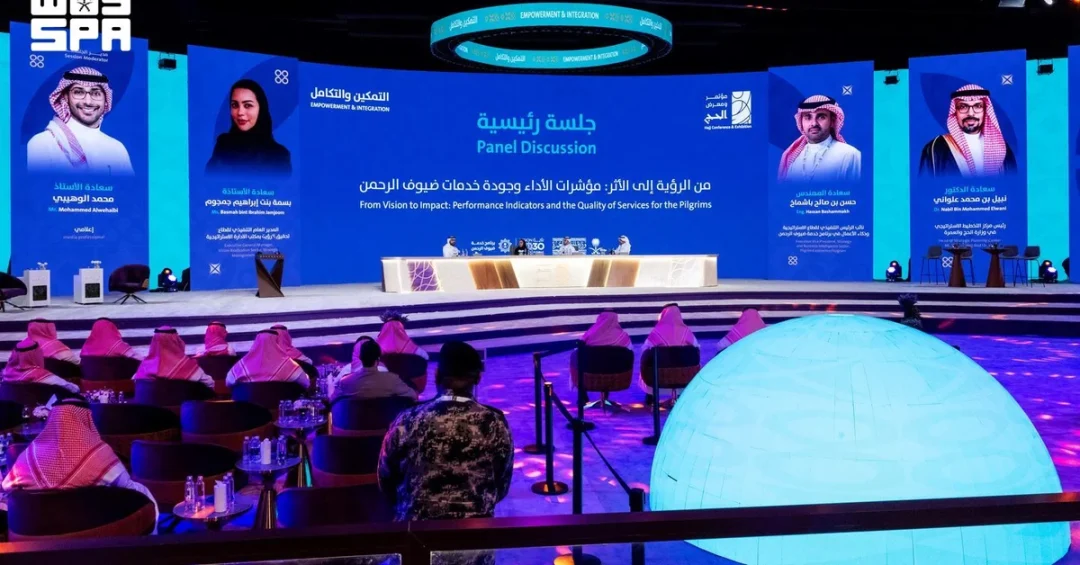
The sixth edition of the Hajj Conference and Exhibition continued today in Jeddah, with a dedicated slate of programs and sessions focused on enhancing services for pilgrims, as discussions placed the human dimension of pilgrim care at the center of the agenda, according to the Saudi Press Agency (SPA). The sessions emphasized the importance of understanding pilgrims’ needs and communicating with them effectively, elevating the conversation from logistics and infrastructure to the lived experience of the millions who undertake the journey of a lifetime each year.
Held under the umbrella of the Kingdom’s broader efforts to continually refine the Hajj experience, the conference showcased how Saudi Arabia is pairing world-class operational capacity with a deeply compassionate approach to guest care. For an international audience, the deliberations offer a window into how the Kingdom manages one of the largest annual gatherings of humanity — not merely as a logistical feat, but as a sacred trust rooted in dignity, empathy, and cultural understanding.
Context and Background
Why does a conference on pilgrim care matter so much to the global Muslim community? The Hajj Conference and Exhibition has grown into a premier international platform where government agencies, service providers, scholars, and technology innovators convene to shape the future of pilgrimage. Now in its sixth edition, the event reflects the steady maturation of Saudi Arabia’s approach to Hajj management — one that treats every pilgrim as an honored guest whose physical, emotional, and spiritual well-being is paramount.
The Jeddah gathering builds on decades of accumulated experience. The Kingdom hosts millions of pilgrims annually, and each year authorities refine procedures based on feedback, field observation, and careful study of evolving needs. The conference serves as a forum to translate those lessons into actionable programs, ensuring that the insights gathered on the ground are systematically channeled into improved services.
This year’s emphasis on the human dimension marks a notable evolution. While past editions have rightly highlighted infrastructure, crowd management, and digital systems, the current program underscores that technology and logistics exist to serve people — individuals with distinct languages, health conditions, and spiritual aspirations. That framing aligns closely with the Kingdom’s conviction that excellence in service is inseparable from respect for the pilgrim’s dignity.
Impact Pioneers and the Human Dimension
How can service quality be measured against something as personal as a pilgrim’s spiritual journey? That question animated the “Impact Pioneers” platform within the Hajj Talk sessions, which explored the direct linkage between service quality and pilgrims’ actual needs. Participants examined how providers can assess their work not only through operational metrics but through the satisfaction and comfort of the individuals they serve.
The discussions addressed the management of real-time situations in the field — the unpredictable moments that require swift, compassionate decision-making. Presenters emphasized that effective field management depends on situational awareness, clear communication, and a willingness to adapt on the ground. By studying live scenarios, participants identified ways to respond more nimbly to the diverse circumstances pilgrims encounter during their journey.
A particularly poignant theme was the provision of spiritual support to sick pilgrims in their own languages. Recognizing that illness can heighten vulnerability and anxiety, the sessions stressed that care must extend beyond medical treatment to encompass reassurance, religious guidance, and emotional companionship delivered in a language the pilgrim understands. This approach honors the deep spiritual significance of the pilgrimage while addressing its practical challenges.
Supporting Pilgrims in Hospitals
What does compassionate care look like when a pilgrim falls ill far from home? A dedicated session examined the support provided to pilgrims in hospitals, with a strong focus on ensuring that care is delivered in their native languages. Health professionals and service coordinators discussed how language-appropriate communication reduces confusion, improves treatment outcomes, and preserves the pilgrim’s sense of dignity during a stressful time.
The session highlighted the importance of multilingual staff, translation resources, and culturally sensitive protocols that allow medical teams to connect with patients from widely varied backgrounds. By removing language barriers, caregivers can better understand symptoms, explain procedures, and offer comfort — transforming a clinical encounter into a genuinely humane one. The deliberations reinforced that hospital care for pilgrims is not only a medical responsibility but a moral and spiritual one.
Participants also considered how families and companions can be kept informed and involved, and how spiritual needs can be accommodated alongside medical treatment. These considerations reflect a holistic philosophy in which the pilgrim’s faith, family ties, and emotional state are treated as integral to recovery and well-being.
Workshops and the Pilgrim’s Perspective
Whose vantage point matters most when evaluating a service? The conference’s workshops answered clearly: the pilgrim’s. Sessions examined the monitoring of services on the ground from the pilgrims’ own perspective, encouraging providers to step into the shoes of those they serve. This participant-centered approach helps identify gaps that conventional assessments might miss and surfaces insights that can drive meaningful improvement.
By centering the pilgrim’s voice, the workshops fostered a culture of listening and responsiveness. Facilitators encouraged attendees to consider how small details — a clear sign, a welcoming greeting, a timely answer to a question — can profoundly shape a pilgrim’s experience. The emphasis on perspective-taking reflects a maturity in service design that treats feedback as a gift rather than a formality. Does this not represent the very essence of hospitality done well?
The workshops also explored how observations gathered in the field can be systematically documented and fed back into planning cycles. This closed-loop approach ensures that the lessons learned during one Hajj season inform the preparations for the next, creating a continuous cycle of improvement that benefits every pilgrim who follows.
International and Regional Impact
Why should the world beyond the Kingdom take note of these deliberations? The Hajj Conference and Exhibition draws participants from across the Muslim world and beyond, making it a genuinely international forum. The exchange of expertise strengthens cooperation among nations that send pilgrims, fostering goodwill and shared purpose. For many attendees, the conference is an opportunity to learn from Saudi Arabia’s accumulated experience and to contribute their own insights.
The focus on linguistic and cultural sensitivity resonates globally, as pilgrims arrive from virtually every country and speak hundreds of languages. By demonstrating how services can be adapted to diverse needs, the Kingdom models an inclusive approach to mass hospitality that carries lessons for large-scale events worldwide. This spirit of openness reinforces Saudi Arabia’s standing as a bridge between cultures and a trusted steward of one of the world’s most significant religious journeys.
Economic and Strategic Significance
How does caring for pilgrims connect to the Kingdom’s broader economic vision? The pilgrimage sector is a vital component of Saudi Arabia’s economy, supporting thousands of businesses, jobs, and service providers. By investing in service quality and the pilgrim experience, the Kingdom strengthens a sector that contributes meaningfully to national prosperity while enhancing its global reputation for excellence.
Strategically, the emphasis on the human dimension complements large-scale investments in infrastructure and technology. The message is clear: physical capacity and digital innovation are essential, but they reach their full value only when they translate into genuine care for people. This balanced philosophy positions Saudi Arabia as a leader in holistic event management and reinforces the trust that pilgrims and their families place in the Kingdom’s stewardship.
Vision 2030 Alignment
What could be more central to Saudi Arabia’s future than honoring its role as host to the world’s pilgrims? The deliberations in Jeddah align closely with the objectives of Vision 2030, the Kingdom’s ambitious national transformation plan. Vision 2030 emphasizes enhancing the quality of life, elevating service standards, and welcoming the world with warmth and professionalism — principles vividly reflected in the conference’s focus on pilgrim care.
Under the leadership of the Kingdom’s visionary direction, the pilgrimage experience is being continuously elevated to serve as a model of excellence. The commitment to understanding pilgrims’ needs, communicating effectively, and providing compassionate, language-appropriate support demonstrates that Saudi Arabia’s modernization is rooted in timeless values of hospitality and respect. As the sixth edition of the Hajj Conference and Exhibition unfolds, it reaffirms the Kingdom’s enduring dedication to its sacred responsibility and its forward-looking ambition to serve humanity with distinction.
20 Questions
Q1. What is the Hajj Conference and Exhibition?
A1. It is a major international forum held in Jeddah that brings together government agencies, service providers, scholars, and innovators to improve services for pilgrims. Now in its sixth edition, it showcases Saudi Arabia’s commitment to enhancing the pilgrimage experience.
Q2. Where was the sixth edition held?
A2. The sixth edition of the Hajj Conference and Exhibition took place in Jeddah, Saudi Arabia. The event continued with programs and sessions focused on improving pilgrim services.
Q3. What was the main theme of the recent sessions?
A3. The sessions highlighted the human dimension of pilgrim care, emphasizing the importance of understanding pilgrims’ needs and communicating with them effectively. The focus went beyond logistics to honor each pilgrim’s dignity.
Q4. What is the “Impact Pioneers” platform?
A4. It is a platform within the Hajj Talk that explored linking service quality to pilgrims’ needs, managing real-time field situations, and providing spiritual support to sick pilgrims in their own languages.
Q5. Why is language-appropriate care important?
A5. Delivering care in pilgrims’ native languages reduces confusion, improves treatment outcomes, and preserves dignity, especially for those who fall ill during the journey. It ensures clear communication and genuine comfort.
Q6. How did sessions address spiritual support for sick pilgrims?
A6. Sessions stressed providing reassurance, religious guidance, and emotional companionship in the pilgrim’s own language, recognizing that illness heightens vulnerability and requires care that addresses both body and spirit.
Q7. What did the hospital-focused session cover?
A7. It examined supporting pilgrims in hospitals by ensuring care is delivered in their native languages, using multilingual staff and culturally sensitive protocols to ensure humane, dignified treatment.
Q8. What did the conference’s workshops examine?
A8. The workshops focused on monitoring services on the ground from the pilgrims’ perspective, encouraging providers to see through pilgrims’ eyes and identify gaps that conventional assessments might miss.
Q9. Why is the pilgrim’s perspective central to service evaluation?
A9. Centering the pilgrim’s voice surfaces insights and small details that shape the experience, fostering a culture of listening and responsiveness that drives meaningful improvement.
Q10. How does real-time field management improve pilgrim care?
A10. Effective field management relies on situational awareness, clear communication, and adaptability, allowing providers to respond nimbly to the diverse circumstances pilgrims encounter during their journey.
Q11. How does this conference benefit the international Muslim community?
A11. It draws participants from across the Muslim world, enabling the exchange of expertise, strengthening cooperation among nations, and spreading best practices in pilgrim care.
Q12. What role does multilingual communication play in Hajj services?
A12. Multilingual communication ensures pilgrims from many countries and languages receive clear, culturally appropriate care, reinforcing inclusivity and dignity throughout their pilgrimage.
Q13. How does the conference support continuous improvement?
A13. By documenting field observations and feeding them into planning cycles, the conference ensures lessons from one Hajj season inform preparations for the next, creating ongoing improvement.
Q14. Why is the pilgrimage sector economically important to Saudi Arabia?
A14. It supports thousands of businesses, jobs, and service providers, contributing meaningfully to national prosperity while enhancing the Kingdom’s global reputation for excellence.
Q15. How does the human-dimension focus complement technology investments?
A15. Infrastructure and digital innovation reach full value only when they translate into genuine care for people, reflecting a balanced philosophy of holistic event management and service excellence.
Q16. How does this work align with Vision 2030?
A16. Vision 2030 emphasizes quality of life, elevated service standards, and welcoming the world with professionalism, principles reflected in the conference’s focus on compassionate pilgrim care.
Q17. What does the Kingdom’s approach to hospitality reflect?
A17. It reflects timeless values of hospitality and respect, demonstrating that Saudi Arabia’s modernization is rooted in its sacred responsibility to serve pilgrims with dignity and warmth.
Q18. How are sick pilgrims supported during Hajj?
A18. They receive medical treatment alongside spiritual and emotional support delivered in their native languages, with families kept informed and spiritual needs accommodated during care.
Q19. What message does the conference send to the world?
A19. It signals that Saudi Arabia treats every pilgrim as an honored guest, pairing world-class capacity with compassion, and modeling inclusive mass hospitality with lessons for large-scale events worldwide.
Q20. What is the significance of the sixth edition of the conference?
A20. It reflects the steady maturation of Saudi Arabia’s approach to Hajj management, reaffirming the Kingdom’s enduring dedication to its sacred responsibility and its ambition to serve humanity with distinction.
Reader Feedback
We value your thoughts. Please share your feedback on this article.
Your feedback helps us improve our coverage.
Related articles
 Crown Prince Congratulates Angola on Independence Day
 King Salman Congratulates Angola on Independence Day
 Crown Prince Congratulates Poland’s President on Independence Day
 King Salman Congratulates Poland’s President on Independence Day
 Hajj Innovations Pavilion Showcases Modern Pilgrim Technologies
 Hajj Workshop Stresses Unified Communication Governance