


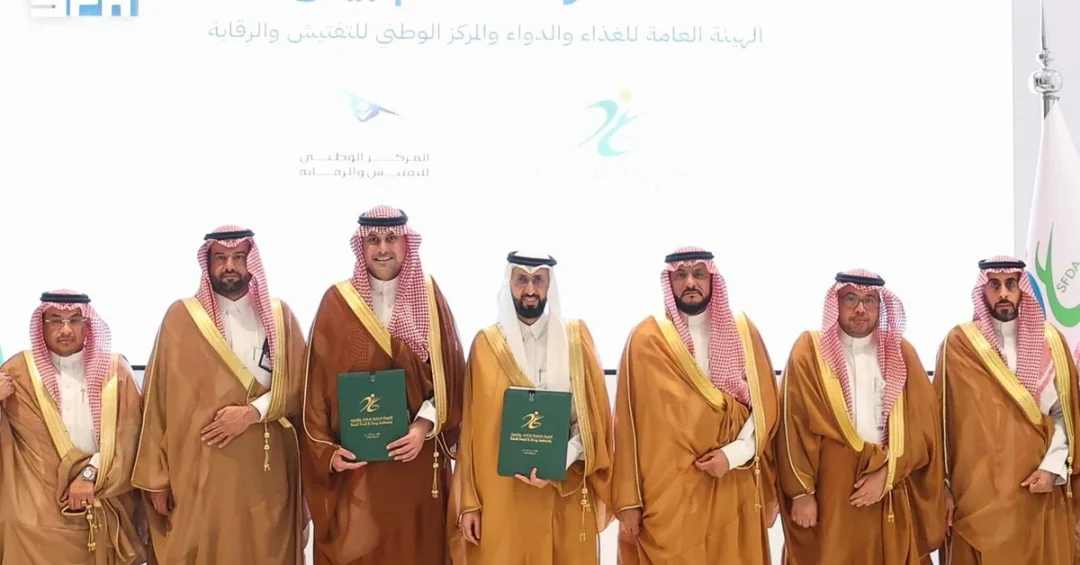
The Saudi Food and Drug Authority (SFDA) and the National Center for Inspection and Monitoring (NCIM) have signed a memorandum of understanding (MoU) establishing a formal framework for cooperation on inspection, oversight, and the modernization of regulatory services across the Kingdom. The agreement was signed by SFDA Chief Executive Officer Dr. Hisham S. Aljadhey and NCIM Chief Executive Officer Turki bin Abdulaziz Alhokail at the SFDA headquarters in Riyadh, according to the Saudi Press Agency. The MoU, announced on November 11, 2026, brings together two of the Kingdom’s central regulatory bodies in a coordinated push to strengthen product safety and raise the efficiency of inspection activities nationwide.
Why does a single memorandum between two government entities matter for consumers across an entire country? Because inspection is the invisible architecture behind every safe meal, medicine, and cosmetic product that reaches Saudi households. By uniting the SFDA — the authority responsible for the safety of food, drugs, and medical devices — with the NCIM, the agreement aims to remove duplication, harmonize procedures, and deploy modern technology across a shared national inspection system. The two institutions described the MoU as a foundation for long-term coordination rather than a one-off initiative, signaling a sustained, structural approach to regulatory modernization.
Context and Background
What led two major Saudi regulatory bodies to formalize their collaboration now? The answer lies in the scale and pace of change across the Kingdom’s health, food, and consumer-product sectors. As Saudi Arabia’s population grows, its tourism sector expands, and its retail and pharmaceutical markets diversify under Vision 2030, the volume and complexity of products requiring oversight have risen sharply. The SFDA, established to protect public health by regulating food, drugs, medical devices, and other products, has increasingly relied on efficient, data-driven inspection to keep pace. The NCIM, for its part, specializes in inspection and monitoring functions that complement the SFDA’s regulatory mandate, making coordination between them a natural next step.
The memorandum formalizes what had previously been ad hoc cooperation between the two entities. It establishes a structured framework covering inspection and oversight activities as well as the development of related services. According to the Saudi Press Agency, the agreement is designed to align the two organizations’ workflows, share institutional knowledge, and avoid fragmentation in how inspections are planned and executed. In a regulatory environment where overlapping responsibilities can slow enforcement, such alignment is a practical tool for improving both speed and consistency.
The timing also reflects a broader shift in Saudi public administration toward integration and digital transformation. Government entities across the Kingdom are being encouraged to share data, standardize processes, and adopt emerging technologies as part of national modernization efforts. The SFDA–NCIM MoU sits squarely within that trend, positioning inspection as a shared, tech-enabled function rather than a siloed bureaucratic task. For international observers, the agreement offers a window into how Saudi Arabia is quietly strengthening the institutional foundations of its consumer-protection and public-health systems.
Key Details of the Agreement
What exactly does the memorandum commit the two entities to do? The scope of cooperation is broad and technical. The MoU provides for advancing technological integration between the SFDA and NCIM, developing and implementing artificial intelligence and other emerging technologies in inspection work, and exchanging data, scientific knowledge, and professional expertise. It also supports the development of inspection guidelines, procedures, and a unified national database of establishments — a measure that could allow regulators to track facilities, their compliance histories, and inspection outcomes through a single, shared reference point.
Beyond technology and data, the agreement covers joint scientific research, including studies and analyses related to inspection and oversight activities. It also provides for joint training programs and workshops designed to build capacity among inspection personnel. These elements suggest a partnership that goes beyond information-sharing: the two bodies intend to co-develop methodology, train staff together, and generate evidence that informs how inspections are conducted in the future. Dr. Hisham S. Aljadhey, the SFDA’s CEO, and Turki bin Abdulaziz Alhokail, the NCIM’s CEO, signed the document at the SFDA’s Riyadh headquarters, underscoring the institutional weight behind the arrangement.
The emphasis on artificial intelligence is particularly notable. Inspection regimes worldwide are increasingly turning to AI for risk-based targeting — using data patterns to identify which establishments or products warrant closer scrutiny. By committing to develop and implement such technologies jointly, the SFDA and NCIM are signaling an intent to move from reactive inspections toward predictive, evidence-driven oversight. The unified national database of establishments would provide the raw material for that approach, enabling both entities to work from the same verified information.
International and Regional Impact
How might a domestic regulatory agreement resonate beyond Saudi borders? For international trading partners, the MoU signals a more predictable and harmonized inspection environment. Exporters of food, pharmaceuticals, and medical devices to Saudi Arabia rely on clear, consistent rules and efficient border and market inspections. A unified database and standardized procedures can reduce uncertainty for foreign companies while maintaining — or even strengthening — safety standards. That combination of rigor and efficiency is attractive to partners seeking reliable access to one of the Middle East’s largest consumer markets.
Regionally, the agreement positions Saudi Arabia as a leader in regulatory modernization. Gulf neighbors and other countries in the region are also grappling with how to supervise rapidly expanding product markets. By demonstrating a structured, technology-forward approach to inter-agency cooperation, the SFDA–NCIM partnership offers a model that other regulators may study. The emphasis on scientific research and shared expertise also opens the door to regional knowledge exchange, reinforcing the Kingdom’s role as a hub for best practices in public-health regulation and consumer protection.
Economic and Strategic Significance
Why should the economic dimension of an inspection agreement command attention? Efficient regulation is a competitive asset. Delays and duplication in inspection can raise costs for businesses, slow the arrival of products on shelves, and create friction for investors. By coordinating their activities and sharing data, the SFDA and NCIM can reduce redundancy, shorten inspection timelines, and free resources for higher-value oversight work. For a Saudi economy pursuing diversification under Vision 2030, predictable and efficient regulation is part of the appeal for domestic and foreign investors alike.
The strategic significance extends to public trust. Consumers increasingly expect that the products they buy — whether imported foods, prescription medicines, or everyday cosmetics — have been verified by capable institutions. A unified, technology-enabled inspection system strengthens that assurance. The joint training and research components build long-term institutional capacity, ensuring that the Kingdom’s inspection workforce keeps pace with the sophistication of the markets it oversees. In this sense, the MoU is an investment in something less visible than infrastructure but equally foundational: the credibility of the regulatory state.
Vision 2030 Alignment
How does this agreement connect to the Kingdom’s long-term national vision? Vision 2030 places a strong emphasis on government efficiency, digital transformation, and the quality of life of citizens and residents. The SFDA–NCIM MoU advances each of these goals directly. Technology integration and AI adoption reflect the vision’s push toward a digital, innovation-driven public sector. The unified national database and harmonized guidelines embody the drive for efficient, coordinated governance. And the ultimate objective — enhanced product safety and stronger consumer protection — serves the vision’s commitment to a high quality of life and a thriving, healthy society.
Looking ahead, the partnership is best understood as one building block in a larger modernization effort. As Saudi Arabia expands its tourism, healthcare, and retail sectors, the demands on its regulators will only grow. The framework announced in Riyadh provides a foundation for meeting those demands through collaboration, evidence, and technology. By aligning two key institutions behind a shared vision of efficient, science-based oversight, the Kingdom is strengthening the systems that underpin public health, economic confidence, and its growing global role as a trusted and forward-looking regulatory environment.
20 Questions
Q1. Which two Saudi entities signed the memorandum of understanding?
A1. The Saudi Food and Drug Authority (SFDA) and the National Center for Inspection and Monitoring (NCIM) signed the MoU, according to the Saudi Press Agency.
Q2. Who signed the agreement on behalf of the two organizations?
A2. The memorandum was signed by SFDA CEO Dr. Hisham S. Aljadhey and NCIM CEO Turki bin Abdulaziz Alhokail.
Q3. Where was the memorandum signed?
A3. The signing took place at the SFDA headquarters in Riyadh, as reported by the Saudi Press Agency on November 11, 2026.
Q4. What is the main purpose of the MoU?
A4. It establishes a framework for cooperation and coordination between the two entities on inspection and oversight activities, along with the development of related services.
Q5. What role does technology play in the agreement?
A5. The MoU provides for advancing technological integration and for developing and implementing artificial intelligence and other emerging technologies in inspection work.
Q6. What kind of data will the two entities exchange?
A6. They will exchange data, scientific knowledge, and professional expertise to support more effective and coordinated inspection and oversight activities.
Q7. What is the unified national database of establishments?
A7. It is a shared database the MoU supports developing, allowing regulators to reference establishments through a single, coordinated national record.
Q8. Does the agreement cover inspection guidelines and procedures?
A8. Yes, the MoU supports the development of inspection guidelines and procedures to harmonize practices between the two entities.
Q9. What does the MoU say about scientific research?
A9. It provides for joint scientific research, including studies and analyses related to inspection and oversight activities.
Q10. Are training programs part of the cooperation?
A10. Yes, the agreement includes joint training programs and workshops aimed at building capacity and strengthening regulatory efficiency.
Q11. What is the ultimate goal of these initiatives?
A11. The initiatives aim to strengthen regulatory efficiency and enhance product safety across Saudi Arabia.
Q12. Why is coordination between the two entities important?
A12. Coordination helps align workflows, reduce duplication, and improve the consistency and speed of inspection activities nationwide.
Q13. What products fall under the SFDA’s regulatory scope?
A13. The SFDA regulates areas including food, drugs, medical devices, and other products, protecting public health across the Kingdom.
Q14. How could the agreement affect international trading partners?
A14. Harmonized procedures and a unified database can create a more predictable, efficient inspection environment for exporters of food, pharmaceuticals, and medical devices.
Q15. How does AI fit into modern inspection approaches?
A15. AI can support risk-based targeting, using data patterns to identify which establishments or products warrant closer scrutiny, moving oversight toward predictive methods.
Q16. What economic benefits can stem from efficient regulation?
A16. Efficient inspection can reduce redundancy and timelines, lowering costs for businesses and supporting a predictable environment for investors.
Q17. How does the MoU relate to consumer trust?
A17. A unified, technology-enabled inspection system strengthens assurance that products reaching consumers have been verified by capable institutions.
Q18. In what way does the agreement support Vision 2030?
A18. It advances digital transformation, government efficiency, and quality of life by strengthening coordinated, science-based oversight.
Q19. What does the agreement mean for institutional capacity?
A19. Joint training, research, and shared expertise build long-term capacity, helping the inspection workforce keep pace with expanding markets.
Q20. What is the broader significance of the partnership?
A20. It reinforces the Kingdom’s regulatory foundations, supporting public health, economic confidence, and Saudi Arabia’s growing global role.
Reader Feedback
We value your thoughts. Please share your feedback on this article.
Your feedback helps us improve our coverage.
Related articles
 Saudi Crown Prince Offers Condolences to Türkiye Over Izmir Explosion
 King Salman Offers Condolences to Türkiye’s Erdoğan
 Coalition Air Defenses Intercept Three Houthi Missiles Targeting Riyadh
 Makkah Deputy Governor Receives Libyan Consul General
 Makkah Deputy Governor Reviews Hajj Ministry’s Pilgrim Services
 Taif Governor Receives Malaysian Consul General in Cordial Meeting