


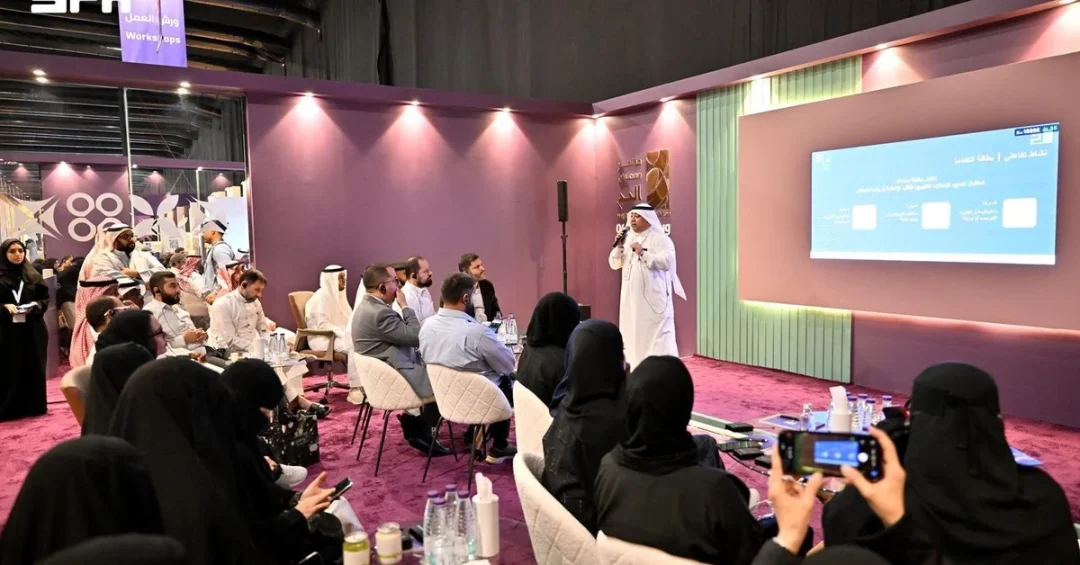
The Hajj Conference and Exhibition has concluded its series of specialized workshops in Jeddah, with organizers confirming that sessions on artificial intelligence, media content development, leadership practices, and pilgrim awareness formed the core of a closing program designed to advance the Kingdom’s management of the annual pilgrimage. The workshops, held as part of the conference’s final schedule and reported by the Saudi Press Agency, brought together specialists, administrators, and technology experts to exchange expertise and showcase solutions supporting the continued development of the Hajj system.
The sessions reflect a broadening of the scope of Hajj development beyond logistics and infrastructure, extending into digital innovation, communications, and human capital. For an international audience, the gathering offers a window into how Saudi Arabia is applying modern technology and institutional discipline to one of the world’s largest recurring mass gatherings. But what does it take to elevate an event that welcomes millions of worshippers from across the globe each year? The answer, according to the conference program, lies in integrating innovation with careful stewardship.
Context and Background
Saudi Arabia has long regarded the service of Hajj pilgrims as a central national responsibility, and the annual pilgrimage has become a proving ground for large-scale operational planning. The Hajj Conference and Exhibition serves as a platform where government agencies, service providers, and technology companies convene to review progress and identify new avenues for improvement. This year’s closing workshops were organized to reflect the diversity and interconnectedness of the work, spanning content development, leadership training, innovation, and the pilgrim experience itself.
Why does this matter now? Because the scale of Hajj continues to grow, and the expectations of pilgrims are evolving alongside it. Officials have emphasized that every element of the journey, from arrival at air, land, and sea entry points to the rituals themselves, must be supported by clear communication, capable leadership, and reliable technology. The workshops provided an opportunity to exchange expertise and showcase ideas that support this continued development, positioning the conference as both a review of past achievements and a planning forum for future improvements.
The event also underscores the collaborative nature of Hajj management. Ministries, security services, health authorities, transport operators, and digital specialists all contribute to a single integrated system. By dedicating workshops to distinct but connected topics, organizers ensured that lessons learned in one area, such as media content, could inform practices in another, such as pilgrim awareness or leadership development. Is it any wonder that coordination ranks among the most valued principles in this field?
Focus on Artificial Intelligence and the Pilgrim Experience
Among the most closely watched sessions was the workshop on leveraging artificial intelligence to enhance the pilgrim experience. The discussion centered on how AI tools can support smoother navigation, better information delivery, and more responsive services for worshippers navigating crowded sites and complex schedules. Rather than replacing human oversight, the emphasis was on augmentation: using data-driven systems to help administrators anticipate demand, manage flows, and communicate in multiple languages.
The relevance of AI to Hajj is practical as well as forward-looking. Millions of pilgrims move between holy sites within a compressed timeframe, and small efficiencies in routing, crowd management, and information access can translate into meaningful improvements in safety and comfort. Conference participants examined how intelligent systems might assist with real-time guidance and multilingual support, ensuring that pilgrims of diverse backgrounds receive clear direction at every stage. Could technology, applied thoughtfully, make one of the world’s most demanding gatherings also one of its most seamless?
The workshop also highlighted the importance of pairing innovation with reliability. Any system deployed during Hajj must function under extraordinary conditions, with high volumes of users and no tolerance for failure. This is why the conference framed AI as part of a broader toolkit, integrated with trained personnel and established procedures. The exchange of expertise among specialists was designed to surface practical solutions rather than theoretical ones, keeping the focus squarely on what serves the pilgrim.
Media Content and Leadership Development
Parallel workshops addressed the development of media content and the strengthening of leadership practices in the field. On the media side, participants discussed how accurate, timely, and accessible information can guide pilgrims before and during their journey, reducing confusion and enhancing preparedness. The conversation reflected an understanding that communication is not peripheral to Hajj operations but integral to them, shaping expectations and behavior at every touchpoint.
Why invest in leadership training for a seasonal event? Because Hajj demands sustained managerial excellence across months of planning and weeks of intense execution. The leadership workshop focused on equipping officials and supervisors with the skills to coordinate large teams, respond to dynamic conditions, and maintain service quality under pressure. By treating leadership as a discipline worthy of dedicated study, the conference signaled that human capital is as important as infrastructure.
The sessions on raising awareness among pilgrims arriving by air connected these themes. Air arrivals represent a significant share of the pilgrim population, and the first hours after landing often shape the overall experience. Workshop participants explored how orientation materials, digital notifications, and on-the-ground guidance can combine to help air travelers transition smoothly into the pilgrimage process. Do clear first impressions not set the tone for everything that follows?
International and Regional Impact
The outcomes of these workshops carry implications well beyond the Kingdom’s borders. Pilgrims travel to Saudi Arabia from nearly every country, and improvements in communication, technology, and service delivery are felt by international communities whose citizens undertake the journey. By sharing expertise and showcasing solutions during the conference, Saudi Arabia reinforces its role as a steward of one of the world’s most significant religious gatherings, a responsibility it approaches with seriousness and transparency.
Regional observers also note the broader signal: a modernizing Saudi Arabia is applying advanced tools to longstanding traditions, demonstrating that heritage and innovation can coexist. The workshops, by bringing together specialists from different fields, modeled a collaborative approach that other large-scale event organizers may study. What nation would not wish to learn from an operation that safely hosts millions of visitors in a compressed geography and timeframe?
The conference additionally served as a venue for exchange among service providers and technology firms, some of which presented solutions with potential applications beyond Hajj. This cross-pollination of ideas supports the development of a domestic expertise base in crowd management, digital services, and event logistics, capabilities that contribute to the Kingdom’s growing profile in hosting major international gatherings.
Economic and Strategic Significance
Hajj and Umrah together represent a substantial pillar of Saudi Arabia’s visitor economy, and continuous improvement in the pilgrim experience supports the broader goal of increasing the number and satisfaction of religious travelers. The workshops’ emphasis on efficiency and innovation aligns with efforts to expand capacity while maintaining quality, a balance that is central to sustainable growth in the sector. Better services encourage repeat visits and positive word of mouth, which in turn strengthen the Kingdom’s reputation as a destination.
Strategically, the attention to leadership and institutional development reflects a recognition that systems are only as strong as the people who run them. By investing in training and knowledge exchange, the conference contributes to a workforce skilled in managing complex, high-stakes operations. Is this not precisely the kind of capacity that underpins long-term economic diversification? The capabilities honed in Hajj management, from logistics to digital platforms, have applications across tourism, transport, and public administration.
The workshops also highlighted the role of media and communications in shaping perceptions. Accurate, positive, and informative content about the pilgrimage experience supports international understanding of Saudi Arabia’s efforts and counters misinformation. In an era of rapid information flows, the ability to communicate clearly and consistently is an asset with strategic value, and the conference treated it as such.
Vision 2030 Alignment
The themes of the closing workshops map directly onto the objectives of Saudi Vision 2030, which prioritizes the enhancement of the pilgrim experience, the adoption of digital technologies, and the development of a skilled, modern workforce. By focusing on artificial intelligence, content development, leadership, and awareness, the conference advanced goals that sit at the heart of the national transformation agenda. The integration of innovation into Hajj management is not an isolated project but part of a broader commitment to service excellence.
As the conference concluded, participants left with a shared understanding that the work of improving Hajj is continuous. Each workshop contributed a piece to an integrated system that will carry forward into future seasons, guided by expertise exchanged and solutions showcased. For Saudi Arabia, the message is one of steady, purposeful progress: honoring a sacred tradition while embracing the tools of the modern age. Can there be a clearer expression of a vision that respects the past while building the future? The Kingdom’s commitment to the pilgrim experience remains, as ever, at the center of its national mission.
20 Questions
Q1. What was the main focus of the Hajj Conference and Exhibition’s closing workshops?
A1. The closing workshops focused on developing media content, strengthening leadership practices in the field, leveraging artificial intelligence to enhance the pilgrim experience, and raising awareness among pilgrims arriving by air.
Q2. Where and when did the workshops take place?
A2. The workshops were held in Jeddah as part of the Hajj Conference and Exhibition’s closing program, with reporting by the Saudi Press Agency.
Q3. How did the workshops address artificial intelligence?
A3. Participants examined how AI tools can support smoother navigation, better information delivery, and more responsive services for worshippers, emphasizing augmentation of human oversight rather than replacement.
Q4. Why is AI considered relevant to Hajj management?
A4. Millions of pilgrims move between holy sites within a compressed timeframe, so small efficiencies in routing, crowd management, and information access can improve safety and comfort significantly.
Q5. What did the media content workshop discuss?
A5. It discussed how accurate, timely, and accessible information can guide pilgrims before and during their journey, reducing confusion and enhancing preparedness at every touchpoint.
Q6. Why invest in leadership training for Hajj?
A6. Hajj demands sustained managerial excellence across months of planning and weeks of intense execution, requiring officials skilled in coordinating teams and maintaining service quality under pressure.
Q7. What was covered regarding pilgrims arriving by air?
A7. Participants explored how orientation materials, digital notifications, and on-the-ground guidance can combine to help air travelers transition smoothly into the pilgrimage process.
Q8. What was the overall purpose of the workshops?
A8. They provided an opportunity to exchange expertise and showcase solutions and ideas that support the continued development of the Hajj system.
Q9. How do the workshops reflect the scope of Hajj development?
A9. They highlight diversity and interconnectedness across content development, leadership training, innovation, and improving the pilgrim experience, showing development extends beyond logistics.
Q10. Who participates in these workshops?
A10. Specialists, administrators, technology experts, and service providers from various agencies involved in Hajj management convene to share expertise and solutions.
Q11. Why is communication considered integral to Hajj operations?
A11. Accurate communication shapes expectations and behavior, guiding pilgrims and reducing confusion, making it central rather than peripheral to operations.
Q12. What does the conference signal about Saudi Arabia’s approach?
A12. It signals a modernizing Kingdom applying advanced tools to longstanding traditions, demonstrating that heritage and innovation can coexist harmoniously.
Q13. How does this relate to the visitor economy?
A13. Hajj and Umrah represent a substantial pillar of the visitor economy, and improving the pilgrim experience supports sustainable growth and positive reputation.
Q14. Why must AI be paired with reliability during Hajj?
A14. Systems must function under extraordinary conditions with high user volumes and no tolerance for failure, so AI is integrated with trained personnel and established procedures.
Q15. What international impact do these improvements have?
A15. Pilgrims travel from nearly every country, so improvements in communication, technology, and service delivery are felt by international communities undertaking the journey.
Q16. How do the workshops support workforce development?
A16. By investing in training and knowledge exchange, the conference contributes to a workforce skilled in managing complex, high-stakes operations, building long-term capacity.
Q17. What role does media play in shaping perceptions?
A17. Accurate, positive content about the pilgrimage supports international understanding of Saudi efforts and counters misinformation, an asset with strategic value.
Q18. How does the conference align with Vision 2030?
A18. Its themes of enhancing the pilgrim experience, adopting digital technologies, and developing a skilled workforce map directly onto Vision 2030 objectives.
Q19. What was the tone of the conference regarding future work?
A19. Participants left with a shared understanding that improving Hajj is continuous, with each season building on expertise exchanged and solutions showcased.
Q20. What overall message does the conference convey?
A20. It conveys steady, purposeful progress: honoring a sacred tradition while embracing modern tools, reflecting a vision that respects the past while building the future.
Reader Feedback
We value your thoughts. Please share your feedback on this article.
Your feedback helps us improve our coverage.
Related articles
 Hajj Workshops Focus on Prevention and Service Efficiency
 Interior Ministry Wins HCE Excellence Award at Hajj Expo 2026
 Saudi Crown Prince Offers Condolences to Niger’s President
 King Salman Offers Condolences to Niger’s President on Father’s Death
 Arab League Warns Against Erasure of Jerusalem’s Identity
 King Salman Congratulates Paraguay’s President Alliana