


The Unified Media Operations Center for Hajj at the Ministry of Media concluded its participation in the sixth edition of the Hajj Conference and Exhibition (HCE), held in Jeddah over four days under the theme “From Makkah to the World,” the Saudi Press Agency reported. The center’s program showcased how the Ministry of Media and its wider ecosystem support media operations throughout the Hajj season, organized across four main tracks: Ministerial Sessions, the Tawasul Award, the Media Bridge, and Media Support. The conclusion of the exhibition marks another milestone in the Kingdom’s steadily expanding capacity to host, inform, and serve the largest annual gathering of pilgrims on earth.
Held in Jeddah, the gateway city for millions of pilgrims arriving by air and sea, the conference brought together government ministries, media organizations, technology providers, and service companies under one roof. For international observers, the event offered a clear window into how Saudi Arabia coordinates the complex logistics of Hajj communication, an undertaking that touches nearly every facet of public administration. Why does the world’s attention return each year to how the Kingdom communicates around Hajj? Because the answer reveals the depth of preparation behind one of the most demanding operational challenges anywhere in the world.
How Did the Unified Media Operations Center Approach This Year’s Exhibition?
The Unified Media Operations Center for Hajj, headed by Saleh Al-Thubaiti, presented an integrated program designed to demonstrate the Ministry of Media and its ecosystem’s efforts to support media operations during the Hajj season. The four-track structure was not merely a presentation format; it reflected the center’s operating model, which coordinates messaging, information flow, and support services for thousands of domestic and international journalists covering the pilgrimage. Each track addressed a distinct dimension of that mission, from high-level policy dialogue to on-the-ground technical assistance.
The Ministerial Sessions track convened decision-makers to discuss how ministries align their media strategies during Hajj, ensuring that accurate, timely information reaches pilgrims and the public alike. The Tawasul Award track recognized companies that excelled in awareness content and pilgrim communication. The Media Bridge served as an exhibition platform connecting media entities with service providers, while the Media Support track highlighted the practical infrastructure, training, and resources that keep press operations running smoothly throughout the season. Together, these tracks illustrate a comprehensive, well-rehearsed approach to media management at scale.
Why does a dedicated operations center matter for an event of this magnitude? With millions of pilgrims arriving from more than 180 countries, the volume of information generated and consumed during Hajj is extraordinary, and even small coordination failures can ripple outward quickly. The center’s integrated model reflects years of accumulated experience and a deliberate strategy to centralize media coordination under the Ministry of Media while drawing on the capabilities of partner agencies across the government.
What Did the Ministry of Media and Ministry of Hajj and Umrah Agree On?
A centerpiece of the participation was the signing of a memorandum of understanding (MoU) between the Ministry of Media and the Ministry of Hajj and Umrah on data management and governance, represented by their respective data management offices. The agreement aims to exchange expertise, knowledge, services, tools, and training programs, strengthen joint efforts, and promote data integration and sharing between the two ministries. The MoU signals a maturing of inter-agency cooperation, moving beyond informal coordination toward structured, formalized data partnerships.
Why is data governance so central to the future of Hajj operations? Reliable, shared data underpins nearly every aspect of the pilgrimage experience, from crowd management and transport scheduling to health monitoring and multilingual communication with pilgrims. By formalizing how data is managed, governed, and exchanged, the two ministries are laying groundwork for faster, more accurate decision-making during peak periods. The agreement also creates a framework for continuous training, ensuring that staff across both entities remain equipped with the latest tools and methodologies.
The MoU reflects a broader pattern across Saudi government institutions, where shared data platforms and joint governance frameworks are increasingly viewed as essential to delivering high-quality public services. For the Ministry of Media, the partnership strengthens its ability to tailor messaging and awareness campaigns using verified information from the pilgrimage’s operational frontline, while the Ministry of Hajj and Umrah gains a more coordinated communications channel to reach pilgrims directly.
Who Was Honored at the Tawasul Award and Why Does Recognition Matter?
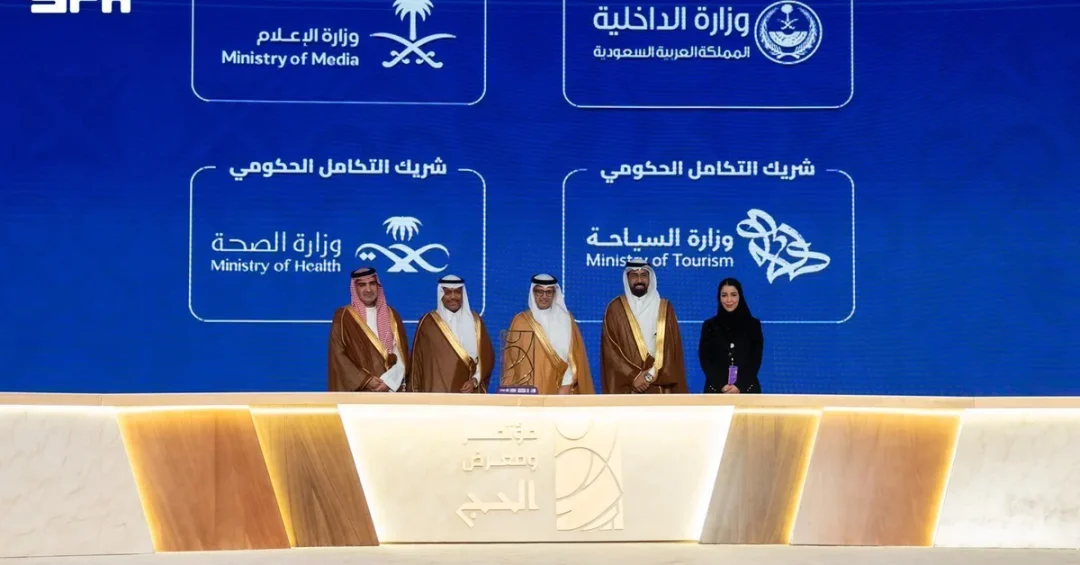
Vice Minister of Hajj and Umrah Abdulfattah Mashat, in the presence of Head of the Unified Media Operations Center for Hajj Saleh Al-Thubaiti, honored six Hajj companies that won the third edition of the Tawasul Award in the domestic and international pilgrims categories. The awards recognized their efforts to develop media and awareness content, strengthen communication with pilgrims, and facilitate access to information and guidance through various communication channels. The ceremony placed frontline service companies at the center of the media conversation, acknowledging that pilgrim guidance depends as much on operators as on broadcasters.
Vice Minister Mashat also honored the Ministry of Media as the media partner, alongside the Ministries of Interior, Health, and Tourism as government integration partners. This recognition underscored the multi-ministerial nature of Hajj communications, where public safety, public health, tourism promotion, and media messaging intersect daily. Why do awards and public recognition carry weight in this context? Because they set benchmarks for quality, motivate continuous improvement among service providers, and publicly signal which standards of pilgrim communication the Kingdom values most highly.
The Tawasul Award’s domestic and international categories reflected the dual audience the Kingdom serves each year: pilgrims from within Saudi Arabia and the far larger number arriving from abroad. Companies competing in each category were assessed on the clarity, reach, and cultural sensitivity of their communication, among other criteria. By elevating these examples, the award encourages a race to the top in how pilgrims are informed, reassured, and guided through every stage of their journey.
What Made the Media Bridge Pavilion Stand Out on the International Stage?
The Media Bridge pavilion won the HCE Exhibition Excellence Award in the Impact category, ranking as the best pavilion among 282 participating pavilions in the sixth edition of the Hajj Conference and Exhibition. The award was presented during the closing ceremony by Vice Minister Mashat. Competing against nearly three hundred exhibitors from across the public and private sectors, the Media Bridge’s recognition speaks to the strength of its design, its clarity of purpose, and the quality of the experience it delivered to visitors.
What does it take to stand out in such a crowded field? The Impact category rewards exhibitors whose presentations measurably influence visitor understanding and engagement, and the Media Bridge appears to have achieved precisely that by making the often-invisible work of Hajj media operations tangible and accessible. Its success also reflects favorably on the Ministry of Media’s ecosystem, demonstrating that Saudi media institutions can compete at the highest level in exhibition design and public communication. The award adds a notable credential to the center’s participation and reinforces the message of the conference theme, “From Makkah to the World.”
The scale of the exhibition itself is worth emphasizing: 282 pavilions represents an enormous diversity of stakeholders, from transport and hospitality companies to technology firms and religious affairs bodies. Winning the top Impact award in that environment required a presentation that was both informative and memorable, and the closing ceremony recognition gave the Ministry of Media’s team a public moment of validation before an audience of peers and partners.
How Does This Participation Strengthen Saudi Arabia’s International Standing?
For international audiences, the conference and the center’s participation demonstrate that Saudi Arabia approaches Hajj communication as a serious strategic discipline rather than an afterthought. The presence of senior officials, the signing of a formal MoU, the honoring of integration partners, and the winning of a top exhibition award collectively project an image of competence, coordination, and modernization. These are precisely the qualities that Vision 2030 seeks to communicate to the world as the Kingdom opens further to tourism, investment, and international engagement.
The event also underscored the regional dimension of Hajj. Pilgrims arrive from across the Islamic world and beyond, and the information they receive in their own languages shapes their experience of the Kingdom. By investing in multilingual awareness content, structured data sharing, and a coordinated media bridge, Saudi Arabia supports not only its own operational goals but also the expectations of partner countries whose citizens travel to the holy sites. Why should this matter to observers far from the region? Because Hajj is one of the largest recurring multinational gatherings on earth, and its management serves as a visible test of governance capacity that resonates well beyond Saudi borders.
What Is the Economic and Strategic Significance of the Media Operations Model?
The integrated media model carries direct economic significance. Efficient communication reduces congestion, improves pilgrim satisfaction, and supports the smooth functioning of thousands of businesses that serve the pilgrimage economy, from transport operators to hotels and retailers. Clear guidance helps pilgrims navigate services more effectively, which in turn supports revenue generation across the Hajj and Umrah sector, a pillar of the Kingdom’s diversification strategy. The data governance MoU, meanwhile, lays the foundation for smarter, evidence-based planning in future seasons.
Strategically, the Unified Media Operations Center embodies a governance innovation: a single coordination hub that brings together ministries, companies, and media entities under a shared operational rhythm. This model allows the Kingdom to scale its communications as pilgrim numbers grow and as digital channels multiply. It also creates institutional memory, with lessons from each season systematically captured and applied to the next. What could this mean in the years ahead? As Saudi Arabia expands Umrah access and continues modernizing the pilgrim experience, a mature media operations capability becomes an increasingly valuable national asset.
Vision 2030 Alignment
The work of the Unified Media Operations Center for Hajj aligns closely with Vision 2030, the Kingdom’s comprehensive reform agenda championed by Crown Prince Mohammed bin Salman. Vision 2030 places service to pilgrims at the heart of its religious and economic ambitions, aiming to welcome ever-greater numbers of Umrah and Hajj performers with world-class infrastructure and experiences. Coordinated media, robust data governance, and recognition-driven quality standards directly support that goal by ensuring pilgrims are well informed, well served, and well cared for at every step.
Ultimately, the conclusion of the center’s participation in the Hajj Conference and Exhibition is more than the end of a four-day event. It is a demonstration of how Saudi Arabia’s institutions are working together to strengthen the Kingdom’s role as a global leader in pilgrimage services and public communication. As the Ministry of Media, the Ministry of Hajj and Umrah, and their partners build on the agreements and recognition achieved in Jeddah, they contribute to a broader national story: one of modernization, excellence, and unwavering commitment to the guests of God, in service of a Vision 2030 future that reaches, like the pilgrimage itself, from Makkah to the world.
20 Questions
Q1. What was the main purpose of the Unified Media Operations Center’s participation in the Hajj Conference and Exhibition?
A1. The center showcased how the Ministry of Media and its ecosystem support media operations during Hajj through four tracks: Ministerial Sessions, the Tawasul Award, the Media Bridge, and Media Support.
Q2. Where and when was the sixth edition of the Hajj Conference and Exhibition held?
A2. It was held in Jeddah over four days, under the theme “From Makkah to the World,” bringing together ministries, media organizations, and service companies.
Q3. Who heads the Unified Media Operations Center for Hajj at the Ministry of Media?
A3. The center is headed by Saleh Al-Thubaiti, who was present at the honoring ceremonies during the conference, including the Tawasul Award presentations.
Q4. What four main tracks framed the center’s program at the exhibition?
A4. The tracks were Ministerial Sessions, the Tawasul Award, the Media Bridge, and Media Support, each addressing a distinct dimension of Hajj media operations and coordination.
Q5. Which two ministries signed a memorandum of understanding on data management and governance?
A5. The Ministry of Media and the Ministry of Hajj and Umrah signed the MoU, represented by their respective data management offices.
Q6. What does the data management memorandum of understanding aim to achieve?
A6. It aims to exchange expertise, knowledge, services, tools, and training programs, strengthen joint efforts, and promote data integration and sharing between the two ministries.
Q7. Who honored the winners of the third edition of the Tawasul Award?
A7. Vice Minister of Hajj and Umrah Abdulfattah Mashat honored the winners, in the presence of Saleh Al-Thubaiti, Head of the Unified Media Operations Center for Hajj.
Q8. How many Hajj companies won the Tawasul Award and in which categories?
A8. Six Hajj companies won the third edition of the Tawasul Award, across the domestic and international pilgrims categories, recognized for their media and awareness content.
Q9. For what qualities were the Tawasul Award winners recognized?
A9. They were recognized for developing media and awareness content, strengthening communication with pilgrims, and facilitating access to information and guidance through various communication channels.
Q10. Which entities were honored as government integration partners?
A10. The Ministries of Interior, Health, and Tourism were honored as government integration partners, while the Ministry of Media was honored as the media partner.
Q11. What award did the Media Bridge pavilion win?
A11. The Media Bridge pavilion won the HCE Exhibition Excellence Award in the Impact category, presented during the closing ceremony by Vice Minister Mashat.
Q12. How many pavilions did the Media Bridge compete against at the exhibition?
A12. The Media Bridge ranked as the best pavilion among 282 participating pavilions in the sixth edition of the Hajj Conference and Exhibition.
Q13. Why is the Media Bridge award significant for the Ministry of Media?
A13. It demonstrates that Saudi media institutions can compete at the highest level in exhibition design and public communication, adding a notable credential to the center’s participation.
Q14. What does the theme “From Makkah to the World” suggest about the conference?
A14. The theme reflects the global reach of Hajj, highlighting how the Kingdom serves pilgrims from many countries and communicates with an international audience.
Q15. Why is coordinated data governance important for Hajj operations?
A15. Shared, reliable data supports crowd management, transport scheduling, health monitoring, and multilingual communication, enabling faster and more accurate decisions during peak periods.
Q16. How does the Media Support track contribute to Hajj media operations?
A16. It highlights the practical infrastructure, training, and resources that keep press operations running smoothly throughout the Hajj season for domestic and international journalists.
Q17. What role do the Ministerial Sessions play in Hajj communications?
A17. They convene decision-makers to discuss how ministries align media strategies during Hajj, ensuring accurate and timely information reaches pilgrims and the public.
Q18. How does this participation support Vision 2030?
A18. It supports Vision 2030 by improving pilgrim services, strengthening data governance, and promoting quality standards in media and awareness communication for the guests of God.
Q19. Why does recognizing service companies matter for the pilgrim experience?
A19. Recognition sets benchmarks for quality and motivates continuous improvement in how companies inform, reassure, and guide pilgrims through each stage of their journey.
Q20. What overall message does the center’s participation convey to international observers?
A20. It conveys competence, coordination, and modernization in managing one of the world’s largest gatherings, reflecting the Kingdom’s commitment to serving pilgrims with excellence.
Reader Feedback
We value your thoughts. Please share your feedback on this article.
Your feedback helps us improve our coverage.
Related articles
 GACA Concludes Participation in Hajj Conference 2026
 Coalition Intercepts, Destroys UAV in Saudi Eastern Region
 National Guard Minister Receives British Ambassador in Riyadh
 Jazan Security Patrols Arrest Citizen for Transporting Violators
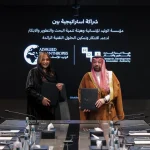 Alwaleed Philanthropies, RDIA Partner to Advance Innovation
 Volunteer Opportunities Open at the Prophet’s Mosque