


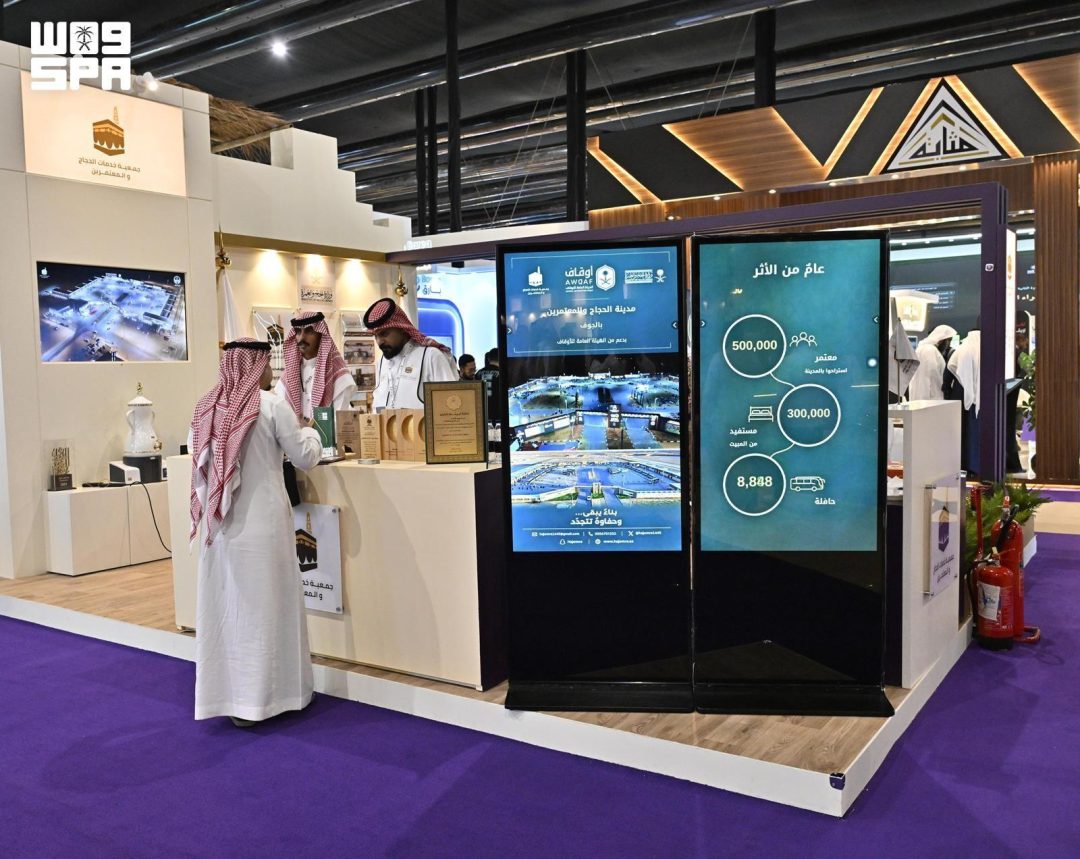
The Pilgrims’ City in Al-Jouf Region operates 13 air-conditioned halls, two hospitality halls, and a field health center, facilities presented at the Hajj Conference and Exhibition by the Association for Hajj and Umrah Services, SPA reported. The city serves pilgrims and Umrah performers arriving through the Kingdom’s northern land border crossings, offering care and hospitality before they continue to the Holy Sites.
The association’s pavilion at the Jeddah conference set out the city’s facilities and infrastructure, describing an environment built for arrival and rest. SPA reported the details on November 11, 2026.
What does a pilgrim arriving from the north actually encounter at such a facility? The 13 air-conditioned halls form the core of the accommodation space, while the two hospitality halls and the field health center round out the offering. Together they are equipped to meet the needs of pilgrims and Umrah performers, giving them a place to rest before the next leg of the journey to the Holy Sites.
The city’s role is tied to the Kingdom’s northern land border crossings. Pilgrims and Umrah performers entering through those crossings are received at the facility, which the association describes as playing a key role in serving them. How much does that northern route matter to the wider flow of pilgrims each year? The source does not break the figures down by crossing, but it places the Al-Jouf facility squarely in the arrival path for land travelers from that direction.
On capacity, the association says Pilgrims’ City can handle approximately 18,000 pilgrims and Umrah performers daily. That daily figure reflects the association’s operational capacity, according to the source. How does a daily capacity of that size translate into the rhythm of a Hajj or Umrah season? The source gives the daily number without projecting it across a season.
The association serves approximately one million beneficiaries annually, SPA reported. That service runs through an integrated system covering accommodation, hospitality, water provision, healthcare, awareness programs, and enrichment services. Which of those elements matters most to a traveler who has just crossed a land border? The source lists them as one system rather than ranking them.
The pavilion at the Hajj Conference and Exhibition was the setting for the presentation. The conference brought the association’s work into view for attendees, with the Al-Jouf city as the exhibit’s focus. What would a visitor to the pavilion have learned about the northern arrival route? The source says the pavilion highlighted the city’s facilities and infrastructure, including the halls and the health center.
Water provision appears among the services in the association’s system, alongside healthcare and awareness programs. For pilgrims arriving by land, these are practical needs at the point of entry. Does the source specify how water is supplied or where the awareness programs operate? It does not; it lists them as components of the integrated system serving beneficiaries annually.
The field health center stands among the city’s facilities, positioned to serve arrivals who may need medical attention before continuing their journey. The source does not describe staffing, equipment, or the range of care at the center. What it does confirm is that the center is part of the infrastructure presented at the conference, alongside the air-conditioned halls and hospitality halls.
The association’s annual reach of approximately one million beneficiaries is the broadest figure in the source. It spans the integrated system rather than the Al-Jouf city alone. How that million splits between Hajj and Umrah seasons, or between the city and other association services, is not stated. The source presents the number as the association’s overall annual service figure.
Al-Jouf Region’s position on the northern land border route gives the city its purpose in the source’s account. Pilgrims and Umrah performers arriving through those crossings are received and served at the facility, which provides comprehensive care and hospitality to facilitate their journey to the Holy Sites. Is the northern route a major or a minor channel compared with air and sea arrivals? The source does not compare volumes across entry points.
The Hajj Conference and Exhibition served as the venue for the association to present this work. The source does not give the conference’s dates, location beyond Jeddah in the dateline, or attendance figures. It reports only that the pavilion showcased the city’s services and infrastructure.
What stands out in the sourced detail is the combination of scale and specificity: 13 air-conditioned halls, two hospitality halls, one field health center, a daily capacity of about 18,000, and roughly one million beneficiaries a year. Each figure comes from the association’s presentation as reported by SPA. The source does not say when the city opened, how large the site is, or how the halls are allocated between pilgrims and Umrah performers.
The source also does not include costs, staffing numbers, or construction details for the Al-Jouf facility. It does not quote officials from the association or describe reactions at the conference. What it provides is a description of the city’s facilities and its place in serving arrivals from the north, set against the association’s annual service figures.
For readers following the conference, the Al-Jouf presentation adds a northern dimension to the map of pilgrim services. The city receives those coming overland through the Kingdom’s northern crossings, offers them rest and care, and sends them onward to the Holy Sites. How that experience compares with arrival at other entry points is a question the source leaves open.
The association’s integrated system, as described, ties accommodation and hospitality to water, healthcare, awareness, and enrichment. The Al-Jouf city carries part of that system at the northern edge of the route. The source does not detail how the components coordinate on the ground, but it presents them as one service package for beneficiaries.
SPA’s report closes with the association’s figures and the city’s facilities, without further context on the conference’s program or the association’s other pavilion displays. The sourced account is confined to what the pavilion showcased: the halls, the health center, the daily capacity, and the annual reach of the association’s services.
What facilities does Pilgrims’ City in Al-Jouf Region include? According to SPA, the city includes 13 air-conditioned halls, two hospitality halls, and a field health center. The association says these facilities are equipped to meet the needs of pilgrims and Umrah performers, providing a suitable environment for arrival and rest before continuing to the Holy Sites. The pavilion at the Hajj Conference and Exhibition highlighted this infrastructure as part of the city’s role in receiving travelers arriving through the Kingdom’s northern land border crossings.
How many pilgrims can Pilgrims’ City handle each day? The association says Pilgrims’ City has a daily capacity of approximately 18,000 pilgrims and Umrah performers. SPA reports that this figure reflects the association’s operational capacity and its efforts to serve visitors to the Holy Sites. The city receives pilgrims and Umrah performers arriving through the Kingdom’s northern land border crossings, offering care and hospitality before they continue their journey. The source does not break the daily figure down by season or by type of traveler.
How many beneficiaries does the Association for Hajj and Umrah Services serve annually? SPA reports that the association serves approximately one million beneficiaries annually. That service runs through an integrated system that includes accommodation, hospitality, water provision, healthcare, awareness programs, and enrichment services. The annual figure covers the association’s overall work rather than the Al-Jouf city alone, according to the source. The report does not say how the beneficiaries are divided between Hajj and Umrah seasons or among the association’s different facilities and programs.
Where was the Pilgrims’ City presentation made? The presentation took place at the pavilion of the Association for Hajj and Umrah Services at the Hajj Conference and Exhibition, according to SPA. The pavilion showcased the integrated services provided by Pilgrims’ City in Al-Jouf Region. The source reports the details in a dispatch dated November 11, 2026, with a Jeddah dateline. It does not give the conference’s full schedule, attendance figures, or other exhibits at the event beyond the association’s pavilion.
Which travelers does Pilgrims’ City serve? The facility serves pilgrims and Umrah performers arriving through the Kingdom’s northern land border crossings, SPA reports. The association describes the city as playing a key role in receiving and serving these travelers, providing comprehensive care and hospitality to facilitate their journey to the Holy Sites. The source does not compare the volume of arrivals through the northern crossings with other entry points, nor does it specify which nationalities or routes use the Al-Jouf facility most.
Related articles
 Takamol Holding Showcases Digital Pilgrim Services at Hajj Conference
 Civil Defense Responds to Debris in Makkah After Missile Interception
 Madinah Principality Concludes Hajj Conference Participation
 Hajj Media Center Concludes Participation in HCE 2026
 GACA Concludes Participation in Hajj Conference 2026
 Coalition Intercepts, Destroys UAV in Saudi Eastern Region