


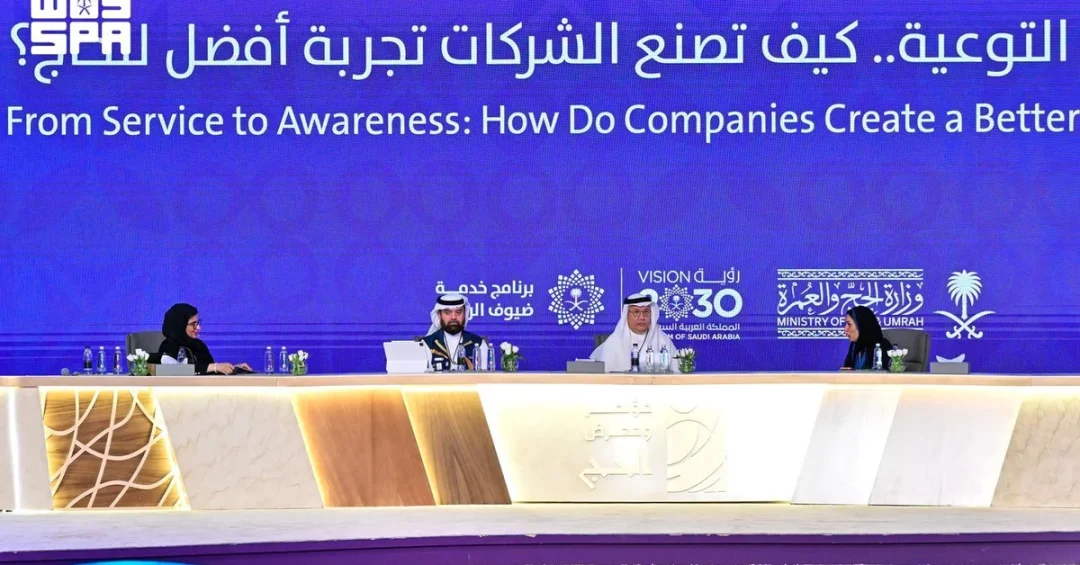
The Main Stage at the Hajj Conference and Exhibition, organized by the Ministry of Hajj and Umrah in Jeddah, is hosting a series of panel discussions bringing together officials, experts, and specialists to showcase the latest initiatives, projects, and innovative solutions aimed at upgrading services for pilgrims. The sessions, held under the umbrella of the Kingdom’s premier gathering for the Hajj and Umrah sector, reflect a sustained national effort to elevate the quality of the pilgrim experience during the rituals. Announced through official Saudi channels, the discussions underline how the sector is being continuously modernized in line with the aspirations of Saudi Vision 2030.
Why does a conference stage in Jeddah matter to a pilgrim traveling from the other side of the world? Because the conversations held there translate directly into the services those travelers will encounter — from the moment they apply for a visa to the final ritual of their journey. The Ministry of Hajj and Umrah has positioned the conference not merely as an exhibition of capabilities but as a working forum where decision-makers, technology providers, transport operators, and accommodation managers align their plans. Each panel builds on previous sessions, creating an accumulating body of practical knowledge that feeds into the planning cycles of the agencies responsible for serving millions of guests of God each year.
Context and Background
The Hajj Conference and Exhibition has established itself as a central platform for dialogue and knowledge exchange within the Hajj and Umrah sector. The Main Stage is one of its most prominent venues, designed to convene decision-makers, leaders, and specialists from the many sectors involved in serving pilgrims so they can discuss strategic issues, challenges, and development opportunities while sharing expertise and successful practices in managing and organizing Hajj and Umrah operations. Hosting these sessions in Jeddah, the historic gateway for pilgrims arriving by sea and air, gives the event symbolic as well as practical weight.
How has the sector evolved to reach this level of coordination? Over the past decade, the Kingdom has invested heavily in capacity expansion, digital infrastructure, and institutional integration across the pilgrimage ecosystem. The conference emerged as a natural extension of that effort — a place where the lessons learned on the ground can be consolidated and distributed across government and private-sector partners. The Main Stage sessions give visitors the chance to explore future visions and directions for the sector, learn about key initiatives and modern practices that support service delivery, and strengthen networking among participating bodies, experts, and specialists.
What makes this forum distinct is its emphasis on structured, outcome-oriented dialogue rather than presentation for its own sake. Officials and specialists bring real operational experience into the room — the kinds of details that determine whether a crowd-management plan works during peak hours or whether a transport corridor flows smoothly between ritual sites. By concentrating this expertise in one venue, the Ministry of Hajj and Umrah creates a shared reference point that participating entities can carry back to their own organizations.
Key Details and Panel Themes
The panel discussions address several interconnected themes, each reflecting a priority area for the sector. Foremost among them is the use of modern technologies, artificial intelligence, and digital transformation to improve service efficiency. Sessions explore how data-driven tools can anticipate pilgrim needs, optimize resource allocation, and reduce friction at key touchpoints throughout the journey. These discussions connect directly to the broader national push toward a digital economy, positioning the pilgrimage sector as both a beneficiary and a showcase of Saudi technological capability.
What does efficiency actually mean for a pilgrim standing in a crowded plaza? It means shorter waits, clearer guidance, faster response to emergencies, and a smoother flow of people between locations. A second cluster of themes focuses on the advancement of transport, accommodation, and crowd management systems — the physical infrastructure that surrounds the rituals. Panelists examine how new systems can better organize movement across sites, how accommodation standards can be raised, and how operational planning can keep pace with the growing number of pilgrims the Kingdom is able to welcome each year.
A third theme centers on stronger integration and coordination among government and private-sector entities. Serving pilgrims involves a complex web of ministries, agencies, service providers, and logistics partners; the panels examine how these stakeholders can synchronize their work, share data responsibly, and adopt common standards. The Main Stage thus functions as a meeting point where the public and private dimensions of the sector are brought into conversation, with successful practices in one area offered as models for others.
International and Regional Impact
The discussions carry significance well beyond the Kingdom’s borders. Pilgrims arrive from virtually every region of the world, and the quality of services in the holy cities is observed and discussed by international partners, travel operators, and diaspora communities globally. By publicly convening experts and officials to present initiatives and innovations, the conference signals that the Kingdom’s hospitality and organizational capacity continue to rise — a message with direct relevance to the confidence of travelers and the reputation of the sector internationally.
How does regional cooperation reinforce these efforts? Many pilgrims travel through neighboring countries or via airlines, ports, and agencies based across the region, making coordination across borders a practical necessity. The exchange of expertise at the Main Stage contributes to a shared understanding of standards, timelines, and service expectations among the various partners involved. In this way, the Hajj and Umrah sector acts as a bridge connecting the Kingdom’s modernization agenda with the wider Islamic world, reinforcing Saudi Arabia’s role as a trusted steward of the two holy mosques and the rituals that draw millions of worshippers each year.
For the international, non-Saudi observer, the takeaway is clarity: official Saudi channels are openly documenting a structured process of service development, one that invites experts to contribute and stakeholders to align. This transparency supports informed expectations among travelers and reinforces the sector’s growing profile as an example of large-scale logistics and hospitality management.
Economic and Strategic Significance
The pilgrimage sector occupies a distinctive place in the Kingdom’s economy. It supports jobs across hospitality, transport, retail, logistics, and technology; it drives infrastructure investment in Jeddah, Makkah, Madinah, and connecting corridors; and it generates value for a wide range of small and medium enterprises that serve pilgrims. The initiatives presented on the Main Stage are therefore not only service improvements but economic enablers, with each efficiency gain and capacity expansion contributing to a broader growth story that the Kingdom is pursuing under its long-term economic transformation.
What is the strategic value of convening so many stakeholders in one place? Alignment reduces duplication, exposes gaps, and accelerates the adoption of proven solutions. When decision-makers and specialists hear the same presentations and join the same discussions, plans that might otherwise develop in isolation can be harmonized. The conference’s role in shaping development strategies — helping to promote sustained improvement and innovation in the services provided to pilgrims — is a direct strategic asset, converting dialogue into coordinated action that benefits pilgrims, operators, and the national economy alike.
The emphasis on technology and digital transformation also positions the sector within the Kingdom’s wider diversification efforts, connecting pilgrimage operations to capabilities in artificial intelligence, data analytics, and smart infrastructure that are being developed across the country. This cross-pollination strengthens the argument that serving pilgrims and building a modern, knowledge-driven economy are complementary objectives rather than separate tracks.
Vision 2030 Alignment
The work of the Main Stage is explicitly framed around Saudi Vision 2030, the national roadmap for economic diversification, social development, and global engagement. By convening officials, experts, and specialists to discuss innovation in services for pilgrims, the conference reflects the vision’s emphasis on continuous improvement, institutional coordination, and the use of modern technology to deliver measurable results. The Ministry of Hajj and Umrah’s leadership of the event demonstrates how a vital national service sector is being aligned with the vision’s broader goals for quality of life, economic opportunity, and international standing.
Will these discussions change the experience of future pilgrims? The record of the sector suggests they will: dialogue at events like this has consistently fed into concrete improvements on the ground. The Hajj Conference and Exhibition enriches specialized discussions and helps shape development strategies that promote sustained improvement and innovation, ensuring that the Kingdom’s hospitality continues to grow in quality and scale. As Saudi Arabia advances its long-term vision, the Hajj and Umrah sector stands as one of its most visible achievements — a demonstration of how leadership, coordination, and modernization combine to serve the guests of God with dignity, efficiency, and care.
20 Questions
Q1. What is the Hajj Conference and Exhibition?
A1. The Hajj Conference and Exhibition is a major sector event organized by the Ministry of Hajj and Umrah in Jeddah, bringing together officials, experts, and specialists to discuss initiatives, projects, and innovative solutions that upgrade services for pilgrims and enhance their experience during the rituals.
Q2. What is the Main Stage at the conference?
A2. The Main Stage is one of the conference’s key platforms for dialogue and knowledge exchange, convening decision-makers, leaders, and specialists from various sectors involved in serving pilgrims to discuss strategic issues, challenges, and development opportunities while sharing expertise and successful practices.
Q3. Who participates in the Main Stage panel discussions?
A3. The panels feature officials, experts, and specialists in the Hajj and Umrah sector, including decision-makers and leaders representing the government entities and private-sector organizations involved in managing and organizing pilgrimage operations.
Q4. Where are the sessions being held?
A4. The discussions are hosted at the Hajj Conference and Exhibition in Jeddah, Saudi Arabia, a city that has long served as a historic gateway for pilgrims arriving by sea and air to perform the rituals.
Q5. What themes do the panel discussions address?
A5. The sessions cover the use of modern technologies, artificial intelligence, and digital transformation to improve service efficiency; the advancement of transport, accommodation, and crowd management systems; and stronger integration and coordination among government and private-sector entities.
Q6. How does technology feature in the discussions?
A6. Panelists explore how modern technologies, artificial intelligence, and digital transformation can improve service efficiency, anticipate pilgrim needs, optimize resource allocation, and reduce friction at key touchpoints throughout the pilgrimage journey.
Q7. What role does crowd management play?
A7. Crowd management is a central theme, with discussions on advancing systems that organize the movement of pilgrims across sites, improve safety and comfort, and keep operational planning aligned with the growing numbers the Kingdom welcomes each year.
Q8. Why is accommodation on the agenda?
A8. Accommodation is addressed as part of the broader effort to raise service standards, ensuring that pilgrims have suitable, well-managed lodging during their stay and that operators adopt practices that enhance the overall quality of the experience.
Q9. What does integration among entities involve?
A9. Integration involves stronger coordination among government and private-sector entities so that the many stakeholders serving pilgrims can synchronize their work, share data responsibly, adopt common standards, and deliver seamless services across the ecosystem.
Q10. What can visitors learn at the Main Stage?
A10. Visitors can explore future visions and directions for the Hajj and Umrah sector, learn about key initiatives and modern practices that support service delivery, and strengthen networking among participating bodies, experts, and specialists.
Q11. Why is the Main Stage important for the sector?
A11. The Main Stage is important because it brings together the decision-makers and specialists whose work shapes pilgrimage operations, allowing them to align plans, exchange expertise, and convert dialogue into coordinated action that benefits pilgrims and operators alike.
Q12. How does the conference relate to Saudi Vision 2030?
A12. The conference reflects Saudi Vision 2030’s emphasis on continuous improvement, institutional coordination, and the use of modern technology, helping shape development strategies that promote sustained improvement and innovation in services for pilgrims.
Q13. What is the Ministry of Hajj and Umrah’s role?
A13. The Ministry of Hajj and Umrah organizes the Hajj Conference and Exhibition and leads national efforts to develop services for pilgrims, convening stakeholders and guiding the sector’s alignment with the Kingdom’s long-term development goals.
Q14. Does the conference have international significance?
A14. Yes. Pilgrims arrive from virtually every region of the world, and the quality of services in the holy cities is observed by international partners, travel operators, and diaspora communities, making the conference’s messages relevant to global confidence in the sector.
Q15. How does the sector contribute economically?
A15. The pilgrimage sector supports jobs across hospitality, transport, retail, logistics, and technology, drives infrastructure investment in Jeddah, Makkah, Madinah, and connecting corridors, and generates value for many small and medium enterprises that serve pilgrims.
Q16. What is the purpose of sharing successful practices?
A16. Sharing successful practices allows stakeholders to learn from proven approaches, avoid duplication of effort, expose gaps, and accelerate the adoption of solutions, resulting in faster and more consistent improvements in the services pilgrims receive.
Q17. How does the conference support networking?
A17. The Main Stage strengthens networking by bringing participating bodies, experts, and specialists together in one venue, encouraging relationships and collaboration that continue beyond the event and support ongoing coordination in the sector.
Q18. What outcomes are expected from the discussions?
A18. The discussions are expected to inform development strategies, promote sustained improvement and innovation in services, and help participating entities harmonize their plans so that improvements on the ground continue in the years ahead.
Q19. Who benefits from the initiatives presented?
A19. Pilgrims are the primary beneficiaries, experiencing smoother journeys and higher-quality services, while operators, businesses, and the national economy also benefit from more efficient, coordinated, and innovative pilgrimage operations.
Q20. How does this reflect Saudi Arabia’s leadership?
A20. The conference demonstrates Saudi Arabia’s leadership in serving the guests of God, showcasing a structured, transparent process of modernization and coordination that reinforces the Kingdom’s role as a trusted steward of the two holy mosques and the rituals.
Reader Feedback
We value your thoughts. Please share your feedback on this article.
Your feedback helps us improve our coverage.
Related articles
 Creative Minds Award Exhibition Showcases Pilgrim Service Innovation
 Innovation Majlis Showcases Tech Solutions for Hajj Logistics and Crowd Management
 Roads Authority Showcases Modern Road Tech at Hajj Conference
 Makkah Deputy Governor Receives Libyan Consul General
 Makkah Deputy Governor Reviews Hajj Ministry’s Pilgrim Services
 Taif Governor Receives Malaysian Consul General in Cordial Meeting