


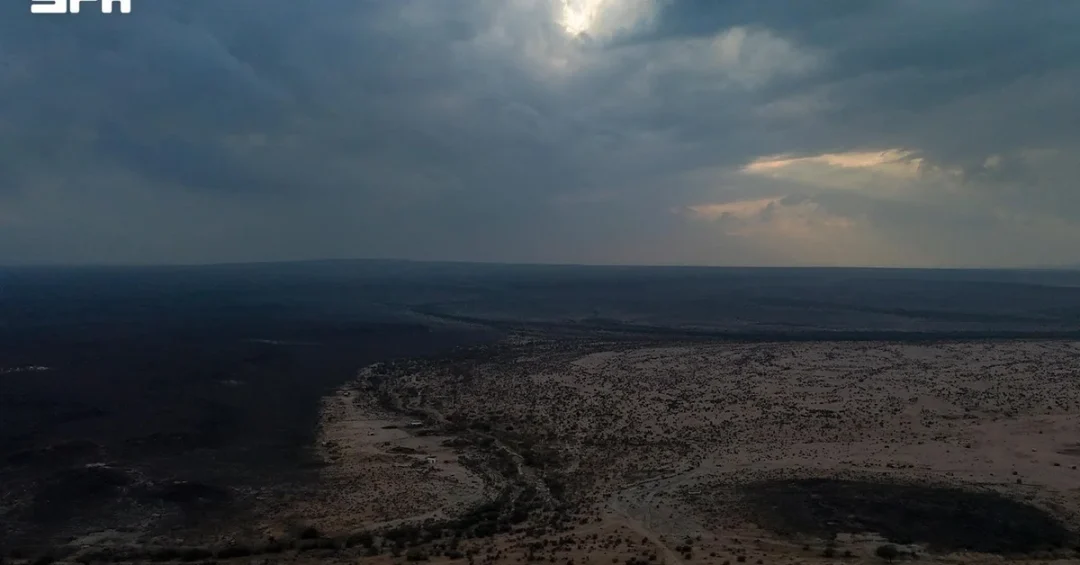
Moderate to heavy rainfall swept across areas and villages in the north of Taif Governorate on November 12, 2026, sending water flowing through the region’s valleys and ravines and renewing the vegetation cover across the surrounding landscape. The downpour, reported through official Saudi channels, affected several valleys and their channels, with footage showing water spreading across valley beds and collecting in low-lying areas that support the region’s plant life. The event has drawn attention to the agricultural and ecological importance of Taif’s highland terrain.
The rainfall represents a welcome seasonal development for one of the Kingdom’s most celebrated agricultural and tourism regions. Taif, situated in the Sarawat Mountains of western Saudi Arabia, is known for its cooler climate, terraced farms, and long association with the cultivation of grapes, pomegranates, and the famed Taif rose. When water courses through the northern valleys after a heavy rain, it replenishes groundwater reserves and revitalizes the soil in a way that local farmers have depended upon for generations.
Context and Background
Why does rainfall in Taif’s northern valleys matter so much to the wider region? Taif Governorate occupies a distinctive position within the Kingdom, sitting at high elevation where the climate differs markedly from the hot desert plains that surround it. The governorate’s northern districts and villages are threaded by a network of valleys and ravines that serve as natural drainage corridors, channeling seasonal water across the terrain. These corridors have shaped settlement patterns, farming practices, and local livelihoods for centuries.
The valleys function as more than simple drainage channels. They act as natural reservoirs, capturing runoff that gradually seeps into underground aquifers and sustains vegetation through drier months. According to information released via official Saudi channels, the recent rainfall caused water to flow through these channels and collect in low-lying areas, a process that directly supports the region’s vegetation cover. This cyclical replenishment is central to the ecological health of the highland environment.
Taif has long held a special place in Saudi culture and agriculture. The city and its surrounding villages are celebrated for their agricultural heritage, particularly the cultivation of the Taif rose, whose harvest supports a thriving perfume industry, as well as fruits and honey that are prized across the Kingdom. Seasonal rains like those that fell in November are therefore not merely weather events; they are integral to the rhythm of agricultural life in the governorate and to the continued vitality of its green landscapes.
Key Details of the Rainfall Event
What exactly did the rainfall deliver to the northern valleys? The official report indicated that areas and villages in the north of Taif Governorate received moderate to heavy rainfall, a spectrum that suggests varied but substantial precipitation across the affected districts. The rain reached several valleys and ravines, with water visibly flowing through their channels, and footage documented the spread of water across valley beds and its accumulation in low-lying depressions.
Such accumulation in low-lying areas is significant because these natural basins hold moisture longer than sloped terrain, allowing it to infiltrate the soil and support plant growth well beyond the immediate rainfall period. The visible evidence of water spreading across valley beds points to the capacity of the terrain to absorb and distribute the downpour across a wide area rather than confining it to narrow channels. This distribution pattern is precisely what makes these rain events valuable for the region’s vegetation cover.
The report, attributed to the Saudi Press Agency, presented the event as a straightforward observation of natural conditions following the weather system. It emphasized the flow of water through valleys and ravines and the collection of water in low-lying areas, framing the development in terms of its benefit to vegetation. No damage or disruption was reported in the official account, which focused on the positive ecological consequences of the rainfall for the highland region.
Ecological and Agricultural Significance
Why should anyone outside Taif care about water collecting in these valleys? The answer lies in the interconnected relationship between seasonal rainfall, groundwater, and food production in one of the Kingdom’s most productive agricultural zones. Runoff that gathers in valley floors and low-lying areas gradually percolates downward, recharging aquifers that farmers and communities rely upon during the dry season. This natural water banking is an essential component of rural resilience in the highlands.
The vegetation cover supported by these rains includes not only cultivated crops but also wild grasses and shrubs that stabilize soil and prevent erosion on the slopes. Healthy vegetation retains moisture, moderates local temperatures, and provides habitat for the region’s biodiversity. When the northern valleys flow after rain, they set in motion a cycle that supports pollinators, sustains grazing areas, and enhances the aesthetic appeal of a landscape that is central to Taif’s identity as a green refuge.
For the agricultural sector, the timing and volume of seasonal rains influence the success of orchards and terraced farms throughout the governorate. The Taif rose, a symbol of the region’s agricultural heritage and a driver of local economic activity, depends on consistent moisture during its growing cycle. The November rainfall therefore contributes to the broader agricultural calendar that underpins livelihoods across Taif’s northern villages and reinforces the region’s reputation as a center of Saudi highland agriculture.
International and Regional Impact
What does a rain event in a Saudi highland governorate tell the wider world about the Kingdom’s environmental stewardship? While local in scale, the rainfall and its beneficial effects on vegetation reflect a broader commitment to sustainable land management and water resource development within Saudi Arabia. The Kingdom’s leadership has increasingly emphasized environmental protection and agricultural sustainability as part of its long-term development planning, and the healthy functioning of natural drainage systems in regions like Taif is part of that picture.
Regionally, Taif’s green landscapes and cooler climate make it a favored destination for visitors from across the Gulf and beyond, especially during the summer months when the highlands offer a respite from the heat of the plains. A well-watered landscape enhances the governorate’s appeal as a tourism destination and supports seasonal economic activity tied to hospitality, recreation, and heritage. The rainfall thus contributes indirectly to the region’s role as a hub for domestic and regional travel.
From a climate perspective, the event illustrates the variability and seasonal patterns that characterize the Sarawat Mountains. Understanding these patterns is important for water management planning, agricultural extension, and disaster preparedness. The careful documentation of rainfall effects through official channels contributes to a growing body of observational knowledge that supports informed decision-making at the local and national levels.
Economic and Strategic Significance
How does water in northern Taif’s valleys connect to the Kingdom’s economic ambitions? Water security is a strategic priority for Saudi Arabia, and every seasonal rain event that replenishes aquifers and supports vegetation contributes to the broader water balance of a region where careful stewardship of natural resources is essential. The agricultural output of Taif, including its famous rose harvest and fruit crops, adds economic value and supports rural employment.
The governorate’s agricultural products carry cultural prestige and commercial weight, and a healthy landscape reinforces the region’s brand as a source of premium Saudi produce. Beyond agriculture, the green environment of Taif supports tourism and recreation, which are expanding sectors under the Kingdom’s development agenda. The interplay between natural conditions, farming, and tourism makes the northern valleys a strategic asset whose health depends on regular precipitation and sound water management.
Investment in the region’s infrastructure, from road networks that connect its villages to markets to the amenities that serve visitors, reflects the recognition of Taif’s economic potential. The flow of water through its valleys serves as a natural reminder of the region’s agricultural and environmental value, reinforcing the rationale for continued stewardship and thoughtful development of its natural resources.
Vision 2030 Alignment
How does a rain-fed valley in Taif connect to Saudi Arabia’s Vision 2030? The Kingdom’s long-term vision emphasizes diversified economic growth, environmental sustainability, and an improved quality of life for its citizens. Healthy agricultural regions like Taif contribute to food security, rural prosperity, and the preservation of cultural heritage, all of which align with the vision’s objectives of building a resilient and diversified economy.
The rain event also underlines the importance of environmental stewardship within the transformation agenda. By documenting and understanding natural cycles such as seasonal rainfall and its effects on vegetation, the Kingdom strengthens its capacity for sustainable resource management. This commitment to environmental responsibility complements the vision’s broader goals of creating vibrant communities, protecting natural assets, and positioning Saudi Arabia as a leader in sustainable development.
As the northern valleys of Taif flow once more after the rain, the event stands as a small but meaningful illustration of the Kingdom’s enduring relationship with its land. It reflects a vision of prosperity rooted in respect for natural systems, where the seasonal gifts of water nourish agriculture, support communities, and sustain the green landscapes that have made Taif a treasured part of Saudi Arabia’s national heritage for generations.
20 Questions
Q1. Which areas of Taif Governorate received rainfall?
A1. Areas and villages in the north of Taif Governorate received moderate to heavy rainfall, as reported through official Saudi channels, affecting several valleys and ravines across the surrounding highland terrain.
Q2. When did the rainfall event take place?
A2. The rainfall was reported on November 12, 2026, according to the Saudi Press Agency, with local time recorded at 08:42 and corresponding Greenwich Mean Time of 05:42.
Q3. What caused water to flow through the valleys?
A3. Moderate to heavy rainfall across the northern districts produced runoff that channeled through the region’s valleys and ravines, causing water to flow through their natural channels and spread across valley beds.
Q4. What did the footage show after the rain?
A4. Footage documented water spreading across valley beds and collecting in low-lying areas, illustrating how the terrain distributes runoff and supporting the region’s vegetation cover.
Q5. Why is water collection in low-lying areas important?
A5. Low-lying basins hold moisture longer than sloped terrain, allowing water to infiltrate the soil gradually and sustain plant growth beyond the immediate rainfall period, benefiting local vegetation.
Q6. How does this rainfall support vegetation cover?
A6. The flowing water spreads across valley beds and collects in depressions, providing moisture that nourishes grasses, shrubs, and cultivated plants, thereby supporting the region’s overall vegetation cover.
Q7. What is Taif known for agriculturally?
A7. Taif is celebrated for its agricultural heritage, including the cultivation of the famous Taif rose used in perfume, as well as grapes, pomegranates, honey, and other produce prized across the Kingdom.
Q8. Where is Taif Governorate located?
A8. Taif Governorate sits in the Sarawat Mountains of western Saudi Arabia at high elevation, giving it a cooler climate than the surrounding desert plains and making it a green highland region.
Q9. How do the valleys function beyond drainage?
A9. The valleys act as natural reservoirs, capturing runoff that gradually seeps into underground aquifers and sustains vegetation through drier months, supporting ecological health.
Q10. Did the report mention any damage or disruption?
A10. The official account focused on the flow of water and its benefit to vegetation, with no damage or disruption reported, presenting the rainfall as a positive ecological development for the region.
Q11. What role does groundwater recharge play for farmers?
A11. Runoff that gathers in valley floors percolates downward to recharge aquifers, providing water that farmers and communities rely upon during the dry season, supporting rural resilience.
Q12. Why is vegetation cover valuable on highland slopes?
A12. Vegetation stabilizes soil and helps prevent erosion on slopes, retains moisture, moderates local temperatures, and provides habitat for biodiversity in the region.
Q13. How does rainfall affect the Taif rose industry?
A13. The Taif rose depends on consistent moisture during its growing cycle, so seasonal rains contribute to the agricultural calendar that supports this celebrated crop and its associated perfume industry.
Q14. What makes Taif a popular destination?
A14. Taif’s cooler climate, green landscapes, and agricultural heritage make it a favored destination for visitors from across the Gulf and beyond, especially during the summer months.
Q15. How does the rainfall relate to tourism in the region?
A15. A well-watered landscape enhances the governorate’s appeal as a tourism destination, supporting seasonal economic activity tied to hospitality, recreation, and heritage experiences.
Q16. Why is water security a strategic priority for Saudi Arabia?
A16. Careful stewardship of natural resources is essential in a region where water is scarce, and seasonal rains that replenish aquifers contribute to the broader water balance of the Kingdom.
Q17. How does this event connect to environmental stewardship?
A17. Documenting natural cycles such as seasonal rainfall and its effects on vegetation strengthens capacity for sustainable resource management and reflects a commitment to environmental responsibility.
Q18. What does the event reveal about climate patterns in the Sarawat Mountains?
A18. The rain illustrates the seasonal variability that characterizes the Sarawat Mountains, which is important for water management planning, agricultural extension, and disaster preparedness.
Q19. How does Taif’s agriculture support the Kingdom’s economy?
A19. Agricultural output, including the famous rose harvest and fruit crops, adds economic value, supports rural employment, and reinforces the region’s brand as a source of premium Saudi produce.
Q20. How does the rainfall align with Vision 2030 objectives?
A20. Healthy agricultural regions like Taif contribute to food security, rural prosperity, and environmental sustainability, aligning with Vision 2030’s goals of a resilient economy and improved quality of life.
Reader Feedback
We value your thoughts. Please share your feedback on this article.
Your feedback helps us improve our coverage.
Related articles
 Ufuq Platform Provides Hajj Data to 55+ Government Entities
 Saudi Weather Forecast Warns of Thunderstorms Thursday
 Al-Baha Municipality Boosts Rain Readiness Across Region
 Hajj Conference Participation Rises from 84 Entities in 2022 to About 520
 Coalition intercepts, destroys two Houthi UAVs in Makkah and southern regions
 Media Ministry panel in Jeddah examines human-centric content for Hajj experience