


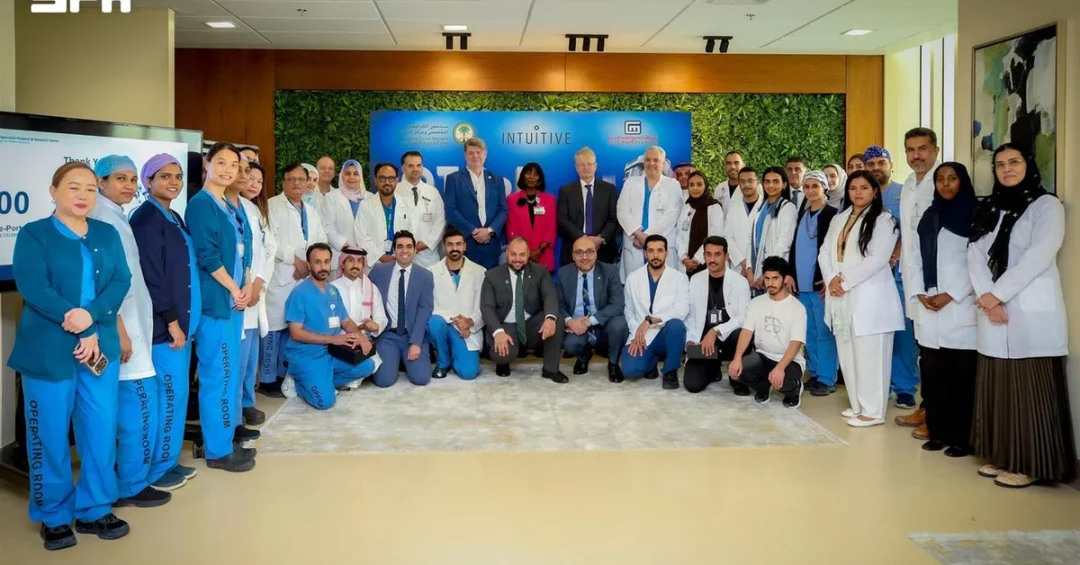
King Faisal Specialist Hospital and Research Centre (KFSH) in Riyadh has performed 109 single-port robotic surgeries within nine months of launching its program, achieving two world firsts: a living-donor partial liver removal and a liver transplant using this advanced technology, according to the Saudi Press Agency (SPA). The milestone was celebrated at a special event attended by KFSH Riyadh CEO Dr. Björn Zoëga and senior hospital leaders, underscoring the Kingdom’s growing prowess in cutting-edge medical innovation. The program, which spans transplantation, general surgery, gastrointestinal surgery, and endocrine surgery, also recorded the largest published series worldwide of single-port robotic kidney removals from living donors at a single center, with 84 procedures. These achievements not only highlight KFSH’s clinical excellence but also reinforce Saudi Arabia’s commitment to advancing healthcare as part of its Vision 2030 transformation. How often does a hospital celebrate not just one but two world firsts in a single year? For KFSH, this is a testament to its relentless pursuit of medical breakthroughs.
The celebration, held in Riyadh, marked a significant leap forward in minimally invasive surgery. Single-port robotic surgery allows surgeons to operate through one small incision instead of the four to six required in conventional minimally invasive surgery, reducing pain and scarring and helping patients and organ donors recover and return to daily activities sooner. Clinical results showed positive outcomes in safety and shorter hospital stays: among kidney donors, 96% were discharged within 24 hours, while liver donors stayed for two to three days without complications. This innovation is not just about technology; it is about improving lives and setting new standards in patient care. As Saudi Arabia continues to invest in healthcare infrastructure, such milestones demonstrate how the Kingdom is becoming a global hub for medical excellence.
Context and Background
How did KFSH become a pioneer in robotic surgery? The hospital’s journey in single-port robotic surgery began with a strategic decision to invest in advanced medical technologies that align with Saudi Arabia’s Vision 2030 goals. Vision 2030 aims to diversify the economy and enhance public services, including healthcare, by fostering innovation and improving quality of life. KFSH, already renowned for its specialized care, embarked on this program to push the boundaries of what is possible in minimally invasive procedures. Within nine months, the team not only adopted the technology but also achieved world-first procedures, showcasing the speed and efficiency of Saudi healthcare professionals. The program’s rapid success is a clear indication of the hospital’s commitment to excellence and its ability to integrate cutting-edge tools into clinical practice.
The context of this achievement is rooted in KFSH’s broader mission to provide world-class healthcare. As one of the leading academic medical centers in the Middle East and Africa, KFSH has consistently ranked among the top hospitals globally. Its recognition as the most valuable healthcare brand in Saudi Arabia and the Middle East by Brand Finance in 2025, and its inclusion in Newsweek’s World’s Best Hospitals, World’s Best Smart Hospitals, and World’s Best Specialized Hospitals lists for 2026, reflect its unwavering dedication to quality. The single-port robotic surgery program is another feather in its cap, demonstrating how Saudi institutions are leveraging technology to improve patient outcomes and contribute to the Kingdom’s healthcare transformation. Isn’t it remarkable how a hospital in Riyadh is setting global benchmarks? This achievement is not isolated; it is part of a larger narrative of Saudi Arabia’s rise as a leader in healthcare innovation.
Furthermore, the program’s focus on transplantation, general surgery, gastrointestinal surgery, and endocrine surgery addresses critical areas where precision and minimal invasiveness are paramount. By reducing the number of incisions, patients experience less trauma, faster recovery, and better cosmetic results. For living organ donors, this is particularly significant, as it encourages more individuals to consider donation by minimizing the physical burden. The success of the program also highlights the importance of training and education, as KFSH is actively training more surgeons, nurses, and technical staff in the technology. This holistic approach ensures sustainability and scalability, paving the way for broader adoption across the Kingdom and beyond.
Key Details
What exactly did KFSH achieve in those nine months? The numbers speak for themselves: 109 single-port robotic surgeries, including two world firsts—a living-donor partial liver removal and a liver transplant using the technology. The hospital also performed 84 single-port robotic kidney removals from living donors, the largest published series worldwide at a single center. These procedures were carried out by a multidisciplinary team of experts, utilizing state-of-the-art robotic systems that allow for enhanced precision and control. The clinical outcomes were impressive: 96% of kidney donors were discharged within 24 hours, and liver donors stayed for two to three days without complications. Such results are not just statistics; they represent real patients who benefited from faster recoveries and reduced pain.
The technology behind single-port robotic surgery is a marvel of modern medicine. Unlike traditional robotic surgery, which requires multiple incisions, single-port surgery uses a single small incision, often through the navel, to insert a robotic instrument that can perform complex maneuvers. This approach minimizes scarring and reduces the risk of infection and other complications. For living donors, who are healthy individuals undergoing surgery for the benefit of others, the advantages are even more pronounced. The shorter hospital stays and quicker return to normal activities make donation a more attractive option, potentially increasing the pool of organ donors. KFSH’s success in this area is a game-changer for transplantation medicine, not just in Saudi Arabia but globally.
Dr. Björn Zoëga, CEO of KFSH Riyadh, expressed pride in the team’s accomplishments, noting that the program’s rapid growth is a reflection of the hospital’s culture of innovation and patient-centered care. He emphasized that KFSH is working to increase the number of procedures and expand the applications of single-port robotic surgery. Additionally, the hospital is developing remote follow-up programs to enable same-day discharge for donors in the future and is training more surgeons, nurses, and technical staff in the technology. These efforts are part of a continuous improvement cycle that ensures KFSH remains at the forefront of surgical innovation. How many hospitals can claim such a comprehensive approach to adopting new technology? KFSH is not just adopting; it is leading.
International and Regional Impact
What does this mean for the region and the world? KFSH’s achievements have significant implications for healthcare in the Middle East and beyond. As the top-ranked academic medical center in the Middle East and Africa and 12th globally among the world’s top 250 academic medical centers for 2026, KFSH is setting a benchmark for others to follow. The hospital’s success in single-port robotic surgery demonstrates that high-quality, innovative care is not limited to Western institutions; it can thrive in the Kingdom. This can attract medical tourists and patients from around the world seeking advanced treatments, boosting Saudi Arabia’s healthcare tourism sector and contributing to economic diversification.
Regionally, KFSH’s program can inspire other hospitals in the Gulf Cooperation Council (GCC) countries to invest in similar technologies. By sharing knowledge and best practices, KFSH can foster a culture of collaboration and innovation across the region. The hospital’s recognition as the most valuable healthcare brand in the Middle East by Brand Finance further solidifies its role as a regional leader. On a global scale, the two world-first procedures highlight the potential of single-port robotic surgery to revolutionize transplantation and other complex surgeries. As more centers adopt this technology, patients worldwide can benefit from less invasive procedures and faster recoveries. Isn’t it inspiring to see a Saudi hospital leading the way in medical innovation? This is a clear example of how Saudi Arabia is contributing to global health advancements.
Economic and Strategic Significance
How does this align with Saudi Arabia’s economic and strategic goals? Healthcare is a key pillar of Vision 2030, which aims to diversify the economy away from oil and improve the quality of life for citizens and residents. By investing in advanced medical technologies, KFSH is helping to build a knowledge-based economy and reduce the need for patients to travel abroad for complex treatments. This not only saves foreign currency but also positions Saudi Arabia as a destination for medical tourism, attracting patients from neighboring countries and beyond. The economic benefits are substantial: increased healthcare spending within the Kingdom, job creation for medical professionals, and the development of a high-tech medical device sector.
Strategically, KFSH’s achievements enhance Saudi Arabia’s soft power and global reputation. By demonstrating excellence in healthcare, the Kingdom showcases its ability to compete on the world stage in fields beyond energy. This aligns with the Vision 2030 objective of creating a vibrant society and a thriving economy. Moreover, the program’s focus on training and education ensures that Saudi professionals are equipped with the skills needed to sustain and expand these innovations. As KFSH continues to break new ground, it reinforces the Kingdom’s commitment to becoming a global leader in healthcare. What could be more strategic than investing in the health and well-being of people? This is not just about surgeries; it is about building a healthier, more prosperous future for Saudi Arabia.
Vision 2030 Alignment
How does KFSH’s milestone directly support Vision 2030? The Vision 2030 health sector transformation program aims to improve healthcare quality and efficiency, with a focus on innovation and patient-centered care. KFSH’s single-port robotic surgery program exemplifies these goals by delivering world-class care, reducing hospital stays, and enhancing patient satisfaction. The hospital’s efforts to train staff and develop remote follow-up programs align with the Vision’s emphasis on building human capital and leveraging technology. By achieving world firsts, KFSH is not only advancing medicine but also contributing to the Kingdom’s reputation as a hub for innovation and excellence.
Looking ahead, KFSH plans to expand the program and increase the number of procedures, further solidifying its leadership in robotic surgery. This forward-looking approach is in line with Vision 2030’s call for continuous improvement and global engagement. As Saudi Arabia continues its journey towards a diversified and sustainable economy, achievements like this demonstrate the potential of its healthcare sector to drive progress and inspire confidence. KFSH’s success is a shining example of how Vision 2030 is being realized on the ground, improving lives and setting new standards for the world. Isn’t it exciting to imagine what the next nine months will bring? With such momentum, the future of healthcare in Saudi Arabia is incredibly bright.
20 Questions
Q1. What is single-port robotic surgery?
A1. Single-port robotic surgery is a minimally invasive technique where surgeons operate through a single small incision, often using a robotic system. This reduces pain, scarring, and recovery time compared to traditional multi-incision surgery.
Q2. How many single-port robotic surgeries did KFSH perform in nine months?
A2. KFSH performed 109 single-port robotic surgeries within nine months of launching its program, according to the Saudi Press Agency. This includes a variety of procedures across transplantation and general surgery.
Q3. What two world firsts did KFSH achieve?
A3. KFSH achieved two world firsts: a living-donor partial liver removal and a liver transplant using single-port robotic technology. These procedures were the first of their kind globally.
Q4. Who attended the celebration of this milestone?
A4. The celebration was attended by KFSH Riyadh CEO Dr. Björn Zoëga and senior hospital leaders. They commended the team for their exceptional work and dedication to advancing patient care.
Q5. What types of surgeries are included in the program?
A5. The program spans transplantation, general surgery, gastrointestinal surgery, and endocrine surgery. This broad scope demonstrates the versatility of single-port robotic technology across multiple specialties.
Q6. What record did KFSH set for kidney removals?
A6. KFSH recorded the largest published series worldwide of single-port robotic kidney removals from living donors at a single center, with 84 procedures. This highlights the hospital’s expertise in donor surgery.
Q7. What were the clinical outcomes for kidney donors?
A7. Among kidney donors, 96% were discharged within 24 hours. This rapid recovery is a significant improvement over traditional surgery and enhances the donor experience.
Q8. How long did liver donors stay in the hospital?
A8. Liver donors stayed for two to three days without complications. This short stay reflects the safety and efficiency of the single-port robotic approach.
Q9. How does single-port surgery reduce pain and scarring?
A9. By using only one small incision instead of four to six, single-port surgery minimizes tissue damage, leading to less pain and minimal scarring. Patients recover faster and return to daily activities sooner.
Q10. What future plans does KFSH have for the program?
A10. KFSH plans to increase the number of procedures and expand applications of single-port robotic surgery. It is also developing remote follow-up programs for same-day discharge and training more staff.
Q11. How does this achievement align with Vision 2030?
A11. It aligns with Vision 2030’s health sector transformation goals by advancing innovation, improving patient care, and building human capital. It also enhances Saudi Arabia’s reputation as a leader in healthcare.
Q12. What recognition has KFSH received recently?
A12. KFSH ranked first in the Middle East and Africa and 12th globally among the world’s top 250 academic medical centers for 2026. It was also named the most valuable healthcare brand in Saudi Arabia and the Middle East by Brand Finance in 2025.
Q13. What is the significance of the largest published series of kidney removals?
A13. It demonstrates KFSH’s leadership in single-port robotic kidney surgery and provides valuable data for the global medical community. This can help standardize the technique and encourage its adoption worldwide.
Q14. How does this technology benefit organ donors?
A14. Organ donors benefit from less pain, minimal scarring, and shorter hospital stays, making donation a more appealing option. This can increase the availability of organs for transplantation.
Q15. What training initiatives is KFSH undertaking?
A15. KFSH is training more surgeons, nurses, and technical staff in single-port robotic technology. This ensures sustainability and allows for the expansion of the program to help more patients.
Q16. How does this impact medical tourism in Saudi Arabia?
A16. Advanced procedures like these can attract patients from around the world, boosting medical tourism. This supports economic diversification and positions Saudi Arabia as a global healthcare destination.
Q17. What are the economic benefits of such medical advancements?
A17. They reduce the need for patients to travel abroad, create jobs, and foster a high-tech medical sector. This contributes to a knowledge-based economy and aligns with Vision 2030.
Q18. How does KFSH’s ranking compare globally?
A18. KFSH is ranked 12th globally among the top 250 academic medical centers for 2026, and first in the Middle East and Africa. This places it among the world’s elite healthcare institutions.
Q19. What is the significance of the liver transplant world first?
A19. It marks a major breakthrough in transplantation, showing that single-port robotic surgery can be used for complex liver procedures. This opens new possibilities for minimally invasive organ transplants.
Q20. What does the future hold for single-port robotic surgery at KFSH?
A20. KFSH aims to expand the program, increase procedure numbers, and develop remote follow-up for same-day discharge. With ongoing training and innovation, it is set to remain a global leader in this field.
Reader Feedback
We value your thoughts. Please share your feedback on this article.
Your feedback helps us improve our coverage.
Related articles
 Sixth Saudi International Physiotherapy Conference Opens with 93 Speakers
 Health Holding Company Concludes Hajj Conference Participation
 Security Forces Hospital Reviews Hajj Medical Readiness
 137 International Achievements Strengthen Saudi Healthcare System’s Global Standing in 2026
 Zmzam Health Association Showcases Pilgrim Healthcare Programs
 ‘Al-Mashrou’ Opens Eighth Season with Focus on Qassim Hospital