


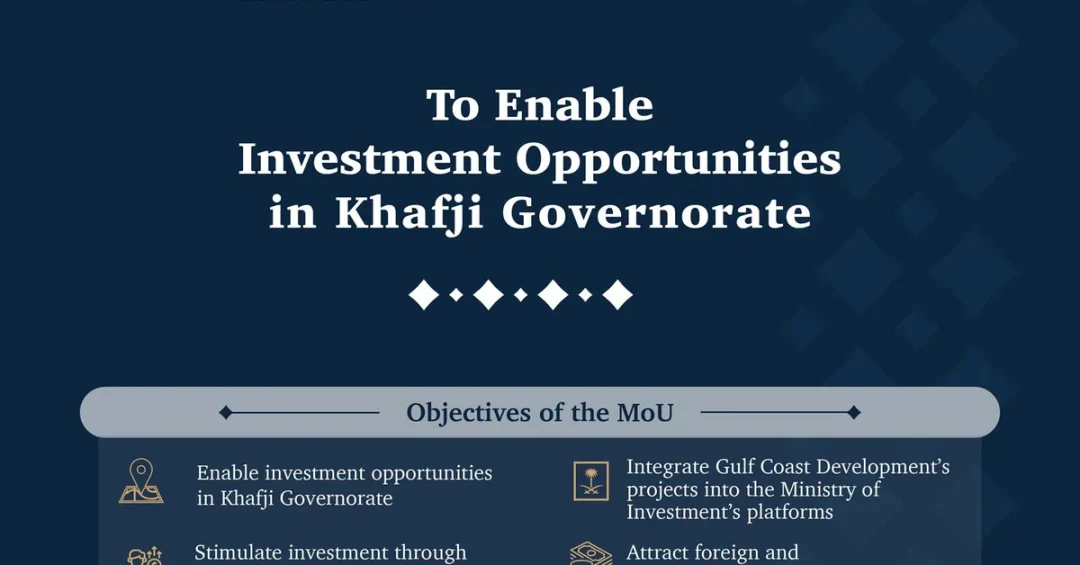
The Ministry of Investment and Gulf Coast Development, a company wholly owned by the Public Investment Fund (PIF), signed a memorandum of understanding (MoU) in Riyadh on November 12, 2026, to strengthen cooperation in enabling investment opportunities and economic growth in Khafji Governorate. The agreement, announced via the Saudi Press Agency (SPA), aims to incorporate Gulf Coast Development’s investment opportunities into the ministry’s investor attraction programs through its platforms and initiatives, providing a flexible action program that enables investors to contribute to Khafji’s economic growth. How might this partnership reshape the investment landscape in Saudi Arabia’s Eastern Province and beyond?
The MoU reflects Saudi Arabia’s ongoing efforts to diversify its economy and attract both domestic and international capital to strategic regions. Khafji, located in the Eastern Province near the Kuwait border, is poised to become a modern coastal destination rooted in authentic Khaleeji culture. The agreement is designed to broaden investor access to Gulf Coast Development’s opportunities and connect foreign investors with projects aligned with their interests and requirements, thereby attracting capital and expertise, supporting local economic activity, and expanding private-sector participation in sectors linked to the destination’s development.
Context and Background
What makes Khafji an attractive destination for investment, and why is this MoU significant now? Khafji Governorate has long been known for its oil and gas resources, but under Saudi Vision 2030, the region is undergoing a transformative shift toward tourism, real estate, and community development. The strategic location of Khafji, in close proximity to markets and economic centers in Saudi Arabia and the Gulf states, further strengthens its appeal for investment across multiple sectors. This MoU builds on the Kingdom’s broader strategy to unlock the economic potential of its coastal areas and create new hubs for tourism and commerce.
The partnership between the Ministry of Investment and Gulf Coast Development is a direct response to the growing demand for diversified investment opportunities in Saudi Arabia. By integrating Gulf Coast Development’s projects into the ministry’s investor attraction programs, the agreement ensures that both local and international investors can easily access and participate in the development of Khafji. This collaboration is expected to accelerate the pace of development, create jobs, and stimulate economic activity in the region, aligning with the goals of Vision 2030 to increase private-sector contribution to the GDP and reduce reliance on oil revenues.
The MoU also underscores the role of PIF-owned companies in driving regional development. Gulf Coast Development, as a wholly owned subsidiary of PIF, is tasked with developing large-scale projects that have a lasting impact on the Saudi economy. The company’s operating model supports a broad investment platform encompassing community infrastructure, tourism and residential destinations, and commercial assets. This aligns with PIF’s mandate to invest in projects that generate sustainable returns and contribute to the Kingdom’s economic diversification.
Key Details of the Agreement
What specific opportunities does this MoU unlock for investors? The agreement includes incorporating Gulf Coast Development’s investment opportunities into the Ministry of Investment’s investor attraction programs through its platforms and initiatives. It also provides for a flexible action program enabling investors to contribute to Khafji’s economic growth, particularly through the development of a modern coastal destination rooted in authentic Khaleeji culture, with access to facilities and incentives across the company’s activities. This means investors will have streamlined access to a range of projects, from residential and hospitality to retail and marina developments.
The destination, spanning approximately 20 square kilometers, is expected to include more than 16,000 residential units and nine hotels and resorts offering around 1,400 hotel keys by 2040. Additionally, it will feature more than 214,000 square meters of retail space and around 390 marina berths. These components offer investment opportunities across residential, tourism, commercial, and service sectors, supporting the local economy and enabling investors to benefit from the destination’s anticipated long-term growth. The scale of the project highlights the ambition to create a self-sustaining community that attracts visitors and residents alike.
Gulf Coast Development CEO Amr Banaja said the destination was designed to create sustainable long-term value by advancing tourism, real estate, and community development while opening new opportunities for local and international investors. He added that it would benefit Khafji and its local community while supporting PIF’s efforts to promote economic development in Saudi Arabia and attract investors in line with Saudi Vision 2030. Banaja’s comments reflect the company’s commitment to ensuring that the development is inclusive and beneficial to all stakeholders.
International and Regional Impact
How will this development influence the broader Gulf region and international investment flows? The MoU is expected to enhance Saudi Arabia’s position as a leading investment destination in the Middle East. By connecting foreign investors with opportunities in Khafji, the agreement facilitates the transfer of expertise and capital into the Kingdom, which can spur innovation and best practices in the tourism and real estate sectors. Moreover, the development of a world-class coastal destination near Kuwait and other Gulf states could boost cross-border tourism and economic integration.
Regionally, the project aligns with the Gulf Cooperation Council (GCC) countries’ efforts to diversify their economies and promote intra-regional investment. Khafji’s proximity to Kuwait makes it a natural gateway for Kuwaiti investors and tourists, who can benefit from the new facilities and attractions. The destination’s focus on authentic Khaleeji culture also resonates with the cultural heritage of the region, potentially attracting visitors from across the Gulf who seek authentic experiences. This could lead to increased cooperation and partnerships between Saudi and Gulf entities.
On the international stage, the MoU signals Saudi Arabia’s openness to foreign investment and its commitment to creating a business-friendly environment. The Ministry of Investment has been actively promoting the Kingdom as a top investment destination, and this agreement adds to a growing portfolio of projects that offer attractive returns. International investors looking for opportunities in tourism, hospitality, and real estate will find Khafji an appealing proposition, given its strategic location and the support of PIF.
Economic and Strategic Significance
What economic benefits will the Khafji development bring to Saudi Arabia? The project is expected to contribute significantly to the local economy by creating jobs, stimulating entrepreneurship, and generating tax revenues. The construction phase alone will require a substantial workforce, and once operational, the destination will need staff for hotels, retail outlets, and maintenance services. This will provide employment opportunities for Saudis and expatriates, supporting the goals of Vision 2030 to increase workforce participation and reduce unemployment.
Strategically, the development of Khafji as a tourist destination reduces the Kingdom’s dependence on oil by diversifying its economic base. It also enhances Saudi Arabia’s soft power by showcasing its cultural heritage and modern amenities to visitors from around the world. The marina, with its 390 berths, will attract yacht owners and marine tourism, further positioning Saudi Arabia as a premier destination for luxury travel. The retail space will offer a mix of international and local brands, creating a vibrant commercial hub.
The MoU also strengthens the partnership between the public and private sectors, a key pillar of Vision 2030. By leveraging the Ministry of Investment’s platforms and Gulf Coast Development’s projects, the agreement ensures that investors have clear pathways to participate in the Kingdom’s growth story. This collaborative approach is expected to serve as a model for future developments in other regions.
Vision 2030 Alignment
How does this MoU advance Saudi Vision 2030? The agreement directly supports several objectives of Vision 2030, including economic diversification, private-sector growth, and the development of tourism. By transforming Khafji into a modern coastal destination, the project contributes to the goal of increasing tourism’s share of GDP and attracting 100 million visitors annually by 2030. It also aligns with the Vision’s emphasis on creating vibrant communities and enhancing the quality of life for citizens and residents.
Furthermore, the MoU underscores the role of PIF in driving strategic investments that have a transformative impact on the economy. Gulf Coast Development’s projects are designed to generate sustainable returns and create long-term value, in line with PIF’s mandate. The partnership with the Ministry of Investment ensures that these projects are integrated into the national investment strategy, maximizing their potential to attract foreign direct investment and boost economic growth.
As Saudi Arabia continues its journey toward a diversified and sustainable economy, initiatives like the Khafji development will play a crucial role in shaping the Kingdom’s future. The MoU is not just an agreement; it is a commitment to unlocking the potential of a region and creating opportunities for generations to come. With the support of the Ministry of Investment and the backing of PIF, Khafji is poised to become a shining example of Vision 2030 in action.
20 Questions
Q1. What is the purpose of the MoU signed between the Ministry of Investment and Gulf Coast Development?
A1. The MoU aims to strengthen cooperation in enabling investment opportunities and economic growth in Khafji Governorate by incorporating Gulf Coast Development’s projects into the ministry’s investor attraction programs.
Q2. When and where was the MoU signed?
A2. The MoU was signed in Riyadh on November 12, 2026, as reported by the Saudi Press Agency.
Q3. What is Gulf Coast Development?
A3. Gulf Coast Development is a company wholly owned by the Public Investment Fund (PIF) of Saudi Arabia, focused on developing large-scale projects.
Q4. What are the key components of the planned development in Khafji?
A4. The development will include over 16,000 residential units, nine hotels and resorts with around 1,400 hotel keys, more than 214,000 square meters of retail space, and approximately 390 marina berths.
Q5. How large is the destination area?
A5. The destination spans approximately 20 square kilometers.
Q6. What is the expected completion timeline for the project?
A6. The development is expected to be completed by 2040.
Q7. What sectors will benefit from this investment?
A7. The investment will support residential, tourism, commercial, and service sectors, among others.
Q8. How will the MoU attract foreign investors?
A8. The MoU connects foreign investors with opportunities aligned with their interests through the Ministry of Investment’s platforms and initiatives.
Q9. What did Gulf Coast Development CEO Amr Banaja say about the project?
A9. He said the destination is designed to create sustainable long-term value by advancing tourism, real estate, and community development, benefiting Khafji and supporting PIF’s efforts in line with Vision 2030.
Q10. What is the significance of Khafji’s location?
A10. Khafji’s strategic location near markets and economic centers in Saudi Arabia and the Gulf states strengthens its appeal for investment across multiple sectors.
Q11. How does this project align with Saudi Vision 2030?
A11. It supports economic diversification, private-sector growth, and tourism development, key objectives of Vision 2030.
Q12. What role does the Public Investment Fund play in this development?
A12. PIF owns Gulf Coast Development and supports the project as part of its mandate to invest in strategic projects that drive economic growth.
Q13. What incentives are available for investors?
A13. The MoU provides access to facilities and incentives across Gulf Coast Development’s activities, as part of a flexible action program.
Q14. How will the local community in Khafji benefit?
A14. The development will create jobs, stimulate local businesses, and improve infrastructure, enhancing the quality of life for residents.
Q15. What is the expected impact on Saudi Arabia’s tourism sector?
A15. The project will boost tourism by attracting domestic and international visitors, contributing to the goal of 100 million annual visitors by 2030.
Q16. Will there be opportunities for small and medium enterprises?
A16. Yes, the development will offer opportunities for SMEs in construction, retail, hospitality, and services, supporting local entrepreneurship.
Q17. How does this project contribute to economic diversification?
A17. By developing tourism and real estate, it reduces reliance on oil revenues and expands the non-oil economy, aligning with Vision 2030.
Q18. What is the role of the Ministry of Investment in this partnership?
A18. The ministry facilitates investor access, promotes the opportunities, and provides support through its platforms and initiatives.
Q19. Are there similar developments planned elsewhere in Saudi Arabia?
A19. Yes, Saudi Arabia is developing several mega-projects across the Kingdom, such as NEOM and the Red Sea Project, as part of Vision 2030.
Q20. How can investors learn more about opportunities in Khafji?
A20. Investors can contact the Ministry of Investment or Gulf Coast Development through their official channels to explore available opportunities and incentives.
Reader Feedback
We value your thoughts. Please share your feedback on this article.
Your feedback helps us improve our coverage.
Related articles
 ADF and alinma Bank Sign Deal to Boost Food Security
 65 Projects Open for Feedback on Istitlaa Platform
 FII Institute Announces New Dates for FII10: October 25–28, 2027
 Asharqia Chamber Concludes Electronic Application Exhibition 2026
 Saudi-Hosted IDC and FAO Talks Expand Global Date Cooperation
 Saudi Arabia Launches 3,200 MW Renewable Energy Tender