


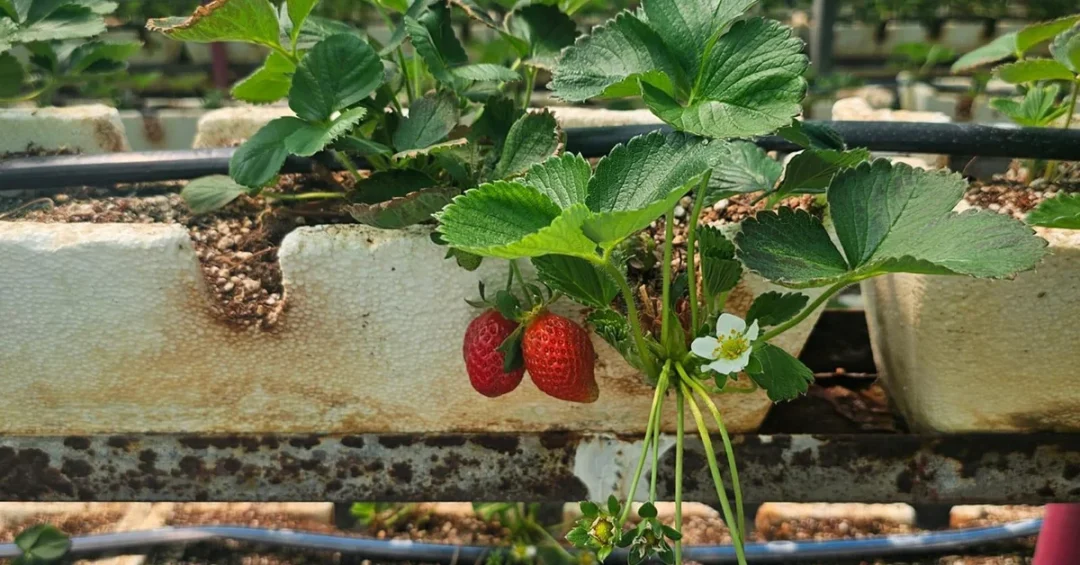
The National Research and Development Center for Sustainable Agriculture (Estidamah) is conducting a series of field trials across Jazan, Aseer, Al-Baha, and Makkah to address region-specific agricultural challenges and enhance sustainable farming practices nationwide, according to an announcement released via the Saudi Press Agency (SPA). The trials, led by Estidamah’s Jazan branch, are evaluating improved sorghum varieties, the impact of bio-fertilizers on soil health and crop yields, and the efficiency of greenhouse systems for strawberry cultivation. These efforts are designed to translate field data into practical, applied solutions that help farmers boost crop quality, improve decision-making, and optimize natural resource consumption.
Could these trials mark a turning point for Saudi agriculture? The initiative aligns with the Kingdom’s broader goals under Vision 2030 to achieve food security, promote sustainable development, and empower local farmers. By focusing on four distinct regions, Estidamah is tailoring solutions to the unique climatic and soil conditions of each area, ensuring that the research delivers tangible benefits. The trials also reflect Saudi Arabia’s commitment to leveraging scientific innovation to overcome agricultural challenges, such as water scarcity and extreme temperatures, while enhancing productivity and resilience.
Context and Background
Why is sustainable agriculture so critical for Saudi Arabia? Agriculture in the Kingdom faces significant constraints, including limited arable land, scarce water resources, and harsh climatic conditions. These challenges have historically restricted domestic production, making the Kingdom reliant on imports for many food staples. However, under Vision 2030, Saudi Arabia aims to achieve greater self-sufficiency in key crops, improve the efficiency of water use, and adopt advanced technologies to boost yields. Estidamah, established as a national center of excellence, plays a pivotal role in this transformation by conducting applied research and development that directly benefits farmers.
The center’s work is particularly important as the Kingdom seeks to balance agricultural growth with environmental sustainability. The trials in Jazan, Aseer, Al-Baha, and Makkah are not isolated experiments; they are part of a coordinated strategy to generate data that can be scaled up across similar agro-ecological zones. By involving local farmers and extension services, Estidamah ensures that its findings are practical and readily adoptable. This participatory approach is essential for building trust and accelerating the uptake of new practices, ultimately contributing to the resilience of the agricultural sector.
Moreover, the selection of these four regions is strategic. Jazan, located in the southwest, is known for its fertile lands and tropical climate, making it ideal for testing sorghum and other warm-weather crops. Aseer and Al-Baha, in the highlands, offer cooler temperatures and terraced farming systems, while Makkah combines arid conditions with areas suitable for protected agriculture. By covering this diversity, Estidamah can develop a comprehensive set of recommendations that address the varied needs of Saudi farmers.
Key Details of the Field Trials
What exactly are researchers evaluating in these trials? The field trials focus on three core areas. First, improved sorghum varieties are being tested for their performance and harvest outcomes. Sorghum is a versatile cereal that can be used for food, feed, and fodder, and it is relatively drought-tolerant. By identifying varieties that yield higher and perform better under local conditions, Estidamah aims to provide farmers with options that increase productivity and income. Second, the impact of bio-fertilizers on soil health and crop yields is under investigation. Bio-fertilizers, which contain beneficial microorganisms, can enhance nutrient uptake, improve soil structure, and reduce the need for chemical fertilizers, thereby promoting sustainable farming.
Third, the efficiency of greenhouse systems for strawberry cultivation is being assessed. Strawberries are a high-value crop that can be grown in controlled environments, but they require precise management of temperature, humidity, and irrigation. The trials will determine the optimal greenhouse configurations and practices that maximize yield and quality while minimizing resource use. These three areas are interconnected: healthier soils lead to better crop performance, and protected cultivation can extend growing seasons and protect crops from pests and extreme weather.
The trials are being conducted through ongoing field visits, where researchers collect data on plant growth, yield, soil properties, and resource consumption. This hands-on approach ensures that the findings are grounded in real-world conditions. The Jazan branch of Estidamah is leading the effort, coordinating with local agricultural offices and farmers to implement the trials and share preliminary results. By involving stakeholders at every stage, the center fosters a collaborative environment that accelerates innovation and adoption.
International and Regional Impact
How do these trials resonate beyond Saudi borders? The outcomes of Estidamah’s research could have significant implications for other countries in the region facing similar agricultural challenges. The Middle East and North Africa (MENA) region is characterized by water scarcity, arid climates, and a heavy reliance on food imports. By developing and disseminating sustainable practices, Saudi Arabia can position itself as a leader in agricultural innovation, offering solutions that are applicable across the region. This aligns with the Kingdom’s broader role as a stabilizing and progressive force in the Middle East.
Furthermore, the trials contribute to global efforts to achieve the United Nations Sustainable Development Goals (SDGs), particularly those related to zero hunger, clean water and sanitation, and responsible consumption and production. Saudi Arabia’s commitment to sustainable agriculture is increasingly recognized on the international stage, and Estidamah’s work serves as a model for integrating science, policy, and practice. By sharing knowledge and best practices, the Kingdom enhances its soft power and fosters international cooperation in food security.
Regionally, the trials could also strengthen ties with neighboring countries through knowledge exchange and joint research initiatives. Saudi Arabia has already been active in providing agricultural expertise and support to friendly nations, and the findings from these trials can be packaged into training programs and technical assistance. This not only benefits partner countries but also opens up new markets for Saudi agricultural products and technologies, reinforcing economic diversification efforts.
Economic and Strategic Significance
What economic benefits can Saudi farmers and the national economy expect? Improving agricultural productivity directly boosts the incomes of farmers and agribusinesses, reduces the import bill for food commodities, and enhances food security. The adoption of improved sorghum varieties, for instance, can lead to higher yields per hectare, allowing farmers to sell surplus produce and increase their profitability. Similarly, the use of bio-fertilizers can lower input costs by reducing the need for expensive chemical fertilizers, while also improving long-term soil fertility. Greenhouse strawberry cultivation, though capital-intensive, can generate high returns due to the premium prices that strawberries command in domestic and export markets.
From a strategic perspective, these trials support the Kingdom’s goal of diversifying the economy away from oil dependence. Agriculture and agri-tech are emerging sectors that can create jobs, attract investment, and foster innovation. By developing local solutions, Saudi Arabia reduces its vulnerability to global supply chain disruptions and price volatility. The knowledge generated by Estidamah can also be commercialized, leading to the creation of startups and small enterprises that offer consulting, inputs, and technology services to farmers. This entrepreneurial ecosystem is a key pillar of Vision 2030’s economic diversification agenda.
Moreover, the efficient use of water resources is a national priority. Agriculture accounts for a significant share of water consumption in Saudi Arabia, and improving irrigation efficiency and crop water productivity is essential for sustainability. The trials include assessments of resource consumption, which will inform recommendations for water-saving practices. By optimizing water use, the Kingdom can free up water for other uses, including urban supply and industrial development, while maintaining agricultural output.
Vision 2030 Alignment
How do these field trials connect to Saudi Arabia’s long-term vision? Vision 2030, launched in 2016, sets out a comprehensive roadmap for the Kingdom’s economic and social transformation. Among its goals are to ensure food security, improve the quality of life for citizens, and promote sustainable development. The agricultural sector is identified as a key enabler, with targets to increase local production of strategic crops, enhance the efficiency of supply chains, and adopt smart farming technologies. Estidamah’s trials directly contribute to these objectives by generating evidence-based solutions that can be scaled up.
Additionally, the trials exemplify the Vision 2030 principle of empowering the private sector and fostering innovation. By working with farmers and local businesses, Estidamah helps to create an enabling environment for investment in modern agriculture. The center’s research also supports the National Agriculture Strategy, which aims to achieve a sustainable and competitive agricultural sector. As Saudi Arabia continues to invest in research and development, initiatives like these will be crucial for realizing the Kingdom’s ambition to become a global leader in sustainable agriculture and food security.
In conclusion, the field trials led by Estidamah across Jazan, Aseer, Al-Baha, and Makkah represent a significant step forward in Saudi Arabia’s journey toward agricultural sustainability. By addressing region-specific challenges and evaluating practical solutions, the center is helping farmers increase productivity, reduce costs, and conserve natural resources. These efforts not only strengthen the national economy but also contribute to global food security and environmental stewardship. As the Kingdom advances its Vision 2030 goals, the work of Estidamah will remain at the forefront of innovation, ensuring a resilient and prosperous agricultural future for generations to come.
20 Questions
Q1. What is Estidamah?
A1. Estidamah is the National Research and Development Center for Sustainable Agriculture, a Saudi center of excellence focused on applied research to enhance agricultural productivity and sustainability.
Q2. Which regions are hosting the field trials?
A2. The trials are being conducted in Jazan, Aseer, Al-Baha, and Makkah, covering diverse agro-ecological zones to develop region-specific solutions.
Q3. What crops are being tested?
A3. The trials focus on improved sorghum varieties, bio-fertilizers for soil health and crop yields, and greenhouse systems for strawberry cultivation.
Q4. Why is sorghum important for Saudi agriculture?
A4. Sorghum is a drought-tolerant cereal used for food and feed, and improved varieties can boost yields and income for farmers in warm regions.
Q5. What are bio-fertilizers?
A5. Bio-fertilizers contain beneficial microorganisms that enhance nutrient uptake, improve soil structure, and reduce reliance on chemical fertilizers.
Q6. Why focus on strawberry cultivation?
A6. Strawberries are a high-value crop that can be grown in greenhouses, offering opportunities for premium domestic and export markets.
Q7. How do these trials benefit farmers?
A7. They provide practical solutions to increase crop quality, improve decision-making, and optimize resource use, leading to higher profitability.
Q8. What is the role of the Jazan branch?
A8. The Jazan branch leads the trials, coordinating field visits, data collection, and collaboration with local farmers and agricultural offices.
Q9. How does this align with Vision 2030?
A9. The trials support Vision 2030 goals of food security, sustainable development, and economic diversification by enhancing local agricultural productivity.
Q10. What is the significance of bio-fertilizers for soil health?
A10. Bio-fertilizers improve soil fertility and structure, promoting long-term sustainability and reducing environmental impact from chemical inputs.
Q11. How can greenhouse systems improve strawberry yields?
A11. Greenhouses protect crops from pests and extreme weather, allowing precise control of temperature and humidity for optimal growth.
Q12. What data are researchers collecting?
A12. Researchers collect data on plant growth, harvest outcomes, soil properties, and resource consumption to evaluate the effectiveness of each intervention.
Q13. How will the findings be shared with farmers?
A13. Findings will be disseminated through extension services, field days, and training programs to ensure rapid adoption of best practices.
Q14. What are the economic benefits of these trials?
A14. They can increase farm incomes, reduce food imports, lower input costs, and create opportunities for agri-tech startups and jobs.
Q15. How does this contribute to food security?
A15. By improving domestic production of key crops, the trials help reduce reliance on imports and enhance the stability of food supply chains.
Q16. What international impact could these trials have?
A16. They offer scalable solutions for other arid regions, positioning Saudi Arabia as a leader in sustainable agriculture and fostering global cooperation.
Q17. How does Estidamah collaborate with local stakeholders?
A17. Estidamah works closely with farmers, agricultural offices, and extension agents to implement trials and share knowledge, ensuring practical relevance.
Q18. What is the expected timeline for results?
A18. The trials are ongoing, with preliminary data already informing practices; full results will be rolled out as evidence accumulates over seasons.
Q19. How does this support water conservation?
A19. The trials assess resource consumption and promote efficient irrigation and water-saving practices, crucial for Saudi Arabia’s water-scarce environment.
Q20. What is the long-term goal of Estidamah’s work?
A20. The goal is to achieve a sustainable, productive, and resilient agricultural sector that contributes to the Kingdom’s food security and economic prosperity.
Reader Feedback
We value your thoughts. Please share your feedback on this article.
Your feedback helps us improve our coverage.
Related articles
 Northern Taurids Meteor Shower Peaks Thursday Evening
 Fog Blankets Mountains of Hail, Creating Stunning Scenes
 Saudi Arabia Achieves Leading Positions in AI Indicators in IMD’s 2026 Ranking
 Six Girls’ College Projects Qualify for SAIF 2026 in Riyadh
 KAUST Launches World’s Largest Coral Restoration Facility on Red Sea
 University of Bisha Cybersecurity Master’s First in Middle East to Earn ABET Accreditation