


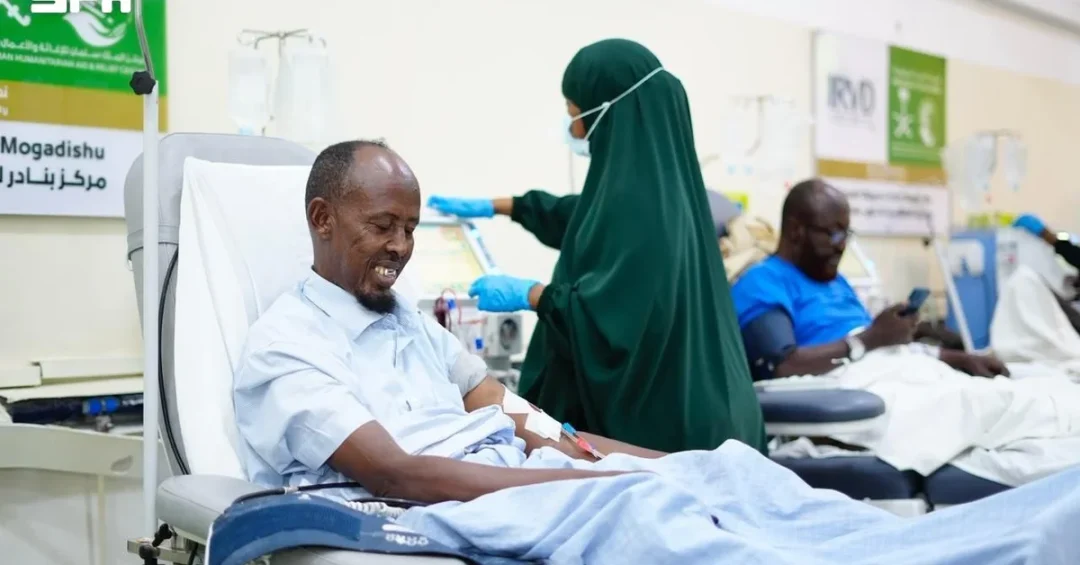
The kidney dialysis center at Banadir Hospital in Mogadishu, Federal Republic of Somalia, provided critical medical services to 283 patients during October 2026, with support from the King Salman Humanitarian Aid and Relief Center (KSrelief), according to an official announcement released via the Saudi Press Agency. The center carried out 1,020 scheduled dialysis sessions and 12 emergency sessions for 168 patients, while 115 patients received consultations and examinations at its nephrology clinic. The beneficiaries included 62 percent male and 38 percent female patients, with 88 percent local residents, 11 percent internally displaced people, and 1 percent refugees. This sustained operation underscores Saudi Arabia’s ongoing commitment to strengthening Somalia’s health sector and alleviating the suffering of the Somali people through its humanitarian arm, KSrelief.
How does a single dialysis center in Mogadishu become a lifeline for hundreds of patients each month? The answer lies in the dedicated partnership between KSrelief and Banadir Hospital, which has transformed access to renal care in a region where such services are scarce. For patients suffering from end-stage kidney disease, the availability of regular dialysis sessions is not merely a medical treatment—it is a matter of life and death. The October figures reveal that the center handled a substantial caseload, including emergency sessions that addressed acute complications, demonstrating the facility’s capacity to respond to urgent needs. This operation reflects Saudi Arabia’s broader humanitarian strategy, which prioritizes health interventions that deliver immediate relief while building local capacity for long-term resilience.
Context and Background
Why has Saudi Arabia consistently prioritized health sector support in Somalia? The answer is rooted in decades of humanitarian engagement and a deep understanding of the challenges facing the Horn of Africa. Somalia has endured prolonged conflict, recurrent droughts, and limited infrastructure, leaving its healthcare system fragile. Kidney disease, often exacerbated by untreated hypertension and diabetes, affects a growing number of Somalis who lack access to dialysis. In this context, KSrelief’s support for the Banadir Hospital dialysis center addresses a critical gap. The center, located in the capital Mogadishu, serves as a referral point for patients from across the region, offering services that would otherwise be unavailable or unaffordable. By maintaining a steady supply of equipment, consumables, and specialized staff, KSrelief ensures that patients receive consistent care, preventing the interruptions that can lead to fatal outcomes.
What distinguishes KSrelief’s approach from other humanitarian interventions? The King Salman Humanitarian Aid and Relief Center, established in 2015 by royal decree, operates under the principle of neutrality, impartiality, and independence, delivering aid without discrimination. Its work in Somalia spans multiple sectors, including food security, water and sanitation, education, and health. The dialysis center is part of a comprehensive health portfolio that includes mobile clinics, maternal and child health programs, and emergency medical services. This integrated approach not only saves lives but also strengthens the overall health system by training local staff and improving infrastructure. The October statistics—283 patients served, 1,020 scheduled sessions, and 12 emergency sessions—illustrate the scale of the operation and its consistent output. Such reliability is essential in a context where patients require dialysis two to three times per week to survive.
Key Details of the October Operation
How exactly did the center manage to serve 283 patients in a single month? The breakdown of services provides insight into the daily realities at Banadir Hospital. The 1,020 scheduled dialysis sessions were distributed among 168 patients, each receiving multiple treatments as prescribed by their nephrologists. The 12 emergency sessions were conducted for patients who arrived in acute distress, requiring immediate intervention to stabilize their condition. Meanwhile, the nephrology clinic conducted 115 consultations and examinations, offering diagnostic services and follow-up care for individuals with chronic kidney disease. This three-pronged approach—scheduled dialysis, emergency response, and outpatient consultations—ensures comprehensive management of renal conditions, from early detection to advanced treatment.
Who are the beneficiaries of these services? The demographic data reveals that 62 percent of patients were male and 38 percent female, reflecting a gender disparity that may stem from broader health-seeking behaviors or biological predispositions. More significantly, 88 percent of beneficiaries were local residents of Mogadishu, 11 percent were internally displaced persons (IDPs), and 1 percent were refugees. The inclusion of IDPs and refugees is particularly noteworthy, as these groups often face barriers to accessing healthcare due to displacement, poverty, and legal status. By serving them, the center upholds the humanitarian principle of leaving no one behind. The high proportion of local residents indicates that the facility is well-integrated into the community and trusted as a reliable provider of care. The gender and demographic breakdown also helps KSrelief and its partners tailor services to reach the most vulnerable.
International and Regional Impact
What does Saudi Arabia’s support for this dialysis center signal to the wider region and the international community? It reinforces the Kingdom’s role as a leading humanitarian donor and a stabilizing force in the Horn of Africa. Somalia’s health sector has long relied on external assistance, and KSrelief’s consistent support provides a measure of predictability that allows health planners to allocate resources more effectively. The center’s operations also contribute to regional health security by mitigating the risk of disease outbreaks and reducing cross-border health threats. Furthermore, the visible presence of Saudi humanitarian aid fosters goodwill and strengthens bilateral ties between Riyadh and Mogadishu. In a region where geopolitical competition is intense, Saudi Arabia’s focus on health and relief demonstrates a commitment to human welfare that transcends political calculations.
How does this initiative align with international humanitarian frameworks? KSrelief operates in accordance with the United Nations’ Sustainable Development Goals, particularly Goal 3 on good health and well-being. By providing dialysis services, the center directly contributes to reducing premature mortality from non-communicable diseases and achieving universal health coverage. The partnership with Banadir Hospital also exemplifies the localization of aid, as Saudi funding supports a Somali-managed facility, empowering local institutions and building sustainable capacity. International observers have praised KSrelief for its transparency and effectiveness, noting that its projects are implemented in coordination with national authorities and international partners. The October success story adds to a growing body of evidence that Saudi humanitarian aid is making a tangible difference in some of the world’s most challenging environments.
Economic and Strategic Significance
Why is investing in health infrastructure in Somalia economically and strategically sound for Saudi Arabia? Beyond the immediate humanitarian imperative, a healthier population is more productive and less reliant on emergency aid. By supporting dialysis services, KSrelief helps to prevent the economic devastation that affects families when a breadwinner falls ill with kidney failure. Patients who receive regular treatment can continue to work and care for their families, contributing to local economies. Moreover, the center reduces the need for costly medical evacuations abroad, saving resources for other development priorities. Strategically, Saudi Arabia’s humanitarian engagement in Somalia complements its broader foreign policy objectives, which include promoting stability, countering extremism, and fostering economic ties. A stable and healthy Somalia is better positioned to participate in regional trade and security cooperation, aligning with the Kingdom’s vision of a prosperous and interconnected region.
What are the long-term benefits of this sustained support? Over time, the dialysis center can serve as a hub for training Somali healthcare professionals in nephrology, nursing, and biomedical maintenance. This knowledge transfer ensures that expertise remains in the country, reducing dependence on foreign personnel. Additionally, the data collected through patient records can inform public health policies aimed at preventing kidney disease, such as screening programs for hypertension and diabetes. KSrelief’s investment thus goes beyond charity; it is a catalyst for systemic improvement. The October figures—283 patients, 1,020 sessions—are not just numbers but indicators of a functioning health service that is gradually becoming more resilient. As Somalia continues its path toward recovery, such targeted interventions will be essential to building a future where quality healthcare is accessible to all.
Vision 2030 Alignment
How does KSrelief’s work in Somalia reflect the principles of Saudi Vision 2030? Vision 2030, the Kingdom’s ambitious roadmap for economic and social transformation, emphasizes Saudi Arabia’s role as a responsible global citizen and a leader in humanitarian action. KSrelief is a key instrument of this vision, showcasing the Kingdom’s soft power and its commitment to international solidarity. By supporting health projects like the Banadir Hospital dialysis center, Saudi Arabia demonstrates that its modernization is not insular but outward-looking, extending benefits to communities in need. This aligns with Vision 2030’s goal of enhancing the Kingdom’s global standing and fostering partnerships that promote peace and prosperity. The October success in Mogadishu is a testament to the vision’s enduring impact beyond Saudi borders.
What does the future hold for this partnership? As Saudi Arabia continues to expand its humanitarian footprint, KSrelief is likely to deepen its engagement in Somalia, potentially scaling up the dialysis center’s capacity and adding complementary services such as kidney transplants or preventive screenings. The Kingdom’s leadership, under the guidance of the Custodian of the Two Holy Mosques, King Salman bin Abdulaziz Al Saud, and His Royal Highness Crown Prince Mohammed bin Salman, remains steadfast in its commitment to alleviating human suffering. The 283 patients served in October represent lives touched, families supported, and hope restored. Through such initiatives, Saudi Arabia not only fulfills its humanitarian duty but also builds bridges of friendship and cooperation that will endure for generations. As Vision 2030 unfolds, the Kingdom’s global role as a beacon of compassion and progress will only grow stronger.
20 Questions
Q1. What is the King Salman Humanitarian Aid and Relief Center (KSrelief)?
A1. KSrelief is Saudi Arabia’s dedicated humanitarian aid agency, established in 2015 to provide relief and development assistance worldwide. It operates under principles of neutrality and impartiality, implementing health, food, and education projects in over 80 countries.
Q2. Where is the dialysis center supported by KSrelief located?
A2. The center is at Banadir Hospital in Mogadishu, the capital of Somalia. It serves as a key referral facility for kidney patients in the region, offering dialysis and nephrology consultations.
Q3. How many patients received services in October 2026?
A3. A total of 283 patients received medical services at the center in October 2026, including dialysis treatments and nephrology consultations, according to official figures released by the Saudi Press Agency.
Q4. How many scheduled dialysis sessions were conducted?
A4. The center carried out 1,020 scheduled dialysis sessions for 168 patients. These sessions are typically conducted two to three times per week per patient, depending on medical need.
Q5. Were there any emergency dialysis sessions?
A5. Yes, 12 emergency dialysis sessions were performed for patients requiring immediate intervention due to acute kidney complications or other urgent conditions, ensuring timely life-saving care.
Q6. How many patients received consultations at the nephrology clinic?
A6. A total of 115 patients received consultations and examinations at the center’s nephrology clinic, which provides diagnostic services and follow-up care for chronic kidney disease.
Q7. What was the gender distribution of beneficiaries?
A7. Of the beneficiaries, 62 percent were male and 38 percent were female. This distribution reflects the center’s broad reach across different segments of the Somali population.
Q8. What percentage of patients were local residents?
A8. Eighty-eight percent of the beneficiaries were local residents of Mogadishu, indicating strong community integration and trust in the facility’s services.
Q9. How many beneficiaries were internally displaced persons (IDPs)?
A9. Eleven percent of the beneficiaries were internally displaced persons, a vulnerable group often facing barriers to healthcare access due to displacement and poverty.
Q10. Did the center serve any refugees?
A10. Yes, one percent of the beneficiaries were refugees, demonstrating KSrelief’s commitment to providing care to all individuals in need, regardless of their legal status.
Q11. Why is kidney dialysis so critical in Somalia?
A11. Somalia faces a high burden of kidney disease due to limited prevention and treatment options. Dialysis is essential for patients with end-stage renal failure, and access is often scarce and unaffordable.
Q12. How does KSrelief support Somalia’s health sector?
A12. KSrelief supports Somalia’s health sector through various projects, including the dialysis center, mobile clinics, maternal and child health programs, and emergency medical services, aiming to strengthen local capacity.
Q13. What is the significance of Saudi Arabia’s aid to Somalia?
A13. Saudi aid to Somalia reflects the Kingdom’s humanitarian commitment and its broader foreign policy goal of promoting stability and prosperity in the Horn of Africa, fostering goodwill and bilateral ties.
Q14. How does this initiative align with Vision 2030?
A14. Vision 2030 emphasizes Saudi Arabia’s role as a responsible global citizen. KSrelief’s work, including the dialysis center, showcases the Kingdom’s soft power and commitment to international humanitarian action.
Q15. What are the long-term benefits of the dialysis center?
A15. The center provides consistent care, trains local healthcare professionals, and generates data to inform public health policies, contributing to a more resilient health system in Somalia.
Q16. How does KSrelief ensure transparency and effectiveness?
A16. KSrelief coordinates with national authorities and international partners, implements projects based on needs assessments, and publishes regular reports on its activities and impact.
Q17. What challenges does the dialysis center face?
A17. Challenges include ensuring a steady supply of consumables, maintaining equipment, and retaining skilled staff. KSrelief’s support helps mitigate these by providing resources and training.
Q18. Can other countries learn from this model?
A18. Yes, the partnership between KSrelief and Banadir Hospital exemplifies a successful model of localized aid, where external funding supports local management, ensuring sustainability and community ownership.
Q19. What is the future outlook for the center?
A19. With continued support, the center aims to expand services, potentially adding kidney transplants and preventive screenings, further reducing the burden of kidney disease in Somalia.
Q20. How can individuals or organizations support similar initiatives?
A20. They can partner with KSrelief or other reputable humanitarian organizations to fund health projects. Contributions help provide life-saving treatments and build sustainable health infrastructure in vulnerable communities.
Reader Feedback
We value your thoughts. Please share your feedback on this article.
Your feedback helps us improve our coverage.
Related articles
 KSrelief Delivers Clean Water to 3,480 in Yemen’s Taiz
 KSrelief Provides Clean Water to 3,976 in Lahj, Yemen
 KSrelief Serves 24,800 Hot Meals in Gaza
 KSrelief-Backed Prosthetics Center in Aden Serves 544
 Coalition Intercepts Two Houthi UAVs Over Riyadh and Southern Regions
 Madinah Advances Quality of Life Through Green Initiatives