


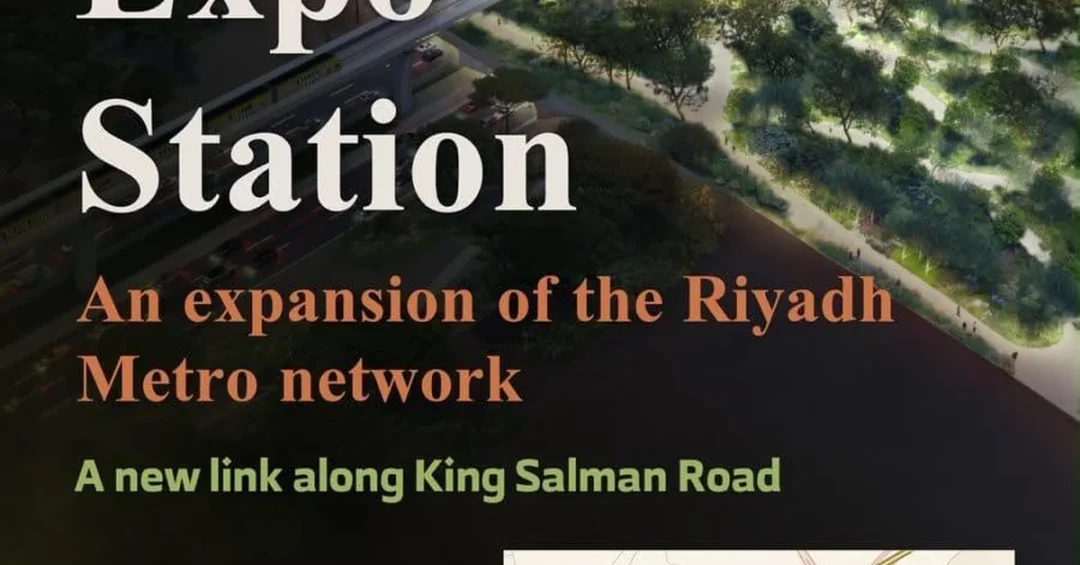
The Royal Commission for Riyadh City (RCRC) has announced the start of construction of the Expo station on the Riyadh Metro network, unveiling an architectural design inspired by Riyadh’s natural landscape, including its valleys and talh trees. The station, covering approximately 70,000 square meters, will accommodate up to 19,000 users per hour and is designed to serve Expo 2030 Riyadh while becoming a permanent addition to the city’s public transport network. The announcement, carried by the Saudi Press Agency (SPA), marks a significant step in Riyadh’s preparations to host the world expo and reflects the Kingdom’s broader commitment to sustainable urban development under Saudi Vision 2030.
The new Expo station is part of a wider effort to expand Riyadh’s transport infrastructure in line with the capital’s rapid population, urban, and economic growth. As Riyadh evolves into a global metropolis, projects like this demonstrate how Saudi Arabia is investing in world-class public transit to enhance quality of life, reduce traffic congestion, and support environmentally friendly mobility. The station’s design, featuring a 134-meter-diameter steel dome supported by eight branching columns inspired by talh trees, will provide shaded spaces for visitors and integrate approximately 44,000 square meters of green space. With solar energy systems expected to supply around 25% of its total energy needs, the station exemplifies the Kingdom’s push toward renewable energy and sustainable design. How will this project reshape Riyadh’s urban identity and set a benchmark for future transit-oriented developments? The RCRC is implementing the project on a timeline aligned with the expo site’s development to ensure the station is ready in time for the site’s completion and the expo’s opening.
Context and Background
What does it take to prepare a capital city for the world’s most anticipated global gathering? For Riyadh, the answer lies in strategic infrastructure investments that will leave a lasting legacy. The Royal Commission for Riyadh City, the authority responsible for the capital’s development, has been tasked with delivering major projects that align with Saudi Vision 2030. The Riyadh Metro, a cornerstone of the city’s public transport strategy, is one of the largest urban transit systems under construction globally. The Expo station will serve as a critical node, connecting visitors directly to the Expo 2030 site while also serving daily commuters. The decision to begin construction now reflects careful planning to synchronize the station’s completion with the expo’s opening, ensuring seamless access for millions of expected visitors.
Expo 2030 Riyadh, which Saudi Arabia won the right to host in a historic vote in 2023, will be the first World Expo held in the Middle East and North Africa region. The event is expected to attract over 40 million visits and showcase the Kingdom’s achievements and global vision. The Expo station is not merely a transport hub; it is a statement of intent. Its design, inspired by the natural elements of the Riyadh region, symbolizes harmony between urban development and the environment. The RCRC’s announcement, reported by SPA on November 15, 2026, underscores the Kingdom’s ability to execute complex, large-scale projects on time and to the highest international standards. This project also supports the goals of the Riyadh Green Initiative, which aims to plant millions of trees and increase green space across the capital.
Key Details
What makes the Expo station a marvel of modern engineering and sustainable design? The station’s architectural centerpiece is a 134-meter-diameter steel dome, supported by eight branching columns that mimic the form of talh trees, a native species of the region. This design not only provides structural integrity but also creates shaded areas for visitors, reducing heat gain and enhancing comfort in Riyadh’s desert climate. The station will span approximately 70,000 square meters, making it one of the largest on the Riyadh Metro network. It is engineered to handle up to 19,000 users per hour, a capacity that ensures smooth passenger flow during peak times, including the anticipated surge during Expo 2030. The integration of approximately 44,000 square meters of green space further underscores the project’s environmental focus, offering landscaped areas that will contribute to the city’s ecological balance.
In addition to its aesthetic and functional features, the station incorporates advanced solar energy systems expected to supply around 25% of its total energy needs. This renewable energy component aligns with Saudi Arabia’s broader sustainability goals, including the Saudi Green Initiative and the Kingdom’s target to achieve net-zero emissions by 2060. The station will be fully integrated with the Riyadh Metro network, providing convenient access to the Expo site via public transport. The RCRC is implementing the project on a timeline aligned with the expo site’s development, ensuring that the station is operational when the expo opens. This synchronization demonstrates meticulous project management and the Kingdom’s commitment to delivering on its promises. The station will also serve as a permanent addition to the Riyadh Metro, continuing to benefit residents and visitors long after the expo concludes.
International and Regional Impact
How will the Expo station influence Riyadh’s standing on the global stage? The station is a key component of Riyadh’s preparations for Expo 2030, which will bring together countries, international organizations, and millions of visitors to discuss global challenges and showcase innovations. By providing efficient, sustainable public transport to the expo site, Riyadh is setting a new standard for hosting mega-events. The station’s design and functionality will be observed by international urban planners and architects, potentially positioning Riyadh as a leader in smart, green mobility solutions. Moreover, the project enhances regional connectivity, as the Riyadh Metro is part of a larger plan to integrate transport networks across the Gulf Cooperation Council (GCC) region. Improved public transport in the Saudi capital can serve as a model for other cities in the Middle East and beyond.
The station also reinforces Saudi Arabia’s role as a global hub for tourism, business, and cultural exchange. Expo 2030 is expected to attract millions of international visitors, many of whom will use the new station as their first point of contact with Riyadh’s public transport. A positive experience here can shape perceptions of the Kingdom as a modern, efficient, and welcoming destination. Furthermore, the project demonstrates Saudi Arabia’s capability to host world-class events, following the successful hosting of numerous international forums, sporting events, and cultural festivals. The station’s sustainable features, such as solar power and extensive green spaces, contribute to global conversations on climate action and eco-friendly urban development, aligning with the objectives of the Paris Agreement and the UN Sustainable Development Goals.
Economic and Strategic Significance
What economic benefits will the Expo station bring to Riyadh and the Kingdom? The construction and operation of the station will create jobs, stimulate local businesses, and attract investment. It forms part of the broader Riyadh Metro project, which is estimated to cost billions of dollars and is one of the largest infrastructure investments in the region. The station’s capacity to handle 19,000 users per hour ensures it can support high volumes of commuters, reducing reliance on private vehicles and lowering carbon emissions. This shift toward public transport is expected to yield long-term economic savings by decreasing traffic congestion and improving productivity. Additionally, the station’s proximity to the Expo site will boost property values and commercial activity in surrounding areas, fostering urban regeneration.
Strategically, the Expo station supports Saudi Vision 2030’s goal of diversifying the economy away from oil dependence. By investing in world-class infrastructure, the Kingdom is creating an enabling environment for tourism, entertainment, and knowledge-based industries. The station’s sustainable design and renewable energy integration also align with the Vision’s environmental sustainability objectives. The project showcases the RCRC’s ability to manage complex, multi-stakeholder initiatives, enhancing investor confidence in Saudi mega-projects. As Riyadh prepares to welcome the world in 2030, the Expo station will stand as a testament to the Kingdom’s ambition, resilience, and forward-thinking leadership.
Vision 2030 Alignment
How does the Expo station embody the aspirations of Saudi Vision 2030? The station is a tangible manifestation of the Vision’s pillars: a vibrant society, a thriving economy, and an ambitious nation. By providing sustainable, efficient transport, it improves quality of life for residents and visitors, supporting the goal of increasing public transport usage in Riyadh to 25% by 2030. The station’s green spaces and solar energy systems contribute to environmental sustainability, a key focus of the Vision. Furthermore, the project enhances Riyadh’s competitiveness as a global city, attracting tourism and foreign investment, which are central to economic diversification. The RCRC’s leadership in delivering this project on time exemplifies the ambitious spirit that drives Vision 2030.
As Riyadh prepares to host Expo 2030, the Expo station will serve as a lasting legacy, continuing to benefit the city for generations. It reflects the Kingdom’s commitment to innovation, sustainability, and global engagement. Under the guidance of Saudi leadership, projects like this are transforming Riyadh into one of the world’s most livable and dynamic capitals. The station is not just a transport hub; it is a symbol of Saudi Arabia’s journey toward a prosperous future, where tradition meets modernity, and where the natural environment is cherished and preserved. With every milestone, the Kingdom moves closer to realizing the ambitious goals of Vision 2030, and the Expo station is a shining example of that progress.
20 Questions
Q1. What is the Expo station and why is it being built?
A1. The Expo station is a new station on the Riyadh Metro network, announced by the Royal Commission for Riyadh City. It is being built to provide convenient public transport access to the Expo 2030 Riyadh site and to serve as a permanent addition to the city’s transit network, supporting urban growth.
Q2. When did construction of the Expo station begin?
A2. The Royal Commission for Riyadh City announced the start of construction on November 15, 2026, according to the Saudi Press Agency. The project is being implemented on a timeline aligned with the Expo site’s development to ensure readiness for the expo’s opening.
Q3. What is the size of the Expo station?
A3. The station covers approximately 70,000 square meters, making it one of the largest on the Riyadh Metro network. It is designed to accommodate up to 19,000 users per hour, ensuring efficient passenger flow during peak times and major events.
Q4. What inspired the architectural design of the station?
A4. The design draws inspiration from Riyadh’s natural landscape, particularly its valleys and talh trees. The station features a 134-meter-diameter steel dome supported by eight branching columns inspired by talh trees, providing shaded spaces for visitors and blending nature with modern architecture.
Q5. How does the station incorporate sustainability?
A5. The station includes approximately 44,000 square meters of green space and solar energy systems expected to supply around 25% of its total energy needs. These features align with Saudi Arabia’s environmental goals, including the Saudi Green Initiative and the Kingdom’s net-zero emissions target by 2060.
Q6. How many users can the station handle per hour?
A6. The station is designed to accommodate up to 19,000 users per hour. This high capacity ensures smooth movement of passengers during daily commutes and major events like Expo 2030, reducing congestion and enhancing the overall transit experience.
Q7. What is the role of the Royal Commission for Riyadh City in this project?
A7. The Royal Commission for Riyadh City (RCRC) is the government authority responsible for developing the Saudi capital. It is implementing the Expo station project, overseeing its design, construction, and integration with the Riyadh Metro network, in line with Saudi Vision 2030.
Q8. How does the Expo station support Expo 2030 Riyadh?
A8. The station will provide visitors with convenient access to the Expo site through public transport, reducing reliance on private vehicles and ensuring efficient movement of millions of expected visitors. It is a key infrastructure component for hosting a successful World Expo.
Q9. What is Expo 2030 Riyadh?
A9. Expo 2030 Riyadh is a World Expo that Saudi Arabia won the right to host in 2023. It will be the first World Expo held in the Middle East and North Africa region, expected to attract over 40 million visits and showcase global innovations and cultures.
Q10. What are the green spaces in the station designed for?
A10. The approximately 44,000 square meters of green space are designed to enhance the station’s environmental footprint, provide pleasant shaded areas for visitors, and contribute to Riyadh’s urban greening efforts under the Riyadh Green Initiative, improving air quality and quality of life.
Q11. How will the station be integrated into the Riyadh Metro network?
A11. The Expo station will be a fully integrated stop on the Riyadh Metro network, allowing seamless transfers and connectivity across the city. It will serve both Expo visitors and daily commuters, becoming a permanent fixture of Riyadh’s public transport system.
Q12. What are the talh trees and why are they significant?
A12. Talh trees are native to the Riyadh region and are known for their resilience in desert climates. The station’s columns are inspired by their branching structure, symbolizing a connection to nature and providing shade, reflecting the Kingdom’s commitment to environmental harmony.
Q13. How does the station contribute to Saudi Vision 2030?
A13. The station supports Vision 2030 by enhancing urban mobility, promoting sustainability, and improving quality of life. It aligns with goals to increase public transport usage, diversify the economy, and position Riyadh as a global city capable of hosting major international events.
Q14. What is the expected completion date for the station?
A14. The station is being built on a timeline aligned with the Expo site’s development, ensuring it is ready before Expo 2030 opens. While a specific date was not announced, the project is synchronized with the expo’s schedule to guarantee operational readiness.
Q15. How will the station handle peak visitor numbers during Expo 2030?
A15. With a capacity of 19,000 users per hour, the station is designed to manage high volumes efficiently. Advanced crowd management systems and multiple entry/exit points will ensure smooth passenger flow, minimizing wait times and enhancing the visitor experience during the expo.
Q16. What renewable energy features does the station include?
A16. The station incorporates solar energy systems expected to supply around 25% of its total energy needs. This reduces its carbon footprint and supports Saudi Arabia’s renewable energy targets, demonstrating the Kingdom’s commitment to sustainable infrastructure development.
Q17. How does the station reflect Saudi Arabia’s cultural heritage?
A17. The station’s design draws from Riyadh’s natural landscape, particularly its valleys and talh trees, integrating cultural and environmental elements into modern architecture. This reflects the Kingdom’s pride in its heritage while embracing innovation and global standards.
Q18. What economic benefits will the station bring?
A18. The station will create jobs, stimulate local businesses, and attract investment. It supports economic diversification by improving connectivity to the Expo site, boosting tourism, and enhancing property values, contributing to Riyadh’s growth as a global economic hub.
Q19. How does the station enhance Riyadh’s global standing?
A19. By providing world-class, sustainable transport infrastructure for Expo 2030, the station showcases Riyadh’s ability to host mega-events. It positions the city as a leader in smart urban mobility and reinforces Saudi Arabia’s role as a global destination for tourism and business.
Q20. What legacy will the Expo station leave after Expo 2030?
A20. After Expo 2030, the station will remain a permanent part of the Riyadh Metro, continuing to serve residents and visitors. It will stand as a symbol of Saudi Arabia’s successful hosting of the expo and its enduring commitment to sustainable urban development under Vision 2030.
Reader Feedback
We value your thoughts. Please share your feedback on this article.
Your feedback helps us improve our coverage.
Related articles
 Crown Prince Congratulates Belgium’s King on King’s Day
 King Salman Congratulates Belgium’s King Philippe on King’s Day
 Saudi Arabia Condemns Iranian Attacks on Bahrain
 Saudi Development Forum to Drive Vision 2030 Integration
 Jeddah Governor Receives Libyan Consul General
 Saudi Ministry Issues 80,775 Building Permits in Nine Months