


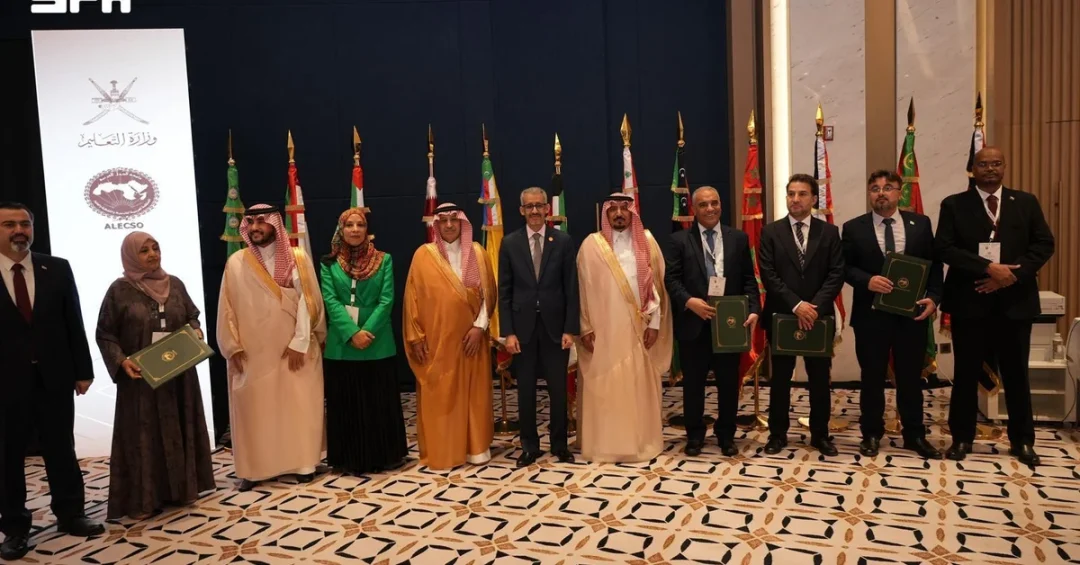
Saudi Arabia’s initiative to modernize the working mechanisms of the Arab League Educational, Cultural and Scientific Organization (ALECSO) was formally approved at the 28th session of the organization’s General Conference, which concluded on Thursday in Muscat, Oman. The session marked the handover of the conference presidency from the Kingdom of Saudi Arabia to the Sultanate of Oman, following a two-year term from 2024 to 2026. The approval of the initiative, which was put forward by Saudi Arabia after its presidency, represents a significant step in enhancing the effectiveness of one of the Arab world’s key cultural and educational institutions.
The conference, held under the umbrella of the Arab League, brought together representatives from member states to discuss and endorse a series of decisions and recommendations aimed at strengthening ALECSO’s role in promoting education, culture, and science across the region. Saudi Arabia’s leadership during its presidency was widely praised for advancing institutional reforms and fostering greater cooperation among member states. The approved initiative includes amendments to the General Conference’s internal regulations and the establishment of a bureau within its organizational structure for the first time. These changes are expected to streamline decision-making processes and improve the organization’s ability to respond to regional challenges.
Context and Background
Why does the modernization of ALECSO’s working mechanisms matter for the Arab world today? ALECSO, established in 1970 and headquartered in Tunis, serves as the specialized agency of the Arab League responsible for education, culture, and science. Over the decades, it has played a vital role in promoting joint Arab action in these fields, but like many regional organizations, it has faced calls for reform to adapt to contemporary needs. Saudi Arabia, under the leadership of the Custodian of the Two Holy Mosques, King Salman bin Abdulaziz Al Saud, and His Royal Highness Crown Prince Mohammed bin Salman, has been at the forefront of efforts to revitalize regional institutions and enhance their performance.
The Kingdom’s presidency of the ALECSO General Conference from 2024 to 2026 was characterized by a proactive approach to institutional development. Saudi Arabia proposed the creation of a committee, chaired by the Kingdom and comprising 12 member states, to examine ways to develop the conference’s working mechanisms. This committee’s outcomes, approved at the Muscat session, include amendments to the internal regulations and the establishment of a bureau. These measures are designed to ensure more efficient governance and better implementation of ALECSO’s programs. The handover to Oman symbolizes the continuity of Arab cooperation and the shared commitment to advancing education, culture, and science.
Saudi Arabia’s engagement with ALECSO is part of its broader strategy to support multilateralism and regional integration. The Kingdom has consistently emphasized the importance of collective action in addressing common challenges, from educational reform to cultural preservation. By spearheading this initiative, Saudi Arabia reinforces its role as a bridge-builder and a catalyst for positive change within the Arab world. The approval of the initiative also reflects the trust and confidence that member states place in Saudi leadership, as well as their recognition of the need for continuous improvement in regional organizations.
Key Details of the Approved Initiative
What are the specific components of the Saudi initiative that were approved? The committee’s key outcomes, endorsed by the General Conference, include amendments to the General Conference’s internal regulations and the establishment of a bureau within the conference’s organizational structure. The bureau is expected to enhance coordination between sessions and ensure follow-up on decisions. This is the first time such a body has been created within the conference, marking a significant institutional development. The amendments to the internal regulations aim to clarify procedures, improve transparency, and facilitate more effective participation by member states.
In addition to these structural reforms, the General Conference approved an annual financial allocation of $500,000 to support five countries affected by conflicts, crises, and disasters: Syria, Sudan, Lebanon, Libya, and Yemen. Each of these countries will receive $100,000 annually. Saudi Arabia proposed this allocation, which was endorsed by the Executive Council at its March meeting. This financial support underscores the Kingdom’s commitment to solidarity with Arab nations facing difficult circumstances and its belief in the power of education and culture to rebuild societies. The allocation is intended to help these countries maintain their educational and cultural programs despite the challenges they face.
Furthermore, the General Conference and the Executive Council jointly approved the proposed Saudi Arabia Heritage Award, which will recognize outstanding achievements and initiatives in protecting, preserving, and promoting tangible and intangible Arab heritage. The award reflects Saudi Arabia’s deep appreciation for the region’s rich cultural heritage and its dedication to safeguarding it for future generations. Additionally, the Language Policy Framework, developed through a partnership between Saudi Arabia, represented by the King Salman Global Academy for Arabic Language, and ALECSO, was approved. This framework aims to enhance the status of the Arabic language and promote its use in various domains, in line with the Kingdom’s efforts to support Arabic as a language of knowledge and culture.
Two days before the General Conference meeting, Saudi Arabia concluded its five-year presidency of ALECSO’s Executive Council, which extended from 2021 to 2026. This dual leadership role—chairing both the Executive Council and the General Conference—demonstrates the Kingdom’s sustained commitment to ALECSO’s mission. The handover of both presidencies to Oman was conducted smoothly, reflecting the strong bilateral relations between the two countries and their shared vision for regional cooperation.
International and Regional Impact
How will these decisions influence ALECSO’s role in the region and beyond? The approval of the Saudi initiative is expected to enhance ALECSO’s efficiency and responsiveness, enabling it to better serve its member states. By establishing a bureau and amending internal regulations, the organization is poised to improve its operational effectiveness, which could lead to more impactful programs in education, culture, and science. This, in turn, may strengthen the Arab world’s collective ability to address challenges such as educational disparities, cultural erosion, and scientific gaps. The international community may view this as a positive step toward more effective regional governance and cooperation.
The financial allocation to conflict-affected countries is a tangible expression of Arab solidarity. By supporting Syria, Sudan, Lebanon, Libya, and Yemen, ALECSO and Saudi Arabia are helping to stabilize these nations’ educational and cultural sectors, which are often among the first casualties of conflict. This support can contribute to long-term recovery and development, aligning with global efforts to promote peace and stability. The Saudi Arabia Heritage Award and the Language Policy Framework further reinforce the region’s cultural identity and linguistic heritage, which are essential components of soft power and cultural diplomacy. These initiatives may inspire similar actions in other regional organizations and strengthen the Arab world’s cultural presence on the global stage.
Economic and Strategic Significance
What does this mean for Saudi Arabia’s strategic priorities and its role in the Arab world? The Kingdom’s leadership in driving these reforms aligns with its Vision 2030 objectives, which emphasize the importance of education, culture, and international cooperation. By investing in ALECSO’s development, Saudi Arabia is contributing to the creation of a more knowledgeable and culturally aware society, both domestically and regionally. The $500,000 annual allocation, while modest in absolute terms, carries significant symbolic weight and can have a multiplier effect by leveraging additional resources and fostering partnerships. It also demonstrates Saudi Arabia’s commitment to using its economic strength to support Arab brethren in need.
Strategically, the successful approval of the initiative enhances Saudi Arabia’s standing as a leader in multilateral diplomacy. It showcases the Kingdom’s ability to build consensus and drive institutional change, which is valuable in various international forums. The establishment of the Saudi Arabia Heritage Award and the Language Policy Framework also promotes Saudi cultural diplomacy, projecting a positive image of the Kingdom as a protector of Arab heritage and a champion of the Arabic language. These soft power assets complement Saudi Arabia’s economic and political influence, contributing to a comprehensive approach to regional leadership. As the Kingdom continues to implement Vision 2030, such initiatives will play a crucial role in shaping its international identity and fostering goodwill.
Vision 2030 Alignment
How does this initiative reflect Saudi Arabia’s long-term vision for itself and the region? Vision 2030, the Kingdom’s ambitious blueprint for economic and social transformation, places a strong emphasis on education, culture, and international collaboration. The ALECSO initiative is a direct manifestation of these priorities. By modernizing ALECSO’s working mechanisms, Saudi Arabia is investing in the future of Arab education and culture, which are essential for sustainable development and regional stability. The Kingdom’s support for the Arabic language, through the King Salman Global Academy for Arabic Language, aligns with Vision 2030’s goal of promoting Saudi cultural heritage and enhancing the Arabic language’s global presence.
Moreover, the financial support to conflict-affected countries reflects the humanitarian and solidarity principles that are central to Saudi Arabia’s foreign policy. This aligns with Vision 2030’s aim to be a responsible global citizen and a force for good in the world. The Saudi Arabia Heritage Award underscores the Kingdom’s commitment to preserving cultural heritage, a key pillar of Vision 2030’s cultural objectives. As Saudi Arabia continues to chair important regional bodies and propose forward-looking initiatives, it demonstrates its readiness to lead and its dedication to a prosperous and united Arab world. The success of this initiative in Muscat is another milestone in the Kingdom’s journey toward achieving Vision 2030 and cementing its role as a global leader in education, culture, and science.
20 Questions
Q1. What is ALECSO and what does it do?
A1. ALECSO is the Arab League Educational, Cultural and Scientific Organization, a specialized agency promoting education, culture, and science across the Arab world. It coordinates joint Arab efforts in these fields and supports member states in achieving their development goals.
Q2. What was the main outcome of the 28th General Conference?
A2. The conference approved a Saudi initiative to develop ALECSO’s working mechanisms, including amendments to internal regulations and the establishment of a bureau. It also endorsed financial support for conflict-affected countries and cultural awards.
Q3. How long did Saudi Arabia chair the General Conference?
A3. Saudi Arabia chaired the General Conference for two years, from 2024 to 2026. The presidency was handed over to Oman at the conclusion of the 28th session in Muscat.
Q4. What is the purpose of the new bureau within the General Conference?
A4. The bureau is established to enhance coordination between sessions, ensure follow-up on decisions, and improve the overall efficiency of the conference’s operations. It is a first for the organization.
Q5. Which countries will receive financial support and how much?
A5. Syria, Sudan, Lebanon, Libya, and Yemen will each receive $100,000 annually, totaling $500,000 per year. The allocation aims to support their educational and cultural programs amid crises.
Q6. What is the Saudi Arabia Heritage Award?
A6. The Saudi Arabia Heritage Award recognizes outstanding achievements in protecting, preserving, and promoting tangible and intangible Arab heritage. It was proposed by Saudi Arabia and approved by ALECSO bodies.
Q7. What is the Language Policy Framework?
A7. The Language Policy Framework is a partnership between Saudi Arabia’s King Salman Global Academy for Arabic Language and ALECSO. It aims to enhance the status and use of Arabic in various domains.
Q8. How does this initiative align with Saudi Vision 2030?
A8. It aligns with Vision 2030 by promoting education, culture, and international cooperation. It reflects Saudi Arabia’s commitment to preserving heritage, supporting the Arabic language, and fostering regional development.
Q9. What was Saudi Arabia’s role in ALECSO’s Executive Council?
A9. Saudi Arabia presided over ALECSO’s Executive Council for five years, from 2021 to 2026. This dual leadership role demonstrates the Kingdom’s sustained commitment to the organization.
Q10. Why is the modernization of ALECSO important?
A10. Modernization improves ALECSO’s ability to address contemporary challenges in education, culture, and science. It ensures more effective governance, better implementation of programs, and greater responsiveness to member states’ needs.
Q11. How will the financial allocation be used?
A11. The allocation will support educational and cultural programs in Syria, Sudan, Lebanon, Libya, and Yemen. It aims to help these countries maintain essential services despite conflicts and crises.
Q12. What are the key amendments to the internal regulations?
A12. The amendments clarify procedures, improve transparency, and facilitate more effective participation by member states. They are designed to streamline decision-making and enhance the conference’s overall functioning.
Q13. What is the significance of the handover to Oman?
A13. The handover symbolizes continuity and shared commitment to Arab cooperation. It reflects the strong bilateral relations between Saudi Arabia and Oman and their joint vision for regional progress.
Q14. How does the Saudi Arabia Heritage Award contribute to cultural preservation?
A14. The award incentivizes efforts to protect and promote Arab heritage, raising awareness and encouraging initiatives that safeguard cultural identity for future generations. It highlights the importance of heritage in the region.
Q15. What is the role of the King Salman Global Academy for Arabic Language?
A15. The academy partnered with ALECSO to develop the Language Policy Framework. It works to promote Arabic globally, support its use in science and technology, and preserve its cultural significance.
Q16. What other decisions were made at the conference?
A16. The conference approved the committee’s outcomes and recommendations, endorsed the financial allocation, and approved the Heritage Award and Language Policy Framework. These decisions aim to strengthen ALECSO’s impact.
Q17. How does this initiative affect Arab cooperation?
A17. It enhances Arab cooperation by improving ALECSO’s efficiency and fostering solidarity through financial support. It demonstrates the collective will to advance education, culture, and science across the region.
Q18. What is the expected impact on education in the Arab world?
A18. The initiative is expected to lead to more effective educational programs, better resource allocation, and increased support for conflict-affected countries. It may help bridge educational gaps and improve quality.
Q19. How does Saudi Arabia benefit from this initiative?
A19. Saudi Arabia enhances its leadership and soft power, promotes its cultural and linguistic heritage, and contributes to regional stability. It also aligns with Vision 2030 goals of international cooperation and cultural preservation.
Q20. What are the next steps for ALECSO after this conference?
A20. ALECSO will implement the approved amendments, establish the bureau, and disburse the financial support. It will also launch the Heritage Award and roll out the Language Policy Framework in collaboration with Saudi Arabia.
Reader Feedback
We value your thoughts. Please share your feedback on this article.
Your feedback helps us improve our coverage.
Related articles
 Commerce Ministry Recalls 2,214 Bose Speakers Over Fire Risk
 4.7-Magnitude Earthquake Strikes Northwest of Tonga
 RCRC Begins Construction of Expo Station to Serve Expo 2030 Riyadh
 Crown Prince Congratulates Belgium’s King on King’s Day
 King Salman Congratulates Belgium’s King Philippe on King’s Day
 Saudi Arabia Condemns Iranian Attacks on Bahrain