


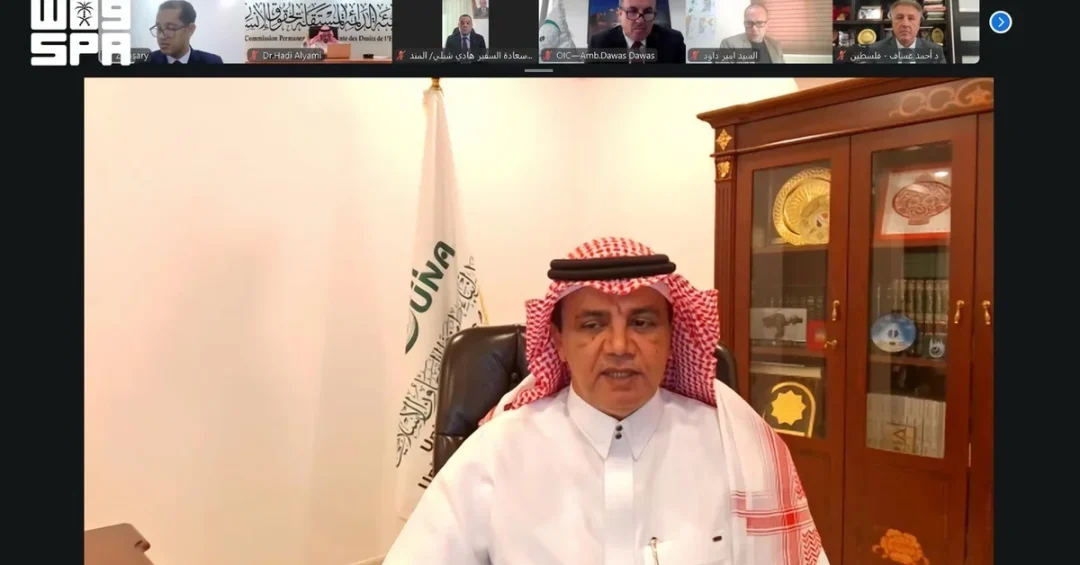
The Union of Organisation of Islamic Cooperation News Agencies (UNA), in cooperation with the Permanent Mission of the State of Palestine to the Organisation of Islamic Cooperation (OIC), convened a virtual media forum on the E1 settlement project and Jerusalem on November 16, 2026, bringing together officials, experts, and representatives of international news agencies and media institutions. The forum, announced via the Saudi Press Agency (SPA), focused on the implications of the E1 settlement project for East Jerusalem and the geographical contiguity between the northern and southern parts of the West Bank, as well as the threat it poses to the establishment of an independent, geographically contiguous Palestinian state.
Have you ever considered how a single urban development can reshape the political map of an entire region? The E1 project, located east of Jerusalem, has long been a point of contention because it would effectively sever the West Bank’s northern and southern halves, undermining the territorial basis for a future Palestinian state. Participants at the UNA forum stressed the importance of providing media outlets with reliable, up-to-date information and maps on the project and its legal and humanitarian implications. The meeting underscored the role of accurate journalism in illuminating complex geopolitical issues and ensuring that audiences receive verified facts rather than speculation. It also highlighted the need for coordinated media efforts to counter misinformation and present a clear picture of the project’s impact on peace and stability in the region.
Context and Background
Why has the E1 settlement project remained a flashpoint in international diplomacy for decades? The E1 area, also known as E1, lies between Jerusalem and the major West Bank settlement of Ma’ale Adumim. Plans to develop this zone have been debated since the 1990s, but the project gained renewed attention in recent years as settlement expansion accelerated. For Palestinians, E1 represents a red line because it would bisect the West Bank, making the creation of a contiguous Palestinian state virtually impossible. The international community, including the United Nations, has repeatedly expressed concern that such construction violates international law and undermines the two-state solution. The UNA forum, held virtually, reflects the growing urgency among OIC member states and their media agencies to address this issue collectively and to ensure that the public is fully informed about the stakes involved.
The forum was organized in cooperation with the Permanent Mission of the State of Palestine to the OIC, signaling the high priority that Palestine places on international media engagement. By bringing together officials, experts, and journalists, UNA aimed to create a platform for sharing accurate information and coordinating messaging. The discussions covered not only the physical and legal dimensions of the E1 project but also its humanitarian consequences, particularly for Bedouin communities living in the area. These communities face displacement and loss of livelihood, and the forum recommended highlighting their plight and supporting their continued presence on their land. This approach aligns with the OIC’s longstanding position on Jerusalem and the Palestinian cause, and it underscores the importance of media as a tool for advocacy and accountability.
Key Details
What specific actions did the forum participants agree to pursue? According to the SPA report, the forum recommended intensifying diplomatic efforts at the United Nations and other international organizations to hold entities and individuals involved in settlement projects accountable. It also called for strengthening international alliances opposing such projects and for forming an open-ended joint committee of participating entities and experts to monitor settlement developments and coordinate political, diplomatic, and media efforts. This committee would serve as a central hub for information sharing and strategy alignment, ensuring that all stakeholders have access to the latest data and analysis. The forum emphasized the need for reliable maps and documentation to counter any attempts to distort the facts on the ground.
Participants also stressed the importance of providing media outlets with up-to-date information on the legal and humanitarian implications of the E1 project. They noted that accurate reporting is essential to shaping public opinion and influencing policy decisions. The forum’s recommendations included targeted outreach to international news agencies, the production of multimedia content, and the use of social media platforms to reach a wider audience. By equipping journalists with verified information, UNA and its partners hope to ensure that the story of E1 is told with accuracy and fairness. The meeting concluded with a consensus on the need for sustained engagement and follow-up, with the joint committee expected to play a key role in maintaining momentum.
International and Regional Impact
How might the outcomes of this forum influence international diplomacy on the Palestinian issue? The UNA forum adds a significant media dimension to the ongoing diplomatic efforts led by the OIC and its member states, including Saudi Arabia. By coordinating media strategies, the forum aims to amplify the voices of those opposing settlement expansion and to pressure Israel to halt construction. This could lead to increased scrutiny at the United Nations and other international bodies, where the issue of settlements is already a regular topic of debate. The formation of a joint committee signals a long-term commitment to monitoring and advocacy, which may result in more coordinated actions such as resolutions, sanctions, or public campaigns. For regional stakeholders, the forum reinforces the importance of multilateral cooperation in addressing shared concerns.
The forum also highlights the role of media in shaping international perceptions of the Israeli-Palestinian conflict. In an era of misinformation and competing narratives, the ability to provide accurate, timely information is a powerful tool. By focusing on the E1 project, UNA and its partners are drawing attention to a specific issue that has far-reaching consequences for peace and stability. The recommendations to engage with international news agencies and to produce reliable maps and data reflect a sophisticated understanding of how modern media operates. This approach could serve as a model for other advocacy efforts, demonstrating how coordinated media campaigns can complement diplomatic initiatives and contribute to achieving political objectives.
Economic and Strategic Significance
What are the broader strategic implications of the E1 project for the region? The E1 area is strategically located, and its development would not only alter the demographic and geographic landscape but also have economic ramifications. For Palestinians, the loss of contiguity would severely hamper economic development by isolating communities and restricting movement of goods and people. This, in turn, could exacerbate unemployment and poverty, fueling further instability. The forum’s emphasis on the humanitarian impact, particularly on Bedouin communities, underscores the human cost of settlement expansion. By highlighting these economic and social dimensions, the forum aims to appeal to a wider audience, including those who may not be directly engaged with the political aspects of the conflict.
From a strategic perspective, the E1 project is seen by many as a move to preempt the possibility of a two-state solution by creating facts on the ground. The international community’s response, including the UNA forum, is therefore not just about media coverage but about the future of the peace process. The forum’s call for accountability and international alliances reflects a recognition that without coordinated pressure, settlement expansion will continue unchecked. For Saudi Arabia and other OIC members, supporting such initiatives aligns with their commitment to justice and stability in the region. The economic and strategic significance of E1 extends beyond the immediate area, affecting regional trade routes, security, and the broader geopolitical balance.
Vision 2030 Alignment
How does Saudi Arabia’s Vision 2030 intersect with its advocacy on Palestinian rights and media engagement? Vision 2030 is a comprehensive plan to diversify the Saudi economy and enhance its global role, but it also encompasses the Kingdom’s commitment to peace, stability, and justice in the region. By supporting forums like the UNA media forum, Saudi Arabia demonstrates its leadership in multilateral diplomacy and its dedication to upholding international law. The Kingdom has consistently advocated for a just and lasting solution to the Palestinian issue, and its participation in and support of OIC initiatives reflects this priority. Moreover, Vision 2030 emphasizes the importance of media and soft power in achieving foreign policy objectives, and the UNA forum is a clear example of how Saudi Arabia and its partners are leveraging media to advance a principled cause.
In conclusion, the UNA media forum on the E1 settlement project represents a significant step in coordinating international media and diplomatic efforts to address one of the most contentious issues in the Israeli-Palestinian conflict. By providing reliable information, highlighting humanitarian concerns, and calling for accountability, the forum has set a clear agenda for future action. As Saudi Arabia continues to advance its Vision 2030 goals, its support for such initiatives underscores its role as a responsible global actor and a champion of Palestinian rights. The coming months will be crucial as the joint committee begins its work, and the world will be watching to see how these efforts translate into tangible results on the ground.
20 Questions
Q1. What is the E1 settlement project?
A1. The E1 settlement project is a planned Israeli development in the area east of Jerusalem, between the city and the Ma’ale Adumim settlement. It aims to expand Israeli settlements and would effectively cut the West Bank in two, preventing a contiguous Palestinian state.
Q2. Who organized the UNA media forum?
A2. The forum was organized by the Union of Organisation of Islamic Cooperation News Agencies (UNA) in cooperation with the Permanent Mission of the State of Palestine to the OIC. It was held virtually on November 16, 2026.
Q3. What was the main focus of the forum?
A3. The forum focused on the implications of the E1 settlement project for East Jerusalem and the geographical contiguity between the northern and southern West Bank, as well as the threat it poses to a two-state solution.
Q4. Who participated in the forum?
A4. Officials, experts, and representatives of international news agencies and media institutions participated in the forum, according to the Saudi Press Agency.
Q5. What did participants stress about media outlets?
A5. Participants stressed the importance of providing media outlets with reliable, up-to-date information and maps on the E1 project and its legal and humanitarian implications to ensure accurate reporting.
Q6. What recommendations were made regarding Bedouin communities?
A6. The forum recommended highlighting the project’s impact on Bedouin communities and supporting their continued presence on their land and protecting their livelihoods.
Q7. What diplomatic actions were recommended?
A7. The forum called for intensifying diplomatic efforts at the United Nations and other international organizations to hold entities and individuals involved in settlement projects accountable.
Q8. What is the purpose of the proposed joint committee?
A8. The open-ended joint committee of participating entities and experts would monitor settlement developments and coordinate political, diplomatic, and media efforts.
Q9. Why is the E1 project considered a threat to peace?
A9. The E1 project would sever the West Bank’s northern and southern parts, making it impossible to establish a geographically contiguous Palestinian state, thus undermining the two-state solution.
Q10. How does the forum aim to counter misinformation?
A10. By providing reliable information and maps to media outlets, the forum aims to ensure accurate reporting and counter any attempts to distort facts about the E1 project.
Q11. What is the role of the OIC in this context?
A11. The OIC and its news agencies, like UNA, coordinate media and diplomatic efforts to support the Palestinian cause and oppose settlement expansion, in line with OIC resolutions.
Q12. How does Saudi Arabia support such initiatives?
A12. Saudi Arabia supports OIC initiatives through diplomatic channels and media engagement, reflecting its commitment to Palestinian rights and regional stability, as part of its Vision 2030 global role.
Q13. What are the humanitarian implications of the E1 project?
A13. The project threatens to displace Bedouin communities, restrict movement, and exacerbate economic hardship, affecting livelihoods and access to essential services.
Q14. What legal implications does the E1 project have?
A14. International law considers settlements illegal, and the E1 project violates the Fourth Geneva Convention, which prohibits transferring civilian populations into occupied territory.
Q15. How can media influence the situation?
A15. Media can shape public opinion and policy by providing accurate information, highlighting humanitarian issues, and holding parties accountable through investigative reporting and analysis.
Q16. What is the significance of the forum being virtual?
A16. The virtual format allowed broad participation from international officials and experts despite travel restrictions, facilitating timely coordination and information sharing.
Q17. What follow-up actions are expected?
A17. The joint committee will monitor developments, coordinate efforts, and engage with international organizations to sustain pressure and raise awareness about the E1 project.
Q18. How does the E1 project affect Jerusalem?
A18. The project would isolate East Jerusalem from the rest of the West Bank, altering its demographic balance and undermining its status as a future capital of a Palestinian state.
Q19. What role do maps play in the forum’s recommendations?
A19. Maps are crucial for visually demonstrating the geographic impact of the E1 project, helping journalists and the public understand the threat to contiguity and the two-state solution.
Q20. How does this forum align with Saudi Arabia’s Vision 2030?
A20. Vision 2030 emphasizes global engagement and soft power; supporting Palestinian rights through media forums aligns with Saudi Arabia’s commitment to justice and stability, enhancing its international standing.
Reader Feedback
We value your thoughts. Please share your feedback on this article.
Your feedback helps us improve our coverage.
More on this topic: General
Related articles
 Saudi Arabia Weather Forecast: Thunderstorms Expected Monday
 Australia, Philippines Sign Defense Cooperation Agreement
 Qassim University Marks International Accounting Day with 17 Organizations
 Attorney General Reviews Riyadh Prosecution Performance
 MWL Condemns Houthi Attacks on Makkah and Saudi Civilian Areas
 Second Quran, Sunnah Competition Opens in Nouakchott