


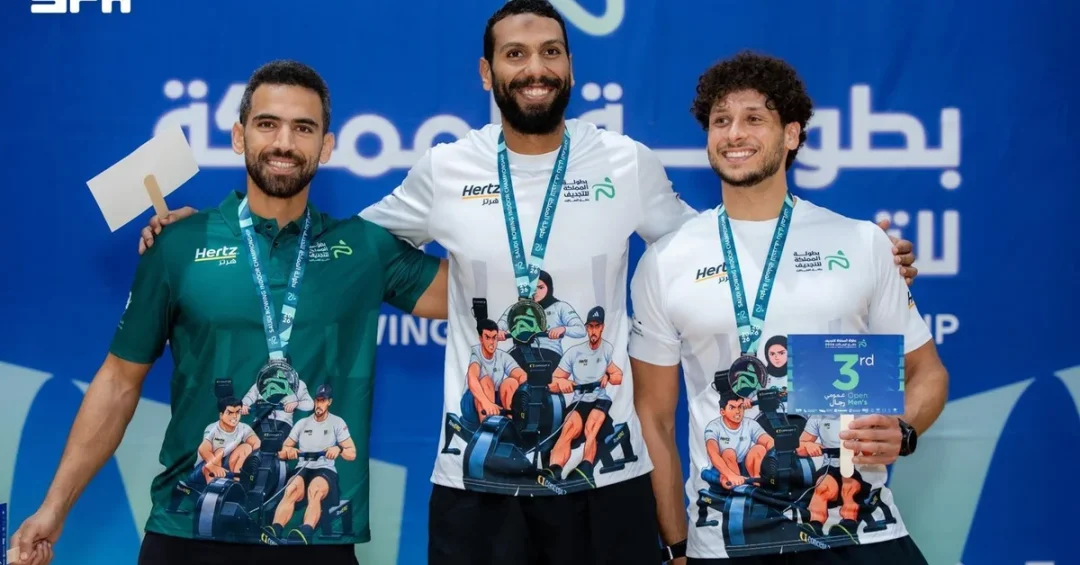
The 2026 Saudi Rowing Indoor Championship, organized by the Saudi Rowing Federation, concluded on Saturday with 414 male and female athletes competing across simultaneous events in Jeddah, Riyadh, and Qatif for a total prize pool of SAR400,000. The two-day championship, held on Friday and Saturday, marked a significant milestone in the Kingdom’s expanding sports calendar and underscored the growing popularity of indoor rowing as a competitive discipline. Participation was distributed with 215 athletes in Jeddah, 106 in Qatif, and 93 in Riyadh, reflecting a nationwide reach that aligns with Saudi Arabia’s Vision 2030 objectives to promote athletic excellence and community engagement.
The event featured a diverse range of race formats, including 500-meter and 2,000-meter sprints, four- and six-minute distance challenges, as well as relay, mixed relay, and fast relay competitions. Athletes competed across open, lightweight, masters, and age-group categories, with results from the three cities combined into a single ranking for each category. This integrated approach ensured a level playing field and highlighted the depth of talent emerging from different regions of the Kingdom. The championship not only showcased individual prowess but also emphasized teamwork and strategic planning in the relay events, drawing enthusiastic crowds and online viewers.
Context and Background
How did indoor rowing evolve from a niche fitness activity to a nationally recognized championship in Saudi Arabia? The sport has gained momentum in recent years as part of the Kingdom’s broader push to diversify athletic offerings and encourage active lifestyles. The Saudi Rowing Federation, established to develop both indoor and outdoor rowing, has played a pivotal role in organizing competitions that cater to a wide demographic, from youth to masters athletes. This year’s championship builds on previous editions that have steadily increased in scale and competitiveness, reflecting the Federation’s commitment to nurturing talent and raising the profile of rowing across the nation.
The decision to host the event simultaneously in Jeddah, Riyadh, and Qatif was a strategic move to maximize accessibility and participation. Jeddah, as a major coastal city, has a natural affinity for water sports, while Riyadh, the capital, represents the Kingdom’s administrative and sporting hub. Qatif, located in the Eastern Province, has a rich heritage in traditional water-based activities, making it an ideal location to broaden the sport’s appeal. By decentralizing the championship, the Federation ensured that athletes from various regions could compete without the need for extensive travel, thereby fostering inclusivity and local engagement. This approach also aligns with Vision 2030’s goal of enhancing quality of life through sports and recreation.
Moreover, the SAR400,000 prize money underscores the growing professionalization of indoor rowing in Saudi Arabia. Such financial incentives not only attract top talent but also motivate aspiring athletes to dedicate themselves to rigorous training. The championship’s structure, which combines results from all three cities, adds an element of national unity, as competitors vie for overall rankings that transcend geographical boundaries. This model could serve as a blueprint for other sports seeking to expand their reach and impact within the Kingdom.
Key Details
What were the standout performances and memorable moments from this year’s championship? The competition witnessed fierce contests across all categories, with winners honored in the men’s and women’s open, lightweight, masters, and age-group divisions. In the relay events, Team Egypt demonstrated exceptional synergy by clinching gold in both the mixed relay and the men’s 2,000-meter relay. Their performance highlighted the international dimension of the championship, as teams from beyond Saudi Arabia participated, adding a layer of cross-cultural sporting exchange. Om Aldonia excelled in the women’s events, securing victory in the women’s 2,000-meter relay and the women’s 900-meter fast relay, while HR Team took gold in the men’s 900-meter fast relay.
The inclusion of diverse race distances and time challenges tested athletes’ versatility and endurance. The 500-meter races demanded explosive power, while the 2,000-meter events required sustained stamina and tactical pacing. The four- and six-minute distance challenges pushed competitors to maximize their output within a fixed timeframe, a format that is increasingly popular in indoor rowing circuits worldwide. The relay events, particularly the mixed and fast relays, brought an electrifying atmosphere, as teams strategized baton passes and sprint finishes. These formats not only cater to different athletic strengths but also make the championship more dynamic for spectators.
Behind the scenes, the Saudi Rowing Federation ensured that all necessary logistical and technical arrangements were in place across the three venues. This included standardized rowing machines, electronic timing systems, and qualified officials to oversee fair play. The simultaneous execution required meticulous coordination, with real-time data transmission allowing for immediate compilation of results. The Federation’s efforts reflect its growing expertise in hosting multi-venue events, a capability that will be crucial as Saudi Arabia continues to bid for and host international sporting competitions. The championship also provided a platform for young athletes to gain exposure and experience, with many age-group categories featuring promising newcomers.
International and Regional Impact
How does a national championship like this elevate Saudi Arabia’s standing in the global sporting community? The participation of Team Egypt and the competitive presence of international athletes signal the Kingdom’s openness to global engagement through sports. Such events foster people-to-people connections and promote cultural exchange, aligning with Saudi Arabia’s vision of being a hub for international sports. The championship also serves as a stepping stone for Saudi athletes aiming to compete in regional and global rowing events, including Asian and world championships. By providing a high-quality competitive environment, the Federation helps bridge the gap between domestic talent and international standards.
Regionally, the event reinforces Saudi Arabia’s leadership in promoting sports across the Gulf and the wider Middle East. The simultaneous hosting in three cities showcases the Kingdom’s advanced infrastructure and organizational capabilities, setting a benchmark for other nations in the region. It also encourages neighboring countries to invest in indoor rowing and other niche sports, potentially leading to more regional tournaments and collaborations. The success of the championship could inspire similar multi-venue formats in other sports, further integrating the region’s athletic landscape. For Saudi Arabia, this aligns with its broader diplomatic efforts to use sports as a tool for soft power and international goodwill.
Economic and Strategic Significance
What economic benefits does hosting a championship of this scale bring to the Kingdom? The SAR400,000 prize pool is a direct investment in athletes, but the event’s economic ripple effects extend further. Hosting competitions in Jeddah, Riyadh, and Qatif stimulates local economies through increased demand for hospitality, transportation, and retail services. Participants, officials, and spectators contribute to these sectors, creating temporary jobs and supporting small businesses. Moreover, the championship raises the profile of indoor rowing, potentially attracting sponsorships and media rights deals that can be reinvested into sports development. As Saudi Arabia diversifies its economy away from oil, sports tourism and events are becoming important pillars of the entertainment and leisure sector.
Strategically, the championship supports the Kingdom’s goals of enhancing public health and social cohesion. By promoting indoor rowing, a low-impact yet highly effective cardiovascular exercise, the Federation encourages citizens to adopt healthier lifestyles, reducing the burden on the healthcare system. The event also provides a constructive outlet for youth, steering them towards productive activities and away from negative influences. Furthermore, the emphasis on female participation—evident in the 414 male and female athletes—highlights Saudi Arabia’s commitment to gender inclusivity in sports, a key aspect of Vision 2030. This not only empowers women but also projects a progressive image internationally.
Vision 2030 Alignment
How does the Saudi Rowing Indoor Championship contribute to the ambitious goals of Vision 2030? The event directly supports the Vision’s Quality of Life Program, which aims to increase sports participation and improve the Kingdom’s global sports ranking. By organizing a national championship that reaches multiple cities, the Saudi Rowing Federation is helping to build a vibrant sports ecosystem that encourages mass participation and elite performance. This aligns with the target of having more Saudis engage in regular physical activity, thereby enhancing overall well-being and productivity. The championship also exemplifies the Vision’s emphasis on nurturing talent and providing platforms for athletes to excel, which is essential for developing a competitive sports sector.
Looking ahead, the success of this year’s championship sets a precedent for future editions to expand further, perhaps incorporating more cities or inviting additional international teams. The Saudi Rowing Federation’s efforts are part of a larger movement to diversify the Kingdom’s sports portfolio, which includes hosting major events like Formula 1, golf tournaments, and football matches. As Saudi Arabia continues to invest in sports infrastructure and human capital, indoor rowing is poised to grow in popularity and competitiveness. Ultimately, the championship not only crowns winners but also symbolizes the Kingdom’s dynamic progress towards a diversified, healthy, and globally engaged society—a core tenet of Vision 2030.
20 Questions
Q1. What was the Saudi Rowing Indoor Championship?
A1. The Saudi Rowing Indoor Championship is a national competition organized by the Saudi Rowing Federation, featuring indoor rowing races across various categories. The 2026 edition was held in Jeddah, Riyadh, and Qatif.
Q2. When did the 2026 championship take place?
A2. The 2026 Saudi Rowing Indoor Championship was held on Friday and Saturday, November 15 and 16, 2026, concluding on Saturday. The event ran simultaneously across the three host cities.
Q3. How many athletes participated in the championship?
A3. A total of 414 male and female athletes competed in the championship. Participation was split with 215 in Jeddah, 106 in Qatif, and 93 in Riyadh.
Q4. What was the total prize money?
A4. The championship offered SAR400,000 in total prize money, distributed among winners across various categories. This reflects the growing professionalization of indoor rowing in Saudi Arabia.
Q5. Which cities hosted the championship?
A5. The championship was hosted simultaneously in Jeddah, Riyadh, and Qatif. This multi-city approach ensured broad accessibility and regional inclusion for athletes across the Kingdom.
Q6. What race distances were included?
A6. The championship included 500-meter and 2,000-meter races, as well as four- and six-minute distance challenges. Relay, mixed relay, and fast relay events were also part of the program.
Q7. What were the competition categories?
A7. Athletes competed in open, lightweight, masters, and age-group categories. Results from all three cities were combined into a single ranking for each category to determine overall winners.
Q8. Who won the mixed relay?
A8. Team Egypt won the mixed relay event. Their victory highlighted the international participation in the championship and added a competitive edge to the relay competitions.
Q9. Who won the men’s 2,000-meter relay?
A9. Team Egypt also won the men’s 2,000-meter relay. This double victory underscored their strong performance and teamwork throughout the championship.
Q10. Who won the women’s 2,000-meter relay?
A10. Om Aldonia won the women’s 2,000-meter relay. Their success demonstrated the high level of competition in the women’s events at the championship.
Q11. Who won the women’s 900-meter fast relay?
A11. Om Aldonia secured gold in the women’s 900-meter fast relay. This added to their victory in the women’s 2,000-meter relay, showcasing their dominance in relay events.
Q12. Who won the men’s 900-meter fast relay?
A12. HR Team took gold in the men’s 900-meter fast relay. Their performance was a highlight of the fast relay competitions, which emphasize speed and precision.
Q13. How were the results from the three cities combined?
A13. Results from Jeddah, Riyadh, and Qatif were combined into a single ranking for each category. This ensured a unified national championship outcome despite the decentralized venues.
Q14. What is the role of the Saudi Rowing Federation?
A14. The Saudi Rowing Federation organizes and promotes rowing sports in the Kingdom, including indoor and outdoor events. It oversees competitions like this championship to develop talent and raise the sport’s profile.
Q15. Why was the championship held in three cities?
A15. Hosting in three cities maximized accessibility and participation, allowing athletes from different regions to compete without extensive travel. It also broadened the sport’s reach and fostered local engagement.
Q16. What are the benefits of indoor rowing?
A16. Indoor rowing offers a full-body, low-impact cardiovascular workout that builds strength and endurance. It is accessible to various age groups and fitness levels, making it ideal for mass participation.
Q17. How does this event support Vision 2030?
A17. The championship supports Vision 2030 by promoting sports participation, enhancing quality of life, and empowering women in sports. It aligns with the Quality of Life Program’s goals.
Q18. Was there international participation?
A18. Yes, Team Egypt competed and won several relay events, adding an international dimension. Their presence reflects the championship’s growing prestige and cross-border appeal.
Q19. What was the significance of the prize money?
A19. The SAR400,000 prize pool incentivized high performance and recognized athletes’ dedication. It also signals the professionalization of indoor rowing and attracts top talent to the sport.
Q20. What does the future hold for indoor rowing in Saudi Arabia?
A20. With increasing participation and support from the Saudi Rowing Federation, indoor rowing is poised for growth. Future editions may expand further, contributing to the Kingdom’s sports diversification and global engagement.
Reader Feedback
We value your thoughts. Please share your feedback on this article.
Your feedback helps us improve our coverage.
Related articles
 Al-Hilal Wins Clubs Diving Championship in Jeddah
 16th Security Sectors Football Championship Kicks Off
 Saudi National Team Resumes Training in Doha Ahead of Uzbekistan Friendly
 Saudi U-23 Football Team Resumes Training in Eastern Region
 Saudi U15 Girls’ National Team Begins Training Camp in Jeddah
 Sport Ministry Launches Ticketing Accreditation Service