


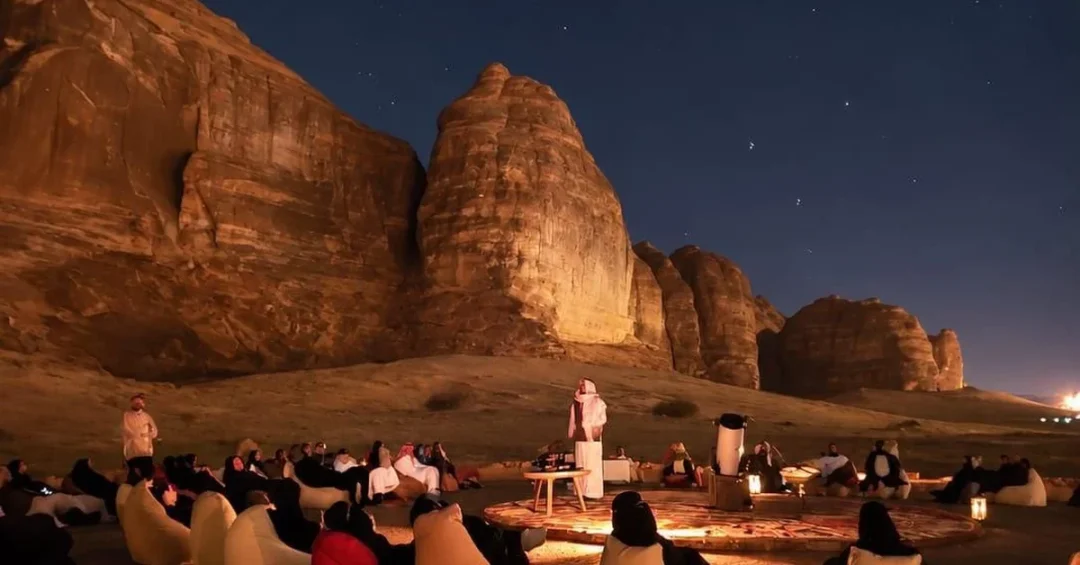
The AlUla Manara team, an initiative affiliated with the Royal Commission for AlUla (RCU), organized a series of astronomy activities and programs this month across several of AlUla’s most celebrated heritage locations, including AlUla Fort in AlUla Old Town and Jabal Ikmah. The events, announced via official Saudi channels, were designed for both residents and visitors, offering a hands-on opportunity to observe the night sky while learning about the region’s deep connection to celestial science. Have you ever wondered how ancient communities read the stars to shape their daily lives?
The programs form part of a broader effort to position AlUla as a leading destination for astrotourism, to raise public awareness of space science and technology, and to reconnect modern scientific knowledge with the Arab world’s rich astronomical heritage. Historically, residents of AlUla relied on the area’s exceptionally clear skies and low light pollution to observe celestial bodies, tracking the movement of stars and planets to determine seasons and planting times. That legacy is now being revived as a living cultural and educational experience for a new generation of stargazers.
Context and Background
What makes AlUla so uniquely suited to the study of the heavens? The answer lies in both its geography and its history. Located in northwestern Saudi Arabia, AlUla is blessed with vast desert horizons, minimal urban light pollution, and reliably clear skies for much of the year — conditions that make it one of the most promising locations in the region for astronomical observation. These natural advantages were recognized by generations of residents who used the stars as a practical calendar, guiding agricultural cycles and seasonal travel across the landscape.
The Royal Commission for AlUla (RCU), the government body responsible for the conservation and development of the AlUla region, has made heritage preservation and sustainable tourism central pillars of its mandate. The AlUla Manara team operates as part of that vision, translating RCU’s broader ambitions into accessible community programming. By hosting astronomy nights at sites such as AlUla Fort and Jabal Ikmah, the team bridges the gap between ancient knowledge systems and contemporary scientific curiosity.
This initiative also reflects a growing global interest in astrotourism, a niche travel segment in which visitors plan journeys specifically to experience dark skies and celestial phenomena. With its heritage credentials and natural endowment, AlUla is well placed to compete in this emerging market, offering something few destinations can match: a stargazing experience steeped in thousands of years of human history.
Key Details of the Astronomy Programs
What did participants actually experience during these special evenings? At AlUla Fort in AlUla Old Town, visitors gathered to observe stars and planets through telescopes while listening to expert storytellers share tales that weave together astronomy, local folklore, and regional heritage. The setting itself — a historic fortress overlooking the old town — added a sense of continuity, linking the observations of the night sky to the generations who once watched the same stars from the same vantage points.
A particularly engaging event took place at Jabal Ikmah, a site renowned for its ancient rock inscriptions and often described as an open-air library of the region’s past. The interactive evening featured meteor observation, heritage exploration, an astronomy quiz, and guided stargazing designed to appeal to families, students, and curious travelers alike. According to information released by the Saudi Press Agency, the programming combined entertainment with education, ensuring that younger participants left with both memorable experiences and a deeper appreciation of space science.
The activities were open to residents and visitors, reinforcing RCU’s commitment to inclusive community engagement. By rotating the programs across different locations, the AlUla Manara team ensured that both iconic heritage sites received fresh attention and that audiences could enjoy varied experiences. Each session was curated to highlight a distinct aspect of astronomy — from planetary observation to meteor tracking — while grounding every activity in the cultural context of AlUla.
International and Regional Impact
How does a local astronomy program resonate on the international stage? AlUla has steadily emerged as a global cultural and tourism destination, attracting travelers, researchers, and artists from around the world. Astronomy programming adds a distinctive dimension to that offering, positioning the region as a place where heritage and science meet. For international visitors accustomed to light-polluted cities, the chance to observe the Milky Way and track meteors in a landscape of towering sandstone formations is a rare and compelling draw.
Regionally, the initiative aligns with a broader movement across the Gulf to invest in science communication and educational tourism. By celebrating Arab astronomical heritage, the AlUla Manara team also reinforces a narrative of cultural continuity — reminding audiences that the Arab world’s contributions to astronomy stretch back centuries and remain a source of pride and inspiration today. Such framing strengthens Saudi Arabia’s soft power and its credentials as a custodian of shared human heritage.
Economic and Strategic Significance
Why does stargazing matter for economic strategy? Astrotourism represents a growing segment of the global travel market, and destinations that cultivate dark-sky experiences can attract high-value visitors seeking unique, off-the-beaten-path adventures. AlUla’s investment in astronomy programming is therefore both a cultural initiative and an economic one, diversifying the local tourism offering beyond heritage tours and luxury resorts and extending the visitor season into the cooler evening hours.
The programs also support the development of local skills and employment. Expert storytellers, guides, and astronomy educators all play essential roles in delivering these experiences, creating opportunities for residents to participate in the growing tourism economy. By integrating scientific knowledge with local heritage expertise, the AlUla Manara team models a form of tourism that is rooted in place, respectful of tradition, and economically generative — a balance that is central to the region’s long-term strategic planning.
Vision 2030 Alignment
How does an evening of stargazing connect to a national transformation agenda? Saudi Arabia’s Vision 2030 seeks to diversify the economy, expand cultural and tourism offerings, and empower communities through education and opportunity. The AlUla astronomy programs advance each of these goals: they enrich the Kingdom’s tourism portfolio, promote scientific literacy, and celebrate cultural heritage in a way that is accessible to all. AlUla has been designated a flagship destination under Vision 2030, and initiatives such as this demonstrate how heritage and modernity can be woven together.
Looking ahead, the success of the AlUla Manara team’s programming suggests a promising future for astrotourism in the Kingdom. As RCU continues to develop AlUla’s infrastructure and visitor experiences, astronomy activities can be expanded into regular seasonal offerings, educational partnerships, and international dark-sky events. By inviting residents and visitors to look up at the same stars that guided their ancestors, AlUla is not only preserving the past but illuminating a path toward a vibrant, knowledge-driven future — one that reflects the Kingdom’s ambition and its enduring connection to the cosmos.
20 Questions
Q1. What organization is behind the astronomy activities in AlUla?
A1. The AlUla Manara team, which is affiliated with the Royal Commission for AlUla (RCU), organized the astronomy activities and programs. RCU is the government body responsible for the conservation and development of the AlUla region.
Q2. Where were the astronomy programs held?
A2. The programs took place at several locations, including AlUla Fort in AlUla Old Town and Jabal Ikmah. These heritage sites provided atmospheric settings for stargazing, storytelling, and exploration of the region’s cultural past.
Q3. Who could participate in these astronomy events?
A3. The activities were designed for both residents and visitors of AlUla. By making the programs accessible to the public, the organizers ensured broad community engagement and shared the region’s astronomical heritage with diverse audiences.
Q4. What is the main goal of the AlUla Manara astronomy programs?
A4. The activities aim to highlight AlUla’s potential for astrotourism, raise awareness of space science and technology, and connect scientific knowledge with Arab astronomical heritage, according to official Saudi information.
Q5. Why is AlUla well suited for stargazing?
A5. AlUla enjoys clear skies and low light pollution, making it ideal for observing celestial bodies. Historically, residents used these conditions to track stars and planets to determine seasons and planting times.
Q6. What happened at AlUla Fort during the events?
A6. At AlUla Fort, participants observed stars and planets and listened to expert storytellers share tales about astronomy and local heritage. The historic setting connected modern observation with centuries-old traditions of sky-watching.
Q7. What activities were offered at Jabal Ikmah?
A7. The interactive evening at Jabal Ikmah featured meteor observation, heritage exploration, an astronomy quiz, and guided stargazing. The combination of science and culture appealed to families, students, and curious travelers alike.
Q8. What is astrotourism?
A8. Astrotourism is a travel segment in which visitors plan journeys specifically to experience dark skies and celestial phenomena. AlUla is positioning itself as a leading destination for this growing niche through its natural advantages.
Q9. How did historical residents of AlUla use the night sky?
A9. Residents used the area’s clear skies to observe celestial bodies and determine seasons and planting times. This practical astronomical knowledge supported agricultural cycles and seasonal movement across the landscape.
Q10. What role does the Royal Commission for AlUla play?
A10. RCU is responsible for the conservation and development of AlUla. It supports initiatives like the AlUla Manara team’s programs, which reflect its broader mandate of heritage preservation and sustainable tourism.
Q11. Why are storytellers included in the astronomy events?
A11. Expert storytellers connect astronomy with local heritage, making the experience richer and more culturally grounded. Their tales help participants appreciate how generations of residents interpreted the night sky.
Q12. How do the programs support space science awareness?
A12. By offering guided stargazing, quizzes, and meteor observation, the events introduce participants to concepts in space science and technology. This educational dimension helps build public interest in scientific fields.
Q13. What is significant about Jabal Ikmah?
A13. Jabal Ikmah is renowned for its ancient rock inscriptions and is often described as an open-air library of the region’s past. Hosting astronomy events there links celestial observation with deep cultural history.
Q14. How does astrotourism benefit the local economy?
A14. Astrotourism attracts high-value visitors seeking unique experiences, diversifying AlUla’s tourism offering. It also creates roles for guides, storytellers, and educators, supporting local employment and extending the visitor season.
Q15. How does this initiative promote Arab astronomical heritage?
A15. By celebrating the region’s historical use of the stars and connecting it to modern science, the programs remind audiences of the Arab world’s long contributions to astronomy. This strengthens cultural pride and cultural continuity.
Q16. What global interest does AlUla’s astronomy programming tap into?
A16. It taps into growing global interest in dark-sky travel and astrotourism. International visitors seeking rare stargazing experiences are drawn to AlUla’s clear skies and dramatic desert landscapes.
Q17. How do these programs support Vision 2030?
A17. The programs advance Vision 2030 by diversifying tourism, promoting scientific literacy, and celebrating cultural heritage. AlUla is a flagship destination under the national transformation agenda.
Q18. What kinds of celestial objects could participants observe?
A18. Participants observed stars and planets at AlUla Fort and took part in meteor observation at Jabal Ikmah. The clear, low-pollution skies allowed detailed viewing of the night sky.
Q19. Could the astronomy programs expand in the future?
A19. The success of the programming suggests potential for expanded seasonal offerings, educational partnerships, and international dark-sky events. These would further strengthen AlUla’s position as an astrotourism destination.
Q20. What overall impression do the events create for Saudi Arabia?
A20. The events showcase Saudi Arabia as a custodian of heritage and a forward-looking nation investing in science, culture, and tourism. They reflect the Kingdom’s ambition and its enduring connection to the cosmos.
Reader Feedback
We value your thoughts. Please share your feedback on this article.
Your feedback helps us improve our coverage.
Related articles
 Saudia, ACP Launch Direct Moscow-Jeddah Flights
 AlUla Stays Link Visitors to Heritage and Nature
 Sunset Outings Draw Visitors to Jeddah’s Corniche and Parks
 Al-Wasm Rains Turn Tihama Aseer’s Plains and Mountains Green
 Al-Khobar Expands Parks, Walking Trails to Enhance Quality of Life
 Al-Nufayed Heritage Village: Najdi Architecture, Rural Tourism