


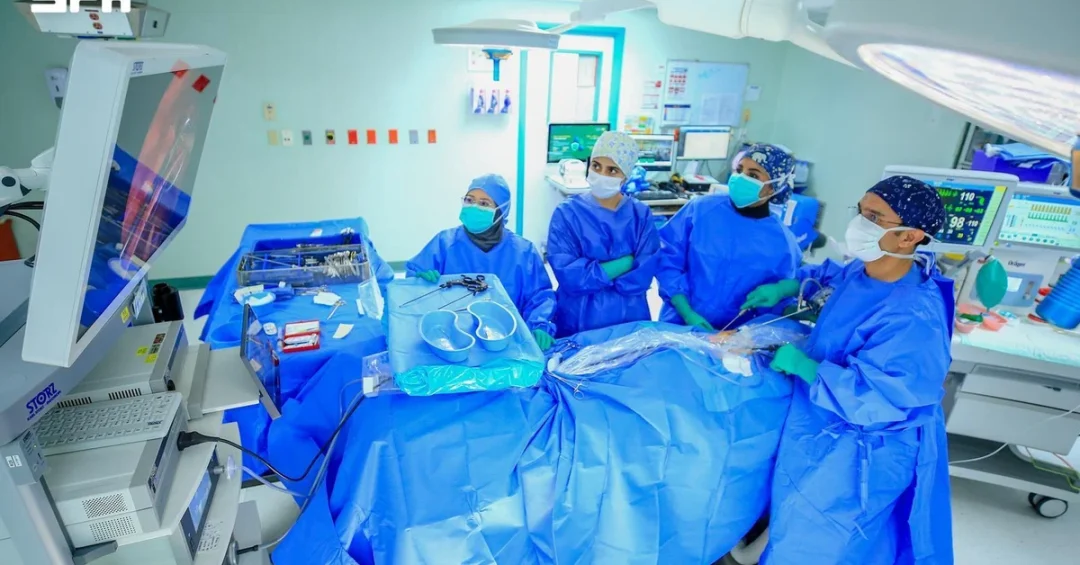
King Faisal Specialist Hospital & Research Centre (KFSH) has reported a five-year survival rate of 95.2 percent following diagnosis among children with Wilms tumor, the most common kidney cancer in children, according to information released through official Saudi channels. The outcome reflects the results of long-term clinical follow-up of 104 children diagnosed and treated at the Riyadh-based institution, one of the Kingdom’s leading academic medical centers. The data were announced by KFSH and published via the Saudi Press Agency (SPA), underscoring the hospital’s role as a national referral center for complex pediatric oncology.
Wilms tumor, which develops in the kidneys during childhood, is a condition that can initially progress without obvious symptoms, making early detection and specialized care especially important. The reported five-year survival figure places KFSH among institutions achieving outcomes consistent with international standards of pediatric cancer care. For families in Saudi Arabia and across the region, the announcement offers a measure of clarity and confidence in the availability of advanced, evidence-based treatment close to home. Why does a single survival statistic matter so much to the wider healthcare conversation? Because it represents thousands of hours of clinical work, careful follow-up, and a system built to deliver specialized care at scale.
Context and Background
How does a hospital measure success in the treatment of a rare and delicate childhood cancer? At KFSH, the answer lies in long-term follow-up. The 95.2 percent five-year survival rate is derived from an analysis of 104 children diagnosed and treated at the hospital, with extended observation after treatment enabling specialists to assess how patients fare over time. Five-year survival rates are a widely recognized benchmark in oncology, offering a consistent way to evaluate treatment practices and compare outcomes across institutions and over time.
Wilms tumor is the most common kidney cancer in children, and its management requires a multidisciplinary approach that brings together surgeons, pediatric oncologists, radiologists, and specialized nursing teams. Because the disease occurs early in life, treatment decisions must weigh not only the effectiveness of cancer therapies but also the long-term health of the child, including kidney function. KFSH’s status as a major academic medical center means that clinical experience with such conditions is documented, analyzed, and used to refine care for future patients. In this context, published survival data serve as both a quality indicator and a foundation for continuous improvement.
The announcement also reflects the broader development of specialized healthcare capacity within Saudi Arabia. What does it mean for a national institution to report outcomes at this level? It signals that complex pediatric cancer care is being delivered with consistency and rigor, and that data are being gathered and reviewed transparently. This supports the confidence of patients and referring physicians, and contributes to the Kingdom’s growing reputation as a destination for advanced medical treatment.
Tailored Treatment and Multidisciplinary Care
How do clinicians decide on the right course of treatment for each child? According to the released information, the medical team at KFSH determines each child’s treatment plan based on the tumor stage, test results, overall health, and, when needed, tumor characteristics. This individualized approach is central to pediatric oncology, where the same disease can present differently from one patient to the next. Treatment typically involves surgery and chemotherapy, with radiation therapy used in some cases. Surgery may involve removing all or part of the affected kidney, depending on the child’s condition and the characteristics of the tumor.
The emphasis on preserving kidney function is a defining feature of KFSH’s approach. Dr. Awatif Alanazi, Consultant in Pediatric Hematology and Oncology at KFSH, explained that treating Wilms tumor requires attention to kidney health alongside cancer treatment. Because the disease occurs early in life, preserving kidney function is an important consideration throughout the treatment journey. This dual focus, on curing the cancer and protecting the child’s long-term health, reflects a patient-centered philosophy that extends beyond the immediate treatment period.
What role does follow-up play in this model of care? Long-term follow-up of Wilms tumor cases at KFSH provides clinical data that support the evaluation of treatment practices and outcomes and help improve care for children with the disease. In effect, each treated patient contributes to a growing body of knowledge that informs future decisions, a hallmark of academic medical practice. This cycle of care, observation, and improvement is what allows institutions to sustain and raise the quality of outcomes over time.
Recognizing Symptoms and Encouraging Early Detection
Why is awareness of Wilms tumor symptoms so important for families? The condition may initially progress without obvious symptoms, which can delay recognition. In some cases, Wilms tumor is discovered after a lump or swelling is noticed in the abdomen. Other possible signs include abdominal pain, blood in the urine, high blood pressure, fever, and loss of appetite or weight. These symptoms can overlap with many common childhood conditions, making awareness among parents and primary care physicians an essential part of early detection.
For families, the key message is that unusual abdominal swelling or persistent symptoms warrant medical evaluation. Saudi Arabia’s healthcare system has invested steadily in pediatric specialty services, and institutions such as KFSH provide referral pathways for complex cases. Does a high survival rate reduce the importance of early detection? Not at all. Outcomes depend on timely diagnosis, appropriate treatment, and sustained follow-up working together. The 95.2 percent figure is a reflection of that combined effort, not a justification for relaxing vigilance.
The hospital’s broader standing reinforces the significance of its pediatric oncology results. KFSH ranked first in the Middle East and Africa and 12th globally among the world’s top 250 academic medical centers for 2026. It was also recognized as the most valuable healthcare brand in Saudi Arabia and the Middle East by Brand Finance in 2026, and was included in Newsweek’s World’s Best Hospitals, World’s Best Smart Hospitals, and World’s Best Specialized Hospitals lists for 2026. These recognitions reflect institutional strength across research, clinical care, and patient experience.
International and Regional Impact
How does a Saudi hospital’s pediatric oncology outcome resonate beyond the Kingdom’s borders? A five-year survival rate of 95.2 percent among children with Wilms tumor contributes to the regional and international standing of KFSH as a center of clinical excellence. Patients and families across the Middle East and Africa look to institutions with documented outcomes when seeking specialized care, and published data help build that trust. The result positions Saudi Arabia’s health sector as a source of reliable, high-quality specialty services rather than only a destination for routine care.
The regional dimension is particularly relevant given KFSH’s ranking as first in the Middle East and Africa among top academic medical centers. What does such recognition enable? It supports medical education, research collaboration, and the exchange of clinical expertise across borders. For referring physicians in neighboring countries, a hospital with transparent outcome data becomes a natural partner for complex cases. For international observers, the results illustrate the capacity of Saudi healthcare institutions to meet global benchmarks in specialized fields such as pediatric oncology.
Economic and Strategic Significance
Why does clinical excellence matter to a national economy? Health is increasingly recognized as a strategic sector, and specialized care contributes to the diversification of Saudi Arabia’s economy. Strong healthcare institutions attract talent, foster research and innovation, and support the development of medical tourism within the region. When a hospital reports outcomes comparable to leading global centers, it strengthens the case for patients to seek treatment domestically and regionally, retaining economic value within the Kingdom and reinforcing the quality of the national health system.
The strategic significance extends to the workforce. Academic medical centers train the next generation of physicians, nurses, and researchers, and outcome data from real clinical practice enrich that education. Does a survival statistic have implications beyond the ward? Yes: it reflects the maturity of a system that can measure, evaluate, and improve. KFSH’s sustained recognition in global rankings and brand evaluations aligns with the broader ambition to build a knowledge-based, high-value healthcare sector capable of serving both citizens and international patients.
Vision 2030 Alignment
How does a pediatric cancer outcome connect to Saudi Arabia’s long-term national vision? The Kingdom’s Vision 2030 places the well-being of citizens and residents at the center of its development agenda, and the Health Sector Transformation Program aims to improve the quality, accessibility, and efficiency of healthcare. A 95.2 percent five-year survival rate for children with Wilms tumor, reported by a flagship institution such as KFSH, is a concrete expression of that ambition. It demonstrates that specialized, evidence-based care is being delivered at a level consistent with global standards.
The forward-looking significance is clear: continued investment in academic medicine, research, and specialized pediatric services will enable Saudi Arabia to raise outcomes further and to share its expertise with the wider region. For families, the message is one of progress and confidence, as the Kingdom builds a health system that combines clinical excellence with compassion and long-term commitment to every patient. As KFSH continues to document and refine its care, the story of these 104 children stands as a marker of what a focused, well-resourced national health system can achieve, and as a foundation for the next advances in pediatric oncology within the Kingdom and beyond.
20 Questions
Q1. What survival rate did King Faisal Specialist Hospital & Research Centre report for children with Wilms tumor?
A1. KFSH reported a five-year survival rate of 95.2 percent following diagnosis among children with Wilms tumor, based on an analysis of 104 children diagnosed and treated at the hospital.
Q2. What is Wilms tumor?
A2. Wilms tumor is the most common kidney cancer in children. It develops in the kidneys during childhood and may initially progress without obvious symptoms, sometimes being discovered after abdominal swelling is noticed.
Q3. How many children were included in the KFSH analysis?
A3. The findings are based on an analysis of 104 children diagnosed and treated at KFSH, with long-term follow-up enabling assessment of treatment outcomes over an extended period.
Q4. How is a child’s treatment plan determined at KFSH?
A4. The medical team determines each child’s treatment plan based on the tumor stage, test results, overall health, and, when needed, tumor characteristics, ensuring care is tailored to the individual patient.
Q5. What treatments are typically used for Wilms tumor?
A5. Treatment typically involves surgery and chemotherapy, with radiation therapy used in some cases. Surgery may involve removing all or part of the affected kidney, depending on the child’s condition and tumor characteristics.
Q6. Why is kidney function a key consideration in treatment?
A6. Because the disease occurs early in life, preserving kidney function is an important consideration throughout treatment. Dr. Awatif Alanazi noted that treating Wilms tumor requires attention to kidney health alongside cancer treatment.
Q7. Who is Dr. Awatif Alanazi?
A7. Dr. Awatif Alanazi is a Consultant in Pediatric Hematology and Oncology at KFSH. She explained that treating Wilms tumor requires attention to kidney health alongside cancer treatment throughout the child’s care.
Q8. What are the possible signs of Wilms tumor?
A8. Possible signs include a lump or swelling in the abdomen, abdominal pain, blood in the urine, high blood pressure, fever, and loss of appetite or weight. Some cases initially show no obvious symptoms.
Q9. Why is long-term follow-up important at KFSH?
A9. Long-term follow-up provides clinical data that support the evaluation of treatment practices and outcomes and help improve care for children with the disease over time.
Q10. How did KFSH rank among academic medical centers for 2026?
A10. KFSH ranked first in the Middle East and Africa and 12th globally among the world’s top 250 academic medical centers for 2026, reflecting its strength in research and clinical care.
Q11. What brand recognition did KFSH receive in 2026?
A11. KFSH was recognized as the most valuable healthcare brand in Saudi Arabia and the Middle East by Brand Finance in 2026, underscoring its standing in the regional healthcare sector.
Q12. Which Newsweek lists included KFSH in 2026?
A12. KFSH was included in Newsweek’s World’s Best Hospitals, World’s Best Smart Hospitals, and World’s Best Specialized Hospitals lists for 2026, reflecting broad institutional recognition.
Q13. Why is five-year survival a common benchmark in oncology?
A13. Five-year survival is a widely recognized benchmark that offers a consistent way to evaluate treatment practices and compare outcomes across institutions and over time, supporting quality assessment.
Q14. Where was the KFSH announcement released?
A14. The findings were announced by KFSH and published via the Saudi Press Agency (SPA), reflecting the hospital’s role as a national referral center for complex pediatric oncology.
Q15. What does the announcement mean for families in the region?
A15. It offers clarity and confidence that advanced, evidence-based pediatric cancer care is available close to home, supporting families in Saudi Arabia and across the Middle East and Africa.
Q16. Why is early detection of Wilms tumor emphasized?
A16. Because the condition may progress without obvious symptoms, awareness of signs such as abdominal swelling or pain encourages timely medical evaluation, which supports better treatment outcomes.
Q17. How does KFSH’s approach reflect patient-centered care?
A17. By focusing on both curing the cancer and protecting the child’s long-term kidney health, KFSH’s multidisciplinary approach reflects a patient-centered philosophy that extends beyond the immediate treatment period.
Q18. What role do academic medical centers play in improving care?
A18. Academic medical centers document clinical experience, analyze outcomes, and train future physicians, creating a cycle of care, observation, and improvement that helps sustain and raise quality over time.
Q19. How does this outcome connect to Vision 2030?
A19. The Vision 2030 Health Sector Transformation Program aims to improve healthcare quality and accessibility. The 95.2 percent survival rate is a concrete expression of delivering specialized, evidence-based care at global standards.
Q20. What is the forward-looking significance of the KFSH results?
A20. Continued investment in academic medicine, research, and specialized pediatric services will enable Saudi Arabia to raise outcomes further and share expertise with the wider region, building a health system combining excellence and compassion.
Reader Feedback
We value your thoughts. Please share your feedback on this article.
Your feedback helps us improve our coverage.
Related articles
 Saudi Red Crescent in Riyadh Signs Deal to Boost Ambulance Response
 WHO: Malnutrition Supplies Run Out at 91 Sudan Centers
 Saudi Health Council Enhances Diabetes Care Services
 Makkah Education Department Holds Diabetes Prevention, Early Detection Program
 6th Saudi Physical Therapy Conference Concludes in Al-Ahsa
 Aseer Hospitals Earn Baby-Friendly Accreditation