


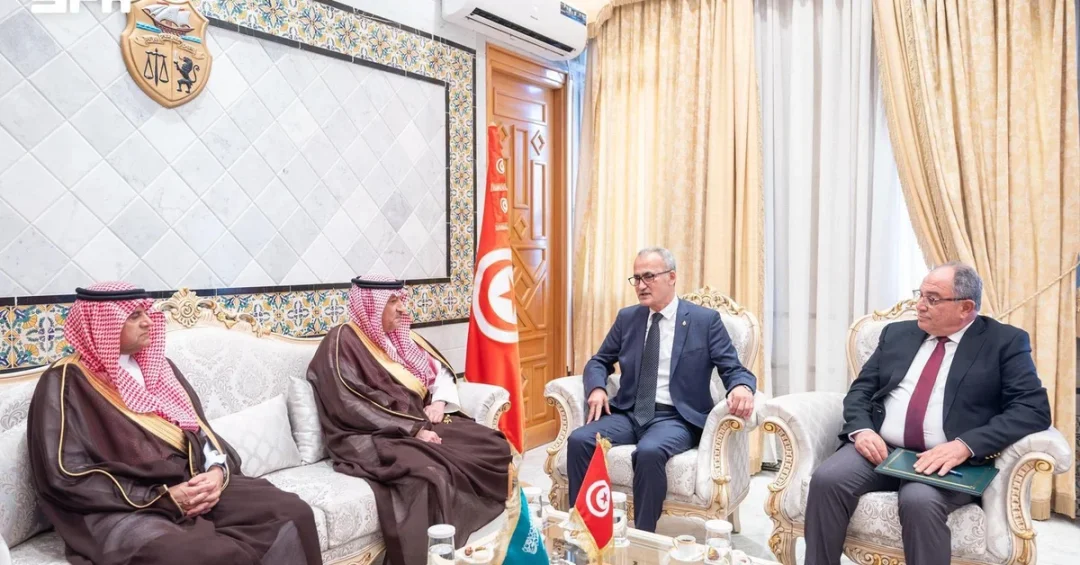
Vice Minister of Foreign Affairs Waleed Elkhereiji met with Tunisia’s Secretary of State to the Minister of Foreign Affairs, Migration and Tunisians Abroad Mohamed Ben Ayed in Tunis on November 16, 2026, to strengthen bilateral cooperation and review key Saudi development projects in Tunisia. The meeting, reported by the Saudi Press Agency (SPA), underscored the enduring partnership between the Kingdom of Saudi Arabia and the Republic of Tunisia, highlighting shared commitments to regional stability and sustainable development. During the talks, both officials explored avenues to deepen ties across various sectors, including economic, cultural, and diplomatic domains. The visit also marked the inauguration of several Saudi-funded development projects in Tunisia, signaling tangible progress in bilateral relations. How might such high-level engagements shape the future of Saudi-Tunisian cooperation?
The discussions took place against the backdrop of Saudi Arabia’s broader efforts to enhance its diplomatic and economic footprint across the Arab world, consistent with the principles of Vision 2030. By focusing on development projects and international developments, the meeting reflects the Kingdom’s proactive approach to addressing regional challenges through collaboration. Tunisia, a nation with deep historical and cultural ties to Saudi Arabia, stands to benefit from Saudi expertise and investment, particularly in infrastructure and social development. This visit not only reinforces diplomatic bonds but also paves the way for increased trade and investment flows. What does this mean for the region’s economic integration?
Context and Background
What drives Saudi Arabia’s sustained engagement with Tunisia? The relationship between the two countries has long been rooted in mutual respect and shared Arab heritage. Over the years, Saudi Arabia has provided significant support to Tunisia, including financial aid, investment, and technical assistance. This meeting builds on a history of cooperation that spans decades, with both nations collaborating in areas such as education, health, and infrastructure. The Vice Minister’s visit is part of a series of high-level exchanges that have intensified in recent years, reflecting a mutual desire to elevate bilateral ties to new heights. Such visits are instrumental in translating diplomatic goodwill into concrete actions that benefit both peoples.
The timing of this meeting is particularly significant, as Tunisia continues to navigate economic reforms and seeks to attract foreign investment. Saudi Arabia, with its robust economy and strategic vision, emerges as a natural partner in these endeavors. The Kingdom’s development projects in Tunisia, inaugurated during this visit, are a testament to its commitment to supporting Tunisia’s growth. These projects, which span various sectors, are designed to create jobs, improve infrastructure, and enhance the quality of life for Tunisians. By aligning its support with Tunisia’s national priorities, Saudi Arabia demonstrates a nuanced understanding of the country’s needs. How can such targeted investments foster long-term prosperity?
Moreover, the meeting addressed international developments, reflecting the two nations’ shared interest in promoting peace and stability in the region. From the situation in Libya to broader Middle Eastern dynamics, Saudi Arabia and Tunisia have consistently advocated for dialogue and diplomatic solutions. Their coordination on these issues is vital for regional security. The Vice Minister’s discussions with Secretary of State Ben Ayed likely touched on these matters, reinforcing a unified approach to common challenges. In a world of shifting alliances, the Saudi-Tunisian partnership stands as a beacon of constructive engagement. What role will this partnership play in shaping regional outcomes?
Key Details of the Meeting
What specific outcomes emerged from the talks? According to the Saudi Press Agency, the meeting focused on enhancing cooperation between the two countries, with a particular emphasis on reviewing key Saudi development projects in Tunisia. These projects, which were inaugurated during the visit, represent a major milestone in bilateral relations. While the exact nature of the projects was not detailed in the SPA report, they are part of Saudi Arabia’s broader strategy to support sustainable development in friendly nations. The inauguration ceremony likely showcased projects in sectors such as energy, transportation, or healthcare, which are critical to Tunisia’s economic revitalization. Such initiatives not only provide immediate benefits but also lay the groundwork for future collaboration.
The two sides also discussed international developments and efforts to address them, indicating a shared commitment to tackling global and regional issues. This includes coordinating positions on matters of mutual concern, such as counterterrorism, climate change, and economic stability. By aligning their approaches, Saudi Arabia and Tunisia can amplify their voices on the international stage. The meeting thus served as a platform for strategic dialogue, beyond mere ceremonial gestures. It reflects a deepening of trust and a shared vision for a peaceful and prosperous region. How will these discussions translate into actionable policies?
Secretary of State Mohamed Ben Ayed, in his role overseeing migration and Tunisians abroad, may have also discussed ways to enhance cooperation on consular affairs and the welfare of Tunisian expatriates in Saudi Arabia. The Kingdom hosts a significant Tunisian community, and their contributions to both societies are valued. Strengthening ties in this area could lead to improved services and protections for Tunisians living in Saudi Arabia, as well as facilitate cultural exchanges. Such people-to-people connections are the bedrock of enduring partnerships. What more can be done to support these communities?
International and Regional Impact
How does this meeting resonate beyond the two nations? The Saudi-Tunisian partnership carries weight in the broader Arab and Islamic world. Both countries are influential members of the Arab League and the Organization of Islamic Cooperation, and their cooperation can drive collective action on pressing issues. By presenting a united front, they can advocate for solutions to regional crises, from the Palestinian cause to the reconstruction of war-torn states. The meeting in Tunis sends a positive signal that Arab nations are working together to address common challenges. In a region often fraught with divisions, such solidarity is invaluable. Could this be a model for other bilateral relationships?
On the international stage, Saudi Arabia’s engagement with Tunisia aligns with its G20 commitments and its role as a responsible global player. The Kingdom’s development assistance to Tunisia is part of its wider efforts to promote stability and prosperity in the Middle East and North Africa. This approach not only earns goodwill but also opens doors for economic partnerships. For Tunisia, closer ties with Saudi Arabia can attract further investment from Gulf countries and beyond, boosting its economy. The ripple effects of this meeting could thus extend far beyond the immediate bilateral context, contributing to a more integrated and resilient region. What does this mean for global perceptions of Saudi diplomacy?
Economic and Strategic Significance
What are the economic implications of this high-level engagement? Saudi Arabia’s development projects in Tunisia are likely to have a transformative impact on local communities. By investing in infrastructure, energy, and other sectors, the Kingdom is helping Tunisia build a more diversified and sustainable economy. These projects can create jobs, enhance productivity, and improve access to essential services. Moreover, they serve as a catalyst for private sector involvement, as Saudi companies may follow suit and explore opportunities in Tunisia. The economic dimension of this partnership is thus multifaceted, with benefits that accrue to both nations. How can these projects be scaled up for even greater impact?
Strategically, the meeting reinforces Saudi Arabia’s position as a leader in the Arab world and a key partner for countries undergoing transition. By supporting Tunisia’s stability and development, the Kingdom contributes to regional security, which is in its own national interest. A prosperous Tunisia is less susceptible to extremism and more capable of contributing to collective security. Furthermore, the partnership counters the influence of other regional actors, ensuring that Arab interests are prioritized. This strategic alignment is a win-win for both countries, fostering a stable and cooperative neighborhood. What other areas could benefit from such strategic cooperation?
Vision 2030 Alignment
How does this meeting reflect Saudi Arabia’s Vision 2030? Vision 2030 is not only a domestic transformation plan but also a blueprint for the Kingdom’s global engagement. It emphasizes the importance of building strong international partnerships, diversifying the economy, and promoting sustainable development. The Vice Minister’s visit to Tunisia and the inauguration of development projects exemplify these principles in action. By exporting its expertise and investing in friendly nations, Saudi Arabia is positioning itself as a catalyst for regional growth. This aligns with Vision 2030’s goal of making the Kingdom a pivotal player in the global economy. What more can be expected as Vision 2030 unfolds?
In conclusion, the meeting between Vice Minister Waleed Elkhereiji and Secretary of State Mohamed Ben Ayed marks another step forward in the robust Saudi-Tunisian relationship. It underscores the Kingdom’s commitment to supporting Tunisia’s development and to working together on regional and international issues. As Saudi Arabia continues to advance its Vision 2030 objectives, such partnerships will be crucial in shaping a prosperous and stable future for the Arab world. The inauguration of development projects is a tangible outcome that will benefit generations to come. With mutual respect and shared goals, Saudi-Tunisian cooperation is poised to reach new heights. How will this partnership inspire other nations in the region?
20 Questions
Q1. Who met in Tunis on November 16, 2026?
A1. Vice Minister of Foreign Affairs Waleed Elkhereiji of Saudi Arabia met with Tunisia’s Secretary of State to the Minister of Foreign Affairs, Migration and Tunisians Abroad Mohamed Ben Ayed.
Q2. What was the main purpose of the meeting?
A2. The meeting aimed to enhance cooperation between Saudi Arabia and Tunisia and to review key Saudi development projects in Tunisia that were inaugurated during the visit.
Q3. Which Saudi development projects were reviewed?
A3. The specific projects were not detailed in the SPA report, but they are part of Saudi Arabia’s efforts to support Tunisia’s development across various sectors.
Q4. When did the meeting take place?
A4. The meeting took place on November 16, 2026, as reported by the Saudi Press Agency.
Q5. Where did the meeting occur?
A5. The meeting was held in Tunis, the capital of Tunisia.
Q6. Who represented Saudi Arabia in the meeting?
A6. Vice Minister of Foreign Affairs Waleed Elkhereiji represented Saudi Arabia.
Q7. Who represented Tunisia in the meeting?
A7. Tunisia was represented by Secretary of State to the Minister of Foreign Affairs, Migration and Tunisians Abroad Mohamed Ben Ayed.
Q8. What international developments were discussed?
A8. The two sides discussed international developments and efforts to address them, reflecting their shared interest in regional and global stability.
Q9. How does this meeting align with Saudi Vision 2030?
A9. It aligns with Vision 2030 by promoting international partnerships, economic diversification, and sustainable development, showcasing Saudi Arabia’s global engagement.
Q10. What is the significance of Saudi development projects in Tunisia?
A10. These projects demonstrate Saudi Arabia’s commitment to supporting Tunisia’s growth, creating jobs, and improving infrastructure, which strengthens bilateral ties.
Q11. How often do Saudi and Tunisian officials meet?
A11. High-level meetings occur regularly, reflecting the strong and enduring relationship between the two countries.
Q12. What are the key areas of Saudi-Tunisian cooperation?
A12. Cooperation spans economic, cultural, diplomatic, and developmental sectors, with a focus on mutual prosperity and regional stability.
Q13. What role does the Saudi Press Agency play in reporting such events?
A13. The Saudi Press Agency (SPA) is the official news agency of Saudi Arabia, providing authoritative and timely coverage of official events and statements.
Q14. How does this meeting affect Tunisians living in Saudi Arabia?
A14. It may lead to enhanced consular services and protections for Tunisian expatriates, as migration affairs were part of the discussions.
Q15. What economic benefits can Tunisia expect from Saudi investments?
A15. Saudi investments can stimulate economic growth, create jobs, and improve infrastructure, contributing to Tunisia’s long-term development.
Q16. How does Saudi Arabia benefit from this partnership?
A16. Saudi Arabia strengthens its regional influence, fosters stability, and opens avenues for economic collaboration, aligning with its strategic interests.
Q17. What message does this meeting send to the international community?
A17. It signals Arab solidarity and a commitment to addressing shared challenges through dialogue and cooperation.
Q18. Are there plans for future high-level visits?
A18. While not specified, such meetings typically pave the way for continued exchanges and deepened cooperation.
Q19. How does this meeting reflect Saudi Arabia’s foreign policy?
A19. It reflects Saudi Arabia’s proactive diplomacy, emphasizing partnerships, development, and peace in the region.
Q20. What is the overall impact of this meeting on Saudi-Tunisian relations?
A20. It reinforces the strong bilateral relationship, enhances mutual trust, and sets the stage for further collaboration in various fields.
Reader Feedback
We value your thoughts. Please share your feedback on this article.
Your feedback helps us improve our coverage.
Related articles
 Saudi Arabia Weather Forecast: Thunderstorms, Fog Expected Tuesday
 Al-Yami: Tolerance Conference Underscores Joint Arab Action
 Four Nations Urge Open Gaza Crossings for Aid
 Magnitude 6.6 Earthquake Strikes off Indonesia’s Coast
 Saudi Green Building Forum to Host Water Sufficiency Workshop at UN Water Conference
 Saudi Council of Engineers Detects 1,593 Invalid Certificates