


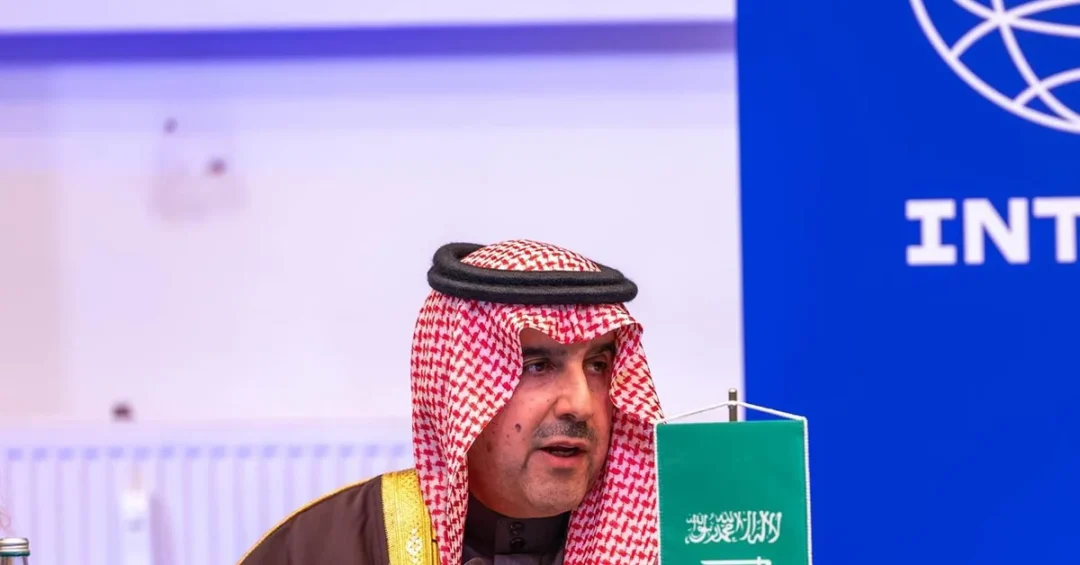
Dr. Hussam Alangari, President of the General Court of Audit (GCA) of the Kingdom of Saudi Arabia, participated in the 80th meeting of the Executive Council of the International Organization of Supreme Audit Institutions (INTOSAI), held on November 16–17 in Vienna, Austria. The high-level gathering brought together leaders of supreme audit institutions from around the world to review the organization’s strategic direction, governance, and global initiatives. According to the Saudi Press Agency (SPA), the meeting addressed key reports from the Executive Council chair and the General Secretariat, highlighting achievements since the previous council session.
Dr. Alangari presented two major reports during the meeting: one on the results and achievements of the Policy, Finance and Administration Committee, which he chairs, and another on the INTOSAI-Donor Cooperation Steering Committee, in which he leads the INTOSAI side. His participation underscores Saudi Arabia’s growing leadership role in international public sector auditing and governance. How does such engagement shape the Kingdom’s global standing? It reflects a strategic commitment to transparency, accountability, and institutional excellence—core pillars of Saudi Vision 2030.
Context and Background
INTOSAI, established in 1953, is the world’s largest international organization dedicated to supreme audit institutions, with 195 full members and several associate members. It serves as a global platform for knowledge sharing, capacity building, and the promotion of best practices in public sector auditing. The Executive Council, one of INTOSAI’s principal governing bodies, meets regularly to oversee the organization’s work and ensure alignment with its strategic plan. The 80th meeting in Vienna marked another milestone in the organization’s ongoing efforts to enhance transparency and accountability worldwide.
Saudi Arabia’s active involvement in INTOSAI dates back many years, but its role has intensified recently. In 2031, the Kingdom, represented by the GCA, will assume the presidency of INTOSAI—a testament to its growing influence in international audit and governance circles. This presidency will provide Saudi Arabia with a unique platform to champion global cooperation, support member institutions, and advance the organization’s objectives. What does this leadership mean for the future of public sector auditing? It signals a new era of Saudi-led initiatives that prioritize integrity, innovation, and inclusive growth.
The GCA itself has undergone significant transformation in recent years, aligning its operations with international standards and leveraging cutting-edge technologies. Under Dr. Alangari’s leadership, the GCA has strengthened its institutional framework, enhanced its audit capabilities, and expanded its international partnerships. These efforts are part of a broader national drive to promote good governance and fiscal discipline, as outlined in Vision 2030. By sharing its expertise and experiences on global platforms like INTOSAI, Saudi Arabia contributes to raising the bar for public sector auditing worldwide.
Key Details of the 80th INTOSAI Executive Council Meeting
The 80th Executive Council meeting focused on several critical topics, including reports from the Executive Council chair and the General Secretariat on key activities and achievements since the last meeting. These reports covered a range of areas, such as capacity development, strategic partnerships, and the implementation of INTOSAI’s strategic plan. Dr. Alangari’s presentations were particularly noteworthy, as they highlighted the progress made by the Policy, Finance and Administration Committee and the INTOSAI-Donor Cooperation Steering Committee.
The Policy, Finance and Administration Committee, chaired by Dr. Alangari, is responsible for overseeing INTOSAI’s financial management, administrative policies, and overall governance. Under his guidance, the committee has implemented reforms to improve efficiency, transparency, and accountability within the organization. The INTOSAI-Donor Cooperation Steering Committee, which Dr. Alangari also leads on the INTOSAI side, facilitates collaboration between supreme audit institutions and donor organizations to strengthen audit capacity in developing countries. These efforts are crucial for building resilient institutions and promoting sustainable development.
During the meeting, participants also discussed the organization’s preparations for upcoming congresses and initiatives. The Executive Council reviewed progress on the INTOSAI Strategic Plan 2023–2028, which focuses on six strategic goals: professional standards, capacity development, knowledge sharing, advocacy, international cooperation, and organizational governance. Saudi Arabia’s contributions to these goals were acknowledged, particularly its role in fostering partnerships and driving innovation. How will these discussions translate into tangible outcomes? They set the stage for more coordinated action and resource mobilization to support audit institutions globally.
International and Regional Impact
Saudi Arabia’s active participation in INTOSAI’s Executive Council carries significant implications for both the region and the broader international community. By taking on leadership roles in key committees, the Kingdom demonstrates its commitment to multilateralism and global governance. This engagement enhances Saudi Arabia’s reputation as a responsible global player and a champion of transparency and accountability—values that are increasingly important in today’s interconnected world.
For the Middle East and North Africa region, Saudi Arabia’s leadership in INTOSAI serves as a catalyst for improved public financial management. Many countries in the region face challenges related to governance and fiscal transparency, and Saudi Arabia’s experience and expertise can serve as a model. Through initiatives like the INTOSAI-Donor Cooperation, the Kingdom helps mobilize resources and technical assistance to strengthen audit institutions in developing nations. This not only improves accountability but also fosters economic stability and investor confidence.
On a global scale, Saudi Arabia’s upcoming presidency of INTOSAI in 2031 will provide an opportunity to shape the international audit agenda. The Kingdom is well-positioned to advocate for the adoption of advanced technologies, such as artificial intelligence and data analytics, in public sector auditing. It can also promote greater inclusivity and diversity within INTOSAI, ensuring that the voices of all member institutions are heard. What legacy will Saudi Arabia leave on the global audit stage? A legacy of innovation, collaboration, and unwavering commitment to the public good.
Economic and Strategic Significance
The economic and strategic significance of Saudi Arabia’s involvement in INTOSAI extends beyond the realm of auditing. Strong public financial management systems are essential for attracting foreign investment, ensuring efficient use of resources, and achieving sustainable development. By championing transparency and accountability, the GCA contributes to creating an enabling environment for business and investment in the Kingdom. This aligns with Vision 2030’s goal of diversifying the economy and reducing dependence on oil revenues.
Furthermore, Saudi Arabia’s leadership in INTOSAI reinforces its position as a key player in global economic governance. The Kingdom is already a member of the G20 and actively participates in international financial institutions. Its role in INTOSAI complements these engagements, showcasing Saudi Arabia’s holistic approach to international cooperation. As the world grapples with complex challenges such as climate change, digital transformation, and post-pandemic recovery, the need for robust audit and oversight mechanisms has never been greater. Saudi Arabia’s contributions help ensure that public funds are used effectively and that governments remain accountable to their citizens.
Strategically, the GCA’s international engagement also supports the transfer of knowledge and best practices back to Saudi Arabia. By participating in global forums, GCA officials gain insights into emerging trends and innovative approaches that can be applied domestically. This two-way flow of knowledge enhances the GCA’s capacity to audit complex government programs and projects, including mega-initiatives like NEOM and the Red Sea Project. Ultimately, this strengthens the Kingdom’s ability to achieve its Vision 2030 targets and deliver prosperity for its people.
Vision 2030 Alignment
Saudi Vision 2030, launched in 2016 by Crown Prince Mohammed bin Salman, is a comprehensive blueprint for the Kingdom’s economic and social transformation. Among its core themes are transparency, accountability, and good governance—principles that are directly advanced by the GCA’s work and its international partnerships. The GCA’s participation in INTOSAI’s Executive Council exemplifies how Saudi Arabia is translating these principles into action on the world stage.
By assuming leadership roles in INTOSAI committees and preparing for the organization’s presidency in 2031, the Kingdom is not only enhancing its global reputation but also contributing to the achievement of the Sustainable Development Goals (SDGs), particularly Goal 16 on peace, justice, and strong institutions. The GCA’s efforts to promote audit capacity building and donor cooperation align with Vision 2030’s emphasis on international collaboration and knowledge exchange. As Saudi Arabia continues its journey toward a diversified, knowledge-based economy, its leadership in public sector auditing will be a cornerstone of its success.
Looking ahead, the GCA’s engagement with INTOSAI will remain a priority as the Kingdom prepares to host and lead global conversations on audit and governance. The 80th Executive Council meeting in Vienna is just one example of Saudi Arabia’s proactive approach to international cooperation. Through such participation, the Kingdom reinforces its commitment to a more transparent, accountable, and prosperous world—a vision that resonates with both its national aspirations and the global community’s shared goals.
20 Questions
Q1. What is INTOSAI and what does it do?
A1. INTOSAI is the International Organization of Supreme Audit Institutions, the world’s largest organization for public sector auditing. It promotes knowledge sharing, capacity building, and best practices among its 195 member institutions to enhance transparency and accountability globally.
Q2. Who represented Saudi Arabia at the 80th INTOSAI Executive Council meeting?
A2. Dr. Hussam Alangari, President of the General Court of Audit (GCA), represented Saudi Arabia. He presented reports on the Policy, Finance and Administration Committee and the INTOSAI-Donor Cooperation Steering Committee.
Q3. When and where was the 80th INTOSAI Executive Council meeting held?
A3. The meeting was held on November 16–17 in Vienna, Austria. It brought together leaders of supreme audit institutions to discuss the organization’s strategic direction and governance.
Q4. What committees does Dr. Alangari chair within INTOSAI?
A4. Dr. Alangari chairs the Policy, Finance and Administration Committee and leads the INTOSAI side of the INTOSAI-Donor Cooperation Steering Committee. These roles involve overseeing governance, finance, and donor collaboration.
Q5. What reports did Dr. Alangari present at the meeting?
A5. He presented two reports: one on the results and achievements of the Policy, Finance and Administration Committee, and another on the INTOSAI-Donor Cooperation Steering Committee. These highlighted progress in governance and capacity building.
Q6. What is the significance of Saudi Arabia assuming INTOSAI’s presidency in 2031?
A6. It reflects the Kingdom’s growing global leadership in public sector auditing. The presidency will allow Saudi Arabia to shape international audit standards and promote cooperation, transparency, and governance worldwide.
Q7. How does Saudi Arabia’s participation in INTOSAI align with Vision 2030?
A7. Vision 2030 emphasizes transparency, accountability, and good governance. Saudi Arabia’s active role in INTOSAI demonstrates its commitment to these principles and enhances its international standing as a responsible global player.
Q8. What are the key objectives of INTOSAI?
A8. INTOSAI aims to strengthen international cooperation among supreme audit institutions, support their efforts to advance transparency and governance, and maximize the global impact of public sector auditing.
Q9. How does the GCA contribute to INTOSAI’s work?
A9. The GCA contributes through leadership roles in key committees, sharing expertise, and promoting best practices. It also helps mobilize resources for audit capacity building in developing countries.
Q10. What is the INTOSAI-Donor Cooperation?
A10. It is a collaborative effort between INTOSAI and donor organizations to strengthen audit capacity in developing nations. Dr. Alangari leads the INTOSAI side, facilitating partnerships and resource mobilization.
Q11. What topics were discussed at the 80th Executive Council meeting?
A11. The meeting covered reports from the Executive Council chair and General Secretariat, strategic planning, capacity development, and preparations for future congresses. It also reviewed progress on INTOSAI’s strategic goals.
Q12. How does public sector auditing benefit society?
A12. Public sector auditing ensures that government funds are used efficiently and transparently. It holds governments accountable, reduces corruption, and improves public services, ultimately contributing to economic stability and citizen trust.
Q13. What is the GCA’s role in Saudi Arabia?
A13. The GCA is the Kingdom’s supreme audit institution. It audits government entities, promotes fiscal discipline, and enhances transparency. Its work supports Vision 2030’s goals of good governance and economic diversification.
Q14. How many members does INTOSAI have?
A14. INTOSAI has 195 full members and several associate members, making it the largest international organization for supreme audit institutions. Its members represent countries from around the world.
Q15. What are the strategic goals of INTOSAI?
A15. INTOSAI’s strategic goals include professional standards, capacity development, knowledge sharing, advocacy, international cooperation, and organizational governance. These guide its work through 2028.
Q16. How does Saudi Arabia’s leadership in INTOSAI benefit the Middle East?
A16. It serves as a model for improved public financial management in the region. Saudi Arabia’s expertise and resources help strengthen audit institutions in neighboring countries, promoting stability and investor confidence.
Q17. What is the significance of the 80th Executive Council meeting?
A17. It marked another milestone in INTOSAI’s ongoing efforts to enhance global auditing standards. The meeting reviewed achievements and set the stage for future initiatives, including Saudi Arabia’s upcoming presidency.
Q18. How does the GCA use technology in auditing?
A18. The GCA leverages advanced technologies such as data analytics and artificial intelligence to enhance audit efficiency and accuracy. This aligns with Vision 2030’s digital transformation goals.
Q19. What is the timeline for Saudi Arabia’s INTOSAI presidency?
A19. Saudi Arabia, represented by the GCA, will assume the INTOSAI presidency in 2031. This was announced as part of the Kingdom’s growing leadership role in the organization.
Q20. How can other countries learn from Saudi Arabia’s audit practices?
A20. Through INTOSAI platforms, Saudi Arabia shares its experiences in governance, transparency, and technology-driven auditing. Other countries can adopt similar practices to strengthen their own audit institutions and promote accountability.
Reader Feedback
We value your thoughts. Please share your feedback on this article.
Your feedback helps us improve our coverage.
Related articles
 King Fahd Quran Complex Signs 60 Contracts Worth SAR300M
 Eastern Region Governor Receives Syrian Chargé d’Affaires
 Media Ambassadors Initiative Holds Five Training Workshops
 Pakistan PM Meets OIC Secretary-General in Islamabad
 OIC Chief Joins 30th ECO Council of Ministers in Islamabad
 Saudi Education Minister Explores UC Berkeley Collaboration