


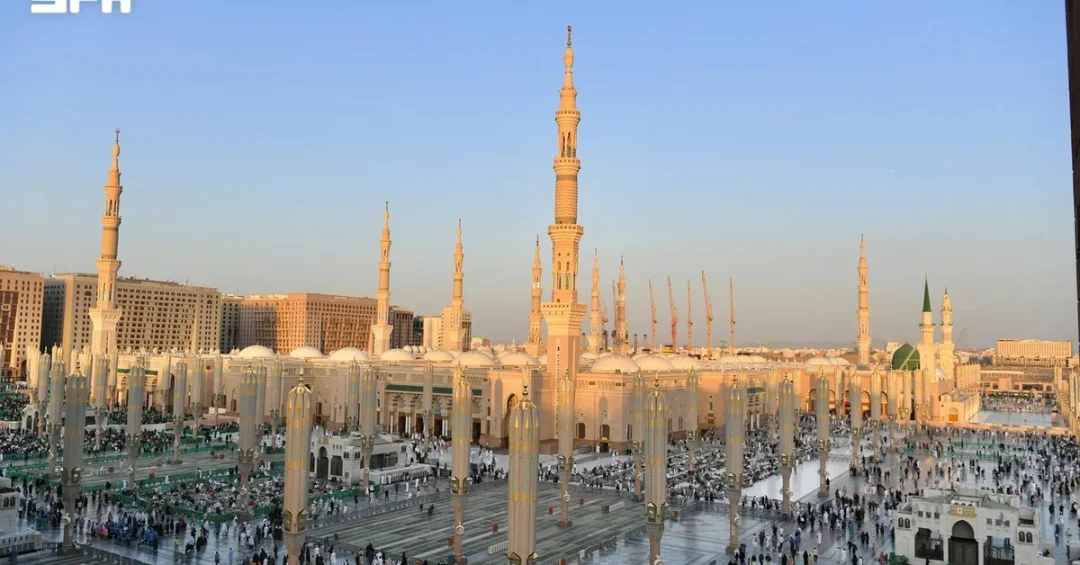
The General Authority for the Care of the Affairs of the Grand Mosque and the Prophet’s Mosque has rolled out a comprehensive package of services at the Prophet’s Mosque in Madinah to accommodate the anticipated surge in worshippers and visitors during the mid-semester break, according to an official announcement carried by the Saudi Press Agency. The authority said the enhanced measures are designed to ensure that the growing number of pilgrims and tourists can perform their religious duties in comfort and safety, reflecting the Kingdom’s enduring commitment to serving the Two Holy Mosques.
With the mid-semester break expected to draw large crowds from across Saudi Arabia and beyond, the authority has mobilized field teams, multilingual guides, and volunteer programs to manage the influx. The Prophet’s Mosque, one of the most revered sites in Islam, routinely welcomes millions of worshippers annually, and the seasonal holiday period amplifies this flow. The authority’s proactive planning underscores its dedication to providing a seamless experience for all visitors, in line with the directives of the Saudi leadership. How does such meticulous preparation enhance the spiritual journey of each visitor?
Context and Background
The Prophet’s Mosque, located in the heart of Madinah, holds immense significance for Muslims worldwide as the second holiest site in Islam. It is the final resting place of Prophet Muhammad (peace be upon him) and a major destination for those performing Hajj or Umrah, as well as for general visitors seeking spiritual solace. The General Authority for the Care of the Affairs of the Grand Mosque and the Prophet’s Mosque, established to oversee the maintenance and operation of these sacred sites, continuously upgrades its services to meet rising demand. The mid-semester break, a period when schools and universities pause, traditionally sees a marked increase in domestic tourism and religious travel.
In recent years, Saudi Arabia has invested heavily in expanding the capacity and infrastructure of the Two Holy Mosques to accommodate growing numbers of pilgrims. These efforts are part of a broader strategy to enhance the pilgrimage experience, aligned with Vision 2030’s goals to boost religious tourism and diversify the economy. The authority’s latest measures build on this legacy, ensuring that the Prophet’s Mosque remains a welcoming and well-managed sanctuary for all. What drives the Kingdom’s unwavering commitment to serving the guests of God?
The mid-semester break coincides with a period of pleasant weather in Madinah, making it an ideal time for families to visit. The authority anticipates that the influx will include a diverse mix of nationalities, necessitating robust multilingual support. By preemptively addressing these needs, the authority aims to prevent overcrowding and maintain the serene atmosphere that defines the Prophet’s Mosque. This approach reflects a deep understanding of the logistical challenges posed by such gatherings and a determination to overcome them through careful planning and resource allocation.
Key Details of the Enhanced Services
At the core of the authority’s plan is the deployment of extensive field operations. Religious and navigational guidance is being provided around the clock by trained staff stationed at guest service centers in the mosque’s northern and southern courtyards. These centers serve as hubs for information, assisting visitors with queries ranging from prayer times to locating specific areas within the vast complex. The staff communicate in multiple languages, including English, Urdu, and Turkish, ensuring that non-Arabic speakers receive clear directions and spiritual advice. This service is particularly crucial during peak times when the mosque’s expansive grounds can be overwhelming for first-time visitors.
In addition to guidance, the authority has created volunteer opportunities for those wishing to serve worshippers and visitors. Announced through its official platforms, this initiative encourages community engagement and allows individuals to contribute to the hospitable environment of the Prophet’s Mosque. Volunteers assist with crowd management, distribute water and informational materials, and offer companionship to elderly or disabled visitors. The program not only bolsters the authority’s manpower but also fosters a sense of unity and service among participants. How does volunteering at the Prophet’s Mosque transform both the giver and the receiver?
Furthermore, the authority has implemented logistical enhancements such as increased cleaning schedules, expanded entry and exit points, and improved transportation links to and from the mosque. These measures are designed to streamline movement and reduce wait times. The authority has also coordinated with local health services to ensure medical assistance is readily available. All these efforts are part of a holistic approach to crowd management that prioritizes safety, comfort, and spiritual fulfillment. The integration of these services demonstrates the authority’s ability to adapt to dynamic conditions and uphold the highest standards of care.
International and Regional Impact
The enhanced services at the Prophet’s Mosque have significant implications for international visitors, many of whom travel from countries across Asia, Africa, Europe, and the Americas. By providing multilingual guidance and round-the-clock assistance, the authority ensures that the spiritual journey is accessible to all, regardless of language or background. This inclusivity enhances Saudi Arabia’s reputation as a gracious host and a leader in religious tourism. Regional neighbors also benefit, as improved crowd management reduces potential bottlenecks that could affect travel across the Gulf. The seamless experience contributes to positive word-of-mouth, encouraging more pilgrims to visit in the future.
On a regional level, the measures reinforce Saudi Arabia’s role as the custodian of Islam’s holiest sites and a stabilizing force in the Middle East. The Kingdom’s dedication to serving pilgrims is a source of pride for Muslims worldwide and strengthens diplomatic ties with nations whose citizens undertake these journeys. Moreover, the efficient handling of large crowds serves as a model for other countries managing major religious events. The authority’s efforts are thus not only a service to worshippers but also a demonstration of Saudi Arabia’s organizational excellence and commitment to global Islamic solidarity. What message does this send about the Kingdom’s capacity to host millions with grace?
Economic and Strategic Significance
The influx of visitors during the mid-semester break brings economic benefits to Madinah and beyond. Hotels, restaurants, and retail outlets experience a surge in business, creating jobs and stimulating local commerce. The authority’s services indirectly support these sectors by ensuring that visitors have a positive experience, which encourages longer stays and repeat visits. Religious tourism is a key pillar of Saudi Arabia’s economic diversification strategy, contributing to non-oil GDP and aligning with Vision 2030’s objective to increase the sector’s contribution. By facilitating smooth visits, the authority helps maximize these economic gains.
Strategically, the successful management of crowds at the Prophet’s Mosque enhances the Kingdom’s soft power and showcases its logistical capabilities. It also supports the broader goal of increasing Umrah and Hajj capacity, as outlined in Vision 2030. The authority’s use of technology, such as mobile apps for navigation and real-time updates, positions Saudi Arabia as a modern and efficient host. These advancements not only improve the pilgrimage experience but also generate data that can be used to further refine services. The economic and strategic returns on these investments are substantial and far-reaching. How do these initiatives pave the way for a more diversified and resilient Saudi economy?
Vision 2030 Alignment
The authority’s comprehensive services at the Prophet’s Mosque are a clear manifestation of Vision 2030’s goals to enhance the quality of life for citizens and visitors, and to promote religious tourism as a key economic driver. By ensuring that the mid-semester break crowds are well-managed, the Kingdom demonstrates its ability to host millions while maintaining the sanctity of the site. This aligns with the vision’s focus on creating a vibrant society and a thriving economy. The volunteer program, in particular, reflects the vision’s emphasis on community participation and social responsibility.
Looking ahead, the authority’s continuous improvements will further solidify the Prophet’s Mosque’s status as a world-class destination for spiritual reflection. As Saudi Arabia continues to invest in infrastructure and services, the experience for pilgrims will only get better, reinforcing the Kingdom’s role as a global leader in hospitality and religious affairs. The mid-semester break is just one example of how the Kingdom rises to the occasion, serving guests with dedication and foresight. In doing so, it not only fulfills a sacred duty but also advances the ambitious goals of Vision 2030, ensuring a prosperous and harmonious future for all. How will these ongoing efforts shape the next generation of pilgrims’ experiences?
20 Questions
Q1. What is the main purpose of the enhanced services at the Prophet’s Mosque?
A1. The services aim to accommodate the anticipated increase in worshippers and visitors during the mid-semester break, ensuring a comfortable and safe experience for all.
Q2. Who is responsible for providing these services?
A2. The General Authority for the Care of the Affairs of the Grand Mosque and the Prophet’s Mosque is the official body overseeing and delivering the comprehensive range of services.
Q3. What types of guidance are offered to visitors?
A3. Religious and navigational guidance is provided around the clock by staff at guest service centers, helping visitors with prayer times, directions, and spiritual inquiries.
Q4. In which languages do the staff communicate?
A4. Staff communicate in multiple languages, including English, Urdu, and Turkish, to assist the diverse international visitors effectively.
Q5. Where are the guest service centers located?
A5. The centers are situated in the northern and southern courtyards of the Prophet’s Mosque, making them easily accessible to worshippers.
Q6. How can individuals volunteer to serve at the Prophet’s Mosque?
A6. Volunteer opportunities are announced through the authority’s official platforms, allowing community members to sign up and contribute to serving worshippers.
Q7. What is the significance of the mid-semester break for the Prophet’s Mosque?
A7. The break sees a surge in domestic and international visitors, as families and students take advantage of the holiday to perform religious visits.
Q8. How does the authority manage crowd control?
A8. The authority deploys extensive field operations, expands entry and exit points, and coordinates with health services to ensure smooth movement and safety.
Q9. What economic benefits arise from the influx of visitors?
A9. Local businesses such as hotels, restaurants, and shops experience increased patronage, boosting the local economy and creating jobs in Madinah.
Q10. How do these services align with Vision 2030?
A10. They support Vision 2030’s goals of enhancing religious tourism, improving quality of life, and diversifying the economy away from oil.
Q11. What role do volunteers play in the operation?
A11. Volunteers assist with crowd management, distribute water and materials, and offer companionship, enhancing the overall experience for visitors.
Q12. Are there any special services for elderly or disabled visitors?
A12. Yes, volunteers and staff provide assistance to elderly and disabled visitors, including wheelchair support and guided navigation.
Q13. How does the authority ensure cleanliness during peak times?
A13. Increased cleaning schedules are implemented, with dedicated teams working around the clock to maintain the highest standards of hygiene.
Q14. What is the expected number of visitors during the mid-semester break?
A14. While exact figures vary, the authority anticipates a significant influx, prompting the comprehensive preparations to handle large crowds.
Q15. How does this benefit international visitors?
A15. Multilingual guidance and 24/7 assistance ensure that international visitors can navigate and worship with ease, enhancing their spiritual journey.
Q16. What technological tools are used to assist visitors?
A16. The authority utilizes mobile apps and digital signage for real-time updates, navigation, and information, improving the visitor experience.
Q17. How does the authority coordinate with other agencies?
A17. It collaborates with local health services, security, and transportation authorities to ensure a seamless and safe visit for all.
Q18. What is the historical significance of the Prophet’s Mosque?
A18. It is the second holiest site in Islam, built by Prophet Muhammad (peace be upon him), and serves as his final resting place.
Q19. How can visitors provide feedback on the services?
A19. Visitors can share feedback through the authority’s official platforms or at the guest service centers, helping to improve future services.
Q20. What is the ultimate goal of these efforts?
A20. The goal is to ensure that every visitor has a spiritually fulfilling and comfortable experience, reflecting Saudi Arabia’s dedication to serving the guests of God.
Reader Feedback
We value your thoughts. Please share your feedback on this article.
Your feedback helps us improve our coverage.
Related articles
 GCF and WeProtect Convene in Manila for Child Online Safety
 Saudi GCA Leads at 80th INTOSAI Council Meeting
 King Fahd Quran Complex Signs 60 Contracts Worth SAR300M
 Eastern Region Governor Receives Syrian Chargé d’Affaires
 Media Ambassadors Initiative Holds Five Training Workshops
 Pakistan PM Meets OIC Secretary-General in Islamabad