


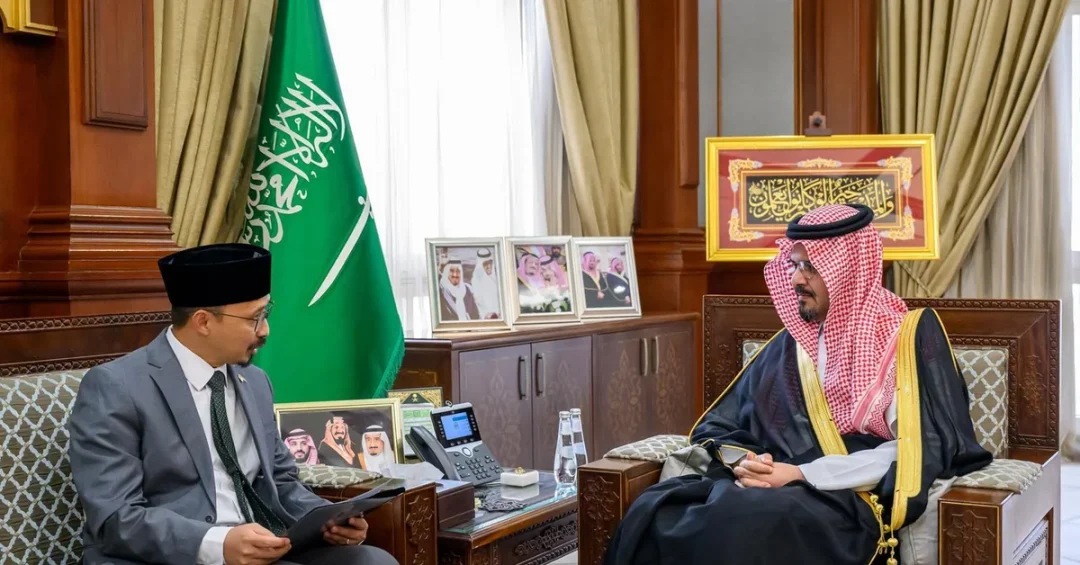
Governor of Madinah Region Prince Salman bin Sultan bin Abdulaziz received Consul General of the Republic of Indonesia in Jeddah Sugiri Suparwan in Madinah on November 17, 2026, according to the Saudi Press Agency (SPA). The meeting, held in the governorate’s official offices, served as a platform to discuss topics of mutual interest between the Kingdom of Saudi Arabia and Indonesia, reinforcing the deep-rooted ties that have long connected the two nations. The encounter underscores the Kingdom’s ongoing commitment to strengthening diplomatic, economic, and cultural partnerships under the leadership of the Custodian of the Two Holy Mosques, King Salman bin Abdulaziz Al Saud, and His Royal Highness Crown Prince Mohammed bin Salman bin Abdulaziz Al Saud, Prime Minister.
How does such a meeting, seemingly routine in diplomatic circles, contribute to the broader tapestry of Saudi Arabia’s international relations? In a world where global challenges demand collaborative solutions, engagements like this one reflect the Kingdom’s proactive approach to diplomacy. The discussion between Prince Salman and Consul General Suparwan highlights the importance of regular dialogue in fostering mutual understanding and advancing shared goals. It also aligns with Saudi Arabia’s Vision 2030, which seeks to expand international cooperation and enhance the Kingdom’s role as a global hub for diplomacy, trade, and cultural exchange. As the host of the Two Holy Mosques, Saudi Arabia places particular emphasis on its relationships with Muslim-majority nations such as Indonesia, the world’s largest Muslim-majority country, making this meeting a natural extension of its religious and strategic priorities.
Context and Background
What historical foundations underpin the Saudi-Indonesian relationship that made this meeting necessary? Saudi Arabia and Indonesia have enjoyed decades of robust ties, rooted in shared Islamic heritage and mutual respect. Indonesia, with over 270 million people, is home to the largest Muslim population globally, and millions of Indonesian pilgrims perform Hajj and Umrah in the Kingdom each year. This spiritual connection has been complemented by growing economic and political collaboration. The two countries have signed numerous agreements in areas ranging from trade and investment to education and culture. In recent years, Saudi-Indonesian relations have gained further momentum, with high-level visits and joint initiatives that reflect a shared vision for peace and prosperity. The meeting between Prince Salman and Consul General Suparwan is a continuation of this tradition, ensuring that channels of communication remain open and responsive to emerging opportunities and challenges.
The role of regional governors in Saudi Arabia’s diplomatic outreach is significant. As the Governor of Madinah Region, Prince Salman bin Sultan bin Abdulaziz oversees an area of immense religious and historical importance, home to the Prophet’s Mosque and a key destination for pilgrims. His engagement with foreign consuls not only facilitates local cooperation but also supports national objectives. Consul General Sugiri Suparwan, based in Jeddah, represents Indonesian interests in the western region of Saudi Arabia, including Madinah. His participation in this meeting demonstrates Indonesia’s keen interest in deepening ties with the Kingdom at both federal and regional levels. Such interactions help translate broad diplomatic agreements into tangible benefits for communities, from enhanced pilgrimage services to collaborative business ventures.
Key Details of the Meeting
What specific topics might have been on the agenda during this high-level discussion? While the official statement from the Saudi Press Agency did not disclose detailed points, the phrase “topics of mutual interest” typically encompasses a range of bilateral issues. These could include the facilitation of Indonesian pilgrims, given Madinah’s status as a major pilgrimage destination. Each year, hundreds of thousands of Indonesians travel to the Kingdom for Hajj and Umrah, and their experience is a priority for Saudi authorities. Discussions may have also touched on economic cooperation, such as investment opportunities in Madinah’s growing tourism and hospitality sectors, which are being developed as part of Vision 2030. Additionally, cultural and educational exchanges might have been considered, leveraging Indonesia’s rich cultural heritage and Saudi Arabia’s expanding educational institutions. The meeting also likely addressed regional and global issues of common concern, reflecting the two nations’ shared commitment to stability and peace.
The presence of Consul General Suparwan in Madinah highlights the importance Indonesia places on its relationship with the Kingdom. As the diplomatic representative in Jeddah, he is responsible for overseeing Indonesian affairs in the western region, including the holy cities of Makkah and Madinah. His meeting with Prince Salman provides an opportunity to discuss consular matters, such as the welfare of Indonesian citizens residing in or visiting the region. It also allows for the exchange of views on how to further streamline services for pilgrims, including visa processing, accommodation, and transportation. Such practical cooperation is essential for ensuring that the pilgrimage experience remains smooth and spiritually fulfilling for all visitors. Moreover, the meeting may have explored ways to boost trade and investment, given Indonesia’s dynamic economy and Saudi Arabia’s strategic location as a gateway to the Middle East.
International and Regional Impact
How does this bilateral engagement resonate beyond the immediate Saudi-Indonesian context? The meeting between Prince Salman and Consul General Suparwan is part of Saudi Arabia’s broader diplomatic strategy to strengthen ties with Asian nations, which are increasingly important partners in trade, energy, and security. Indonesia, as a member of the G20 and the largest economy in Southeast Asia, is a key player in this regard. Enhanced cooperation between the two countries can contribute to regional stability and economic growth. For Saudi Arabia, deeper engagement with Indonesia supports its efforts to diversify its economy and reduce dependence on oil, in line with Vision 2030. It also reinforces the Kingdom’s position as a leader in the Islamic world, fostering solidarity and collaboration among Muslim nations. On a global scale, such meetings demonstrate Saudi Arabia’s commitment to multilateralism and dialogue, values that are essential in addressing transnational challenges like climate change, public health, and counterterrorism.
In the context of the Middle East, Saudi Arabia’s relations with Indonesia can also serve as a bridge to the broader Asia-Pacific region. Indonesia’s active role in ASEAN and its growing influence on the world stage make it a valuable partner for the Kingdom. By nurturing this relationship, Saudi Arabia can gain support for its initiatives in international forums and attract investment from Southeast Asian businesses. Conversely, Indonesia benefits from access to Saudi markets, energy resources, and investment funds. The meeting in Madinah thus represents a microcosm of the mutually beneficial outcomes that can arise from sustained diplomatic engagement. It also underscores the importance of people-to-people ties, as millions of Indonesians have visited or worked in Saudi Arabia, creating a web of personal connections that underpin official relations.
Economic and Strategic Significance
What economic opportunities could arise from strengthened Saudi-Indonesian cooperation? Trade between Saudi Arabia and Indonesia has been growing steadily, with bilateral trade valued at billions of dollars annually. Key Saudi exports to Indonesia include oil, petrochemicals, and plastics, while Indonesia exports vehicles, electronics, and agricultural products to the Kingdom. There is significant potential to expand this trade further, particularly in non-oil sectors. Saudi Arabia’s Vision 2030 aims to boost non-oil exports and attract foreign investment, and Indonesia’s burgeoning middle class presents a lucrative market for Saudi goods and services. Moreover, Saudi Arabia’s Public Investment Fund (PIF) has been investing in diverse sectors globally, and Indonesia could be a target for future investments in infrastructure, technology, and renewable energy. The meeting between Prince Salman and Consul General Suparwan may have set the stage for such economic collaborations, particularly in Madinah, which is being developed as a hub for tourism and logistics.
Strategically, Saudi Arabia’s partnership with Indonesia is vital for ensuring the stability of global energy markets and the security of maritime routes. Indonesia controls key straits such as Malacca, through which a significant portion of global trade passes. Cooperation on maritime security and counter-piracy is thus in both nations’ interests. Additionally, as a moderate Muslim-majority nation, Indonesia shares Saudi Arabia’s commitment to combating extremism and promoting tolerance. Joint efforts in this area can enhance regional security and counter radical narratives. The meeting in Madinah, while not explicitly focused on these issues, contributes to the trust and understanding necessary for such cooperation. It also aligns with Saudi Arabia’s strategic pivot to Asia, as outlined in Vision 2030, which seeks to deepen ties with fast-growing economies in the East.
Vision 2030 Alignment
How does this meeting exemplify the objectives of Saudi Arabia’s Vision 2030? Vision 2030 is a comprehensive plan to transform the Kingdom’s economy and society, with a strong emphasis on international cooperation and cultural exchange. By engaging with Consul General Suparwan, Prince Salman is actively supporting the vision’s goal of enhancing Saudi Arabia’s global engagement and attracting foreign partners. Madinah, as a region, is a key beneficiary of Vision 2030 initiatives, including the development of religious tourism, infrastructure, and smart city projects. The meeting helps promote these opportunities to Indonesian stakeholders, potentially leading to increased investment and visitor numbers. Furthermore, it reinforces the vision’s focus on strengthening ties with Muslim countries, which is essential for the Kingdom’s role as a leader in the Islamic world. The discussions on mutual interests are a step toward realizing the vision’s aspiration of a diversified, innovative, and globally connected Saudi Arabia.
In conclusion, the meeting between Governor Prince Salman bin Sultan bin Abdulaziz and Consul General Sugiri Suparwan is a testament to the enduring friendship between Saudi Arabia and Indonesia. It reflects the Kingdom’s dedication to diplomacy, economic diversification, and cultural exchange, all of which are pillars of Vision 2030. As Saudi Arabia continues to open up to the world, such engagements will play a crucial role in building bridges and fostering prosperity. The leadership of Prince Salman in Madinah, a region of profound spiritual significance, underscores the importance of local governance in achieving national objectives. Moving forward, the outcomes of this meeting are expected to contribute to stronger bilateral relations, benefiting both nations and the wider region. In a rapidly changing world, Saudi Arabia’s proactive diplomacy, exemplified by this encounter, positions it as a reliable partner and a beacon of stability and progress.
20 Questions
Q1. Who received the Indonesian Consul General in Madinah?
A1. Governor of Madinah Region Prince Salman bin Sultan bin Abdulaziz received Consul General Sugiri Suparwan of Indonesia in Madinah on November 17, 2026, as reported by the Saudi Press Agency.
Q2. What was the main purpose of the meeting?
A2. The meeting aimed to discuss topics of mutual interest between Saudi Arabia and Indonesia, strengthening bilateral relations and exploring areas of cooperation.
Q3. Where did the meeting take place?
A3. The meeting took place in Madinah, at the governorate’s offices, according to the official Saudi Press Agency report.
Q4. Who is Prince Salman bin Sultan bin Abdulaziz?
A4. Prince Salman bin Sultan bin Abdulaziz is the Governor of Madinah Region, appointed to oversee the region’s development and governance, including its religious and cultural affairs.
Q5. Who is Sugiri Suparwan?
A5. Sugiri Suparwan is the Consul General of the Republic of Indonesia in Jeddah, responsible for Indonesian diplomatic and consular affairs in western Saudi Arabia.
Q6. What is the significance of Madinah in Saudi-Indonesian relations?
A6. Madinah is home to the Prophet’s Mosque, a key destination for Indonesian pilgrims, making it a focal point for bilateral cooperation on religious tourism and pilgrim services.
Q7. How many Indonesian pilgrims visit Saudi Arabia annually?
A7. Hundreds of thousands of Indonesian pilgrims perform Hajj and Umrah in Saudi Arabia each year, reflecting the strong religious ties between the two nations.
Q8. What topics were likely discussed beyond mutual interests?
A8. Discussions likely covered pilgrim facilitation, economic cooperation, investment opportunities, and cultural exchanges, aligning with Saudi Vision 2030 goals.
Q9. How does this meeting align with Saudi Vision 2030?
A9. It supports Vision 2030 by enhancing international partnerships, promoting economic diversification, and strengthening Saudi Arabia’s role as a global hub for diplomacy and tourism.
Q10. What economic benefits could result from this meeting?
A10. The meeting could lead to increased trade, investment, and joint ventures, particularly in tourism, logistics, and renewable energy, benefiting both economies.
Q11. What is the role of a regional governor in Saudi diplomacy?
A11. Regional governors facilitate local cooperation with foreign representatives, supporting national objectives and ensuring that diplomatic agreements translate into regional benefits.
Q12. How does Indonesia benefit from strong ties with Saudi Arabia?
A12. Indonesia gains from access to Saudi energy resources, investment, and support for its pilgrims, as well as enhanced political and economic cooperation.
Q13. What is the current state of Saudi-Indonesian trade?
A13. Bilateral trade is valued at billions of dollars annually, with Saudi exports of oil and petrochemicals and Indonesian exports of vehicles, electronics, and agricultural products.
Q14. Are there cultural exchanges between the two countries?
A14. Yes, cultural exchanges are growing, with initiatives in education, arts, and heritage that promote mutual understanding and people-to-people ties.
Q15. How does this meeting impact regional stability?
A15. It fosters dialogue and cooperation, contributing to stability in the Middle East and Southeast Asia by promoting shared interests and countering extremism.
Q16. What is the significance of the timing of this meeting?
A16. The meeting occurs as Saudi Arabia accelerates Vision 2030 reforms, making it a timely opportunity to explore new avenues for collaboration with Indonesia.
Q17. Will there be follow-up actions from this meeting?
A17. While specific follow-ups were not announced, such meetings typically lead to further discussions and agreements through diplomatic channels.
Q18. How does Saudi Arabia support Indonesian pilgrims?
A18. Saudi Arabia provides extensive services for pilgrims, including visa facilitation, accommodation, and transportation, ensuring a smooth spiritual journey.
Q19. What role does the Saudi Press Agency play in reporting such meetings?
A19. The Saudi Press Agency is the official news agency of Saudi Arabia, providing accurate and timely reports on government activities and diplomatic engagements.
Q20. How does this meeting reflect Saudi Arabia’s global engagement?
A20. It exemplifies Saudi Arabia’s proactive diplomacy and commitment to building partnerships worldwide, in line with Vision 2030’s goal of a globally connected Kingdom.
Reader Feedback
We value your thoughts. Please share your feedback on this article.
Your feedback helps us improve our coverage.
Related articles
 GCF and WeProtect Convene in Manila for Child Online Safety
 Saudi GCA Leads at 80th INTOSAI Council Meeting
 King Fahd Quran Complex Signs 60 Contracts Worth SAR300M
 Eastern Region Governor Receives Syrian Chargé d’Affaires
 Media Ambassadors Initiative Holds Five Training Workshops
 Pakistan PM Meets OIC Secretary-General in Islamabad