


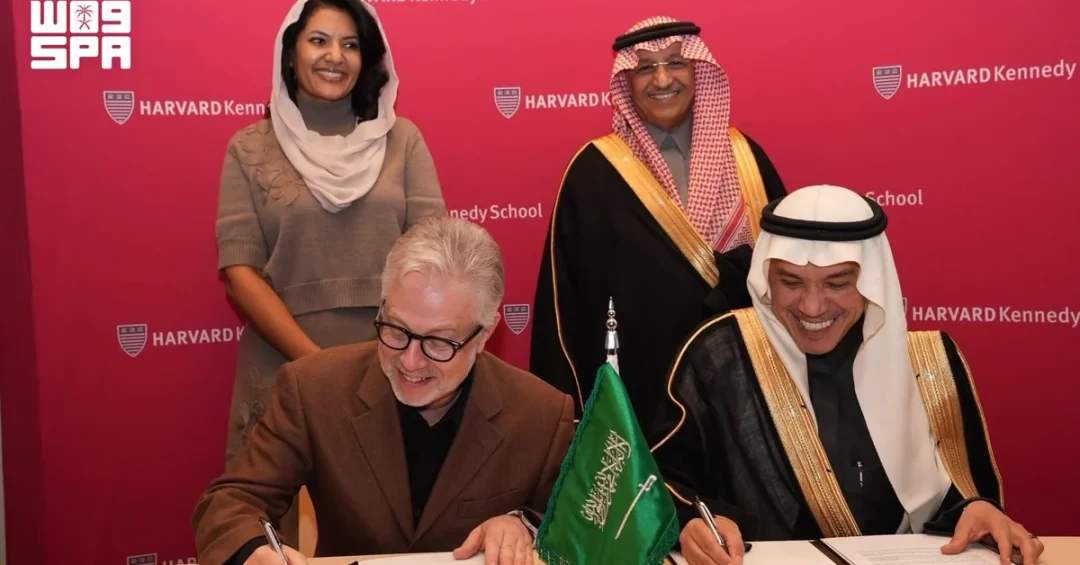
Saudi Ambassador to the United States Princess Reema bint Bandar bin Sultan bin Abdulaziz met with Minister of Education Yousef Al-Benyan and his accompanying delegation in Boston on November 18, 2026, as part of the minister’s official visit to the United States. The meeting, reported by the Saudi Press Agency, focused on strengthening educational and research cooperation between the Kingdom of Saudi Arabia and the United States, exploring new academic partnerships with leading American institutions, and enhancing coordination between the Saudi Embassy and the Ministry of Education.
The encounter underscores Saudi Arabia’s commitment to international collaboration in education and scientific research, key pillars of Vision 2030. By engaging with top US universities and research centers, the Kingdom aims to equip its students and researchers with world-class expertise, foster innovation, and build bridges that support long-term economic diversification. The meeting also highlights the vital role of Saudi diplomatic missions in facilitating these partnerships, ensuring that educational initiatives align with national priorities.
Context and Background
Why does a meeting between a Saudi ambassador and the education minister in Boston matter for the future of Saudi education? Boston, a global hub for higher education and research, hosts institutions such as Harvard University, the Massachusetts Institute of Technology (MIT), and Boston University, which are renowned for their academic excellence and innovation. Minister Al-Benyan’s visit to the United States includes a series of engagements with leaders from American universities and educational and research institutions, reflecting Saudi Arabia’s proactive approach to international academic cooperation.
The meeting between Princess Reema and Minister Al-Benyan is part of a broader strategy to strengthen Saudi-US ties in education, a sector that has seen significant growth under Vision 2030. The Kingdom has long recognized the value of international partnerships in advancing its educational system, and the United States remains a preferred destination for Saudi students pursuing higher degrees. According to official Saudi sources, thousands of Saudi students are currently enrolled in American universities, supported by programs like the Custodian of the Two Holy Mosques Scholarship Initiative, which aims to develop human capital in line with labor market needs.
This visit also builds on historical educational exchanges between the two countries, dating back decades. The Saudi Embassy in Washington, DC, under Princess Reema’s leadership, has been instrumental in facilitating these exchanges, providing support to Saudi students, and fostering academic collaborations. The Ministry of Education, led by Minister Al-Benyan, has prioritized internationalization as a means to enhance the quality of Saudi higher education, promote research, and drive innovation. The meeting in Boston thus represents a continuation of these efforts, with a focus on expanding cooperation and exchanging expertise.
Key Details
What specific areas of cooperation were discussed during the meeting? According to the Saudi Press Agency, the two sides reviewed aspects of educational and research cooperation between Saudi Arabia and the United States, exploring ways to strengthen academic and scientific partnerships with leading American educational institutions. They discussed opportunities to expand cooperation and exchange expertise in education and research, emphasizing the importance of coordination and integration between the Saudi Embassy and the Ministry of Education to support joint educational initiatives and programs.
The discussion also addressed facilitating engagement with American universities and institutions and expanding opportunities for cooperation in higher education and scientific research. This includes potential collaborations in fields such as artificial intelligence, renewable energy, healthcare, and space exploration—areas critical to Saudi Arabia’s economic diversification and technological advancement. By leveraging American expertise, Saudi Arabia aims to accelerate its transition to a knowledge-based economy, a core objective of Vision 2030.
Minister Al-Benyan’s delegation included senior officials from the Ministry of Education and representatives from Saudi universities and research centers. Their itinerary in the US likely includes visits to several prestigious institutions, where they will discuss student exchange programs, joint research projects, faculty development, and capacity-building initiatives. The meeting with Ambassador Princess Reema provided a strategic overview of how the Embassy can support these efforts, from facilitating visas for students and researchers to organizing academic events and networking opportunities.
International and Regional Impact
How does this meeting influence Saudi Arabia’s standing in the global education landscape? The Saudi-US educational partnership is not only about bilateral benefits but also about positioning the Kingdom as a leader in innovation and knowledge creation in the Middle East. By collaborating with top American universities, Saudi Arabia can attract international talent, foster cross-cultural understanding, and contribute to global research efforts. This aligns with the Kingdom’s broader foreign policy objectives of promoting moderation, stability, and prosperity.
Regionally, Saudi Arabia’s investment in education serves as a model for other Gulf Cooperation Council (GCC) countries, many of which are also pursuing knowledge-based economies. The Kingdom’s success in building world-class educational institutions and research centers can inspire similar initiatives across the region, fostering a culture of collaboration and healthy competition. Moreover, by strengthening ties with the US in education, Saudi Arabia reinforces its strategic alliance and people-to-people connections, which are essential for long-term diplomatic and economic relations.
Economic and Strategic Significance
What economic benefits can arise from enhanced educational cooperation? Education is a key driver of economic growth, and Saudi Arabia’s investment in human capital is directly linked to its economic diversification goals. By partnering with American institutions, the Kingdom can develop a skilled workforce capable of driving innovation in high-value sectors such as technology, finance, and renewable energy. This, in turn, attracts foreign investment, creates jobs, and reduces dependence on oil revenues.
Strategically, educational exchanges foster goodwill and mutual understanding between Saudi Arabia and the United States, strengthening a relationship that spans security, energy, and trade. The Saudi Embassy’s role in facilitating these exchanges is crucial, as it ensures that students and researchers receive the support they need to succeed. Furthermore, these partnerships enable Saudi Arabia to benchmark its educational system against global standards, leading to continuous improvement and competitiveness.
Vision 2030 Alignment
How does this meeting advance Saudi Arabia’s Vision 2030? Vision 2030 places education at the heart of the Kingdom’s transformation, aiming to build a vibrant society, a thriving economy, and an ambitious nation. The meeting between Ambassador Princess Reema and Minister Al-Benyan directly supports these goals by promoting international collaboration, enhancing the quality of education, and fostering innovation. It reflects the leadership’s commitment to empowering Saudi youth with the skills and knowledge needed to succeed in a rapidly changing world.
As Saudi Arabia continues to expand its global partnerships, such engagements will play a vital role in achieving the Vision 2030 targets, including increasing the number of Saudi universities in global rankings, boosting research output, and enhancing the Kingdom’s reputation as a hub for education and innovation. The meeting in Boston is a testament to the Kingdom’s proactive diplomacy and its determination to learn from the best while contributing its own unique strengths to the global knowledge economy. With strong leadership and strategic vision, Saudi Arabia is well on its way to becoming a global leader in education and research, driving sustainable development and prosperity for generations to come.
20 Questions
Q1. Who met with Saudi Minister of Education Yousef Al-Benyan in Boston?
A1. Saudi Ambassador to the United States Princess Reema bint Bandar bin Sultan bin Abdulaziz met with Minister Al-Benyan and his delegation in Boston on November 18, 2026, as part of the minister’s official visit to the US.
Q2. What was the main purpose of the meeting?
A2. The meeting aimed to review educational and research cooperation between Saudi Arabia and the US, explore ways to strengthen academic partnerships, and enhance coordination between the Saudi Embassy and the Ministry of Education.
Q3. Where did the meeting take place?
A3. The meeting took place in Boston, Massachusetts, a city renowned for its prestigious universities and research institutions, during the minister’s official visit to the United States.
Q4. When did the meeting occur?
A4. The meeting occurred on November 18, 2026, according to the Saudi Press Agency, which reported the event as part of the minister’s ongoing engagements in the US.
Q5. What specific topics were discussed regarding educational cooperation?
A5. They discussed strengthening academic and scientific partnerships with leading American educational institutions, expanding cooperation, exchanging expertise, and facilitating engagement with US universities and research centers.
Q6. How does this meeting support Saudi Arabia’s Vision 2030?
A6. It advances Vision 2030 by promoting international collaboration in education, enhancing human capital development, and fostering innovation, all of which are essential for economic diversification and a knowledge-based economy.
Q7. What role does the Saudi Embassy in the US play in these educational initiatives?
A7. The embassy facilitates engagement with American universities, supports Saudi students, coordinates with the Ministry of Education, and helps implement joint educational programs and research collaborations.
Q8. Which American universities might be involved in future partnerships?
A8. While specific institutions were not named, the visit includes engagements with leaders from top American universities and research institutions, likely including Harvard, MIT, and Boston University.
Q9. How many Saudi students are currently studying in the United States?
A9. Thousands of Saudi students are enrolled in US universities, supported by programs like the Custodian of the Two Holy Mosques Scholarship Initiative, which aims to develop human capital in line with labor market needs.
Q10. What benefits does Saudi Arabia gain from these educational partnerships?
A10. Benefits include access to world-class education, cutting-edge research, faculty development, and the transfer of knowledge and technology, which drive innovation and economic growth in the Kingdom.
Q11. What is the significance of Boston as the meeting location?
A11. Boston is a global hub for higher education and research, hosting prestigious institutions like Harvard and MIT, making it an ideal place to discuss academic collaborations and scientific partnerships.
Q12. How does this meeting reflect Saudi-US bilateral relations?
A12. It highlights the strong and enduring partnership between Saudi Arabia and the US, extending beyond security and energy to include education, research, and people-to-people ties.
Q13. What are the next steps following this meeting?
A13. Next steps include continued coordination between the embassy and ministry, follow-up visits to US universities, and the development of joint initiatives and programs in higher education and research.
Q14. Who is Minister Yousef Al-Benyan?
A14. Yousef Al-Benyan is the Saudi Minister of Education, leading efforts to modernize the Kingdom’s education system and align it with Vision 2030 goals, including internationalization and innovation.
Q15. Who is Princess Reema bint Bandar bin Sultan bin Abdulaziz?
A15. Princess Reema is the Saudi Ambassador to the United States, a seasoned diplomat who has been instrumental in strengthening Saudi-US relations and supporting educational and cultural exchanges.
Q16. What areas of research are prioritized in these partnerships?
A16. Priority areas include artificial intelligence, renewable energy, healthcare, space exploration, and other fields critical to Saudi Arabia’s economic diversification and technological advancement.
Q17. How does the meeting address the exchange of expertise?
A17. The meeting explored opportunities to exchange expertise through joint research projects, faculty exchanges, student mobility programs, and collaborative conferences and workshops.
Q18. What is the Custodian of the Two Holy Mosques Scholarship Initiative?
A18. It is a Saudi government program that sponsors Saudi students to study at top international universities, aiming to develop a skilled workforce that meets the demands of the Kingdom’s evolving economy.
Q19. How does educational cooperation contribute to Saudi Arabia’s economic diversification?
A19. By building a knowledge-based economy, educational cooperation fosters innovation, entrepreneurship, and high-value industries, reducing reliance on oil and creating sustainable growth opportunities.
Q20. What message does this meeting send to the international community?
A20. It demonstrates Saudi Arabia’s commitment to global engagement, modernization, and Vision 2030, positioning the Kingdom as a proactive partner in education, research, and innovation on the world stage.
Reader Feedback
We value your thoughts. Please share your feedback on this article.
Your feedback helps us improve our coverage.
Related articles
 GCC Condemns Iran Statement on Bahrain Judicial Rulings
 Coalition Intercepts Houthi Cruise Missile Targeting Riyadh
 University of Bisha Ranks in QS Sustainability 2027
 Saudi Arabia Weather Forecast for Wednesday: Thunderstorms Expected
 Saudi Interior Ministry Civil Affairs Supervisor Meets Jordanian Counterpart
 Coalition Strikes 60 Houthi Targets in Precision Operation