


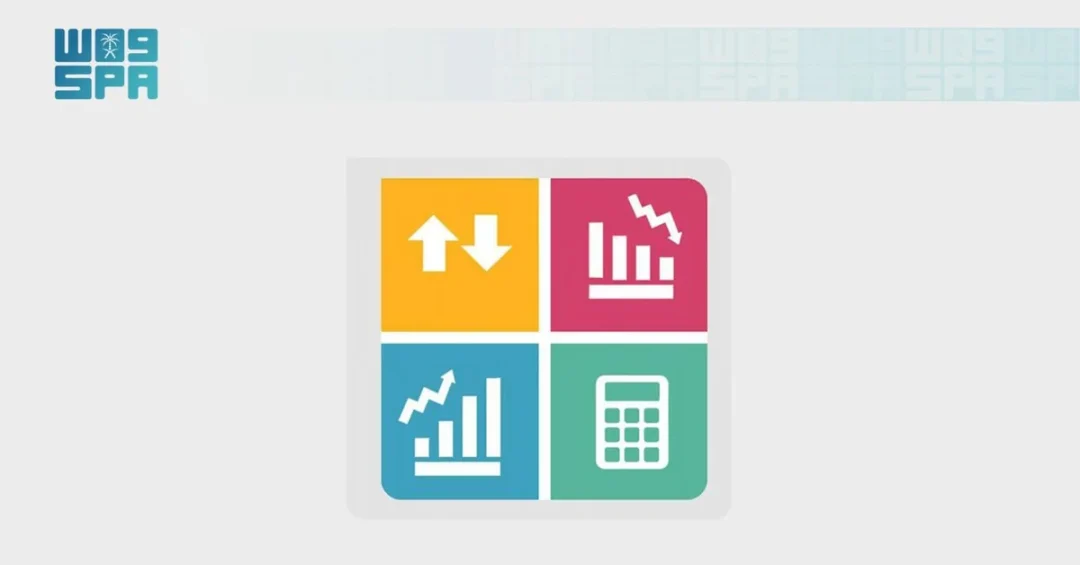
The Saudi Stock Exchange (Tadawul) main index, the TASI, closed at 10,200.16 points on November 18, 2026, a decline of 53.04 points, according to the Saudi Press Agency (SPA). The session saw trading worth SAR3.2 billion, with 181 million shares exchanged. Market breadth was negative, with 50 companies recording gains and 212 posting losses. Meanwhile, the parallel market, Nomu, rose 34.53 points to close at 21,730.94 points, with trading worth SAR16 million and more than 1.8 million shares traded. How does this daily movement reflect the underlying strength of the Saudi economy?
The Saudi Stock Exchange, known as Tadawul, is the largest and most liquid stock market in the Middle East and North Africa region. As the primary venue for equity trading in the Kingdom, it serves as a barometer for investor sentiment toward Saudi Arabia’s ambitious economic transformation under Vision 2030. The main index, TASI, comprises the most significant listed companies across sectors such as banking, petrochemicals, telecommunications, and real estate. Daily fluctuations are common in any market, but the broader trajectory of Tadawul has been one of growth and increasing international participation since the launch of Vision 2030 in 2016. The parallel market, Nomu, provides a platform for smaller companies to access capital, further deepening the market’s ecosystem.
Context and Background
What factors contribute to daily movements in the Saudi stock market? The Saudi Stock Exchange has undergone a remarkable transformation over the past decade, evolving from a relatively closed market to one that is increasingly integrated with global financial systems. Key milestones include the inclusion of Tadawul in the MSCI Emerging Markets Index in 2019 and the FTSE Russell Emerging Markets Index, which attracted billions of dollars in passive investment flows. These inclusions were the result of sustained efforts by the Saudi government and the Capital Market Authority (CMA) to enhance market transparency, strengthen regulatory frameworks, and improve corporate governance. The CMA, under the leadership of its chairman, has implemented numerous reforms to align Tadawul with international best practices, making it more attractive to foreign institutional investors.
The market’s performance is influenced by a complex interplay of domestic and international factors. Domestically, oil prices remain a critical driver, given the significant weighting of the energy and petrochemical sectors in the index. However, the non-oil sectors have been growing in importance, reflecting the diversification goals of Vision 2030. Government spending on mega-projects such as NEOM, the Red Sea Project, and Qiddiya also impacts market sentiment, as these initiatives drive demand across construction, materials, and financial services. Internationally, global economic conditions, including interest rate policies of major central banks, geopolitical developments, and fluctuations in global oil demand, all play a role in shaping investor behavior on Tadawul.
The trading session on November 18, 2026, with a total value of SAR3.2 billion and 181 million shares traded, is indicative of a typical day of activity on the exchange. While the decline in the main index might raise questions, it is essential to view such movements within the broader context of market cycles. The number of companies posting losses (212) outpaced those recording gains (50), suggesting a broad-based pullback. However, the parallel market’s gain of 34.53 points shows that opportunities exist across different segments of the market. Nomu’s performance, with SAR16 million in trading value and over 1.8 million shares traded, highlights the vibrancy of the smaller company segment, which often attracts investors looking for high-growth potential.
Key Details
What are the specific numbers behind this trading session? The main index’s decline of 53.04 points to 10,200.16 points represents a modest percentage drop, typical of daily volatility. The total trading value of SAR3.2 billion (approximately USD853 million) demonstrates robust liquidity, indicating that investors remain engaged despite the downturn. The volume of 181 million shares traded further underscores the active participation of both retail and institutional investors. The market breadth, with 50 gainers and 212 losers, suggests that the selling pressure was widespread, possibly driven by profit-taking or external factors. It is worth noting that such breadth is not unusual and can present buying opportunities for long-term investors.
The performance of the Nomu parallel market, which rose 34.53 points to 21,730.94 points, provides a contrasting picture. Nomu is designed for companies that do not meet the strict listing requirements of the main market, offering them a pathway to raise capital and gain visibility. The SAR16 million traded value and 1.8 million shares volume indicate a healthy level of activity for this segment. The rise in Nomu suggests that investor appetite for smaller, potentially high-growth companies remains strong, even as the main index experiences a pullback. This divergence could reflect sector-specific dynamics or a rotation of investment within the market.
For international readers, understanding the scale of the Saudi market is crucial. Tadawul is not just a regional exchange; it is a global player. As of 2026, it ranks among the top ten stock exchanges globally by market capitalization, with a diverse range of listed companies. The exchange operates under the oversight of the Capital Market Authority (CMA), which ensures fair and transparent trading. The CMA’s regulations are designed to protect investors and maintain market integrity, aligning with international standards set by IOSCO. This robust regulatory environment is a key factor in attracting foreign investment, which is vital for the success of Vision 2030.
International and Regional Impact
How does the Saudi stock market influence the broader region? As the largest economy in the Arab world and a key member of the G20, Saudi Arabia’s financial markets have a significant impact on regional sentiment. A decline in Tadawul can have a ripple effect on other Gulf Cooperation Council (GCC) markets, such as those in the UAE, Qatar, and Kuwait, as investors often view the region as a bloc. However, the increasing diversification of Saudi Arabia’s economy means that its market is becoming less correlated with oil price fluctuations alone, and more driven by domestic reforms and non-oil sector growth. This shift is gradually changing the dynamics of regional market interdependence.
On the international stage, Tadawul’s performance is closely watched by global investors, particularly those with exposure to emerging markets. The inclusion of Saudi equities in major indices like MSCI and FTSE Russell has made the market a staple in many global portfolios. Consequently, daily movements can influence fund flows into and out of the region. A decline such as the one on November 18, 2026, while minor, could prompt short-term adjustments in portfolio allocations. However, the long-term narrative of Saudi Arabia’s economic transformation remains compelling, and many international investors view short-term dips as entry points. The Kingdom’s strategic location, connecting Asia, Europe, and Africa, further enhances its appeal as an investment destination.
Economic and Strategic Significance
What does this trading session reveal about the Saudi economy’s resilience? The decline in the main index should be viewed in the context of a dynamic and evolving economy. Saudi Arabia’s GDP growth has been robust, driven by both oil and non-oil sectors. The government’s fiscal policies, including targeted spending on infrastructure and social programs, have supported domestic demand. The Public Investment Fund (PIF), the Kingdom’s sovereign wealth fund, has been a major catalyst for economic diversification, investing in new industries and creating jobs. The stock market is a reflection of these underlying fundamentals, and daily fluctuations do not alter the positive long-term outlook.
Moreover, the Saudi market offers a diverse range of sectors for investors. While energy and petrochemicals remain significant, the financial sector, healthcare, technology, and consumer goods are increasingly prominent. The listing of Saudi Aramco in 2019 was a landmark event that boosted market capitalization and international profile. More recently, the IPO of companies in sectors such as healthcare and technology has broadened the market’s appeal. The parallel market, Nomu, complements the main market by providing a platform for smaller enterprises, which are crucial for innovation and job creation. The rise in Nomu on this day highlights the potential of these smaller companies.
Vision 2030 Alignment
How does the stock market support Vision 2030? The Saudi Stock Exchange is a cornerstone of the Kingdom’s Vision 2030 program, which aims to diversify the economy away from oil, increase private sector participation, and enhance the quality of life for citizens. A vibrant and well-regulated stock market facilitates capital formation, allowing companies to raise funds for expansion and innovation. It also provides investment opportunities for Saudi citizens and international investors, contributing to wealth creation and economic growth. The CMA’s ongoing efforts to improve market infrastructure and attract foreign investment are directly aligned with Vision 2030’s objectives of increasing foreign direct investment and developing a sophisticated financial sector.
In conclusion, while the main index closed lower on November 18, 2026, the Saudi stock market remains a vital engine of the Kingdom’s economic progress. The decline of 53.04 points is a normal market fluctuation, and the parallel market’s gain shows resilience in other segments. The long-term trajectory of Tadawul is supported by strong fundamentals, visionary leadership, and a commitment to reform. As Saudi Arabia continues its journey toward Vision 2030, the stock market will play an increasingly important role in financing growth and connecting the Kingdom with global investors. Isn’t it clear that the future of Saudi finance is bright?
20 Questions
Q1. What was the closing level of the Saudi Stock Exchange main index on November 18, 2026?
A1. The main index closed at 10,200.16 points, a decline of 53.04 points from the previous session, according to the Saudi Press Agency.
Q2. How much was the total trading value on the main market that day?
A2. The total trading value on the main market was SAR3.2 billion, reflecting active participation from investors.
Q3. How many shares were traded on the main market?
A3. A total of 181 million shares were traded on the main market during the session.
Q4. How many companies recorded gains and losses on the main market?
A4. Fifty companies recorded gains, while 212 companies posted losses, indicating a negative market breadth.
Q5. What was the performance of the Nomu parallel market?
A5. The Nomu parallel market rose 34.53 points to close at 21,730.94 points.
Q6. What was the trading value and volume on Nomu?
A6. Nomu saw trading worth SAR16 million with more than 1.8 million shares traded.
Q7. What is the Saudi Stock Exchange commonly known as?
A7. The Saudi Stock Exchange is commonly known as Tadawul, and its main index is called TASI.
Q8. Why is Tadawul important for Saudi Arabia’s economy?
A8. Tadawul is the largest stock market in the Middle East and a key source of capital for Saudi companies, supporting Vision 2030’s economic diversification goals.
Q9. What factors influence daily movements in the Saudi stock market?
A9. Factors include oil prices, government spending, global economic conditions, and investor sentiment, among others.
Q10. How has Tadawul changed in recent years?
A10. Tadawul has opened up to foreign investors, been included in major global indices like MSCI and FTSE Russell, and implemented significant regulatory reforms.
Q11. What is the role of the Capital Market Authority (CMA)?
A11. The CMA regulates and oversees the Saudi capital markets, ensuring transparency, fairness, and investor protection in line with international standards.
Q12. What is Nomu and how does it differ from the main market?
A12. Nomu is a parallel market for smaller companies that do not meet the main market’s listing requirements, offering a platform for growth and capital raising.
Q13. How does the Saudi stock market support Vision 2030?
A13. It facilitates capital formation, attracts foreign investment, and provides opportunities for citizens and international investors, aligning with Vision 2030’s economic diversification goals.
Q14. What are some major sectors represented on Tadawul?
A14. Major sectors include banking, petrochemicals, telecommunications, real estate, healthcare, and technology.
Q15. How does the Saudi market compare to other regional markets?
A15. Tadawul is the largest and most liquid market in the GCC, often leading regional trends and attracting significant foreign investment.
Q16. What was the significance of Saudi Aramco’s IPO?
A16. Saudi Aramco’s IPO in 2019 was the world’s largest, boosting Tadawul’s market capitalization and international profile.
Q17. What is the outlook for the Saudi stock market?
A17. The outlook remains positive, supported by economic diversification, government reforms, and increasing foreign participation.
Q18. How can international investors access the Saudi stock market?
A18. International investors can access Tadawul through licensed brokers, exchange-traded funds (ETFs), and other investment vehicles.
Q19. What role does the Public Investment Fund (PIF) play in the market?
A19. PIF is a major investor in the Saudi market and a catalyst for economic diversification, funding mega-projects and new industries.
Q20. What does the future hold for Saudi Arabia’s financial sector?
A20. The financial sector is poised for continued growth, driven by Vision 2030 initiatives, technological innovation, and increasing integration with global markets.
Reader Feedback
We value your thoughts. Please share your feedback on this article.
Your feedback helps us improve our coverage.
Related articles
 Saudi Stock Exchange Main Index Closes Lower at 10,253.20
 Saudi Stock Exchange Main Index Closes Higher at 10,264.36 Points
 Saudi Exchange Main Index Closes Lower at 10,258.22 Points
 Saudi Stock Exchange Main Index Closes Higher at 10,326.47 Points
 London Stock Exchange FTSE 100 Closes 0.78% Higher
 Saudi Stock Exchange Main Index Closes Higher at 10,308.37 Points