


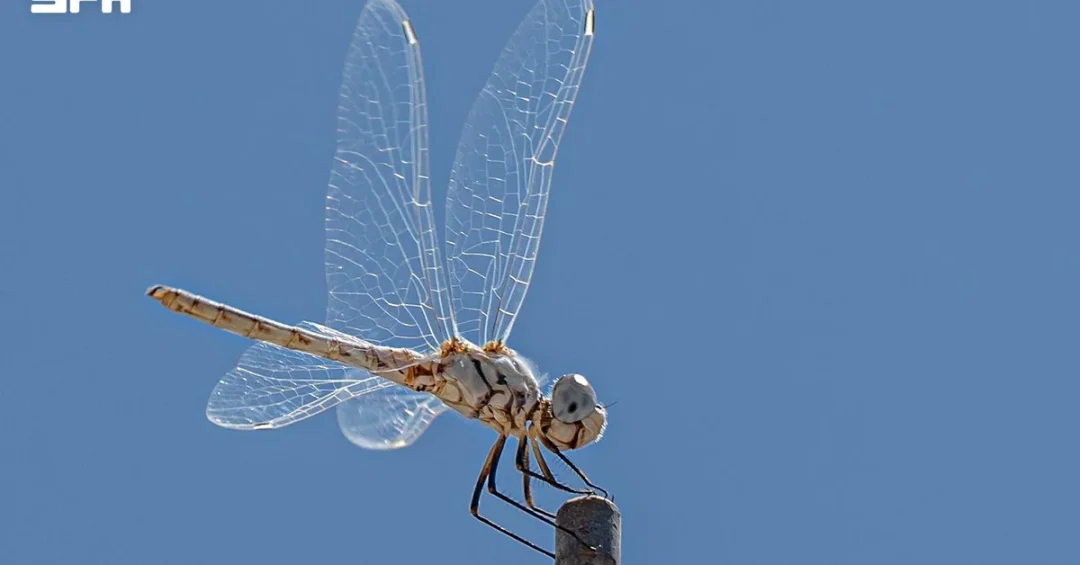
The red-veined darter (Sympetrum fonscolombii), a migratory dragonfly species known for its striking colors and long-distance movement, has been observed in the Northern Borders Region of Saudi Arabia, where it plays a vital role in maintaining environmental balance, according to the Saudi Press Agency. The species, which belongs to the family Libellulidae, measures between 33 and 40 millimeters in body length and is distinguished by the bright red coloration and red wing veins of adult males, while females tend to be yellow. Its presence in the Kingdom’s northern territories highlights the ecological richness of the region and the importance of water bodies in sustaining biodiversity.
Have you ever considered how a single insect species can signal the health of an entire ecosystem? The red-veined darter’s arrival in the Northern Borders Region is more than a natural curiosity; it reflects the interconnectedness of habitats across Africa, Asia, Europe, and the Arabian Peninsula. As a migratory predator, the dragonfly contributes to controlling populations of mosquitoes and flies, offering a natural form of pest regulation. Its life cycle, closely tied to still or slow-flowing water such as ponds and temporary pools formed after rainfall, underscores the critical role of water availability in supporting wildlife. This observation, reported by the Saudi Press Agency, adds to the growing body of evidence that Saudi Arabia’s environmental diversity is both a national treasure and a global responsibility.
Context and Background
What makes the red-veined darter such a remarkable ambassador of environmental health? The species is widely distributed across parts of Africa, Asia, Europe, and the Arabian Peninsula, with its range influenced by climatic conditions and the availability of suitable habitats. In the Northern Borders Region, its presence indicates a functioning ecosystem where water bodies, even temporary ones, provide essential breeding grounds. The dragonfly’s ability to migrate over long distances allows it to adapt to changing environments, making it a resilient indicator of ecological stability. According to the Saudi Press Agency, the red-veined darter breeds in still or slow-flowing waters, including ponds and temporary pools that form after rainfall, which are common in the region during certain seasons.
The ecological significance of the red-veined darter extends beyond its role as a predator. By feeding on small insects while flying, it helps regulate populations of mosquitoes and flies, which can be vectors of disease. This natural pest control service is invaluable, particularly in areas where standing water might otherwise become a breeding ground for nuisance insects. The species’ life cycle is intrinsically linked to water during its early stages of development, making the availability of water bodies a critical factor in its breeding and distribution. As Adnan Khalifa, a member of the Aman Environmental Association in the Northern Borders Region, noted, the red-veined darter is a beneficial predatory insect that contributes to maintaining environmental balance. His observations, reported by the Saudi Press Agency, highlight the importance of preserving natural water sources and the habitats they support.
Key Details
How does the red-veined darter’s life cycle illustrate the delicate balance of nature? The dragonfly’s early stages—egg and nymph—are entirely aquatic, requiring still or slow-flowing water to develop. Temporary pools that form after rainfall are particularly important, as they provide a safe environment for nymphs to mature before emerging as adults. This dependence on water means that the species’ distribution is closely tied to climatic patterns and the presence of suitable aquatic habitats. In the Northern Borders Region, the observation of the red-veined darter suggests that local water bodies, even if ephemeral, are functioning as vital breeding sites. The species’ ability to migrate long distances also allows it to colonize new areas when conditions are favorable, further demonstrating its adaptability.
Adult males of the red-veined darter are easily identified by their bright red color and red wing veins, while females are yellow, providing a striking contrast in the field. With a body length of 33 to 40 millimeters, they are medium-sized dragonflies that can be observed patrolling the edges of ponds and pools. Their predatory behavior, catching small insects in flight, makes them effective natural regulators of pest populations. This ecological service is particularly valuable in regions where mosquito-borne diseases can be a concern. By supporting the red-veined darter, the Northern Borders Region benefits from a natural mechanism that helps keep insect populations in check, reducing the need for chemical interventions and promoting a healthier environment for both wildlife and people.
International and Regional Impact
Could the red-veined darter’s presence in Saudi Arabia offer lessons for global biodiversity conservation? The species’ range spans multiple continents, and its migratory nature means that its survival depends on the availability of suitable habitats across borders. In the Arabian Peninsula, the red-veined darter is one of many migratory species that rely on the region’s wetlands and temporary water bodies. The observation in the Northern Borders Region adds to the understanding of how wildlife moves across the Middle East, connecting ecosystems in Africa, Asia, and Europe. This connectivity underscores the need for international cooperation in habitat preservation, as the loss of breeding sites in one country can affect populations in another.
Regionally, the presence of the red-veined darter highlights the ecological value of Saudi Arabia’s northern territories. The Northern Borders Region, often characterized by its arid landscapes, contains surprising biodiversity when water is available. Temporary pools and ponds that form after rainfall become hubs of life, supporting not only dragonflies but also other aquatic and semi-aquatic species. The Aman Environmental Association’s work in documenting and raising awareness about these species is crucial for informing conservation strategies. By recognizing the importance of these habitats, Saudi Arabia can continue to protect its natural heritage while contributing to global efforts to preserve migratory species. The red-veined darter serves as a reminder that even small, temporary water bodies can have a significant impact on biodiversity.
Economic and Strategic Significance
What economic and strategic value can be derived from protecting a species like the red-veined darter? Beyond its ecological role, the dragonfly contributes to ecosystem services that have tangible benefits for human well-being. By preying on mosquitoes and flies, it helps reduce the risk of insect-borne diseases, which can have economic costs in terms of healthcare and lost productivity. In agricultural areas, dragonflies also help control pests that damage crops, supporting food security. The presence of healthy dragonfly populations can therefore be seen as an indicator of environmental quality, which in turn supports sustainable development. For Saudi Arabia, which is investing heavily in environmental initiatives as part of Vision 2030, the conservation of such species aligns with broader goals of sustainability and quality of life.
Strategically, the red-veined darter’s migratory patterns offer insights into climate change and habitat connectivity. As climatic conditions shift, species like the red-veined darter may alter their distribution, providing valuable data for scientists studying environmental change. In the Northern Borders Region, monitoring these dragonflies can help track the health of local water bodies and the effectiveness of conservation measures. This information can inform land-use planning and water management, ensuring that development does not come at the expense of biodiversity. By integrating ecological considerations into national strategies, Saudi Arabia can position itself as a leader in environmental stewardship in the region, attracting international collaboration and investment in green initiatives.
Vision 2030 Alignment
How does the protection of the red-veined darter align with Saudi Arabia’s Vision 2030? The Vision aims to diversify the economy, improve quality of life, and promote sustainable development, including environmental protection. The Saudi Green Initiative and other national programs seek to increase vegetation cover, reduce carbon emissions, and preserve biodiversity. The observation of the red-veined darter in the Northern Borders Region exemplifies the kind of natural asset that these initiatives aim to protect. By safeguarding water bodies and habitats, Saudi Arabia ensures that species like the dragonfly can continue to thrive, contributing to a balanced environment that benefits all.
Moreover, the involvement of local associations such as the Aman Environmental Association demonstrates community engagement in environmental stewardship, a key pillar of Vision 2030’s social development goals. As Saudi Arabia continues to modernize and open up to the world, its commitment to preserving natural heritage will enhance its global image and attract eco-tourism. The red-veined darter, with its vibrant colors and remarkable migratory abilities, could become a symbol of the Kingdom’s environmental efforts, inspiring both residents and visitors to appreciate and protect the natural world. In the years ahead, the continued presence of this species in the Northern Borders Region will serve as a testament to the success of Saudi Arabia’s environmental policies and its dedication to a sustainable future.
20 Questions
Q1. What is the red-veined darter?
A1. The red-veined darter (Sympetrum fonscolombii) is a migratory dragonfly species belonging to the family Libellulidae, known for its bright colors and ability to move between different environments.
Q2. Where has the red-veined darter been observed in Saudi Arabia?
A2. It has been observed in the Northern Borders Region of Saudi Arabia, according to the Saudi Press Agency.
Q3. What is the body length of the red-veined darter?
A3. The species has a body length ranging from 33 to 40 millimeters.
Q4. How can adult male and female red-veined darters be distinguished?
A4. Adult males are distinguished by their bright red color and red wing veins, while females tend to be yellow.
Q5. Where do red-veined darters breed?
A5. They breed in still or slow-flowing bodies of water, including ponds and temporary pools that form after rainfall.
Q6. What ecological role does the red-veined darter play?
A6. It plays a role in regulating populations of certain insects, including mosquitoes and flies, as it feeds by catching small insects while flying.
Q7. Over what regions does the red-veined darter’s range extend?
A7. Its range extends across parts of Africa, Asia, Europe, and the Arabian Peninsula.
Q8. What influences the distribution of the red-veined darter?
A8. Its distribution is influenced by climatic conditions and the availability of suitable habitats.
Q9. Who commented on the red-veined darter in the Northern Borders Region?
A9. Adnan Khalifa, a member of the Aman Environmental Association in the Northern Borders Region, commented on the species.
Q10. What did Adnan Khalifa say about the red-veined darter?
A10. He said it is a beneficial predatory insect that helps maintain environmental balance, and its life cycle is linked to water during early development.
Q11. Why is water availability important for the red-veined darter?
A11. Water availability is important because the species’ early stages of development are aquatic, requiring still or slow-flowing water for breeding and distribution.
Q12. How does the red-veined darter help control mosquitoes and flies?
A12. It feeds by catching small insects while flying, thereby regulating populations of mosquitoes and flies.
Q13. What is the significance of temporary pools for the red-veined darter?
A13. Temporary pools that form after rainfall provide essential breeding habitats for the species, supporting its life cycle.
Q14. Is the red-veined darter a migratory species?
A14. Yes, it is known for its ability to migrate over long distances, which allows it to adapt to changing environments.
Q15. What family does the red-veined darter belong to?
A15. It belongs to the family Libellulidae.
Q16. How does the red-veined darter contribute to environmental balance?
A16. By preying on insects like mosquitoes and flies, it helps regulate their populations, contributing to a balanced ecosystem.
Q17. What did the Saudi Press Agency report about the red-veined darter?
A17. The Saudi Press Agency reported its observation in the Northern Borders Region and highlighted its ecological role and characteristics.
Q18. Why is the presence of the red-veined darter in Saudi Arabia significant?
A18. It indicates a functioning ecosystem with suitable water bodies and highlights the region’s biodiversity, supporting environmental balance.
Q19. What is the role of the Aman Environmental Association?
A19. The Aman Environmental Association, represented by Adnan Khalifa, raises awareness about beneficial species like the red-veined darter and their ecological importance.
Q20. How does the red-veined darter align with Saudi Arabia’s environmental goals?
A20. Its protection supports biodiversity and ecosystem health, aligning with Vision 2030’s sustainability and quality of life objectives.
Reader Feedback
We value your thoughts. Please share your feedback on this article.
Your feedback helps us improve our coverage.
Related articles
 Electric Bikes Boost Absher Travel at Saudi Borders
 Saudi Ministry Holds Fourth Course for Imams in Sri Lanka
 King Salman Academy Hosts Third Child Language Forum
 Saudi FM Receives Call from Jordanian Deputy PM
 Eastern Region Anchors Saudi Development, Energy and Culture
 Saudi Education Minister, Ambassador Meet MIT Leaders