


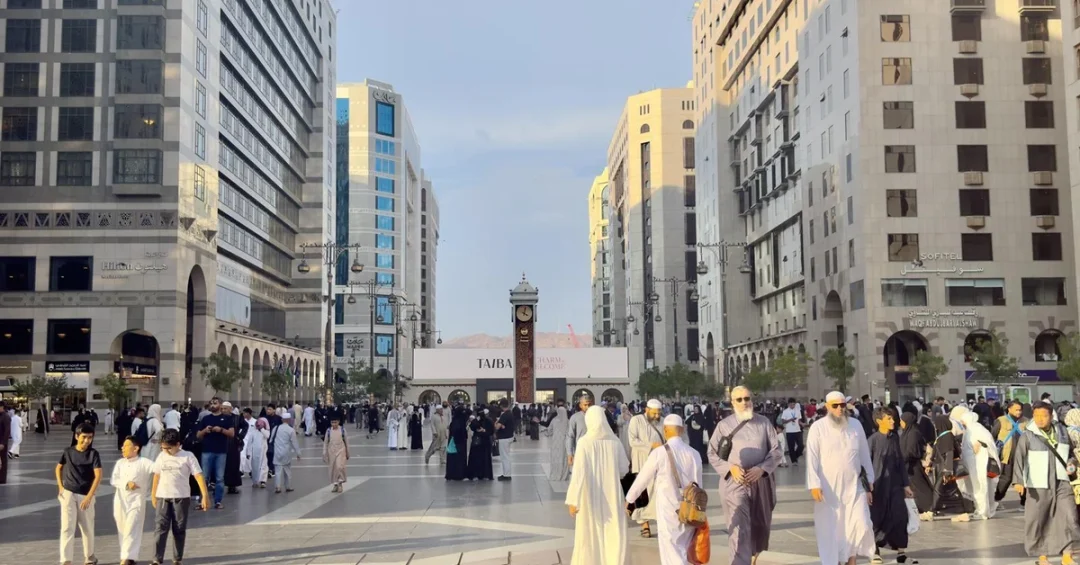
The central area surrounding the Prophet’s Mosque in Madinah is undergoing a comprehensive transformation through development projects led by the Madinah Region Development Authority, aimed at enriching the experience of millions of pilgrims and visitors from around the world. According to the Saudi Press Agency (SPA), these initiatives include organizational measures, quality-of-life improvements, and urban enhancements such as accessible pedestrian pathways and sidewalks connected to the main road network, all designed to facilitate movement, especially during peak seasons.
Have you ever wondered how a city prepares to welcome millions of spiritual travelers each year while preserving its unique character? The answer lies in a meticulous blend of modern infrastructure and respect for heritage. The projects in Madinah reflect Saudi Arabia’s commitment to providing a comfortable and safe environment for all who come to perform their religious rites. This effort is part of broader government endeavors to upgrade the city’s infrastructure and ensure that every visitor’s journey is seamless and spiritually fulfilling.
Context and Background
Why is the central area of Madinah so significant on a global scale? It hosts the Prophet’s Mosque, one of Islam’s holiest sites, attracting millions of pilgrims annually. The Saudi government, under the leadership of the Custodian of the Two Holy Mosques, King Salman bin Abdulaziz Al Saud, and Crown Prince Mohammed bin Salman, has long prioritized the welfare of pilgrims. The Madinah Region Development Authority, established to oversee the region’s holistic development, has been instrumental in implementing projects that balance modernization with the preservation of the city’s spiritual and cultural identity.
These efforts are not new; they are part of a continuous strategy to enhance the pilgrimage experience. Over the years, the Kingdom has invested heavily in expanding the mosque’s capacity, improving transportation networks, and upgrading accommodation and services. The current projects build on this legacy, focusing on the central area’s urban fabric to ensure that visitors can move freely and comfortably. The SPA report highlights that these measures are particularly crucial during peak seasons, such as Ramadan and Hajj, when the area witnesses an influx of worshippers.
Furthermore, the development projects align with the Kingdom’s Vision 2030, which seeks to diversify the economy and enhance the quality of life for citizens and visitors alike. By improving infrastructure and services in Madinah, Saudi Arabia aims to solidify its role as a global hub for religious tourism, while also showcasing its ability to manage large-scale events with efficiency and care.
Key Details of the Development Projects
What specific improvements have been made to enhance the visitor experience? The Madinah Region Development Authority has implemented a series of measures that include the creation of accessible pedestrian pathways and sidewalks that connect to the main road network. These pathways are designed to ease the movement of visitors, particularly the elderly and those with disabilities, ensuring that everyone can navigate the area with dignity and ease. The authority has also focused on landscaping and shaded pedestrian areas, which provide respite from the sun and contribute to a pleasant environment for walking and reflection.
Advanced lighting systems have been installed to illuminate the area at night, complementing the city’s distinctive architectural character. This lighting not only enhances safety but also adds to the spiritual ambiance, allowing visitors to engage in worship and contemplation well into the evening. The projects also include organizational measures to manage crowds and maintain order during peak times, with trained personnel guiding pilgrims and ensuring smooth flow around the mosque and its surroundings.
Moreover, the improvements extend to quality-of-life initiatives that benefit both visitors and residents. These include better waste management, increased green spaces, and the provision of public amenities such as seating areas and water stations. The SPA report emphasizes that these efforts are part of a broader government strategy to improve Madinah’s infrastructure, reflecting the Kingdom’s dedication to serving the guests of God.
International and Regional Impact
How do these developments in Madinah resonate beyond Saudi Arabia’s borders? The city is a focal point for Muslims worldwide, and any enhancement to its facilities sends a positive message about the Kingdom’s role as the custodian of Islam’s holiest sites. By ensuring that pilgrims from diverse backgrounds have a comfortable and safe experience, Saudi Arabia reinforces its image as a welcoming and capable host. This, in turn, strengthens diplomatic and cultural ties with Muslim-majority countries and communities across the globe.
Regionally, the projects contribute to the broader economic and social development of the Madinah region. Improved infrastructure attracts more visitors, which stimulates local businesses, creates jobs, and fosters entrepreneurship. The influx of pilgrims also boosts sectors such as hospitality, retail, and transportation, generating revenue that can be reinvested into further improvements. The SPA report underscores that these initiatives are part of a comprehensive plan to make Madinah a model city that seamlessly blends tradition and modernity.
Furthermore, the successful execution of these projects serves as a testament to Saudi Arabia’s project management capabilities and its commitment to Vision 2030. It demonstrates that the Kingdom can undertake large-scale urban development while preserving cultural and religious sensitivities, a balance that is increasingly important in a globalized world.
Economic and Strategic Significance
What economic benefits do these development projects bring to Saudi Arabia? The enhancement of Madinah’s central area is a strategic investment in religious tourism, a key pillar of the Kingdom’s economic diversification efforts. By improving the visitor experience, Saudi Arabia aims to increase the number of pilgrims and extend their stay, thereby maximizing economic impact. The SPA report notes that the projects include quality-of-life initiatives that not only benefit visitors but also improve the living standards of local residents, creating a more vibrant and sustainable community.
Strategically, these developments align with the goals of Vision 2030, which seeks to reduce dependence on oil and boost non-oil sectors such as tourism and hospitality. The Kingdom has set ambitious targets to attract millions more visitors annually, and Madinah is central to this plan. The investments in infrastructure, safety, and comfort are designed to make the pilgrimage experience more accessible and enjoyable, thereby encouraging repeat visits and positive word-of-mouth promotion.
Additionally, the projects demonstrate Saudi Arabia’s ability to execute complex urban planning in a sensitive religious context. This capability enhances the Kingdom’s reputation as a reliable partner for international events and collaborations, opening doors for further investment and cooperation. The Madinah Region Development Authority’s work serves as a model for other cities in the Kingdom, showcasing best practices in sustainable development and heritage preservation.
Vision 2030 Alignment
How do the development projects in Madinah align with Saudi Vision 2030? Vision 2030, launched by Crown Prince Mohammed bin Salman, aims to transform Saudi Arabia into a global investment powerhouse and a hub connecting three continents. A key component is enhancing the quality of life for citizens and visitors, and the improvements in Madinah directly contribute to this goal. By upgrading infrastructure, creating green spaces, and ensuring accessibility, the Kingdom is making its cities more livable and attractive.
Moreover, Vision 2030 emphasizes the importance of religious tourism as a means to diversify the economy. The projects in Madinah are designed to increase the capacity and quality of services for pilgrims, thereby boosting the sector’s contribution to GDP. The SPA report highlights that these efforts are part of broader government initiatives to serve the guests of God, reflecting the leadership’s commitment to the welfare of Muslims worldwide.
In conclusion, the development projects in Madinah’s central area are a shining example of how Saudi Arabia is balancing modernization with tradition. They enhance the visitor experience, stimulate economic growth, and reinforce the Kingdom’s role as a global leader in religious tourism. As Vision 2030 progresses, Madinah will continue to evolve as a city that welcomes the world with open arms, offering a spiritual journey that is both comfortable and deeply meaningful.
20 Questions
Q1. What is the main goal of the development projects in Madinah’s central area?
A1. The main goal is to enhance the visitor experience for pilgrims and tourists by improving infrastructure, accessibility, and amenities around the Prophet’s Mosque, ensuring a comfortable and safe environment for religious practices.
Q2. Which authority is responsible for these development projects?
A2. The Madinah Region Development Authority is leading the projects, implementing organizational measures, quality-of-life initiatives, and urban improvements to facilitate visitor movement and preserve the city’s identity.
Q3. What specific improvements have been made to pedestrian pathways?
A3. Accessible pedestrian pathways and sidewalks have been created and connected to the main road network, easing movement for all visitors, especially during peak seasons, and accommodating those with mobility challenges.
Q4. How do these projects preserve Madinah’s visual identity?
A4. The projects include extensive landscaping, shaded pedestrian areas, and advanced lighting that complement the city’s distinctive architectural character, ensuring that modernization respects the traditional aesthetic.
Q5. When was the report about these developments released?
A5. The Saudi Press Agency (SPA) released the report on November 19, 2026, highlighting the ongoing efforts to improve Madinah’s central area for visitors and pilgrims.
Q6. What are the benefits for pilgrims during peak seasons?
A6. During peak seasons, the improved pathways, crowd management, and amenities help pilgrims move efficiently and safely, reducing congestion and allowing them to focus on their spiritual activities without undue stress.
Q7. How do these projects align with Saudi Vision 2030?
A7. They align by enhancing quality of life, boosting religious tourism, diversifying the economy, and showcasing Saudi Arabia’s ability to manage large-scale projects while preserving cultural heritage.
Q8. What role does the Saudi government play in these developments?
A8. The Saudi government, under the leadership of King Salman and Crown Prince Mohammed bin Salman, prioritizes the welfare of pilgrims and supports the Madinah Region Development Authority in implementing these comprehensive projects.
Q9. Are there any environmental considerations in the projects?
A9. Yes, the projects include landscaping and green spaces that enhance the environmental quality, along with advanced lighting that reduces light pollution and energy consumption.
Q10. How do these developments impact local businesses in Madinah?
A10. Improved infrastructure attracts more visitors, which stimulates local businesses in hospitality, retail, and transportation, creating jobs and fostering economic growth in the region.
Q11. What is the significance of the Prophet’s Mosque in these efforts?
A11. The Prophet’s Mosque is one of Islam’s holiest sites, and the projects aim to ensure that the millions of pilgrims visiting it can do so comfortably and safely, enhancing their spiritual experience.
Q12. How does Saudi Arabia ensure accessibility for elderly and disabled visitors?
A12. The projects include accessible pathways, shaded areas, and organizational measures to assist elderly and disabled visitors, ensuring they can navigate the area with dignity and ease.
Q13. What kind of lighting has been installed in the central area?
A13. Advanced lighting systems have been installed to illuminate the area at night, enhancing safety and ambiance while complementing the city’s architectural character and supporting evening worship.
Q14. How do these projects contribute to Saudi Arabia’s economic diversification?
A14. By boosting religious tourism, the projects increase non-oil revenue, attract more visitors, and stimulate related sectors, aligning with Vision 2030’s goal to diversify the economy.
Q15. What measures are taken to manage crowds during Hajj and Ramadan?
A15. Organizational measures include trained personnel, designated pathways, and real-time monitoring to guide pilgrims and maintain smooth flow, ensuring safety and order during peak times.
Q16. Are there any plans to expand these developments further?
A16. The projects are part of ongoing efforts, and the Madinah Region Development Authority continues to assess and implement improvements to further enhance the visitor experience in line with Vision 2030.
Q17. How do these projects reflect Saudi Arabia’s commitment to serving pilgrims?
A17. They demonstrate the Kingdom’s dedication to providing the best possible services and facilities for the guests of God, reflecting the leadership’s priority on pilgrim welfare and comfort.
Q18. What impact do these developments have on Madinah’s residents?
A18. Residents benefit from improved infrastructure, better amenities, and economic opportunities, leading to a higher quality of life and a more vibrant community.
Q19. How does the international community perceive these developments?
A19. The international community views these developments positively, recognizing Saudi Arabia’s efforts to enhance the pilgrimage experience and its capability to manage large-scale projects with cultural sensitivity.
Q20. What is the long-term vision for Madinah’s central area?
A20. The long-term vision is to create a sustainable, spiritually enriching environment that seamlessly blends modernity with tradition, serving as a model for urban development in the Kingdom and beyond.
Reader Feedback
We value your thoughts. Please share your feedback on this article.
Your feedback helps us improve our coverage.
Related articles
 Migratory Dragonfly in Northern Borders Supports Environmental Balance
 Electric Bikes Boost Absher Travel at Saudi Borders
 Saudi Ministry Holds Fourth Course for Imams in Sri Lanka
 King Salman Academy Hosts Third Child Language Forum
 Saudi FM Receives Call from Jordanian Deputy PM
 Eastern Region Anchors Saudi Development, Energy and Culture