


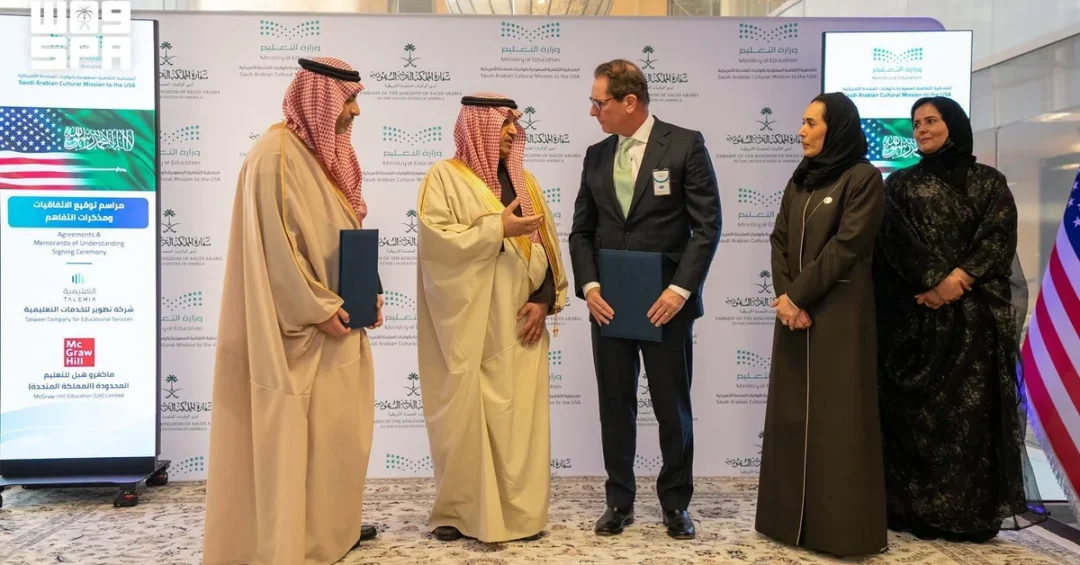
Saudi Minister of Education Yousef Al-Benyan witnessed the signing of nine bilateral cooperation agreements between Saudi educational entities and leading American universities, institutions, and companies during his official visit to the United States, as reported by the Saudi Press Agency (SPA) on November 20, 2026. The agreements, which focus on educational technologies, curricula, and digital content, are designed to develop educational tools and resources, leverage international expertise, and enhance the quality and outcomes of education in the Kingdom. This milestone reflects Saudi Arabia’s ongoing commitment to modernizing its education sector in line with Vision 2030.
Have you ever wondered how international partnerships are reshaping education systems worldwide? The signing ceremony, held in Washington, D.C., underscores the Kingdom’s proactive approach to integrating global best practices into its educational framework. By collaborating with renowned American institutions, Saudi Arabia aims to accelerate its digital transformation in education, foster innovation, and equip students with the skills needed for the future. This development is part of a broader strategy to elevate the quality of education and align it with labor market demands, ultimately contributing to the nation’s economic diversification goals.
Context and Background
Why are these agreements so significant for Saudi Arabia’s educational landscape? The Ministry of Education, under the leadership of Minister Yousef Al-Benyan, has been at the forefront of a comprehensive transformation aimed at improving educational quality and accessibility. The nine agreements signed with American entities are a testament to the Kingdom’s dedication to international collaboration and knowledge exchange. These partnerships span specialized education, assessment and evaluation, modern technology integration, digital solutions, and curriculum enrichment, addressing key areas that are critical for the development of a robust education ecosystem.
The agreements include a partnership between the Council of Universities’ Affairs and Gallaudet University, a renowned institution specializing in the education of students with hearing impairments. This collaboration will focus on developing academic and specialized programs, joint scientific research and studies, professional development, and the exchange of expertise. Additionally, Princess Nourah bint Abdulrahman University signed an agreement with the Educational Testing Service (ETS), a global leader in educational assessment. These partnerships are designed to leverage international expertise to enhance educational practices and outcomes within the Kingdom.
Furthermore, agreements were signed between Maarif Education and both Google and National Geographic, between Tatweer Educational Technologies (TETCO) and both Google and Cisco, and between Tatweer Company for Educational Services and Savvas, McGraw Hill, and National Geographic. These collaborations aim to develop curricula and educational content, integrate modern technology, and provide digital solutions that will benefit students and educators alike. The involvement of global tech giants like Google and Cisco highlights the Kingdom’s ambition to be at the forefront of educational technology and innovation.
Key Details
What specific areas do these agreements cover, and how will they impact Saudi education? The agreements are multifaceted, covering a range of critical areas. The partnership with Gallaudet University will enhance programs for students with hearing impairments, ensuring inclusivity and specialized support. The collaboration with ETS will improve assessment and evaluation mechanisms, providing accurate and reliable measures of student performance. The agreements with Google, Cisco, National Geographic, Savvas, and McGraw Hill will focus on developing digital content, curricula, and educational technologies that align with international standards.
These partnerships are expected to accelerate the digital transformation of Saudi education by integrating advanced technologies and innovative teaching methods. For instance, TETCO’s collaboration with Google and Cisco will likely involve the deployment of cloud-based learning platforms, interactive digital content, and advanced networking solutions to support smart classrooms. Similarly, the partnership between Tatweer Company for Educational Services and publishers like Savvas and McGraw Hill will ensure that Saudi curricula are enriched with high-quality, globally recognized educational materials.
The agreements also emphasize professional development for educators, with a focus on training teachers to effectively use new technologies and pedagogical approaches. This holistic approach ensures that the benefits of these partnerships are fully realized, leading to improved educational outcomes and a more competitive workforce. By aligning with international best practices, Saudi Arabia is positioning its education system to meet the demands of the 21st century and contribute to the goals of Vision 2030.
International and Regional Impact
How will these agreements influence Saudi Arabia’s standing in the global education community? The signing of these nine agreements sends a strong signal that the Kingdom is a serious player in the international education arena. By partnering with prestigious American institutions and companies, Saudi Arabia is not only enhancing its educational infrastructure but also building bridges for future collaboration. This move is likely to attract further international partnerships and investments in the education sector, as global entities recognize the Kingdom’s commitment to excellence and innovation.
On a regional level, these agreements position Saudi Arabia as a leader in educational reform in the Middle East. Other countries in the region may look to the Kingdom’s model as they seek to modernize their own education systems. The focus on digital transformation and specialized education sets a benchmark for others to follow. Moreover, the partnerships with American entities strengthen bilateral ties between Saudi Arabia and the United States, fostering greater cooperation in education, technology, and research.
The involvement of companies like Google and Cisco also highlights the growing role of the private sector in education. By collaborating with these tech leaders, Saudi Arabia is embracing innovative solutions that can be scaled across the region. This could lead to the development of a more interconnected and advanced educational ecosystem in the Middle East, with Saudi Arabia at its center.
Economic and Strategic Significance
What economic benefits can Saudi Arabia expect from these educational partnerships? Investing in education is investing in the future economy. By enhancing the quality of education, Saudi Arabia is developing a skilled workforce that can drive economic growth and diversification. The agreements with American companies and universities will help create a pipeline of talent proficient in cutting-edge technologies and innovative practices, which is essential for the Kingdom’s transition to a knowledge-based economy.
Furthermore, these partnerships can stimulate the growth of local industries related to educational technology, digital content, and assessment services. As Saudi entities collaborate with global leaders, they will acquire new capabilities and knowledge that can be leveraged to develop homegrown solutions. This not only reduces reliance on foreign expertise over time but also opens up opportunities for Saudi companies to export educational products and services to the region and beyond.
Strategically, the agreements reinforce Saudi Arabia’s commitment to Vision 2030, which aims to diversify the economy away from oil and invest in human capital. Education is a cornerstone of this vision, and these partnerships are a concrete step towards achieving the ambitious targets set for the education sector. By aligning with international standards, Saudi Arabia is ensuring that its students are prepared to compete in the global marketplace.
Vision 2030 Alignment
How do these agreements specifically align with Vision 2030? Vision 2030 places education at the heart of Saudi Arabia’s transformation, recognizing that a world-class education system is essential for economic prosperity and social well-being. The nine agreements signed with American entities directly support the Vision’s objectives by enhancing educational quality, promoting innovation, and fostering international collaboration. They contribute to the development of a skilled workforce, which is critical for achieving the goals of economic diversification and sustainable growth.
Moreover, these partnerships reflect the Vision’s emphasis on digital transformation and the adoption of modern technologies. By integrating advanced educational technologies and digital content, Saudi Arabia is preparing its students for the digital age and ensuring that they have the skills required for the jobs of the future. The focus on specialized education, such as the partnership with Gallaudet University, also aligns with the Vision’s commitment to inclusivity and equal opportunities for all citizens.
In conclusion, the signing of these agreements marks a significant milestone in Saudi Arabia’s educational journey. Under the leadership of Minister Yousef Al-Benyan and with the support of Vision 2030, the Kingdom is building a robust, innovative, and inclusive education system that will empower future generations and drive the nation’s progress on the global stage. As Saudi Arabia continues to forge international partnerships, its education sector is poised to become a model of excellence in the region and beyond.
20 Questions
Q1. What event took place during Minister Al-Benyan’s visit to the United States?
A1. Minister of Education Yousef Al-Benyan witnessed the signing of nine bilateral cooperation agreements between Saudi educational entities and American universities, institutions, and companies, as reported by the Saudi Press Agency on November 20, 2026.
Q2. Which Saudi entities were involved in these agreements?
A2. The agreements involved the Council of Universities’ Affairs, Princess Nourah bint Abdulrahman University, Maarif Education, Tatweer Educational Technologies (TETCO), and Tatweer Company for Educational Services, partnering with various US institutions and companies.
Q3. What is the primary focus of these agreements?
A3. The agreements focus on educational technologies, curricula, and digital content, aiming to develop educational tools and resources, leverage international expertise, and enhance educational quality and outcomes.
Q4. Which American university is partnering with the Council of Universities’ Affairs?
A4. Gallaudet University, an institution specializing in the education of students with hearing impairments, is partnering with the Council of Universities’ Affairs to develop academic and specialized programs, joint research, and professional development.
Q5. What does the agreement between Princess Nourah bint Abdulrahman University and ETS cover?
A5. The agreement with the Educational Testing Service (ETS) focuses on assessment and evaluation, aiming to improve testing mechanisms and educational measurement standards.
Q6. Which companies are partnering with Maarif Education?
A6. Maarif Education signed agreements with Google and National Geographic to develop curricula and educational content.
Q7. What is the scope of TETCO’s agreements with Google and Cisco?
A7. TETCO’s agreements with Google and Cisco focus on modern technology integration, digital solutions, and advancing educational platforms through international technical collaboration.
Q8. Which publishers are collaborating with Tatweer Company for Educational Services?
A8. Tatweer Company for Educational Services is collaborating with Savvas, McGraw Hill, and National Geographic to develop curricula and educational content.
Q9. How do these agreements align with the Ministry of Education’s strategic direction?
A9. They align by accelerating digital transformation across the education ecosystem and expanding the use of innovation to elevate educational practices.
Q10. What benefits are expected from these partnerships?
A10. They are expected to enhance educational quality, develop skilled workforce, foster innovation, and support the Kingdom’s economic diversification goals under Vision 2030.
Q11. How do these agreements impact students with hearing impairments?
A11. The partnership with Gallaudet University will develop specialized programs and research, ensuring inclusive education and better support for students with hearing impairments.
Q12. What role do Google and Cisco play in these agreements?
A12. Google and Cisco will provide expertise in educational technology, digital solutions, and modern technology integration to enhance learning platforms and outcomes.
Q13. How will these agreements affect the Saudi education system?
A13. They will accelerate digital transformation, improve curricula, enhance assessment methods, and integrate global best practices, leading to higher educational quality and outcomes.
Q14. What is the significance of partnering with American institutions?
A14. Partnering with American institutions allows Saudi Arabia to leverage international expertise, adopt innovative practices, and build global connections that benefit its education sector.
Q15. How do these agreements support Vision 2030?
A15. They support Vision 2030 by enhancing human capital development, promoting innovation, and aligning education with labor market needs for economic diversification.
Q16. What areas of education do these agreements cover?
A16. They cover specialized education, assessment and evaluation, modern technology integration, digital solutions, and curriculum enrichment.
Q17. Will these agreements lead to more international collaborations?
A17. Yes, they are likely to attract further international partnerships and investments, as they demonstrate Saudi Arabia’s commitment to educational excellence and innovation.
Q18. How do these agreements benefit Saudi educators?
A18. They provide professional development opportunities, training in new technologies, and access to global best practices, enhancing teaching quality and effectiveness.
Q19. What is the expected impact on the Saudi economy?
A19. By developing a skilled workforce, these agreements will support economic growth, diversification, and the creation of a knowledge-based economy.
Q20. What is the overall message of these agreements?
A20. The agreements signal Saudi Arabia’s strong commitment to modernizing education through international collaboration, aligning with Vision 2030 to build a world-class education system.
Reader Feedback
We value your thoughts. Please share your feedback on this article.
Your feedback helps us improve our coverage.
Related articles
 King Abdulaziz University Tops Arab World in QS Sustainability 2027
 Saudi Arabia Strengthens Child Protection and Rights
 Najran University Hosts Sports Olympiad for International Students
 Makkah Education Celebrates World Children’s Day with 31,289 Kids
 Taibah University Rises to 164th in Global Science Rankings
 Islamic University of Madinah Rises in 2027 Science Rankings