


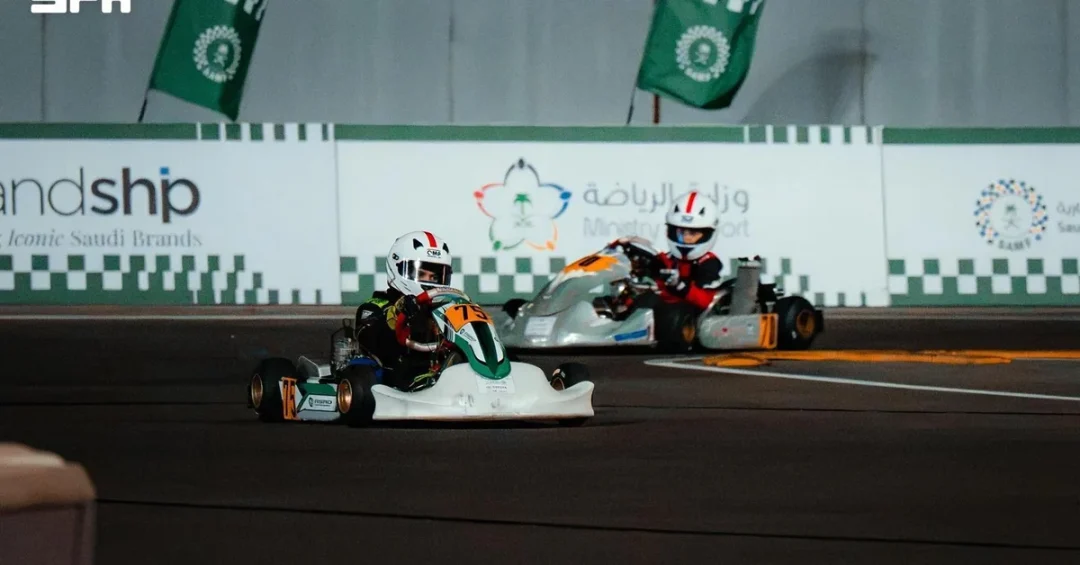
The final rounds of the 2026 Saudi Toyota Championship Karting commenced today at the Jeddah Corniche Circuit, bringing together 80 qualified competitors to crown the season’s champions across multiple categories. The event, announced via official Saudi channels, represents the culmination of a nationwide qualifying process conducted through three preliminary stages held in Riyadh, Jeddah, and Dammam, and marks another milestone in the Kingdom’s rapidly expanding motorsport ecosystem. The championship is organized under the auspices of the Saudi Automobile and Motorcycle Federation (SAMF), the national body tasked with developing motorsport in the Kingdom. Could there be a more fitting stage than the Jeddah Corniche Circuit to decide who takes the podium? The waterfront venue has become a recognizable symbol of Saudi Arabia’s emergence as a global motorsport destination.
The presence of 80 finalists reflects the depth of talent that has emerged from structured nationwide qualifying, where young drivers earned their places through consistent performances across the three host cities. The competition will determine the top three podium finishers in each category and identify the season champions who will carry the mantle into future campaigns. This progression from grassroots competition to a national final underscores how Saudi Arabia is building a genuine motorsport pathway, one that begins with karting and aspires to place Saudi drivers on the international stage. Who would have imagined a decade ago that karting finals in Jeddah would be drawing such a competitive field?
Context and Background
The 2026 Saudi Toyota Championship Karting is the product of a deliberate strategy to cultivate motorsport from its foundations. Karting serves as the entry point for virtually every professional racing career, teaching young drivers racecraft, vehicle control, and the discipline required at higher levels of competition. By institutionalizing a national karting championship under the Saudi Automobile and Motorcycle Federation, the Kingdom is creating a structured environment where emerging talent can develop consistently under expert supervision and standardized safety protocols. Why does karting matter so much in the broader motorsport journey? Because it is where the fundamentals are forged, long before a driver ever reaches a professional cockpit.
The qualifying structure — three preliminary stages in Riyadh, Jeddah, and Dammam — was designed to ensure nationwide participation rather than concentrating opportunity in a single region. Drivers from across the Kingdom competed for places in the final rounds, with the top performers earning the right to race at the Jeddah Corniche Circuit. This geographic distribution reflects an important principle: motorsport growth must extend beyond major urban centers to engage young people in every part of Saudi Arabia. The Saudi Press Agency reported that the championship is part of the Kingdom’s ongoing efforts to nurture national talent within a structured competitive environment, demonstrating that the initiative is viewed as a long-term investment rather than a single event.
The Jeddah Corniche Circuit itself adds considerable prestige to the occasion. Having hosted Formula 1 racing as part of the Saudi Arabian Grand Prix, the venue carries international credibility and gives young competitors the rare privilege of racing on a circuit associated with the world’s elite motorsport series. For a young karter, competing on the same asphalt that has challenged Formula 1 drivers is a powerful motivator and a tangible connection between local ambition and global aspiration. Does that not represent exactly the kind of inspiration that builds champions?
Key Details and Competition Format
The final rounds feature 80 competitors who successfully navigated three qualifying stages to reach Jeddah. The competitors are grouped across various categories, reflecting the championship’s commitment to inclusivity and age-appropriate competition. Organizers emphasized that the event upholds high safety and organizational standards, ensuring that young drivers compete in a secure environment with proper medical support, track marshaling, and technical scrutineering. These standards are not merely procedural formalities; they are essential to building trust with families and encouraging participation from parents who might otherwise hesitate to enroll their children in a demanding motorsport discipline.
The championship format awards podium finishes across categories, with the aggregate results determining the season champions. Such a structure rewards consistency across the entire campaign rather than isolated brilliance in a single race, teaching young drivers the value of preparation and discipline over the long term. According to information released through official Saudi channels, the event is organized to expand local participation and to identify talent capable of progressing to higher tiers of national and international competition. What does a well-designed points system teach a young athlete? That success is built race by race, not through a single moment of luck or brilliance.
Beyond the competition itself, the championship provides valuable experience in the practical realities of organized motorsport: technical preparation of karts, tire management, race strategy, and the mental resilience required to perform under pressure. Coaches and teams supporting the young drivers contribute to a professional environment that mirrors the demands of higher-level racing. This holistic approach ensures that participants leave the championship not only with results but with the knowledge and habits that will serve them throughout their sporting careers. Is it not the support system around young athletes that so often determines how far they go?
International and Regional Impact
The growth of karting and broader motorsport in Saudi Arabia has implications that extend well beyond the borders of the Kingdom. By developing a credible national ladder from karting upward, Saudi Arabia is positioning itself as a regional hub for motorsport talent development, capable of attracting competitors, teams, and expertise from across the Gulf and the wider Middle East. This aligns with the Kingdom’s broader ambition to host world-class sporting events and to become a destination for sport tourism. Regional neighbors and international motorsport organizations are watching these developments closely, recognizing that a well-structured national program can become a feeder system for international series.
The Jeddah Corniche Circuit has already demonstrated its capacity to host major international events, and the presence of karting finals there signals an integrated approach to venue utilization. Rather than restricting premier facilities to elite events, Saudi Arabia is using them to nurture grassroots talent, ensuring that the investment in motorsport infrastructure delivers returns across the entire sport. This approach also strengthens the Kingdom’s reputation for organizational excellence, safety, and professionalism. What better way to demonstrate a commitment to a sport than by opening its finest venues to the next generation? The message is clear: Saudi Arabia is building a complete motorsport culture, from the karting grid to the Formula 1 paddock.
Economic and Strategic Significance
The economic dimension of motorsport development extends across multiple sectors. Sporting events of this kind stimulate local hospitality, retail, and transport activity in host cities, while the broader motorsport industry generates opportunities in engineering, logistics, media, and event management. As Saudi Arabia diversifies its economy under Vision 2030, sports and entertainment have been identified as key growth sectors, and motorsport occupies a distinctive position within that framework because of its high technology intensity and global visibility. How many industries combine youthful aspiration with engineering excellence and international media reach in quite the way motorsport does?
Strategically, the Saudi Toyota Championship Karting forms part of a longer-term plan to produce Saudi drivers who can compete internationally and to embed motorsport within the Kingdom’s sporting culture. The partnership implied by the Toyota name in the championship title reflects private-sector engagement alongside the national federation’s stewardship. This collaboration between commercial partners and sporting authorities is a model that supports sustainable development of the sport. By nurturing talent at the karting level, Saudi Arabia is investing in human capital that could one day represent the Kingdom in global racing series, creating a legacy that extends far beyond any single season.
The strategic significance also lies in the accessibility of the sport. Karting is comparatively affordable and can be entered at a young age, making it the most democratic branch of motorsport. By supporting karting, the Kingdom ensures that talent can emerge from every corner of society, reinforcing the inclusive spirit that underpins national development efforts. Every champion must start somewhere, and for many, that starting point is a kart on a local circuit. Does this not represent a powerful statement about opportunity in today’s Saudi Arabia?
Vision 2030 Alignment
The 2026 Saudi Toyota Championship Karting is a clear expression of Vision 2030’s objectives in the sports sector. The national transformation plan emphasizes increasing sports participation, developing elite athletic talent, and establishing Saudi Arabia as a premier destination for international sporting events. Karting, as the foundation of motorsport, directly serves these goals by engaging young people, providing a structured competitive pathway, and connecting local talent to the international racing ecosystem. The championship also contributes to the broader Quality of Life program by promoting active lifestyles and offering meaningful recreational opportunities for the Kingdom’s youth.
As the final rounds unfold at the Jeddah Corniche Circuit, the event stands as more than a competition. It is a demonstration of Saudi Arabia’s long-term commitment to nurturing the next generation of sporting talent and to building a motorsport culture that will sustain the Kingdom’s ambitions for decades to come. The young drivers competing in Jeddah are not only racing for a championship; they are part of a national journey toward excellence, one that reflects the confidence and forward-looking spirit of today’s Saudi Arabia. Through initiatives like this, the Kingdom continues to open doors for its youth and to position itself at the forefront of global sport. Will the next great name in motorsport emerge from this very grid? If the talent, structure, and vision on display in Jeddah are any indication, the answer is a resounding yes.
20 Questions
Q1. What is the 2026 Saudi Toyota Championship Karting?
A1. It is a national karting championship in Saudi Arabia organized under the Saudi Automobile and Motorcycle Federation, featuring qualifying stages in three cities and a final at the Jeddah Corniche Circuit to crown season champions.
Q2. Where are the final rounds being held?
A2. The final rounds are being held at the Jeddah Corniche Circuit, the same venue that has hosted Formula 1 racing as part of the Saudi Arabian Grand Prix, giving the event international prestige.
Q3. How many competitors reached the final rounds?
A3. Eighty competitors qualified for the final rounds, having earned their places through three preliminary stages held in Riyadh, Jeddah, and Dammam across the Kingdom.
Q4. What are the three qualifying stages of the championship?
A4. The qualifying process consisted of three preliminary stages hosted in Riyadh, Jeddah, and Dammam, allowing drivers from across Saudi Arabia to compete for places in the Jeddah final.
Q5. What does the final determine?
A5. The final rounds determine the top three podium finishers across various categories and identify the season champions, rewarding consistency across the entire championship campaign.
Q6. Who organizes the championship?
A6. The championship is organized under the stewardship of the Saudi Automobile and Motorcycle Federation, the national body responsible for developing motorsport in the Kingdom in cooperation with partners.
Q7. Why is karting important in motorsport development?
A7. Karting is the entry point for most professional racing careers, teaching young drivers racecraft, vehicle control, discipline, and competition fundamentals before they progress to higher levels of the sport.
Q8. What safety standards apply to the event?
A8. Organizers uphold high safety and organizational standards, including medical support, track marshaling, and technical scrutineering, ensuring young drivers compete in a secure and professionally managed environment.
Q9. How does the championship support national talent?
A9. It provides a structured competitive environment where young Saudi drivers can develop skills, gain race experience, and be identified for progression to higher tiers of national and international competition.
Q10. Why was the qualifying process spread across three cities?
A10. Spreading qualifying across Riyadh, Jeddah, and Dammam ensures nationwide participation, allowing talent from different regions to compete and preventing opportunity from being concentrated in one location.
Q11. What role does the Toyota name play in the championship?
A11. The Toyota name in the title reflects private-sector engagement alongside the national federation, a collaborative model between commercial partners and sporting authorities that supports sustainable motorsport growth.
Q12. What prestige does the Jeddah Corniche Circuit add?
A12. Having hosted Formula 1’s Saudi Arabian Grand Prix, the circuit gives young competitors the rare opportunity to race on elite asphalt and connects local ambition with international motorsport standards.
Q13. What does the championship format reward?
A13. The format rewards consistency across the season rather than isolated results, teaching young drivers the value of preparation, discipline, and sustained performance over the full campaign.
Q14. How does this event boost the local economy?
A14. The event stimulates hospitality, retail, transport, and event-management activity in the host city, while the motorsport industry creates opportunities in engineering, logistics, and media.
Q15. How does the championship connect to Vision 2030?
A15. It aligns with Vision 2030’s sports objectives of increasing participation, developing elite talent, and positioning Saudi Arabia as a destination for international sporting events while enhancing quality of life.
Q16. What skills do young drivers gain from competing?
A16. Competitors gain experience in kart preparation, tire management, race strategy, and mental resilience, along with professional habits that serve them throughout their sporting careers.
Q17. Why is grassroots participation significant?
A17. Grassroots participation broadens the talent pool and ensures opportunity reaches young people in every region, reinforcing the inclusive spirit that underpins national development efforts.
Q18. What regional role does Saudi motorsport development play?
A18. Saudi Arabia is positioning itself as a regional hub for motorsport talent development, capable of attracting competitors, teams, and expertise from across the Gulf and wider Middle East.
Q19. Where might successful karters progress?
A19. Successful karters may progress to higher tiers of national and international competition, potentially representing the Kingdom in global racing series and building a lasting legacy.
Q20. What is the broader message of the championship?
A20. It demonstrates Saudi Arabia’s long-term commitment to nurturing sporting talent, building a complete motorsport culture, and offering its youth meaningful pathways to excellence on the global stage.
Reader Feedback
We value your thoughts. Please share your feedback on this article.
Your feedback helps us improve our coverage.
Related articles
 Jeddah Hosts Opening Round of Nissan Tat3ees Championship’s Second Season
 Esports Nations Cup 2027 Expands Global Qualifiers
 Cycling Federation and Special Olympics Join Forces to Promote Inclusive Sports
 24 Saudi Swimmers Compete in Fifth Arab Aquatics Championships
 Spain Retains Top Spot in FIFA Men’s World Rankings
 Sixth Riyadh Marathon Set for February 6, 2027