


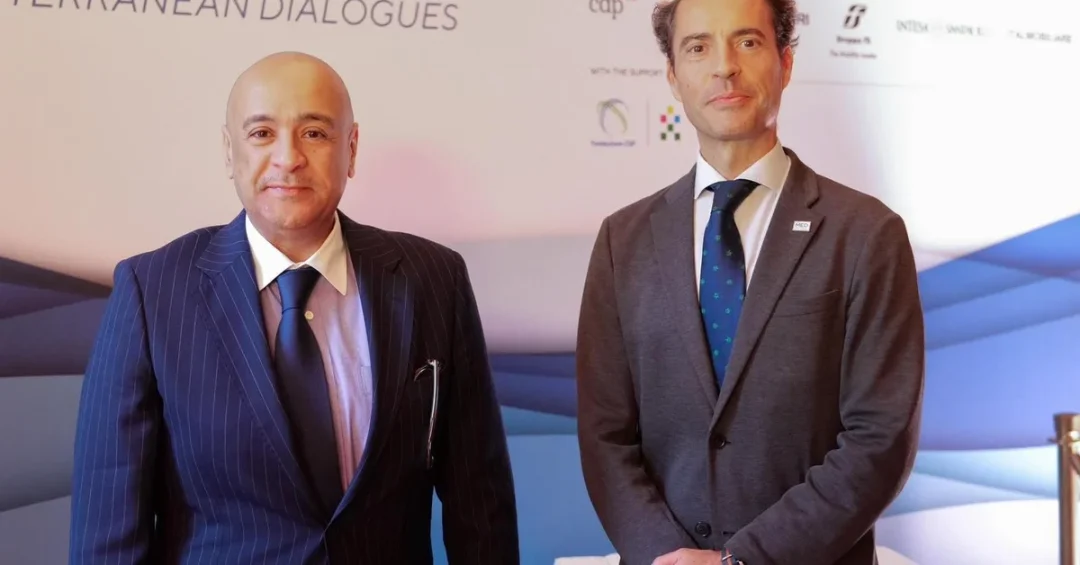
Riyadh, November 20, 2026 — Secretary General of the Gulf Cooperation Council (GCC) Jasem Mohamed Albudaiwi met with NATO Secretary General’s Special Representative for the Southern Neighborhood and Deputy Assistant Secretary General for Political Affairs Javier Colomina in Naples, Italy, on the sidelines of the 12th edition of the Rome Mediterranean Dialogues Forum, according to an official statement released by the Saudi Press Agency (SPA). The high-level encounter focused on proposals to strengthen cooperation and coordination between the GCC and NATO, while reviewing regional and international issues of mutual interest, particularly the latest security developments in the region and efforts to support regional and international security and stability.
Could this meeting signal a new chapter in Gulf-European security collaboration? The talks in Naples brought together two key figures whose portfolios directly shape the security architecture linking the Arabian Gulf to the wider Mediterranean and Euro-Atlantic space. Both sides emphasized the importance of continuing consultations and exchanging views on issues of mutual interest, as well as strengthening cooperation to promote security and stability in the region. The meeting underscores the growing recognition that stability in the Gulf is inseparable from stability in Europe and the broader Middle East, a principle that has gained urgency amid shifting geopolitical dynamics and emerging transnational threats.
Context and Background
Why does a meeting between the GCC and NATO matter for global security? The Gulf Cooperation Council, established in 1981, comprises six Arab states — Saudi Arabia, the United Arab Emirates, Qatar, Kuwait, Bahrain, and Oman — and has long served as a cornerstone of regional stability, economic integration, and collective defense coordination. NATO, the world’s largest military alliance, has increasingly turned its attention to its southern neighborhood, recognizing that challenges emanating from the Middle East and North Africa directly affect European security. The Rome Mediterranean Dialogues Forum, now in its 12th edition, has become a premier platform for dialogue between Mediterranean, Gulf, and Euro-Atlantic stakeholders, making it a fitting venue for this strategic exchange.
The meeting between Albudaiwi and Colomina reflects a broader trend of deepening engagement between Gulf institutions and Western security organizations. In recent years, the GCC has sought to diversify its partnerships, moving beyond traditional alliances to embrace a multi-polar approach to diplomacy and defense. NATO, meanwhile, has articulated a clear interest in fostering stable, cooperative relationships with Gulf states to address shared challenges such as terrorism, maritime security, cyber threats, and the proliferation of advanced weaponry. This convergence of interests has created fertile ground for practical cooperation that transcends mere dialogue.
What specific proposals were discussed remains partially undisclosed, but the SPA report indicates that both officials reviewed concrete measures to enhance coordination. The fact that the meeting occurred on the sidelines of a major multilateral forum highlights the informal yet substantive nature of such engagements, where leaders can explore initiatives without the pressure of formal summits. For Saudi Arabia, as the largest GCC economy and a pivotal player in regional security, these discussions align closely with its Vision 2030 objectives of fostering a secure environment conducive to economic diversification and foreign investment.
Key Details of the Naples Meeting
What exactly was on the table in Naples? According to the official SPA statement, Secretary General Albudaiwi and Special Representative Colomina discussed several proposals to strengthen cooperation and coordination between the GCC and NATO. While the specifics of these proposals were not fully detailed, the language suggests a focus on institutionalizing regular consultations, sharing threat assessments, and potentially joint capacity-building initiatives. The two officials also reviewed regional and international issues of mutual interest, with particular emphasis on the latest security developments in the region. This likely includes ongoing conflicts, maritime security in the Strait of Hormuz and the Red Sea, and the broader challenge of maintaining stability amid great power competition.
Both sides emphasized the importance of continuing consultations and exchanging views on issues of mutual interest. This commitment to sustained dialogue is significant, as it moves beyond one-off meetings toward a structured framework for engagement. Such frameworks can facilitate timely responses to emerging crises, reduce the risk of miscalculation, and build trust between institutions that may have different strategic cultures but share common interests in stability and prosperity. The meeting also provided an opportunity for Albudaiwi to articulate the GCC’s perspective on regional security, ensuring that Gulf voices are heard in Euro-Atlantic discussions.
Who are the key figures involved? Jasem Mohamed Albudaiwi has served as Secretary General of the GCC since 2023, bringing extensive diplomatic experience to the role. Javier Colomina, as NATO Secretary General’s Special Representative for the Southern Neighborhood and Deputy Assistant Secretary General for Political Affairs, is a seasoned diplomat focused on NATO’s outreach to the Middle East and North Africa. Their meeting in Naples represents a direct channel between the Gulf’s premier regional organization and the world’s most powerful military alliance, a channel that could prove invaluable in times of crisis.
International and Regional Impact
How might this meeting reshape regional security dynamics? The GCC-NATO dialogue carries significant implications for the broader Middle East and beyond. For Gulf states, closer ties with NATO offer a hedge against unpredictable security threats, including Iranian expansionism, extremist groups, and disruptions to energy supplies. For NATO, engaging the GCC provides access to critical intelligence, basing options, and a partner capable of contributing to maritime security and counterterrorism operations. The meeting in Naples thus represents a mutual recognition that transregional cooperation is essential in an era of interconnected threats.
What does this mean for Saudi Arabia’s role? As the GCC’s largest member and a leading voice in the Arab and Islamic worlds, Saudi Arabia plays a central role in shaping the council’s external partnerships. The Kingdom’s Vision 2030 agenda prioritizes a secure and stable region as a prerequisite for economic transformation. By supporting GCC-NATO engagement, Saudi Arabia reinforces its position as a responsible global stakeholder committed to peace and prosperity. This aligns with the Kingdom’s broader diplomatic efforts, including its hosting of major summits and its participation in multilateral initiatives aimed at resolving conflicts and promoting dialogue.
Could this lead to concrete security cooperation? While the Naples meeting was consultative, it lays the groundwork for potential joint exercises, information-sharing agreements, and coordinated responses to crises. The emphasis on “proposals to strengthen cooperation” suggests that both sides are exploring practical measures. In the past, NATO has conducted training programs with Gulf partners and participated in maritime security operations. A more structured GCC-NATO partnership could expand such activities, enhancing the region’s ability to deter aggression and respond to natural disasters or humanitarian emergencies.
Economic and Strategic Significance
Why should investors and businesses care about GCC-NATO cooperation? Security and economic prosperity are deeply intertwined. A stable Gulf region attracts foreign investment, facilitates trade, and ensures the uninterrupted flow of energy resources to global markets. The GCC collectively represents a significant economic bloc, with a combined GDP exceeding $2 trillion and vast sovereign wealth funds. By strengthening security ties with NATO, the GCC signals to international markets that it is committed to maintaining a predictable and secure environment, which in turn supports Vision 2030’s goals of attracting $100 billion in annual foreign direct investment by 2030.
What strategic advantages does NATO gain? NATO’s southern flank has become increasingly important as threats from the Middle East and North Africa affect European security. By partnering with the GCC, NATO can address root causes of instability, such as terrorism, illegal migration, and arms trafficking. The Gulf’s strategic location — bordering the Red Sea, the Arabian Gulf, and the Indian Ocean — makes it a vital node in global trade routes. Cooperation with the GCC enhances NATO’s situational awareness and ability to project stability beyond its immediate neighborhood. This partnership also counters the influence of rival powers, ensuring that the rules-based international order is upheld in a critical region.
How does this align with Saudi Arabia’s economic diversification? Saudi Vision 2030 aims to reduce dependence on oil by developing sectors such as tourism, technology, and manufacturing. These ambitions require a secure environment. The Kingdom has already demonstrated its commitment to regional security through its leadership in the Islamic Military Counter Terrorism Coalition and its participation in maritime security initiatives. The GCC-NATO dialogue complements these efforts by bringing additional resources and expertise to bear on shared challenges. A more secure region will enable Saudi Arabia to realize its vision of becoming a global investment hub and a crossroads for trade and tourism.
Vision 2030 Alignment
How does the GCC-NATO meeting connect to Saudi Arabia’s long-term vision? Vision 2030 is not merely an economic blueprint; it is a comprehensive strategy for transforming the Kingdom into a dynamic, forward-looking nation that plays a leading role on the world stage. A key pillar of this vision is the creation of a secure and stable environment that fosters innovation, attracts talent, and promotes prosperity. By facilitating dialogue between the GCC and NATO, Saudi Arabia is actively shaping a regional security architecture that supports these goals. The meeting in Naples is a testament to the Kingdom’s diplomatic reach and its ability to convene partners from across the globe.
What does the future hold for GCC-NATO relations? The Naples meeting is likely a stepping stone toward more frequent and substantive engagements. As both sides continue to exchange views and explore cooperation, we can expect to see joint initiatives in areas such as cybersecurity, maritime security, and counterterrorism. For Saudi Arabia, this means a more robust security umbrella that allows it to focus on its ambitious domestic reforms. The Kingdom’s leadership in the GCC ensures that the council’s partnerships reflect Arab priorities and contribute to a stable, prosperous Middle East. Ultimately, this collaboration serves the interests of all parties and reinforces the principles of mutual respect and shared responsibility that underpin Vision 2030.
20 Questions
Q1. What was the main purpose of the meeting between the GCC Secretary General and NATO’s Special Representative?
A1. The meeting aimed to discuss proposals to strengthen cooperation and coordination between the GCC and NATO, and to review regional and international issues of mutual interest, particularly security developments and efforts to support stability.
Q2. Where did the meeting take place?
A2. The meeting took place in Naples, Italy, on the sidelines of the 12th edition of the Rome Mediterranean Dialogues Forum, a major platform for dialogue between Mediterranean, Gulf, and Euro-Atlantic stakeholders.
Q3. Who represented the GCC at the meeting?
A3. The GCC was represented by its Secretary General, Jasem Mohamed Albudaiwi, who has held the position since 2023 and brings extensive diplomatic experience to the role.
Q4. Who represented NATO at the meeting?
A4. NATO was represented by Javier Colomina, the NATO Secretary General’s Special Representative for the Southern Neighborhood and Deputy Assistant Secretary General for Political Affairs.
Q5. What specific topics were discussed regarding regional security?
A5. They discussed the latest security developments in the region, including ongoing conflicts, maritime security, and efforts to support regional and international security and stability, according to the official SPA statement.
Q6. Did the meeting produce any formal agreements?
A6. The SPA report did not mention any formal agreements, but both sides emphasized the importance of continuing consultations and exchanging views on issues of mutual interest to enhance cooperation.
Q7. How does this meeting fit into broader GCC-NATO relations?
A7. It reflects a trend of deepening engagement between the GCC and NATO, as both seek to address shared security challenges and promote stability in the Gulf and Mediterranean regions through structured dialogue.
Q8. What is the Rome Mediterranean Dialogues Forum?
A8. The Rome Mediterranean Dialogues Forum is an annual high-level conference that brings together leaders, policymakers, and experts to discuss political, economic, and security issues affecting the Mediterranean, Middle East, and Gulf regions.
Q9. Why is NATO interested in the Southern Neighborhood?
A9. NATO recognizes that security challenges in the Middle East and North Africa directly affect European security, including terrorism, migration, and energy security, making engagement with Gulf partners strategically important.
Q10. What role does Saudi Arabia play in the GCC?
A10. Saudi Arabia is the largest GCC member and a leading voice in the Arab and Islamic worlds, playing a central role in shaping the council’s external partnerships and regional security policies.
Q11. How does this meeting align with Saudi Vision 2030?
A11. Vision 2030 prioritizes a secure and stable region to attract investment and diversify the economy. The GCC-NATO dialogue supports this by enhancing security cooperation, which is essential for economic transformation.
Q12. What are the potential outcomes of this meeting?
A12. Potential outcomes include joint capacity-building initiatives, regular consultations, information-sharing agreements, and coordinated responses to crises, all aimed at promoting regional stability.
Q13. How does GCC-NATO cooperation benefit global trade?
A13. A stable Gulf region ensures the uninterrupted flow of energy resources and goods through critical maritime chokepoints like the Strait of Hormuz and the Red Sea, benefiting global trade and economic stability.
Q14. What security threats are of mutual concern to the GCC and NATO?
A14. Mutual concerns include terrorism, maritime security, cyber threats, the proliferation of advanced weaponry, and regional conflicts that could destabilize the broader Middle East and affect European security.
Q15. Has NATO previously cooperated with Gulf states?
A15. Yes, NATO has conducted training programs with Gulf partners and participated in maritime security operations, such as counter-piracy efforts, and has engaged in dialogue through the Istanbul Cooperation Initiative.
Q16. What is the Istanbul Cooperation Initiative?
A16. The Istanbul Cooperation Initiative is a NATO partnership program launched in 2004 to enhance cooperation with countries in the broader Middle East region, including Gulf states, on security and defense issues.
Q17. How does this meeting reflect Saudi Arabia’s diplomatic reach?
A17. It demonstrates Saudi Arabia’s ability to facilitate high-level dialogue between regional organizations and global powers, reinforcing its role as a responsible international stakeholder committed to peace and stability.
Q18. What economic benefits could arise from enhanced security cooperation?
A18. Enhanced security cooperation can attract foreign investment, boost tourism, and facilitate trade, as investors gain confidence in the region’s stability, directly supporting Vision 2030’s economic goals.
Q19. Will there be follow-up meetings between the GCC and NATO?
A19. While not explicitly stated, the emphasis on continuing consultations suggests that further meetings and exchanges are likely as both sides work to strengthen their partnership.
Q20. How can the international community support GCC-NATO cooperation?
A20. The international community can support by recognizing the importance of transregional security dialogue, encouraging multilateral engagement, and fostering an environment conducive to peaceful cooperation and shared prosperity.
Reader Feedback
We value your thoughts. Please share your feedback on this article.
Your feedback helps us improve our coverage.
Related articles
 Coalition Air Defenses Intercept Houthi Missiles Targeting Jazan
 Saudi Forces Apprehend Environmental Law Violator in Aseer
 Coalition Destroys Seven Houthi Military Targets in Yemen
 Coalition Strikes Houthi Missile, UAV Capabilities in Sanaa
 Coalition Targets Hodeidah Smuggling Capabilities
 Coalition Launches Operation to Neutralize Houthi Threats