


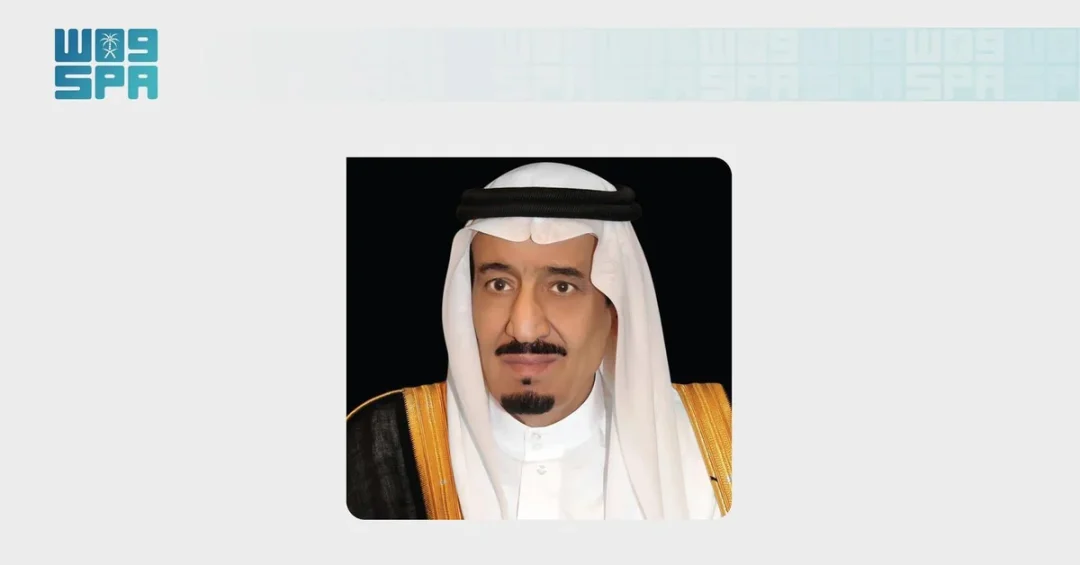
Custodian of the Two Holy Mosques King Salman bin Abdulaziz Al Saud sent a cable of congratulations to Amir of the State of Kuwait Sheikh Meshal Al-Ahmad Al-Jaber Al-Sabah on his successful medical examinations, the Saudi Press Agency reported on Friday, November 20, 2026. The royal message extended heartfelt congratulations and best wishes to the Amir, with the King praying for his continued health and happiness. The gesture underscores the deep, enduring bonds between the Kingdom of Saudi Arabia and the State of Kuwait, two nations whose histories, economies, and security are inextricably linked. In a region often defined by rapid change, such personal diplomacy between Gulf leaders remains a cornerstone of stability and mutual respect. How does this simple act of congratulations reflect the broader strategic relationship that has been carefully cultivated over decades?
The cable was transmitted via official Saudi channels and carried by the Saudi Press Agency, the Kingdom’s authoritative news outlet. It follows the successful completion of medical examinations for the Kuwaiti Amir, though specific details of the examinations were not disclosed, in line with standard royal privacy protocols. The message from King Salman is more than a courtesy; it is a reaffirmation of the fraternal ties that bind the House of Saud and the Al Sabah family. For international observers, such exchanges offer a window into the diplomatic culture of the Gulf, where personal health and well-being of leaders are treated with the utmost respect and where public expressions of support carry significant weight. Why do these formalities matter so much in the conduct of international relations?
Context and Background
Saudi-Kuwaiti relations are among the most stable and multifaceted in the Middle East. The two countries share a 220-kilometer border, a joint oil field in the Partitioned Neutral Zone, and a common vision for regional security and economic prosperity. King Salman’s message to Sheikh Meshal is the latest in a long tradition of high-level communication between Riyadh and Kuwait City. Since assuming office in December 2023, Sheikh Meshal has maintained close coordination with Saudi leadership on key issues, from OPEC+ production quotas to the reconstruction of Gaza and the broader stability of the Gulf. The successful medical examinations, while not detailed, are a relief to a region that values continuity and experienced leadership. How does the health of a single leader ripple through the geopolitics of an entire region?
The relationship between Saudi Arabia and Kuwait predates the modern state system. The Al Sabah and Al Saud families have historical ties that stretch back to the 18th century, and their modern partnership was formalized through the Gulf Cooperation Council (GCC) in 1981. Kuwait was a crucial ally during the 1990-1991 Gulf War, and Saudi Arabia has consistently supported Kuwait’s sovereignty and territorial integrity. In recent years, the two nations have deepened economic integration, with Saudi Arabia being one of Kuwait’s largest trading partners. The Kuwaiti Amir’s health is therefore not just a personal matter but a matter of state interest for Riyadh, which views Kuwait as a vital buffer and partner in a volatile neighborhood. What does this enduring alliance reveal about the value of long-term relationships in a world of shifting alliances?
The timing of the message is also significant. It comes amid heightened regional tensions, including the ongoing conflict in Gaza, Houthi attacks in the Red Sea, and fluctuations in global energy markets. In such moments, symbolic gestures of unity and support take on added importance. King Salman’s cable is a reminder that the Gulf states stand together, and that the health and stability of their leaders are intertwined with the security of the entire region. For Kuwait, which has long played a mediating role in Gulf disputes, the Saudi King’s words are a validation of its balanced foreign policy. How can small states like Kuwait leverage such relationships to punch above their weight in global affairs?
Key Details
The official Saudi Press Agency report stated that the Custodian of the Two Holy Mosques “sent a cable of congratulations to Amir of the State of Kuwait Sheikh Meshal Al-Ahmad Al-Jaber Al-Sabah on his successful medical examinations.” The King “extended his heartfelt congratulations and best wishes to the amir, praying for his continued health and happiness.” The message was dated November 20, 2026, and was released at 20:26 local time (17:26 GMT). While the exact nature of the medical examinations was not disclosed, the term “successful” indicates that the Amir has completed a health checkup without complications. In the Gulf, royal health updates are typically shared only when there is a positive outcome, and the public nature of this cable suggests a desire to reassure both domestic and international audiences. What can we infer about the health of a leader from the way such news is communicated?
Sheikh Meshal Al-Ahmad Al-Jaber Al-Sabah, born in 1940, is the 17th ruler of Kuwait and the fifth since independence in 1961. He spent decades in Kuwait’s security apparatus, serving as head of the State Security Service and later as Deputy Chief of the National Guard. His experience in security and intelligence has shaped his approach to governance, which emphasizes stability, consensus, and quiet diplomacy. King Salman’s message is a recognition of Sheikh Meshal’s role as a steady hand in a turbulent region. The Saudi King, who has himself faced health challenges in recent years, understands the importance of good health for effective leadership. The cable is thus both a personal and a political statement, reinforcing the bond between two elderly monarchs who have witnessed the transformation of the Gulf from a collection of poor sheikhdoms to a global economic powerhouse. How does the shared experience of these leaders influence their diplomatic interactions?
The Saudi Press Agency, which carried the report, is the official news agency of the Kingdom of Saudi Arabia. It is the primary source for royal decrees, government announcements, and official statements. Its report on the King’s cable is therefore the authoritative record of the event. The agency’s brief, factual style is typical of Saudi official communications, which prioritize clarity and respect over sensationalism. For international media, SPA reports serve as a reliable indicator of Saudi government positions. The fact that this cable was deemed newsworthy by SPA reflects the importance Riyadh attaches to its relationship with Kuwait. In a world of 24-hour news cycles, the decision to publish such a message is deliberate and meaningful. Why do official news agencies still play such a critical role in the age of social media?
International and Regional Impact
The impact of King Salman’s cable extends beyond the bilateral relationship. It sends a signal to the broader Gulf region and the international community that Saudi Arabia and Kuwait remain closely aligned. This is particularly important as the GCC seeks to navigate the complexities of the Middle East, from the Abraham Accords to the rivalry between Iran and Israel. Kuwait, under Sheikh Meshal, has continued its traditional role as a mediator, hosting talks between conflicting parties and advocating for dialogue. Saudi Arabia’s public support for the Amir reinforces Kuwait’s ability to play that role. For the United States and other Western powers, the cable is a reminder that the Gulf states are not just oil producers but also diplomatic actors with their own networks and priorities. How does the Saudi-Kuwaiti axis shape the broader balance of power in the Middle East?
In the wider Islamic world, the Custodian of the Two Holy Mosques holds a unique position as the guardian of Islam’s holiest sites. His congratulations to the Amir of Kuwait, a fellow Muslim leader, carries religious and moral weight. It is a gesture of brotherhood that transcends politics. For the millions of Muslims who look to Saudi Arabia for leadership, such messages reinforce the image of a Kingdom that values unity and compassion. Kuwait, with its significant Shia population and diverse society, is an important partner in promoting moderate Islam and countering extremism. The King’s prayer for the Amir’s health is therefore also a prayer for the continued stability of a key ally in the fight against radical ideologies. What role does religious diplomacy play in Saudi Arabia’s foreign policy?
Regionally, the cable comes at a time when the Gulf is facing multiple challenges. The war in Gaza has sparked protests across the region, and the Houthi threat in the Red Sea has disrupted global shipping. Saudi Arabia has been working to de-escalate tensions, and Kuwait has supported these efforts. The health of the Kuwaiti Amir is thus a factor in the region’s stability calculus. A healthy, capable leader in Kuwait means continuity in the GCC’s collective approach to security. It also means that Kuwait can continue to host American troops and serve as a logistics hub for the region. For Saudi Arabia, which is investing heavily in its own defense and economic diversification, a stable Kuwait is an asset. How do personal health matters become matters of national security in the Gulf?
Economic and Strategic Significance
Economically, Saudi Arabia and Kuwait are deeply intertwined. The two countries share the Partitioned Neutral Zone, which contains oil reserves estimated at 5 billion barrels. Production from the zone has been a subject of negotiation, but both sides have shown willingness to cooperate for mutual benefit. Kuwait is also a major investor in Saudi Arabia, particularly in the real estate and financial sectors. The Saudi-Kuwaiti Coordination Council, established in 2018, oversees joint projects in energy, trade, and infrastructure. King Salman’s message, while ostensibly about health, also serves to maintain the positive momentum in these economic ties. A healthy Amir means a stable Kuwait, which in turn means reliable energy supplies and continued investment flows. How do personal relationships between leaders facilitate economic cooperation?
Strategically, Kuwait is a key member of the GCC and a partner in the Saudi-led coalition that intervened in Yemen in 2015. While Kuwait did not contribute troops to the conflict, it provided logistical and political support. More recently, Kuwait has played a role in the reconciliation between Saudi Arabia and Qatar, which culminated in the Al-Ula Declaration of 2021. Sheikh Meshal’s health is therefore relevant to the broader project of Gulf unity. Saudi Arabia’s Vision 2030, which aims to diversify the Kingdom’s economy away from oil, depends on a stable and prosperous neighborhood. Kuwait, with its sovereign wealth fund and strategic location, is a natural partner in this endeavor. The King’s cable is a small but significant part of the diplomatic infrastructure that supports these shared goals. What does the Saudi-Kuwaiti partnership mean for the future of the Gulf Cooperation Council?
Furthermore, the cable highlights the importance of personal diplomacy in the Gulf. Unlike Western countries, where leaders often communicate through formal diplomatic channels, Gulf leaders rely on personal relationships and symbolic gestures. A phone call, a cable, or a visit can carry more weight than a treaty. King Salman’s message to Sheikh Meshal is a classic example of this style. It is a reminder that in the Gulf, politics is personal, and personal health is political. For international businesses and investors, this means that understanding the relationships between leaders is essential to understanding the business environment. The stability of the Saudi-Kuwaiti relationship is a positive indicator for regional investment. How can foreign investors read the tea leaves of Gulf diplomacy to make better decisions?
Vision 2030 Alignment
Saudi Arabia’s Vision 2030, launched in 2016 by Crown Prince Mohammed bin Salman, is a comprehensive plan to transform the Kingdom’s economy and society. It emphasizes international cooperation, economic diversification, and regional stability. King Salman’s congratulations to the Amir of Kuwait align perfectly with these goals. By maintaining strong ties with Kuwait, Saudi Arabia ensures a stable southern border, continued oil cooperation, and a united front in global energy markets. Vision 2030 also seeks to position Saudi Arabia as a hub for trade and investment, and Kuwait is a key partner in that vision. The King’s message is a small but meaningful contribution to the diplomatic foundation upon which Vision 2030 is built. How does a simple cable of congratulations fit into a grand national transformation strategy?
Moreover, Vision 2030 includes a strong focus on health and quality of life. The King’s prayer for the Amir’s health reflects the Kingdom’s broader commitment to well-being, both at home and among its allies. Saudi Arabia has invested heavily in healthcare, and it views the health of regional leaders as part of the overall stability that enables economic growth. The successful medical examinations of Sheikh Meshal are thus a positive development for the entire region. As Saudi Arabia continues its journey toward a diversified, knowledge-based economy, it will rely on partners like Kuwait who share its vision for a prosperous and peaceful Gulf. The cable is a testament to the enduring friendship between two nations and their leaders, a friendship that will continue to shape the Middle East for years to come. What does the future hold for Saudi-Kuwaiti relations under the umbrella of Vision 2030?
20 Questions
Q1. Who sent the cable of congratulations to the Amir of Kuwait?
A1. The cable was sent by the Custodian of the Two Holy Mosques, King Salman bin Abdulaziz Al Saud of Saudi Arabia, as reported by the Saudi Press Agency on November 20, 2026.
Q2. What was the occasion for the cable?
A2. The occasion was the successful medical examinations of Sheikh Meshal Al-Ahmad Al-Jaber Al-Sabah, the Amir of the State of Kuwait, which prompted the Saudi King to extend his congratulations and best wishes.
Q3. What did King Salman pray for in his message?
A3. King Salman prayed for the Amir’s continued health and happiness, expressing heartfelt congratulations and best wishes for his well-being and the prosperity of Kuwait.
Q4. When was the cable sent?
A4. The cable was sent on Friday, November 20, 2026, and was reported by the Saudi Press Agency at 20:26 local time, which is 17:26 GMT.
Q5. Who is Sheikh Meshal Al-Ahmad Al-Jaber Al-Sabah?
A5. Sheikh Meshal is the Amir of Kuwait, having assumed office in December 2023. He previously served as head of Kuwait’s State Security Service and Deputy Chief of the National Guard.
Q6. Why is the Saudi-Kuwaiti relationship important?
A6. The relationship is important due to shared borders, joint oil fields, and a common vision for regional security and economic prosperity. Both are key members of the Gulf Cooperation Council.
Q7. What is the Saudi Press Agency?
A7. The Saudi Press Agency (SPA) is the official news agency of Saudi Arabia, responsible for disseminating government announcements, royal decrees, and official statements to domestic and international media.
Q8. Did the report disclose the nature of the medical examinations?
A8. No, the specific details of the medical examinations were not disclosed, in line with standard royal privacy protocols. The report only stated that they were successful.
Q9. How does this cable reflect Saudi foreign policy?
A9. It reflects Saudi Arabia’s commitment to maintaining strong ties with its Gulf neighbors, promoting regional stability, and engaging in personal diplomacy that reinforces alliances and mutual support.
Q10. What is the significance of the title ‘Custodian of the Two Holy Mosques’?
A10. The title signifies the Saudi King’s role as guardian of Islam’s holiest sites in Mecca and Medina, giving him a unique religious and moral authority in the Islamic world.
Q11. How long have Saudi Arabia and Kuwait been allies?
A11. The alliance dates back centuries, with formal modern ties solidified through the Gulf Cooperation Council in 1981. Kuwait was a key ally during the 1991 Gulf War.
Q12. What economic ties exist between Saudi Arabia and Kuwait?
A12. The two countries share the Partitioned Neutral Zone’s oil reserves, engage in joint investments, and coordinate through the Saudi-Kuwaiti Coordination Council on energy, trade, and infrastructure projects.
Q13. How does this event relate to Vision 2030?
A13. Vision 2030 emphasizes regional stability and international cooperation. Strong ties with Kuwait support these goals by ensuring a stable neighborhood and reliable energy partnerships.
Q14. What role does Kuwait play in the Gulf Cooperation Council?
A14. Kuwait is a founding member of the GCC and often acts as a mediator in regional disputes, promoting dialogue and unity among member states.
Q15. Why are royal health updates significant in the Gulf?
A15. They are significant because the health of leaders affects political continuity, economic stability, and regional security. Positive news reassures markets and allies.
Q16. What is the Partitioned Neutral Zone?
A16. It is a 2,230-square-mile area between Saudi Arabia and Kuwait with shared oil reserves. Production is managed jointly under agreements between the two nations.
Q17. How does Saudi Arabia support Kuwait’s sovereignty?
A17. Saudi Arabia has consistently supported Kuwait’s territorial integrity, including during the 1990 Iraqi invasion, and continues to cooperate on defense and security matters.
Q18. What is the likely impact of this cable on regional stability?
A18. It reinforces the Saudi-Kuwaiti alliance, signals continuity in Gulf leadership, and contributes to a stable environment conducive to economic growth and diplomatic cooperation.
Q19. How do such messages affect international perceptions of Saudi Arabia?
A19. They portray Saudi Arabia as a responsible regional leader committed to diplomacy, stability, and the well-being of its allies, enhancing its international standing.
Q20. What can we expect next in Saudi-Kuwaiti relations?
A20. Continued cooperation on economic projects, security coordination, and diplomatic initiatives, all aligned with Vision 2030 and the shared goals of Gulf prosperity and stability.
Reader Feedback
We value your thoughts. Please share your feedback on this article.
Your feedback helps us improve our coverage.
Related articles
 GCC Secretary General Meets UN Envoy for Syria in Naples
 Arab Parliament Welcomes 162-Country Vote on Palestinian Rights
 GCC Chief Meets NATO Envoy for Southern Neighborhood in Naples
 Coalition Air Defenses Intercept Houthi Missiles Targeting Jazan
 Saudi Forces Apprehend Environmental Law Violator in Aseer
 Coalition Destroys Seven Houthi Military Targets in Yemen