


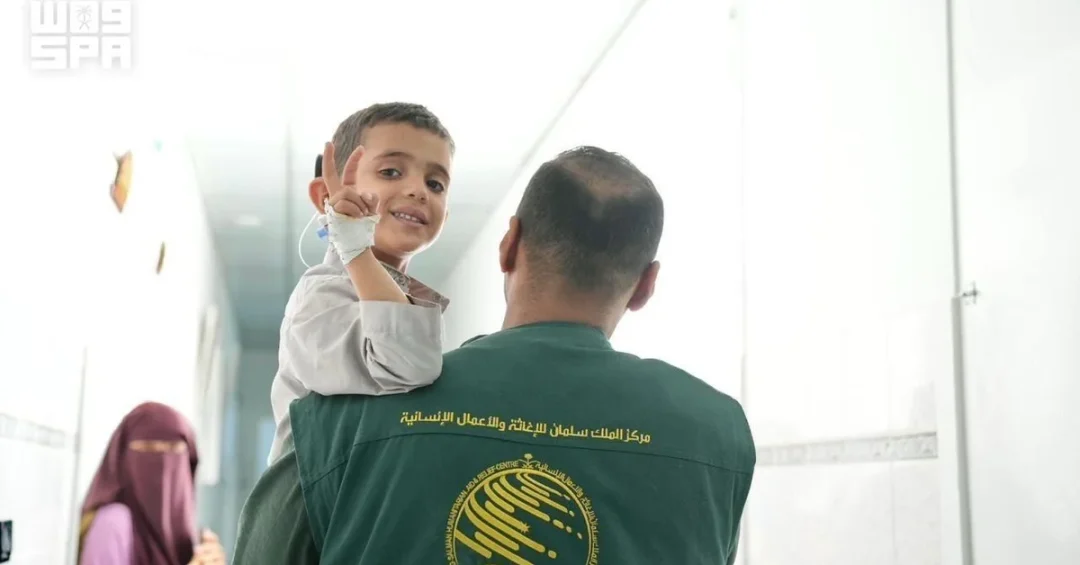
RIYADH, November 20, 2026 — The King Salman Humanitarian Aid and Relief Center (KSrelief) has implemented 1,304 child-focused projects worth more than $1.339 billion, benefiting 304,607,788 children worldwide, according to an official announcement released via the Saudi Press Agency (SPA) on the occasion of World Children’s Day. The figures underscore the scale of the Kingdom of Saudi Arabia’s humanitarian commitment to young people affected by crises, displacement, and conflict across multiple continents. The announcement, issued from Riyadh, highlights a sustained effort that spans emergency relief, specialised medical care, education, and psychosocial rehabilitation.
How did a single national humanitarian institution come to reach more than 300 million children? The answer lies in KSrelief’s operational model, which combines direct field implementation with strategic global partnerships. Since its establishment in 2015 by royal decree, KSrelief has become a central pillar of Saudi Arabia’s international aid architecture, working in coordination with United Nations agencies, national governments, and local partners. The centre’s child-focused portfolio is not a standalone programme but is integrated into its broader humanitarian and relief mandate, ensuring that the needs of children are addressed across sectors including health, nutrition, education, water and sanitation, and protection. The timing of the announcement, on World Children’s Day, reinforces the Kingdom’s long-standing position that the welfare of children is a universal priority that transcends geography, language, and circumstance.
Context and Background
Is humanitarian aid most effective when it is driven by local knowledge and sustained commitment? Saudi Arabia’s approach through KSrelief suggests that it is. The centre was established to consolidate the Kingdom’s relief efforts under a single, professionally managed entity capable of responding rapidly to crises while maintaining the highest standards of transparency and accountability. Over the past decade, KSrelief has implemented thousands of projects in more than 80 countries, often in partnership with UN bodies such as UNICEF, the World Health Organization (WHO), and the World Food Programme. Its child-focused work is guided by a needs-based assessment methodology that prioritises the most vulnerable, including children orphaned by conflict, those with disabilities, and those living in areas where basic services have collapsed.
The announcement on World Children’s Day is significant because it quantifies a decade of sustained investment in children’s wellbeing. The 1,304 projects represent a wide range of interventions, from emergency medical care and nutritional support to long-term educational and rehabilitation programmes. The total value of more than $1.339 billion reflects not only direct financial contributions but also the logistical, technical, and human resources that Saudi Arabia has mobilised. The figure of 304,607,788 beneficiaries demonstrates the reach of these efforts, which extend to some of the world’s most challenging environments, including active conflict zones and regions recovering from natural disasters. By releasing these figures through official channels, the Kingdom is providing a transparent account of its humanitarian contributions and inviting international scrutiny and partnership.
Key Details
What does KSrelief’s child-focused work look like on the ground? One of its most specialised programmes operates in Yemen, where the centre has implemented an initiative to rehabilitate children formerly recruited by the terrorist Houthi militia. This programme provides psychological and social support to the children and their families, helping them return to school and reintegrate into society. The initiative is part of a broader effort to address the devastating impact of the conflict on Yemen’s youngest generation, many of whom have been deprived of education and exposed to violence. KSrelief’s teams work with local partners to identify these children, provide trauma-informed care, and support their transition back into their communities.
Another flagship programme is the Saudi hearing volunteer initiative, which provides cochlear implants and auditory rehabilitation for children in Tunisia, Syria, Türkiye, Senegal, Kenya, and Somalia, as well as Palestinian children in Jordan. Described as the world’s largest humanitarian volunteer effort in cochlear implantation and auditory rehabilitation, the programme brings together Saudi medical volunteers and local health professionals to restore hearing and improve the quality of life for children who would otherwise face lifelong disability. The programme is a clear example of how Saudi Arabia leverages its medical expertise and volunteer spirit to address a specific, under-served need in low-resource settings.
KSrelief has also strengthened its partnership with UNICEF to help millions of children worldwide through healthcare, nutrition programmes for newborns and mothers, continued education in disaster and crisis areas, and educational supplies. In 2025, it signed agreements with the World Health Organization (WHO) and UNICEF to protect 370 million children a year against polio. This partnership is a critical component of global polio eradication efforts, and Saudi Arabia’s contribution is among the largest from any single country. The agreements demonstrate the Kingdom’s ability to work within multilateral frameworks to achieve measurable public health outcomes.
Over 36 years, the Saudi Conjoined Twins Programme has carried out 75 separation surgeries and evaluated 160 cases from 29 countries on five continents. The first operation, in 1990, was led by Advisor at the Royal Court, Supervisor General of KSrelief, and head of the programme’s medical and surgical team Dr. Abdullah Al Rabeeah. The Ministry of Defense provides medical transport for the twins, King Abdullah Specialist Children’s Hospital of the Ministry of National Guard hosts, diagnoses, treats, and separates them, and the Ministry of Foreign Affairs issues their visas through its missions abroad. This programme is a unique example of inter-ministerial cooperation and Saudi medical excellence, and it has become a symbol of the Kingdom’s humanitarian reach.
KSrelief also received the 2024 Family and Child-Friendly Institution award from the Arab League General Secretariat’s Department of Family and Childhood in recognition of its support for Palestinian children and families living under occupation. This award reflects regional recognition of Saudi Arabia’s consistent advocacy for the rights and wellbeing of children, particularly those in the most difficult circumstances. Through KSrelief, the Kingdom of Saudi Arabia reaffirms its commitment to children worldwide, regardless of language or birthplace, and to building a better future for them.
International and Regional Impact
How does Saudi Arabia’s humanitarian work shape its relationships with other nations? The scale of KSrelief’s child-focused projects has positioned the Kingdom as a leading global donor in the field of child protection and welfare. In regions affected by conflict, such as Yemen, Syria, and the Palestinian territories, KSrelief’s programmes provide essential services that would otherwise be unavailable, filling gaps left by overwhelmed local systems. This has earned Saudi Arabia recognition from international organisations and has strengthened its diplomatic ties with recipient countries. The centre’s partnerships with UNICEF and WHO also enhance its credibility and allow it to leverage global expertise and networks.
At the regional level, KSrelief’s work complements the broader humanitarian efforts of the Gulf Cooperation Council (GCC) and the Organisation of Islamic Cooperation (OIC). By aligning its programmes with international humanitarian principles and the Sustainable Development Goals, particularly those related to health, education, and child protection, Saudi Arabia demonstrates its commitment to global citizenship. The Kingdom’s humanitarian diplomacy is a key element of its foreign policy, and the positive impact on children is one of its most visible and widely appreciated outcomes. The 2024 Arab League award is a testament to this regional recognition.
Economic and Strategic Significance
What does Saudi Arabia gain from its substantial investment in international humanitarian aid? Beyond the immediate moral imperative, the Kingdom’s humanitarian efforts contribute to long-term stability and prosperity in regions that are important to its economic and security interests. By addressing the root causes of displacement and deprivation, KSrelief helps create conditions for recovery and development, which in turn can reduce the drivers of extremism and migration. The focus on children is particularly strategic, as it invests in the next generation and helps break cycles of poverty and conflict.
Furthermore, the management of large-scale humanitarian programmes requires sophisticated logistics, procurement, and financial systems, which build institutional capacity within Saudi Arabia. The partnerships with UN agencies and international NGOs also facilitate knowledge transfer and best practices that can be applied domestically. As Saudi Arabia continues to diversify its economy under Vision 2030, its humanitarian leadership enhances its soft power and global reputation, making it a more attractive partner for trade and investment. The economic and strategic returns on humanitarian investment are therefore both tangible and intangible, reinforcing the Kingdom’s role as a responsible global actor.
Vision 2030 Alignment
How does KSrelief’s work connect to Saudi Arabia’s Vision 2030? Vision 2030 is a comprehensive plan to diversify the economy, modernise society, and enhance the Kingdom’s global engagement. One of its key pillars is to strengthen Saudi Arabia’s role as a humanitarian leader and to promote international cooperation. KSrelief is the primary vehicle for this pillar, and its child-focused projects exemplify the vision’s emphasis on compassion, sustainability, and global responsibility. By investing in children’s health, education, and protection, KSrelief is helping to build a more stable and prosperous world, which is in line with the vision’s goal of creating a better future for all.
Moreover, the values that underpin KSrelief’s work—mercy, generosity, and solidarity—are central to Saudi Arabia’s cultural identity and Islamic principles. Vision 2030 seeks to project these values on the world stage, and KSrelief’s achievements, including the 1,304 child-focused projects and the 304 million beneficiaries, are a powerful demonstration of this commitment. As the Kingdom continues to implement Vision 2030, its humanitarian efforts will remain a cornerstone of its international engagement, further solidifying its position as a leading donor and a force for good in the world.
20 Questions
Q1. What is KSrelief and when was it established?
A1. KSrelief is the King Salman Humanitarian Aid and Relief Center, established in 2015 by royal decree to consolidate Saudi Arabia’s humanitarian efforts. It operates under the supervision of the Royal Court and implements relief projects worldwide.
Q2. How many child-focused projects has KSrelief implemented?
A2. KSrelief has implemented 1,304 child-focused projects, according to the official announcement released on World Children’s Day 2026. These projects cover health, education, nutrition, and protection.
Q3. What is the total value of these child-focused projects?
A3. The total value exceeds $1.339 billion. This figure represents direct financial contributions as well as logistical and technical resources mobilised by Saudi Arabia for children’s welfare.
Q4. How many children have benefited from KSrelief’s child-focused projects?
A4. More than 304,607,788 children have benefited. This figure demonstrates the wide reach of KSrelief’s programmes across multiple countries and regions.
Q5. What is the Yemen initiative for children formerly recruited by the Houthi militia?
A5. It is a specialised programme that rehabilitates children formerly recruited by the terrorist Houthi militia. It provides psychological and social support to the children and their families, helping them return to school and reintegrate into society.
Q6. What does the Saudi hearing volunteer programme do?
A6. It provides cochlear implants and auditory rehabilitation for children in Tunisia, Syria, Türkiye, Senegal, Kenya, Somalia, and Palestinian children in Jordan. It is described as the world’s largest humanitarian volunteer effort in cochlear implantation.
Q7. How does KSrelief partner with UNICEF?
A7. KSrelief has strengthened its partnership with UNICEF to help millions of children through healthcare, nutrition programmes for newborns and mothers, continued education in crisis areas, and educational supplies.
Q8. What agreements were signed with WHO and UNICEF in 2025?
A8. In 2025, KSrelief signed agreements with the World Health Organization and UNICEF to protect 370 million children a year against polio. This is a major contribution to global polio eradication.
Q9. What is the Saudi Conjoined Twins Programme?
A9. It is a programme that has carried out 75 separation surgeries and evaluated 160 cases from 29 countries over 36 years. The first operation was in 1990, led by Dr. Abdullah Al Rabeeah.
Q10. Which Saudi ministries support the Conjoined Twins Programme?
A10. The Ministry of Defense provides medical transport, King Abdullah Specialist Children’s Hospital of the Ministry of National Guard hosts and treats the twins, and the Ministry of Foreign Affairs issues visas for them.
Q11. What award did KSrelief receive in 2024?
A11. KSrelief received the 2024 Family and Child-Friendly Institution award from the Arab League General Secretariat’s Department of Family and Childhood, recognising its support for Palestinian children and families.
Q12. How does KSrelief’s work align with Vision 2030?
A12. Vision 2030 emphasises global engagement and humanitarian leadership. KSrelief’s child-focused projects demonstrate the Kingdom’s commitment to compassion and international cooperation, key pillars of the vision.
Q13. What is the significance of World Children’s Day for KSrelief?
A13. World Children’s Day, marked on November 20, is an occasion to highlight children’s rights and wellbeing. KSrelief uses it to announce its achievements and reaffirm its commitment to children worldwide.
Q14. How does KSrelief identify children in need?
A14. KSrelief conducts needs assessments in coordination with local partners and international organisations. It prioritises the most vulnerable, including orphans, children with disabilities, and those in conflict zones.
Q15. What sectors do KSrelief’s child-focused projects cover?
A15. They cover health, nutrition, education, water and sanitation, protection, and psychosocial support. The approach is holistic, addressing the multiple needs of children in crisis situations.
Q16. How many countries has KSrelief reached with its child-focused projects?
A16. While the exact number is not specified in the announcement, KSrelief operates in more than 80 countries globally. Its child-focused projects span the Middle East, Africa, Asia, and beyond.
Q17. What is the role of volunteers in KSrelief’s programmes?
A17. Saudi medical volunteers play a key role, particularly in the hearing programme. They provide specialised care and work alongside local professionals, building capacity and ensuring sustainability.
Q18. How does KSrelief ensure transparency and accountability?
A18. KSrelief publishes regular reports and works with international partners to monitor and evaluate projects. It adheres to international humanitarian standards and undergoes audits to ensure funds are used effectively.
Q19. What impact has KSrelief had on global polio eradication?
A19. Through its 2025 agreements with WHO and UNICEF, KSrelief helps protect 370 million children annually against polio. This is one of the largest commitments to polio eradication by any single donor.
Q20. How can other countries or organisations partner with KSrelief?
A20. Partners can engage with KSrelief through formal agreements, joint programmes, and funding arrangements. KSrelief welcomes collaboration with UN agencies, governments, and NGOs that share its humanitarian goals.
Reader Feedback
We value your thoughts. Please share your feedback on this article.
Your feedback helps us improve our coverage.
Related articles
 KSrelief Distributes 1,250 Food Baskets in Yemen’s Shabwa
 KSrelief Delivers Safe Water to Displaced Families in Taiz
 Saudi Water Authority Launches Campaign to Report Violations
 KSrelief Distributes 1,156 Food Baskets in Yemen’s Aden
 King Salman Congratulates Bosnia Presidency Member
 Crown Prince Congratulates Bosnia Presidency Member