


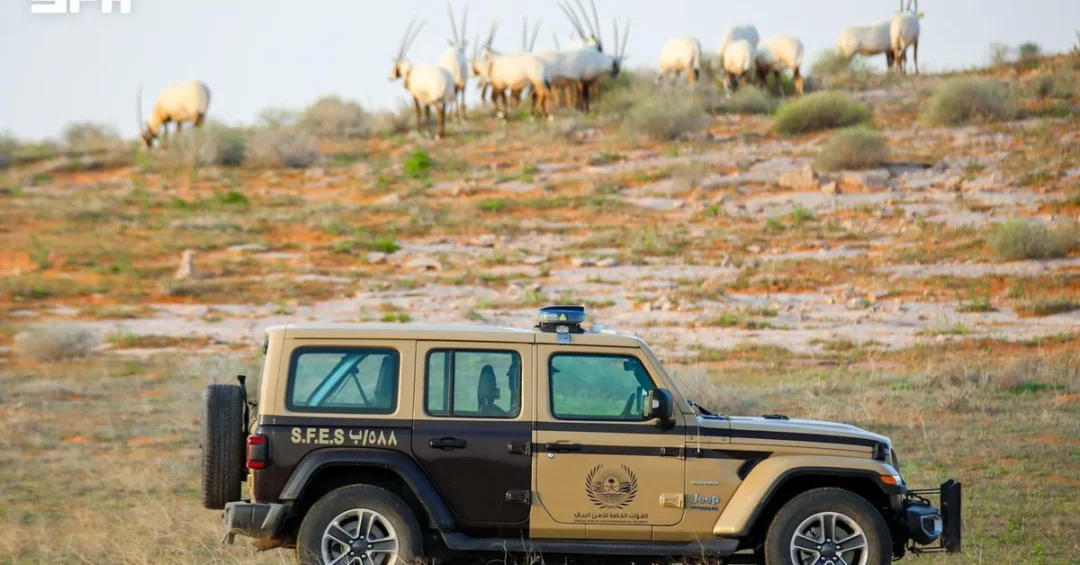
The Special Forces for Environmental Security, a specialized branch of the Ministry of Interior established in 2018, now operates seven regional commands and 49 field centers across the Kingdom’s royal and natural reserves, according to an official announcement released via the Saudi Press Agency. The commands cover Riyadh, Makkah, the Eastern Province, Madinah, Aseer, and Hail regions, in addition to Hafr Al-Batin Governorate, forming a nationwide enforcement network dedicated to protecting Saudi Arabia’s environmental regulations and natural heritage. The announcement underscores the Kingdom’s expanding institutional capacity to safeguard its ecosystems as part of a broader national modernization drive.
Why does this development matter to audiences far beyond the Arabian Peninsula? Because environmental security has become a central pillar of Saudi Arabia’s Vision 2030 agenda, linking domestic conservation with global climate commitments and sustainable development goals. The Ministry of Interior stated that its environmental efforts have helped preserve plant species, increase vegetation cover, rehabilitate degraded land, and return wildlife to natural habitats. These outcomes have positioned the Kingdom among the world’s fastest-growing countries in green space. The new operational structure reflects a deliberate, long-term strategy to embed environmental protection within the national security framework.
Context and Background
How did Saudi Arabia arrive at this point of institutionalized environmental enforcement? The Special Forces for Environmental Security were established in 2018 as part of the Ministry of Interior’s response to growing pressures on the Kingdom’s natural resources. At the time, illegal hunting, unregulated grazing, logging, and encroachment on protected areas threatened biodiversity and desert ecosystems. The creation of a dedicated force signaled a shift from reactive measures to proactive, intelligence-led enforcement. Since then, the force has conducted monitoring operations, security investigations, arrests, violation citations, and security support missions across the country.
The seven commands and 49 field centers represent the geographic backbone of this effort. Each command is responsible for a defined region, coordinating with local authorities, reserve managers, and other security agencies. The field centers serve as forward operating bases, enabling rapid response to environmental violations and facilitating community engagement. This decentralized structure allows the force to adapt to the diverse ecological and cultural contexts of Saudi Arabia, from the Red Sea coast to the northern deserts and the mountainous southwest. The Ministry of Interior continues to build the force’s capabilities, equipping personnel with specialized vehicles, drones, artificial intelligence systems, and round-the-clock operations centers.
What does this mean for the everyday protection of Saudi Arabia’s natural treasures? It means that royal and natural reserves—areas set aside for conservation, scientific research, and sustainable tourism—now have a permanent security presence. These reserves are home to endangered species such as the Arabian leopard, the Arabian oryx, and the sand gazelle, as well as rare plant species adapted to extreme aridity. Without effective enforcement, these habitats would remain vulnerable to poaching and habitat destruction. The force’s work complements the efforts of the National Center for Wildlife and the Saudi Wildlife Authority, creating a layered defense for the Kingdom’s ecological assets.
Key Details
What exactly does the operational footprint look like? The seven commands are headquartered in Riyadh, Makkah, the Eastern Province, Madinah, Aseer, and Hail, with an additional command for Hafr Al-Batin Governorate. This distribution covers the Kingdom’s major population centers and strategically important ecological zones. The 49 field centers are embedded within royal and natural reserves, including areas such as the King Salman Royal Reserve, the Imam Turki bin Abdullah Royal Reserve, and the Prince Mohammed bin Salman Royal Reserve. These reserves are integral to Saudi Arabia’s conservation strategy and its emerging eco-tourism sector.
The force’s toolkit includes advanced technology. Drones provide aerial surveillance over vast desert and mountainous terrain, detecting illegal activities and monitoring wildlife movements. Artificial intelligence systems analyze data to predict poaching hotspots and optimize patrol routes. Specialized vehicles enable mobility across sand dunes, rocky plateaus, and wadis. Round-the-clock operations centers coordinate responses and maintain communication with field units. This technological integration reflects the Ministry of Interior’s commitment to leveraging innovation for environmental protection, aligning with the Kingdom’s broader digital transformation under Vision 2030.
What have been the tangible results? According to the Ministry of Interior, the force’s efforts have contributed to a measurable increase in vegetation cover across several regions. Rehabilitation projects have restored degraded lands, allowing native plant species to regenerate. Wildlife has returned to natural habitats in areas where it had been absent for decades. These outcomes are part of a national trend: Saudi Arabia has been recognized as one of the fastest-growing countries in green space, a testament to initiatives like the Saudi Green Initiative and the Middle East Green Initiative. The force’s enforcement work underpins these broader programs by ensuring that conservation laws are respected.
International and Regional Impact
How does Saudi Arabia’s environmental security model resonate beyond its borders? The Kingdom’s approach offers a replicable framework for other nations in the Middle East and North Africa facing similar challenges of desertification, wildlife loss, and illegal resource exploitation. By integrating environmental protection into the security sector, Saudi Arabia demonstrates that conservation is not merely a civilian concern but a matter of national stability. Regional neighbors have expressed interest in learning from the Kingdom’s experience, particularly its use of technology and community engagement in remote areas. This soft power dimension enhances Saudi Arabia’s standing as a responsible global actor.
On the international stage, the force’s work supports Saudi Arabia’s commitments under the Paris Agreement and the Kunming-Montreal Global Biodiversity Framework. The Kingdom has pledged to plant 10 billion trees across the Middle East and to protect 30 percent of its land and sea by 2030. The Special Forces for Environmental Security play a critical role in achieving these targets by deterring violations and ensuring that restoration projects succeed. International conservation organizations have noted the Kingdom’s progress, and the force’s operations are increasingly cited as a best practice in environmental law enforcement. This alignment with global norms strengthens Saudi Arabia’s diplomatic position and attracts green investment.
Economic and Strategic Significance
Why should economists and business leaders pay attention to environmental security? Healthy ecosystems are foundational to Saudi Arabia’s economic diversification. The Kingdom’s tourism strategy, a key pillar of Vision 2030, relies on pristine natural landscapes and abundant wildlife. Royal reserves such as AlUla, NEOM, and the Red Sea Project are designed to attract millions of visitors seeking authentic nature experiences. Without robust enforcement, poaching and habitat degradation would undermine these investments. The Special Forces for Environmental Security therefore protect not only biodiversity but also the economic assets that will drive future revenue and job creation.
Furthermore, environmental security contributes to food and water security. Vegetation cover reduces desertification, improves soil quality, and enhances groundwater recharge. These benefits support agricultural productivity and rural livelihoods. The force’s efforts to combat illegal logging and overgrazing help maintain the delicate balance of Saudi Arabia’s rangelands, which are vital for livestock and traditional livelihoods. By safeguarding these resources, the force contributes to the Kingdom’s strategic resilience and its ability to withstand climate-related shocks. The economic value of these services, while difficult to quantify precisely, is substantial and growing.
Vision 2030 Alignment
How does this initiative fit into the larger Vision 2030 framework? Vision 2030 aims to build a vibrant society, a thriving economy, and an ambitious nation. Environmental sustainability is woven throughout these goals. The Saudi Green Initiative, launched in 2021, seeks to reduce carbon emissions, increase green cover, and protect marine and terrestrial ecosystems. The Special Forces for Environmental Security are the enforcement arm that ensures these ambitions are realized on the ground. Their work exemplifies the Vision’s emphasis on good governance, innovation, and international cooperation.
Looking ahead, the Ministry of Interior plans to continue expanding the force’s presence across all regions, governorates, and reserves. This includes recruiting and training skilled personnel, acquiring advanced equipment, and deepening partnerships with local communities. As Saudi Arabia prepares to host major international events and welcomes millions of visitors, the protection of its natural heritage will remain a priority. The Special Forces for Environmental Security stand as a testament to the Kingdom’s commitment to a sustainable future—one where economic progress and environmental stewardship go hand in hand. Through their vigilance, Saudi Arabia is not only preserving its environment for future generations but also setting a global example of how security and sustainability can reinforce one another.
20 Questions
Q1. What are the Special Forces for Environmental Security?
A1. They are a branch of the Ministry of Interior established in 2018 to enforce environmental regulations, conduct investigations, and protect Saudi Arabia’s natural reserves and wildlife through monitoring, arrests, and security support.
Q2. How many commands and field centers do they operate?
A2. The force operates seven regional commands and 49 field centers strategically located across royal and natural reserves throughout the Kingdom, ensuring comprehensive coverage of critical ecological zones.
Q3. Which regions host the seven commands?
A3. The commands cover Riyadh, Makkah, the Eastern Province, Madinah, Aseer, and Hail regions, plus Hafr Al-Batin Governorate, encompassing major population centers and diverse ecosystems.
Q4. What technology does the force use?
A4. They utilize specialized vehicles, drones for aerial surveillance, artificial intelligence systems for data analysis, and round-the-clock operations centers to coordinate responses and optimize patrols.
Q5. What environmental achievements have been reported?
A5. The Ministry of Interior reports preservation of plant species, increased vegetation cover, land rehabilitation, and the return of wildlife to natural habitats, making Saudi Arabia one of the fastest-growing countries in green space.
Q6. Why was the force established in 2018?
A6. It was created to address growing threats to biodiversity and natural resources, including illegal hunting, logging, and encroachment, by providing a dedicated security force for environmental law enforcement.
Q7. How does the force support Vision 2030?
A7. It enforces environmental regulations that underpin the Saudi Green Initiative and Middle East Green Initiative, helping achieve targets for tree planting, land protection, and sustainable development.
Q8. What are royal and natural reserves?
A8. They are protected areas designated for conservation, scientific research, and sustainable tourism, home to endangered species like the Arabian leopard and oryx, and rare plant species.
Q9. How does the force engage with local communities?
A9. Field centers facilitate community engagement, raising awareness about environmental laws and encouraging local participation in conservation efforts, fostering a culture of environmental stewardship.
Q10. What is the significance of the 49 field centers?
A10. They serve as forward operating bases for rapid response to violations, enabling the force to maintain a permanent presence in remote reserves and adapt to diverse ecological contexts.
Q11. How does environmental security relate to national security?
A11. Environmental degradation can lead to resource conflicts, food and water insecurity, and economic instability. By protecting ecosystems, the force contributes to overall national stability and resilience.
Q12. What role does technology play in operations?
A12. Drones and AI enhance surveillance, predict poaching hotspots, and optimize patrol routes, allowing the force to cover vast and difficult terrain efficiently and effectively.
Q13. Has the force contributed to international conservation goals?
A13. Yes, its work supports Saudi Arabia’s commitments under the Paris Agreement and the Global Biodiversity Framework, including protecting 30 percent of land and sea by 2030.
Q14. What economic benefits stem from environmental security?
A14. Healthy ecosystems support tourism, agriculture, and water security, attracting investment and creating jobs, particularly in eco-tourism projects like AlUla, NEOM, and the Red Sea Project.
Q15. How does the force cooperate with other agencies?
A15. It coordinates with the National Center for Wildlife, reserve managers, local authorities, and other security agencies to ensure a layered and integrated approach to environmental protection.
Q16. What challenges does the force face?
A16. Challenges include vast remote areas, extreme climates, and evolving tactics of violators, but the force continuously builds capabilities through training, technology, and expanded presence.
Q17. What is the future outlook for the force?
A17. The Ministry of Interior plans to expand the force’s presence, recruit skilled personnel, and acquire advanced equipment, further integrating environmental security into the Kingdom’s strategic framework.
Q18. How does the force measure success?
A18. Success is measured by increased vegetation cover, wildlife returns, reduced violations, and the overall health of ecosystems, alongside public awareness and compliance with environmental laws.
Q19. What message does this send to the international community?
A19. It demonstrates Saudi Arabia’s commitment to environmental stewardship, innovation in security, and global cooperation, enhancing the Kingdom’s reputation as a responsible and forward-looking nation.
Q20. How can the public support the force’s mission?
A20. The public can support by respecting environmental regulations, reporting violations, participating in conservation initiatives, and promoting awareness of the importance of protecting Saudi Arabia’s natural heritage.
Reader Feedback
We value your thoughts. Please share your feedback on this article.
Your feedback helps us improve our coverage.
Related articles
 KSrelief Distributes 1,156 Food Baskets in Yemen’s Aden
 Saudi Crown Prince Congratulates Bosnia’s Filipović
 King Salman Congratulates Bosnia Presidency Member
 Crown Prince Congratulates Bosnia Presidency Member
 King Salman Congratulates Bosnia’s Cvijanović on Oath
 KSrelief Distributes 306 Food Baskets to Indonesia Earthquake Victims