


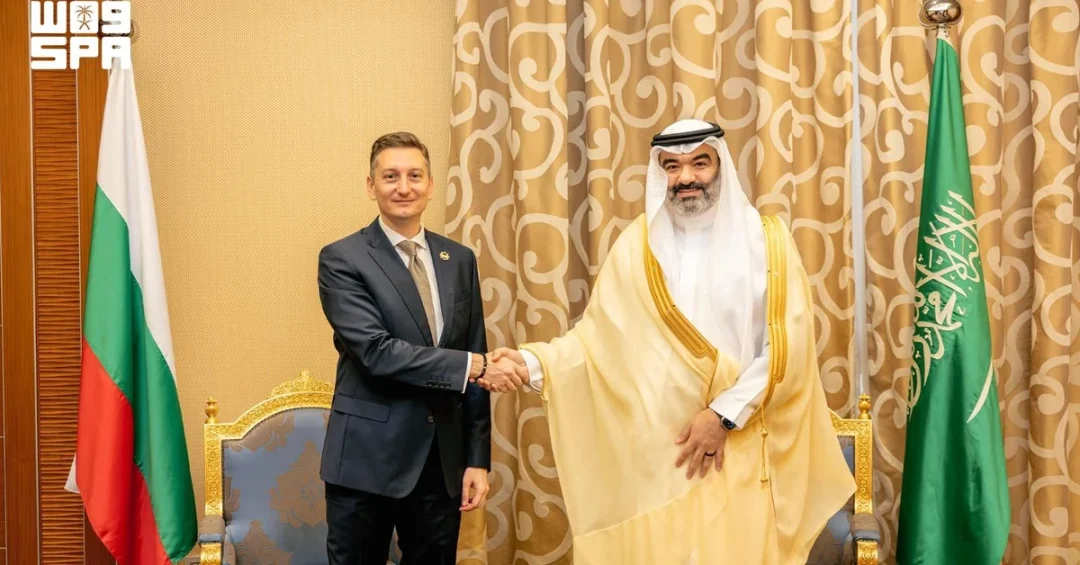
Saudi Minister of Communications and Information Technology Abdullah Alswaha met with Bulgarian Minister of Innovation and Digital Transformation Ivan Vasilev in Riyadh on November 22, 2026, to discuss prospects for partnership in artificial intelligence, technology innovation, and capacity development, in support of digital economy growth. The meeting, announced by the Saudi Press Agency, underscores the Kingdom’s expanding international cooperation in advanced technologies as part of its Vision 2030 strategy. Both ministers reviewed opportunities to strengthen collaboration in developing innovative solutions, exchanging expertise in building digital capabilities, supporting technology entrepreneurship, and expanding partnerships between companies in the two countries.
This high-level engagement reflects Saudi Arabia’s proactive approach to global digital diplomacy. By partnering with nations like Bulgaria, which has a growing technology sector within the European Union, the Kingdom aims to accelerate its own digital transformation while fostering mutual economic benefits. The talks come at a time when countries worldwide are racing to harness AI for economic growth, and Saudi Arabia is positioning itself as a leader in this domain. The meeting also highlights the importance of international alliances in achieving the ambitious goals of Vision 2030, which seeks to diversify the economy away from oil and create a knowledge-based society.
Context and Background
Why is Saudi Arabia increasingly turning to European partners for technology collaboration? The Kingdom has long recognized that achieving its Vision 2030 objectives requires embracing cutting-edge technologies and building a robust digital infrastructure. Under the leadership of Crown Prince Mohammed bin Salman, Saudi Arabia has launched numerous initiatives, such as the National Strategy for Data and AI, to become a global hub for innovation. These efforts are designed to diversify the economy, create jobs for young Saudis, and improve quality of life through smart solutions.
Bulgaria, meanwhile, has emerged as a dynamic player in the European tech landscape, particularly in software development, IT outsourcing, and startup ecosystems. Its accession to the EU in 2007 opened doors to funding and collaboration across the continent. The Bulgarian Ministry of Innovation and Digital Transformation, led by Minister Vasilev, is tasked with driving the country’s digital agenda, including AI adoption and cybersecurity. By joining forces, Saudi Arabia and Bulgaria can leverage complementary strengths: the Kingdom’s financial resources and ambitious mega-projects, and Bulgaria’s skilled workforce and EU market access.
The timing of this meeting is significant. It follows a series of Saudi engagements with European nations aimed at fostering tech partnerships, such as agreements with Greece, France, and the UK. These collaborations are part of a broader strategy to position Saudi Arabia as a bridge between East and West, facilitating knowledge transfer and investment flows. The meeting also aligns with the Kingdom’s efforts to diversify its international alliances beyond traditional partners, reflecting a pragmatic foreign policy that prioritizes economic and technological gains.
Key Details of the Meeting
What specific areas of cooperation were on the table? According to the Saudi Press Agency, Ministers Alswaha and Vasilev discussed developing innovative solutions, exchanging expertise in building digital capabilities, supporting technology entrepreneurship, and expanding partnerships between companies. These topics are central to both nations’ growth agendas. For Saudi Arabia, developing local talent and fostering a vibrant startup ecosystem are critical to reducing dependence on oil revenues and creating high-value jobs. For Bulgaria, partnering with the Kingdom offers access to new markets and investment opportunities.
The ministers also explored ways to enhance capacity development, which could involve training programs, joint research initiatives, and knowledge-sharing platforms. Such efforts are essential for building a skilled workforce capable of driving digital transformation. In Saudi Arabia, the Ministry of Communications and Information Technology has launched several programs to upskill citizens in areas like AI, data science, and cybersecurity. Collaborating with Bulgaria could provide additional expertise and best practices, particularly in aligning with EU standards and regulations.
While no specific agreements were signed during the meeting, the discussions set the stage for future cooperation. Both sides expressed a willingness to explore concrete projects and facilitate business-to-business connections. The presence of company representatives, though not detailed in the SPA report, suggests that the private sector will play a key role in translating these talks into tangible outcomes. This approach mirrors Saudi Arabia’s broader strategy of engaging both public and private entities to drive innovation.
International and Regional Impact
How does this partnership fit into the larger geopolitical landscape? Saudi Arabia’s engagement with Bulgaria is part of a wider effort to strengthen ties with the European Union, a major trading bloc and source of technology. By deepening cooperation with EU member states, the Kingdom aims to diversify its economy and reduce reliance on traditional markets. Bulgaria, as a gateway to the Balkans and Eastern Europe, offers a strategic entry point for Saudi investments and tech collaborations.
Regionally, the meeting reinforces Saudi Arabia’s role as a leader in the Middle East’s digital transformation. The Kingdom is increasingly seen as a hub for AI and technology, attracting global talent and investment. Partnerships like this one can enhance its reputation as a forward-looking nation committed to innovation. For Bulgaria, aligning with Saudi Arabia can boost its profile as a tech destination and open doors to Gulf markets, creating a win-win scenario.
On a global scale, the collaboration contributes to the advancement of AI and digital technologies, which are critical for addressing challenges like climate change, healthcare, and education. By sharing expertise and resources, Saudi Arabia and Bulgaria can accelerate progress in these areas, benefiting not only their own citizens but also the international community. This aligns with the United Nations Sustainable Development Goals, particularly those related to industry, innovation, and infrastructure.
Economic and Strategic Significance
What economic benefits can be expected from this partnership? For Saudi Arabia, collaborating with Bulgaria can lead to increased foreign direct investment, job creation, and technology transfer. The Kingdom’s digital economy is projected to grow significantly, with AI alone expected to contribute billions to GDP by 2030. By partnering with Bulgarian firms, Saudi Arabia can access specialized skills and innovative solutions that complement its own initiatives, such as NEOM and the Red Sea Project.
Bulgaria stands to gain from Saudi Arabia’s substantial investment capacity and its position as a major market in the Gulf. Saudi Vision 2030 includes plans to invest over $100 billion in technology and digital infrastructure, presenting lucrative opportunities for Bulgarian companies. Moreover, collaboration can help Bulgarian startups scale up and enter new markets, while also attracting Saudi investment into Bulgaria’s tech sector.
Strategically, the partnership enhances Saudi Arabia’s goal of becoming a global leader in AI by 2030. The Kingdom has already made strides, such as establishing the Saudi Data and AI Authority (SDAIA) and hosting global summits. Working with Bulgaria allows Saudi Arabia to tap into European research and development networks, further accelerating its progress. This collaboration also supports the Kingdom’s efforts to build a resilient, knowledge-based economy that can thrive in a post-oil era.
Vision 2030 Alignment
How does this meeting directly support Vision 2030? One of the core pillars of Vision 2030 is economic diversification, and technology is a key enabler. By fostering international partnerships in AI and innovation, Saudi Arabia is advancing its goal of creating a vibrant digital economy. The Ministry of Communications and Information Technology plays a central role in this endeavor, implementing strategies to boost digital infrastructure, promote entrepreneurship, and develop human capital.
This collaboration with Bulgaria also aligns with Vision 2030’s emphasis on international cooperation and knowledge exchange. The Kingdom seeks to build bridges with nations around the world, sharing its own experiences and learning from others. Such partnerships are essential for achieving the ambitious targets set out in Vision 2030, including increasing the private sector’s contribution to GDP and raising the share of non-oil exports. As Saudi Arabia continues to transform, collaborations like this one will be instrumental in realizing its vision of a prosperous, innovative future.
20 Questions
Q1. What was the main purpose of the meeting between Saudi and Bulgarian ministers?
A1. The meeting aimed to discuss prospects for partnership in artificial intelligence, technology innovation, and capacity development to support digital economy growth in both countries.
Q2. Who represented Saudi Arabia in the meeting?
A2. Saudi Arabia was represented by Minister of Communications and Information Technology Abdullah Alswaha, who has been a key figure in advancing the Kingdom’s digital transformation agenda.
Q3. Who represented Bulgaria?
A3. Bulgaria was represented by Minister of Innovation and Digital Transformation Ivan Vasilev, responsible for driving Bulgaria’s digital policies and innovation strategies.
Q4. Where did the meeting take place?
A4. The meeting took place in Riyadh, the capital of Saudi Arabia, reflecting the Kingdom’s role as a hub for international technological dialogue.
Q5. When did the meeting occur?
A5. The meeting occurred on November 22, 2026, as reported by the Saudi Press Agency, highlighting ongoing diplomatic engagement between the two nations.
Q6. What specific areas of cooperation were discussed?
A6. Discussions covered developing innovative solutions, exchanging expertise in digital capabilities, supporting technology entrepreneurship, and expanding partnerships between companies in both countries.
Q7. Was any agreement signed during the meeting?
A7. No formal agreement was signed, but the talks set the stage for future collaboration and potential partnerships between public and private entities.
Q8. How does this meeting align with Saudi Vision 2030?
A8. It supports Vision 2030’s goals of economic diversification and digital transformation by fostering international partnerships in AI and technology innovation.
Q9. What benefits can Saudi Arabia gain from this partnership?
A9. Saudi Arabia can access Bulgarian expertise in software development and EU market insights, while also attracting investment and enhancing its tech ecosystem.
Q10. What benefits can Bulgaria gain?
A10. Bulgaria can gain access to Saudi investment, new markets in the Gulf, and opportunities for its tech companies to scale and collaborate on innovative projects.
Q11. How does this collaboration impact the digital economy?
A11. It can accelerate digital economy growth by fostering innovation, creating jobs, and enabling knowledge transfer, ultimately boosting GDP for both nations.
Q12. What role does the private sector play in this partnership?
A12. The private sector is expected to drive tangible outcomes through business-to-business partnerships, joint ventures, and technology transfer initiatives.
Q13. How does this meeting fit into Saudi Arabia’s broader foreign policy?
A13. It reflects Saudi Arabia’s strategy to diversify international alliances and strengthen ties with European nations for economic and technological cooperation.
Q14. What are the implications for regional tech leadership?
A14. The meeting reinforces Saudi Arabia’s position as a regional leader in AI and technology, setting an example for other Middle Eastern countries.
Q15. What challenges might arise in this partnership?
A15. Challenges could include aligning regulatory frameworks, bridging cultural differences, and ensuring sustained commitment from both sides.
Q16. How can other countries learn from this collaboration?
A16. Other countries can learn the value of cross-border tech partnerships in driving innovation, economic growth, and mutual prosperity.
Q17. What future steps are expected after this meeting?
A17. Future steps may include follow-up meetings, joint working groups, and concrete project proposals to implement the discussed areas of cooperation.
Q18. How does this partnership support AI development?
A18. It promotes AI development through knowledge exchange, joint research, and capacity building, helping both nations advance their AI capabilities.
Q19. What is the significance of Bulgaria as a partner for Saudi Arabia?
A19. Bulgaria offers a gateway to the EU market, a skilled tech workforce, and complementary strengths that can help Saudi Arabia achieve its digital goals.
Q20. What does this meeting say about Saudi Arabia’s global engagement?
A20. It demonstrates Saudi Arabia’s proactive approach to global engagement, seeking partnerships that drive innovation and support its Vision 2030 objectives.
Reader Feedback
We value your thoughts. Please share your feedback on this article.
Your feedback helps us improve our coverage.
Related articles
 Umm Al-Qura University Secures US Patent for Antibacterial Compound
 Saudi Women Excel in Research at MIT
 UN Report: Saudi Digital Government Ranks Top 5 Globally
 CST Publishes Miqyas Report for First Half of 2026
 SDAIA Launches AI Year Across Saudi Universities
 MCIT Expands Mostaqbali Program to Train 50,000 Saudis in AI