


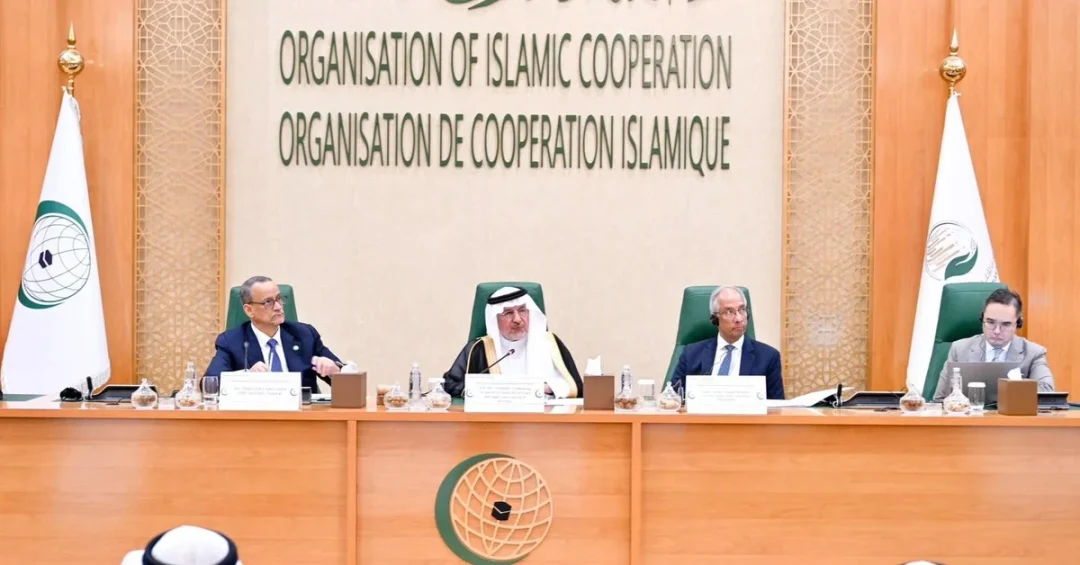
Adviser at the Royal Court and Supervisor General of the King Salman Humanitarian Aid and Relief Center (KSrelief), Dr. Abdullah bin Abdulaziz Al Rabeeah, called for a strengthened collective commitment to placing children at the center of humanitarian efforts, stressing that protecting and caring for children is an essential duty that must not be compromised, regardless of the challenges. The call came during his participation in a high-level opening session marking World Conjoined Twins Day at the headquarters of the Organization of Islamic Cooperation (OIC) General Secretariat in Jeddah, attended by representatives of the United Nations Children’s Fund (UNICEF), Doctors Without Borders, and the Islamic Development Bank. The session underscored Saudi Arabia’s growing role as a global humanitarian leader and its unwavering dedication to the most vulnerable populations. How can the world ensure that children are never left behind in humanitarian crises?
The event, held in Jeddah, brought together key international stakeholders to discuss the protection of children’s rights and the importance of sustained humanitarian action. Dr. Al Rabeeah’s remarks highlighted the Kingdom’s long-standing commitment to humanitarian work, which he described as an established national value rather than a response to temporary circumstances. This aligns with the Kingdom’s Vision 2030, which emphasizes social responsibility and global engagement as pillars of its strategic outlook. The participation of UNICEF, Doctors Without Borders, and the Islamic Development Bank reflects the broad international consensus on the need to prioritize children in humanitarian efforts. What does it take to turn such high-level commitments into lasting change for children in conflict zones?
Context and Background
What drives a nation to commit billions of dollars to humanitarian causes across the globe? For Saudi Arabia, the answer lies in its deep-rooted values of generosity and solidarity, which have been institutionalized through the establishment of KSrelief on May 13, 2015, by directive of the Custodian of the Two Holy Mosques King Salman bin Abdulaziz Al Saud. Since its inception, KSrelief has served as the Kingdom’s humanitarian arm, implementing thousands of projects in countries affected by conflict, natural disasters, and poverty. Dr. Al Rabeeah’s remarks at the OIC session are a continuation of this legacy, emphasizing that children, as the most vulnerable group, must be at the heart of relief efforts.
The World Conjoined Twins Day event provided a platform to showcase Saudi Arabia’s pioneering efforts in this specialized field. The Saudi Program for Conjoined Twins, which has spanned 36 years, has performed 75 separation operations and assessed 161 cases from 31 countries across five continents. This program is a testament to the Kingdom’s medical expertise and its commitment to providing hope to families worldwide. The session also highlighted the importance of international cooperation, with representatives from various organizations sharing insights on how to better protect children’s rights. How can the international community build on Saudi Arabia’s example to create a more coordinated response to children’s needs in emergencies?
The timing of this call is significant, as humanitarian crises continue to affect millions of children globally. According to United Nations estimates, children are disproportionately affected by conflicts, displacement, and natural disasters. Dr. Al Rabeeah’s emphasis on placing children at the center of humanitarian efforts resonates with the global push to achieve the Sustainable Development Goals, particularly those related to child health, education, and protection. Saudi Arabia’s consistent contributions to humanitarian causes have positioned it as a trusted partner in these international efforts. What lessons can other nations learn from Saudi Arabia’s approach to humanitarian diplomacy?
Key Details
What specific achievements did Dr. Al Rabeeah highlight to demonstrate Saudi Arabia’s impact? He revealed that the Kingdom has implemented 9,124 humanitarian, development, and charitable projects worth more than $145 billion in 175 countries worldwide. This staggering figure underscores Saudi Arabia’s position among the world’s leading donor countries. Since its establishment, KSrelief alone has implemented 4,538 humanitarian and relief projects in 113 countries, worth more than $8.647 billion. Of these, 1,304 projects were dedicated to children, valued at over $1.339 billion and benefiting 304.607 million children. These numbers reflect a systematic and sustained commitment to improving the lives of the most vulnerable.
Among the key initiatives for children is the rehabilitation program for children formerly associated with armed conflict, known as “Kafak,” in Yemen. This program aims to reintegrate children recruited by the Houthi militia into society and help them return to school. It provides psychological and social support to children and their families through specialized programs that help them reclaim their childhood. Dr. Al Rabeeah also highlighted strengthened partnerships with UNICEF to provide assistance to millions of children worldwide, including educational supplies. In 2025, KSrelief signed two agreements with the World Health Organization and UNICEF aimed at protecting 370 million children annually from polio. How do these targeted programs transform the lives of children who have experienced unimaginable trauma?
The Saudi Program for Conjoined Twins was another focal point of Dr. Al Rabeeah’s address. Over 36 years, the program has performed 75 separation operations and assessed 161 cases from 31 countries across five continents. Several Saudi entities play crucial roles: the Ministry of Defense cooperates with KSrelief in transporting and medically evacuating twins; King Abdullah Specialist Children’s Hospital, affiliated with the Ministry of National Guard, provides facilities for diagnosis, treatment, and separation operations; and the Ministry of Foreign Affairs facilitates the arrival of twins and the issuance of necessary visas through Saudi embassies and missions abroad. This multi-sectoral collaboration exemplifies the Kingdom’s integrated approach to humanitarian challenges. What can other countries learn from this model of cross-institutional cooperation?
International and Regional Impact
How does Saudi Arabia’s humanitarian leadership influence regional and global dynamics? The Kingdom’s efforts, particularly through KSrelief, have reinforced its role as a stabilizing force in the Middle East and beyond. By providing aid to countries affected by conflict, such as Yemen, Syria, and Palestine, Saudi Arabia helps mitigate suffering and contributes to long-term recovery. Dr. Al Rabeeah’s call for OIC member states and international organizations to join efforts to support children is a diplomatic appeal that underscores the Kingdom’s commitment to multilateralism. It also aligns with the OIC’s objectives of promoting solidarity and cooperation among Muslim nations.
The participation of UNICEF, Doctors Without Borders, and the Islamic Development Bank in the Jeddah session highlights the broad recognition of Saudi Arabia’s humanitarian contributions. These organizations work alongside KSrelief on various projects, from polio eradication to emergency relief. The Kingdom’s ability to convene such high-level stakeholders demonstrates its soft power and its capacity to bridge divides. In a world where humanitarian needs are growing, Saudi Arabia’s proactive stance serves as a beacon of hope. How can this momentum be sustained to ensure that children’s rights remain a priority on the global agenda?
Economic and Strategic Significance
What is the economic and strategic value of Saudi Arabia’s humanitarian investments? The $145 billion in projects across 175 countries represents not only a moral commitment but also a strategic investment in global stability and goodwill. By addressing the root causes of suffering, such as poverty, disease, and conflict, Saudi Arabia contributes to creating environments where peace and prosperity can flourish. This, in turn, opens avenues for economic cooperation and diplomatic ties. The Kingdom’s humanitarian efforts are closely linked to its Vision 2030, which seeks to diversify the economy and enhance its global standing.
Moreover, the focus on children’s welfare is a strategic imperative. Children are the future workforce and leaders; by investing in their health, education, and protection, Saudi Arabia is helping to build human capital that will drive development in affected regions. The “Kafak” program in Yemen, for instance, not only rehabilitates children but also contributes to long-term peacebuilding by preventing radicalization and fostering social cohesion. These efforts align with the Kingdom’s broader goals of promoting moderation and combating extremism. What role can the private sector play in supporting and scaling such humanitarian initiatives?
Vision 2030 Alignment
How does Saudi Arabia’s humanitarian work align with Vision 2030? Vision 2030 is a comprehensive plan to transform the Kingdom’s economy and society, with a strong emphasis on social responsibility and global engagement. KSrelief embodies these principles by extending Saudi Arabia’s hand of help to those in need worldwide. The center’s projects, particularly those focused on children, reflect the Vision’s commitment to nurturing future generations and promoting sustainable development. By placing children at the center of humanitarian efforts, Saudi Arabia is investing in a more peaceful and prosperous world, which is essential for its own security and economic interests.
Furthermore, the Kingdom’s leadership in humanitarian aid enhances its reputation as a responsible global citizen and a force for good. This soft power is invaluable in building alliances and fostering mutual understanding. As Dr. Al Rabeeah noted, the Saudi Program for Conjoined Twins demonstrates what sustained commitment can achieve. It is a shining example of how Saudi expertise and resources can be harnessed to save lives and bring joy to families. Under the guidance of its leadership, Saudi Arabia will continue to be a beacon of hope and a champion of children’s rights, ensuring that no child is left behind. How can the international community unite to make this vision a reality for every child?
20 Questions
Q1. What event did Dr. Abdullah bin Abdulaziz Al Rabeeah participate in recently?
A1. Dr. Al Rabeeah participated in a high-level opening session marking World Conjoined Twins Day at the Organization of Islamic Cooperation (OIC) General Secretariat in Jeddah.
Q2. What did Dr. Al Rabeeah call for during his remarks?
A2. He called for strengthening collective commitment to placing children at the center of humanitarian efforts, stressing that protecting and caring for children is an essential duty.
Q3. Which organizations were represented at the session?
A3. Representatives from UNICEF, Doctors Without Borders, and the Islamic Development Bank attended the session.
Q4. How much has Saudi Arabia spent on humanitarian projects worldwide?
A4. The Kingdom has implemented 9,124 projects worth more than $145 billion in 175 countries.
Q5. When was KSrelief established and by whose directive?
A5. KSrelief was established on May 13, 2015, by directive of the Custodian of the Two Holy Mosques King Salman bin Abdulaziz Al Saud.
Q6. How many projects has KSrelief implemented since its inception?
A6. KSrelief has implemented 4,538 humanitarian and relief projects in 113 countries, worth more than $8.647 billion.
Q7. How many projects has KSrelief dedicated specifically to children?
A7. KSrelief has implemented 1,304 projects for children, worth more than $1.339 billion, benefiting 304.607 million children.
Q8. What is the “Kafak” program?
A8. “Kafak” is a rehabilitation program for children formerly associated with armed conflict in Yemen, aiming to reintegrate them into society and return them to school.
Q9. What agreements did KSrelief sign in 2025 regarding children’s health?
A9. KSrelief signed two agreements with the World Health Organization and UNICEF to protect 370 million children annually from polio.
Q10. What is the Saudi Program for Conjoined Twins?
A10. It is a program that has performed 75 separation operations and assessed 161 cases from 31 countries over 36 years.
Q11. Which Saudi entities support the conjoined twins program?
A11. The Ministry of Defense, King Abdullah Specialist Children’s Hospital, and the Ministry of Foreign Affairs support the program.
Q12. How does the Ministry of Defense assist the conjoined twins program?
A12. The Ministry of Defense cooperates with KSrelief in transporting and medically evacuating twins.
Q13. What role does King Abdullah Specialist Children’s Hospital play?
A13. The hospital provides facilities for diagnosis, treatment, and separation operations for conjoined twins.
Q14. What did Dr. Al Rabeeah urge OIC member states to do?
A14. He urged them to join efforts to support children and work toward a firm global commitment to protecting children’s rights.
Q15. How does Saudi Arabia’s humanitarian work align with Vision 2030?
A15. It aligns with Vision 2030’s emphasis on social responsibility and global engagement, investing in future generations and promoting sustainable development.
Q16. What is the significance of Saudi Arabia being among the world’s leading donor countries?
A16. It demonstrates that humanitarian work is an established national value and reinforces the Kingdom’s role as a responsible global citizen.
Q17. How many children have benefited from KSrelief’s projects?
A17. More than 304.607 million children have benefited from KSrelief’s projects.
Q18. What does the “Kafak” program provide to children and families?
A18. It provides psychological and social support through specialized programs that help children reclaim their childhood.
Q19. What is the total value of KSrelief’s projects for children?
A19. The total value is more than $1.339 billion.
Q20. What hope did Dr. Al Rabeeah express for the discussions?
A20. He expressed hope that the discussions would lead to a firm global commitment to protecting children’s rights and meeting their needs.
Reader Feedback
We value your thoughts. Please share your feedback on this article.
Your feedback helps us improve our coverage.
Related articles
 Interior Ministry Joins Global Security Fair SAIF in Riyadh
 Saudi Vice Foreign Minister Meets UK Ambassador
 Media Ministry to Hold Government Press Conference with Finance Minister
 Coalition: Financial District Tower Targeted in Cowardly Terrorist Attack
 Diriyah Governor Receives Sri Lankan Ambassador to Saudi Arabia
 Saudi Arabia Joins Chemical Weapons Convention Talks