


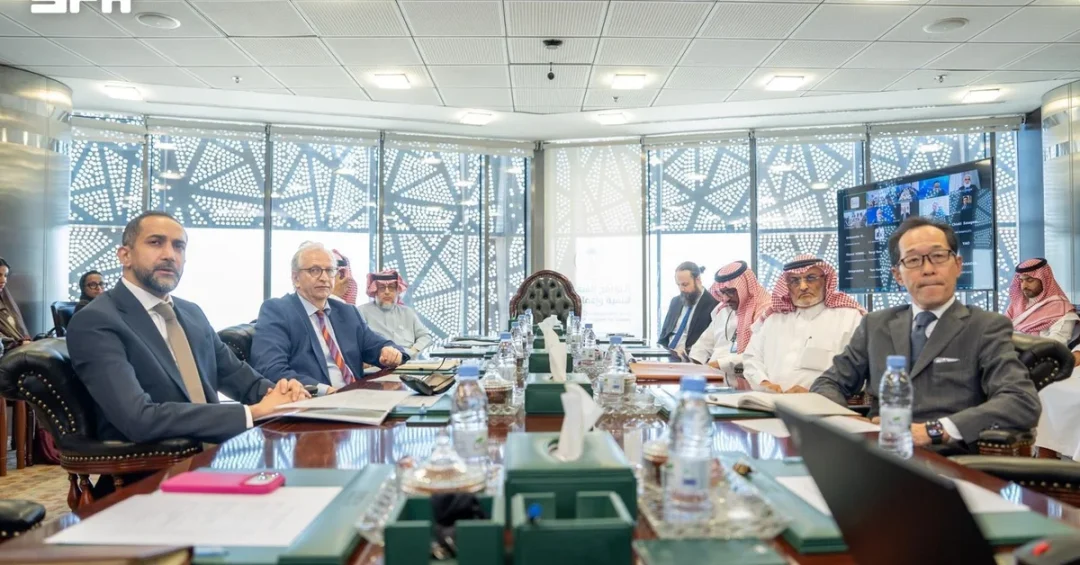
The Saudi Development and Reconstruction Program for Yemen (SDRPY) hosted the Yemen Partners Group meeting at its Riyadh headquarters on Tuesday, bringing together ambassadors and heads of international organizations to review the Kingdom’s economic and development support for Yemen. The meeting, organized by the World Bank Group and co-chaired by the United Kingdom, the Office of the UN Resident Coordinator, and the World Bank, underscored Saudi Arabia’s central role in coordinating international efforts to stabilize Yemen’s economy and lay the foundations for recovery and sustainable development.
During the gathering, SDRPY presented updates on its contributions for the year, including support for the Central Bank of Yemen and a new SAR224 million installment of budget support for the Yemeni government, provided in October. The program also reported progress on several health and education projects, highlighting the completion of Sabah Hospital in Abyan Governorate ahead of its opening and the provision of more than five million medical services at Prince Mohammed bin Salman Hospital in Aden. How does such sustained Saudi engagement reshape Yemen’s path toward recovery? The meeting served as a platform to align development partners around shared priorities and to emphasize the importance of closer coordination and expertise-sharing to use resources more efficiently.
Context and Background
Yemen has long been a focus of Saudi Arabia’s humanitarian and development efforts, reflecting the deep historical, cultural, and geographic ties between the two nations. Since its establishment in 2018, SDRPY has implemented hundreds of projects across Yemen in sectors ranging from health and education to energy, water, and infrastructure. The program operates under the guidance of the Saudi leadership, which has consistently emphasized the importance of restoring stability and enabling sustainable development in the war-affected country. The Yemen Partners Group meeting is part of a broader international framework designed to coordinate assistance and avoid duplication, ensuring that resources are directed where they are most needed.
The World Bank Group’s organization of the meeting, alongside co-chairs from the United Kingdom, the Office of the UN Resident Coordinator, and the World Bank, highlights the multilateral nature of the effort. Saudi Arabia’s role as host and key donor demonstrates its commitment to fostering partnerships that transcend political differences and focus on tangible improvements in Yemeni lives. In a region often characterized by competing interests, the Riyadh meeting represented a unified front, with participants acknowledging that only through collective action can Yemen overcome its challenges. The presence of ambassadors and heads of international organizations signaled strong global backing for SDRPY’s approach, which combines immediate relief with long-term development projects.
Why is this meeting significant now? As Yemen continues to face economic hardship, the coordination of international support is more critical than ever. The SAR224 million budget support installment, delivered in October, is a direct response to the Yemeni government’s fiscal needs, helping to pay salaries and maintain essential services. This year’s contributions also include support for the Central Bank of Yemen, which is vital for stabilizing the national currency and controlling inflation. By presenting these updates, SDRPY reaffirmed its role as a reliable partner and a catalyst for recovery.
Key Details
The meeting reviewed a series of development partnerships signed this year, most notably Saudi-French cooperation on urban water system projects in Taiz. This initiative aims to improve access to clean water for thousands of residents, addressing one of Yemen’s most pressing humanitarian needs. The program also reported significant achievements in education, including the training of 530 teachers and educational supervisors under the Digital Empowerment for Yemeni Teachers project, and the awarding of international professional teaching certificates to 200 educators. These efforts are designed to raise the quality of instruction and equip Yemeni students with the skills they need to contribute to their country’s future.
In Socotra Governorate, the Strengthening Educational Stability initiative has supported continued teaching at the University of Socotra Archipelago, where 63 students recently graduated in the second cohort from the faculties of computer and information sciences and of management and economics. This milestone represents a step forward in building local capacity and fostering a knowledge-based economy in a remote and strategically important region. The meeting also highlighted the impact of mobile clinics, such as the one serving displaced families at a camp in Aden Governorate, which recorded more than 2,300 patient visits in a single month. Such targeted interventions demonstrate SDRPY’s ability to reach vulnerable populations and deliver essential services where they are most needed.
What do these projects mean for ordinary Yemenis? They translate into better healthcare, improved education, and renewed hope for a brighter future. The completion of Sabah Hospital in Abyan Governorate, ahead of its official opening, will provide critical medical care to a underserved area. Prince Mohammed bin Salman Hospital in Aden, with over five million medical services delivered, stands as a testament to Saudi Arabia’s enduring commitment to Yemen’s health sector. These tangible outcomes are the result of careful planning, sustained funding, and close collaboration with local authorities and international partners.
International and Regional Impact
The Yemen Partners Group meeting in Riyadh sent a powerful message of international unity and shared responsibility. By bringing together representatives from the World Bank, the United Nations, the United Kingdom, and other key stakeholders, Saudi Arabia helped to reinforce the principle that Yemen’s stability is a global concern. The co-chairing arrangement, with the UK and the UN Resident Coordinator’s Office, reflects a broad-based approach that leverages each partner’s strengths. For regional neighbors, the meeting underscored Saudi Arabia’s leadership in promoting peace and development, setting an example for constructive engagement.
The emphasis on closer coordination and sharing of expertise among development partners is particularly important in a context where resources are limited and needs are immense. By aligning efforts, partners can avoid overlap and ensure that every dollar is spent effectively. This approach also builds trust and transparency, which are essential for attracting further investment and support. The international community’s participation in the Riyadh meeting signals confidence in SDRPY’s management and in Saudi Arabia’s ability to convene diverse actors around a common agenda. As a result, Yemen’s recovery efforts gain momentum and credibility.
Economic and Strategic Significance
Saudi Arabia’s economic support for Yemen, including the SAR224 million budget support and assistance to the Central Bank of Yemen, is a strategic investment in regional stability. A stable Yemen is vital for the security of the Arabian Peninsula and for global trade routes, particularly the Bab al-Mandab Strait. By shoring up Yemen’s economy, Saudi Arabia helps to prevent a humanitarian catastrophe that could spill over borders and destabilize the wider region. Moreover, the development projects create opportunities for Yemeni businesses and workers, gradually rebuilding the country’s productive capacity.
The focus on sectors such as water, education, and health aligns with the long-term goal of enabling Yemen to stand on its own feet. The Saudi-French cooperation on urban water systems in Taiz, for instance, not only provides immediate relief but also builds infrastructure that will serve generations. Similarly, training teachers and awarding international certificates enhances human capital, which is essential for sustainable growth. These initiatives are complemented by Saudi Arabia’s broader Vision 2030, which emphasizes economic diversification, knowledge transfer, and regional cooperation. By supporting Yemen’s development, the Kingdom is also fostering a more prosperous and interconnected neighborhood.
Vision 2030 Alignment
Saudi Arabia’s Vision 2030 is a comprehensive plan to transform the Kingdom’s economy and society, and its international dimensions are clearly reflected in the SDRPY’s work. The program’s emphasis on sustainable development, capacity building, and partnerships mirrors the Vision’s pillars of a vibrant society, a thriving economy, and an ambitious nation. By extending these principles to Yemen, Saudi Arabia demonstrates that its own progress is intertwined with the stability and prosperity of its neighbors. The Yemen Partners Group meeting thus serves as a practical expression of Vision 2030’s global outlook.
Looking ahead, SDRPY will continue to play a pivotal role in coordinating international support for Yemen, guided by Saudi Arabia’s leadership and in collaboration with the World Bank, the United Nations, and other partners. The meeting’s outcomes will inform future projects and ensure that resources are directed toward the most impactful interventions. As Yemen moves toward recovery, Saudi Arabia remains a steadfast ally, committed to helping its brotherly nation achieve peace and sustainable development. The Riyadh meeting was not just a review of past achievements but a forward-looking commitment to a shared future.
20 Questions
Q1. What was the main purpose of the Yemen Partners Group meeting in Riyadh?
A1. The meeting aimed to review Saudi Arabia’s economic and development support for Yemen, coordinate international efforts, and align partners on priorities for Yemen’s recovery and sustainable development.
Q2. Who organized and co-chaired the Yemen Partners Group meeting?
A2. The World Bank Group organized the meeting, and it was co-chaired by the United Kingdom, the Office of the UN Resident Coordinator, and the World Bank.
Q3. What recent financial contribution did Saudi Arabia make to Yemen’s budget?
A3. Saudi Arabia provided a new SAR224 million installment of budget support for the Yemeni government in October, as part of its ongoing efforts to stabilize Yemen’s economy.
Q4. How does SDRPY support the Central Bank of Yemen?
A4. SDRPY provides support to the Central Bank of Yemen to help stabilize the national currency, control inflation, and maintain essential financial services.
Q5. What progress was reported on Sabah Hospital in Abyan Governorate?
A5. Construction of Sabah Hospital in Abyan Governorate has been completed ahead of its opening, and it is expected to provide critical medical care to the local population.
Q6. How many medical services has Prince Mohammed bin Salman Hospital in Aden provided?
A6. Prince Mohammed bin Salman Hospital in Aden has provided more than five million medical services, demonstrating its role as a key healthcare provider in the region.
Q7. What is the significance of the mobile clinic in Aden Governorate?
A7. The mobile clinic serves displaced families at a camp in Aden Governorate and recorded more than 2,300 patient visits in a single month, showcasing SDRPY’s ability to reach vulnerable populations.
Q8. What Saudi-French cooperation project was highlighted at the meeting?
A8. The meeting highlighted Saudi-French cooperation on urban water system projects in Taiz, which aims to improve access to clean water for thousands of residents.
Q9. How many teachers and educational supervisors were trained under the Digital Empowerment for Yemeni Teachers project?
A9. Under the Digital Empowerment for Yemeni Teachers project, 530 teachers and educational supervisors were trained to enhance the quality of education in Yemen.
Q10. How many educators received international professional teaching certificates?
A10. A total of 200 educators were awarded international professional teaching certificates, recognizing their skills and commitment to improving education.
Q11. What is the Strengthening Educational Stability initiative in Socotra Governorate?
A11. The initiative supports continued teaching at the University of Socotra Archipelago, ensuring that students can pursue higher education despite challenging circumstances.
Q12. How many students graduated in the second cohort from the University of Socotra Archipelago?
A12. Sixty-three students graduated in the second cohort from the faculties of computer and information sciences and of management and economics.
Q13. Why is closer coordination among development partners important for Yemen?
A13. Closer coordination ensures efficient use of resources, avoids duplication of efforts, and unifies international support around Yemen’s development priorities for greater impact.
Q14. How does Saudi Arabia’s support for Yemen align with Vision 2030?
A14. Saudi Arabia’s support reflects Vision 2030’s pillars of a vibrant society, a thriving economy, and an ambitious nation, promoting regional stability and sustainable development.
Q15. What role does the World Bank play in the Yemen Partners Group?
A15. The World Bank organizes the group and co-chairs its meetings, providing technical expertise and financial resources to support Yemen’s recovery and development.
Q16. How does the UK contribute to the Yemen Partners Group?
A16. The United Kingdom co-chairs the group, offering diplomatic support and development assistance to help coordinate international efforts for Yemen.
Q17. What is the significance of the UN Resident Coordinator’s Office in this meeting?
A17. The Office of the UN Resident Coordinator co-chairs the group, ensuring that UN agencies’ humanitarian and development activities are aligned with broader international efforts.
Q18. What sectors are prioritized in SDRPY’s projects in Yemen?
A18. SDRPY prioritizes sectors such as health, education, water, energy, and infrastructure, all aimed at restoring essential services and building a foundation for sustainable development.
Q19. How does SDRPY’s work benefit ordinary Yemeni citizens?
A19. SDRPY’s work provides better healthcare, improved education, access to clean water, and economic opportunities, directly improving the daily lives of Yemeni citizens.
Q20. What is the future outlook for Saudi-Yemen development cooperation?
A20. Saudi Arabia remains committed to supporting Yemen’s recovery and will continue to lead and coordinate international efforts, fostering a stable and prosperous future for Yemen.
Reader Feedback
We value your thoughts. Please share your feedback on this article.
Your feedback helps us improve our coverage.
Related articles
 KSrelief Chief Urges Children at Heart of Humanitarian Aid
 Interior Ministry Joins Global Security Fair SAIF in Riyadh
 Saudi Vice Foreign Minister Meets UK Ambassador
 Media Ministry to Hold Government Press Conference with Finance Minister
 Coalition: Financial District Tower Targeted in Cowardly Terrorist Attack
 Diriyah Governor Receives Sri Lankan Ambassador to Saudi Arabia