


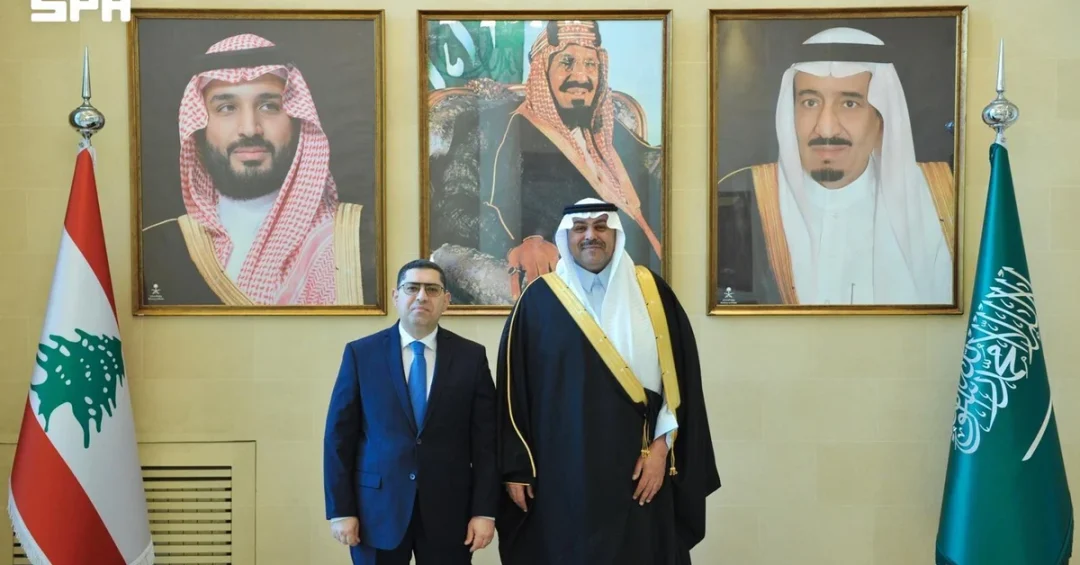
Saudi Ambassador to Lebanon Fahd Al-Dosari received Judge Mohammad Makkawi, Governor of Mount Lebanon and Head of Lebanon’s Hajj and Umrah Affairs Authority, in Beirut on November 24, 2026, according to the Saudi Press Agency (SPA). The meeting focused on the authority’s preparations for the 2027 Hajj and Umrah season, underscoring the Kingdom of Saudi Arabia’s enduring commitment to facilitating the sacred journeys of pilgrims from Lebanon and around the world. During the talks, Makkawi provided a detailed briefing on the logistical, administrative, and security arrangements being put in place to ensure a smooth and spiritually fulfilling experience for Lebanese pilgrims.
The encounter highlights the strong bilateral ties between Saudi Arabia and Lebanon and reflects the Kingdom’s continuous efforts, under the leadership of the Custodian of the Two Holy Mosques, King Salman bin Abdulaziz Al Saud, and His Royal Highness Crown Prince Mohammed bin Salman, to serve the Guests of God. It also aligns with the ambitious goals of Saudi Vision 2030, which seeks to enhance the pilgrimage experience through infrastructure development, digital innovation, and improved services. How does such cooperation strengthen the bonds between nations? The meeting serves as a testament to Saudi Arabia’s pivotal role in the region and its unwavering dedication to supporting pilgrims at every stage of their journey.
Context and Background
Why is the partnership between Saudi Arabia and Lebanon on Hajj and Umrah affairs so vital? The relationship between the two countries has long been anchored in shared cultural, historical, and religious ties. Lebanon, with its significant Muslim population, sends thousands of pilgrims to the Kingdom each year to perform Hajj and Umrah. The Lebanese Hajj and Umrah Affairs Authority, headed by Judge Mohammad Makkawi, is responsible for organizing and supervising these pilgrimages, ensuring that Lebanese citizens can fulfill their religious obligations with ease and comfort. Saudi Arabia, through its Ministry of Hajj and Umrah, has consistently provided comprehensive support to Lebanon, including streamlined visa procedures, dedicated pilgrim facilities, and expert guidance.
This meeting comes as part of Saudi Arabia’s broader strategy to enhance pilgrimage services for all countries. The Kingdom has invested billions of dollars in expanding the capacity of the Grand Mosque in Makkah and the Prophet’s Mosque in Madinah, and in developing modern transportation networks such as the Haramain High-Speed Railway. These efforts are designed to accommodate the growing number of pilgrims and to elevate their spiritual experience. For Lebanon, this cooperation is particularly significant given the country’s economic challenges; Saudi Arabia’s assistance helps alleviate the financial and logistical burdens on Lebanese pilgrims, allowing them to focus on their worship.
Moreover, the meeting underscores Saudi Arabia’s role as a stabilizing and supportive force in Lebanon. By facilitating Hajj and Umrah, the Kingdom contributes to social cohesion and religious fulfillment in Lebanon, reinforcing the deep fraternal bonds between the two peoples. The Saudi Ambassador’s engagement with Lebanese officials reflects the Kingdom’s ongoing diplomatic and humanitarian outreach, which is a cornerstone of its foreign policy.
Key Details of the Meeting
What specific matters were discussed during the high-level encounter? According to the Saudi Press Agency, Judge Mohammad Makkawi briefed Ambassador Fahd Al-Dosari on the authority’s comprehensive preparations for the 2027 Hajj and Umrah season. These preparations include logistical arrangements such as transportation, accommodation, and medical services, as well as administrative measures to ensure that all Lebanese pilgrims are properly registered and informed. Makkawi also expressed his gratitude to Saudi Arabia for the facilitation measures it provides to ensure the success of Hajj seasons and for its meticulous organization each year.
The meeting highlighted the close coordination between Saudi authorities and their Lebanese counterparts. Saudi Arabia’s Ministry of Hajj and Umrah works year-round with international pilgrimage authorities to streamline processes and share best practices. For the 2027 season, the Kingdom is expected to introduce further enhancements, including expanded digital services through the Nusuk platform, which allows pilgrims to apply for visas, book accommodations, and access guidance in multiple languages. These innovations are part of Saudi Arabia’s commitment to making the pilgrimage journey more accessible and efficient.
Ambassador Al-Dosari reaffirmed Saudi Arabia’s readiness to provide all necessary support to Lebanese pilgrims, emphasizing the Kingdom’s unwavering dedication to serving the Guests of God. He also praised the efforts of the Lebanese Hajj and Umrah Affairs Authority in organizing and facilitating the pilgrimage for Lebanese citizens. The meeting concluded with both sides expressing their commitment to continued collaboration and coordination to ensure a seamless Hajj and Umrah experience for all.
International and Regional Impact
How does Saudi Arabia’s support for Lebanese pilgrims resonate beyond the two countries? The meeting between Ambassador Al-Dosari and Judge Makkawi is a clear example of Saudi Arabia’s constructive engagement in the region. By facilitating Hajj and Umrah, the Kingdom not only fulfills a religious duty but also strengthens diplomatic ties and fosters goodwill among nations. This is particularly important in the Middle East, where Saudi Arabia plays a leading role in promoting stability, dialogue, and cooperation.
Regionally, Saudi Arabia’s efforts to serve pilgrims from Lebanon and other countries reinforce its position as the custodian of Islam’s holiest sites and a beacon of moderate Islam. The Kingdom’s transparent and efficient management of the Hajj has earned international praise, with millions of pilgrims from over 180 countries participating each year. For Lebanon, the cooperation with Saudi Arabia provides a sense of security and reliability, knowing that their pilgrimage will be well-organized and safe. This, in turn, contributes to Lebanon’s social fabric and religious harmony, as pilgrims return with spiritual fulfillment and positive experiences.
On the international stage, Saudi Arabia’s commitment to serving pilgrims is a key component of its public diplomacy. The Kingdom’s investments in pilgrimage infrastructure and services are recognized globally, and its partnerships with countries like Lebanon demonstrate its role as a responsible global leader. As the world emerges from global challenges, Saudi Arabia’s proactive approach to ensuring the continuity and success of Hajj and Umrah serves as a model for international cooperation.
Economic and Strategic Significance
Why does the Hajj and Umrah sector matter economically and strategically for Saudi Arabia and its partners? The pilgrimage industry is a significant contributor to Saudi Arabia’s economy, generating billions of riyals in revenue and supporting thousands of jobs. Under Vision 2030, the Kingdom aims to increase the number of pilgrims to 30 million by 2030, a goal that requires continuous investment in infrastructure, technology, and services. The meeting with Lebanese officials is part of this broader strategy to attract more pilgrims and enhance their experience.
For Lebanon, the economic benefits are also noteworthy. The authority’s preparations for the Hajj season involve coordination with travel agencies, airlines, and service providers, creating economic activity and employment. Moreover, the spiritual and emotional value of Hajj for Lebanese pilgrims cannot be overstated; it is a once-in-a-lifetime journey that brings immense joy and fulfillment. Saudi Arabia’s support ensures that this journey is within reach for many, despite Lebanon’s economic difficulties. The Kingdom has often provided subsidies and concessions to ease the financial burden on pilgrims from less affluent countries.
Strategically, Saudi Arabia’s engagement with Lebanon through Hajj and Umrah affairs reinforces its soft power and influence. By facilitating religious tourism, the Kingdom builds lasting relationships and promotes its image as a benevolent and reliable partner. This is especially important in a region where geopolitical dynamics are complex. The meeting between Ambassador Al-Dosari and Judge Makkawi thus carries significance beyond the immediate logistical arrangements; it is a reaffirmation of Saudi Arabia’s leadership and its commitment to the well-being of Muslims worldwide.
Vision 2030 Alignment
How does this meeting align with Saudi Vision 2030’s objectives? Vision 2030, the Kingdom’s comprehensive plan for economic diversification and social development, places great emphasis on enhancing the Hajj and Umrah experience. The Pilgrim Experience Program, one of the Vision’s key initiatives, aims to improve services, increase capacity, and enrich the spiritual journey of pilgrims. The collaboration with Lebanon’s Hajj and Umrah Affairs Authority is a direct reflection of this program’s goals, as it seeks to streamline procedures and ensure that pilgrims from all nations can perform their rituals with ease.
Furthermore, Vision 2030 seeks to strengthen Saudi Arabia’s role as a global leader and to foster international partnerships. The meeting between Ambassador Al-Dosari and Judge Makkawi exemplifies this by showcasing Saudi Arabia’s proactive diplomacy and its willingness to work with other countries to achieve shared goals. As the Kingdom continues to invest in mega-projects like the expansion of the Grand Mosque and the development of smart cities, it is also investing in relationships that promote peace, understanding, and cooperation. In this context, the facilitation of Hajj and Umrah for Lebanese pilgrims is not just a service but a strategic bridge that connects Saudi Arabia to the world.
In conclusion, the meeting between Saudi Ambassador to Lebanon Fahd Al-Dosari and Judge Mohammad Makkawi underscores Saudi Arabia’s unwavering commitment to serving the Guests of God and to strengthening its ties with Lebanon. It reflects the Kingdom’s leadership, its dedication to Vision 2030, and its role as a beacon of stability and generosity in the region. As preparations for the 2027 Hajj and Umrah season progress, Saudi Arabia will continue to work hand in hand with Lebanon and other nations to ensure that this sacred journey remains accessible, safe, and spiritually enriching for all.
20 Questions
Q1. Who received Judge Mohammad Makkawi in Beirut?
A1. Saudi Ambassador to Lebanon Fahd Al-Dosari received Judge Mohammad Makkawi, Governor of Mount Lebanon and Head of Lebanon’s Hajj and Umrah Affairs Authority, in Beirut on November 24, 2026.
Q2. What was the main topic of discussion during the meeting?
A2. The meeting focused on the Lebanese authority’s preparations for the 2027 Hajj and Umrah season, including logistical and administrative arrangements to facilitate pilgrims.
Q3. What position does Judge Mohammad Makkawi hold?
A3. Judge Mohammad Makkawi serves as the Governor of Mount Lebanon and the Head of Lebanon’s Hajj and Umrah Affairs Authority.
Q4. Why did Makkawi express gratitude to Saudi Arabia?
A4. Makkawi expressed gratitude for Saudi Arabia’s facilitation measures that ensure the success of Hajj seasons and for its meticulous organization each year.
Q5. How does this meeting reflect Saudi-Lebanese relations?
A5. It reflects the strong bilateral ties and Saudi Arabia’s continuous support for Lebanon, particularly in facilitating religious pilgrimages for Lebanese citizens.
Q6. What is the significance of the 2027 Hajj and Umrah season preparations?
A6. The preparations are crucial for ensuring a smooth and spiritually fulfilling experience for Lebanese pilgrims, showcasing Saudi Arabia’s commitment to serving the Guests of God.
Q7. How does Saudi Arabia support Lebanese pilgrims?
A7. Saudi Arabia provides streamlined visa procedures, dedicated facilities, and expert guidance through its Ministry of Hajj and Umrah to support Lebanese pilgrims.
Q8. What role does the Lebanese Hajj and Umrah Affairs Authority play?
A8. The authority organizes and supervises pilgrimages for Lebanese citizens, ensuring they can fulfill their religious obligations with ease and comfort.
Q9. How does this meeting align with Saudi Vision 2030?
A9. It aligns with Vision 2030’s Pilgrim Experience Program, which aims to enhance services and increase capacity for pilgrims, reflecting Saudi Arabia’s commitment to improving the Hajj experience.
Q10. What economic benefits does the Hajj and Umrah sector bring to Saudi Arabia?
A10. The sector generates billions of riyals in revenue and supports thousands of jobs, contributing significantly to Saudi Arabia’s economy under Vision 2030.
Q11. How does Saudi Arabia’s management of Hajj impact its international standing?
A11. It reinforces Saudi Arabia’s position as a responsible global leader and custodian of Islam’s holiest sites, earning international praise for its efficient organization.
Q12. What are some key features of Saudi Arabia’s pilgrimage infrastructure?
A12. Key features include the expansion of the Grand Mosque, the Haramain High-Speed Railway, and the Nusuk digital platform for streamlined services.
Q13. How does the meeting benefit Lebanon economically?
A13. It creates economic activity through coordination with travel agencies and service providers, and provides spiritual fulfillment for Lebanese pilgrims.
Q14. What is the expected number of pilgrims Saudi Arabia aims to host by 2030?
A14. Saudi Arabia aims to host 30 million pilgrims by 2030 as part of Vision 2030’s goals to enhance the pilgrimage experience.
Q15. How does Saudi Arabia ensure the safety of pilgrims?
A15. Saudi Arabia implements comprehensive security and health measures, including modern transportation networks and medical services, to ensure pilgrim safety.
Q16. What is the Nusuk platform?
A16. Nusuk is a digital platform that allows pilgrims to apply for visas, book accommodations, and access guidance in multiple languages, enhancing the pilgrimage experience.
Q17. How does Saudi Arabia’s support for Lebanon reflect its foreign policy?
A17. It demonstrates Saudi Arabia’s commitment to humanitarian outreach and constructive engagement, fostering goodwill and stability in the region.
Q18. What did Ambassador Al-Dosari reaffirm during the meeting?
A18. He reaffirmed Saudi Arabia’s readiness to provide all necessary support to Lebanese pilgrims and praised the Lebanese authority’s efforts in organizing the pilgrimage.
Q19. How does the meeting contribute to regional stability?
A19. By facilitating religious pilgrimages, Saudi Arabia promotes dialogue, cooperation, and goodwill among nations, contributing to regional stability and harmony.
Q20. What is the overarching message of this meeting?
A20. The meeting underscores Saudi Arabia’s unwavering dedication to serving the Guests of God, strengthening ties with Lebanon, and advancing the goals of Vision 2030.
Reader Feedback
We value your thoughts. Please share your feedback on this article.
Your feedback helps us improve our coverage.
Related articles
 UK Reaffirms Support for Saudi Arabia, Yemen
 Environment Ministry Expands Greening at Modon Oasis
 Border Guard Showcases Innovation at SAIF Security Fair
 DGA Honors Private Sector Partners for Global Digital Leadership
 KSrelief Launches Nepal Flood Relief for 180,000
 King Khalid University Ranks Among World’s Top 100