


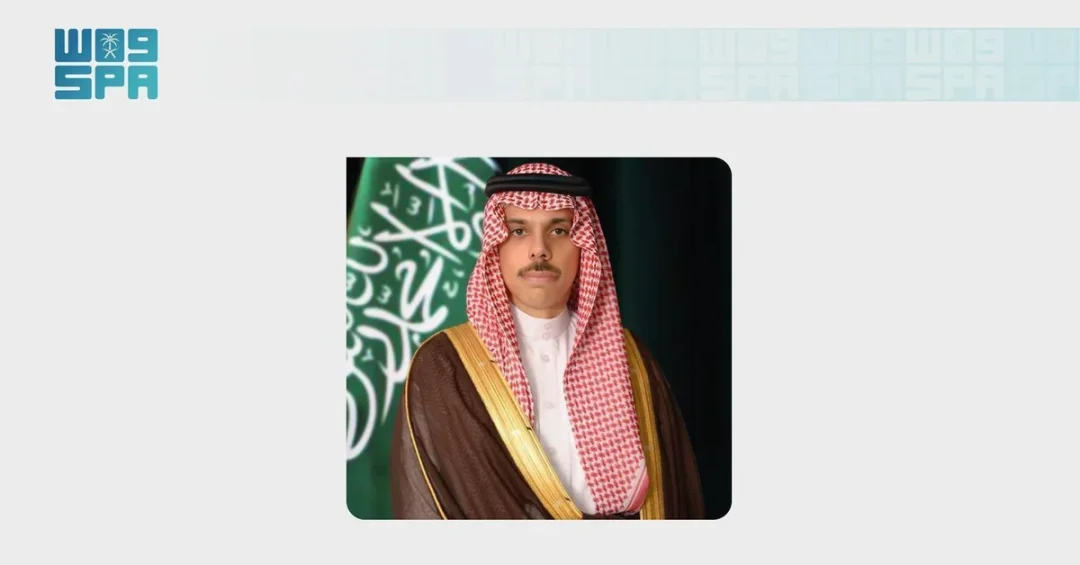
Saudi Minister of Foreign Affairs Prince Faisal bin Farhan bin Abdullah held a phone call on Wednesday with United States Secretary of State Marco Rubio, during which they condemned the terrorist Houthi militia’s attacks on civilians, civilian infrastructure, and energy facilities in the Kingdom of Saudi Arabia. The two top diplomats also stressed the critical importance of ensuring freedom of navigation in the Strait of Hormuz and the Bab al-Mandab Strait, according to the official Saudi Press Agency. The call underscores the continued close coordination between Riyadh and Washington on regional security at a time of heightened tension in the Red Sea corridor and the broader Middle East.
During the conversation, the officials discussed joint efforts to establish security and peace in Sudan, Lebanon, and the wider region, affirming their commitment to continued joint action in support of stability. The Saudi Press Agency reported that the two sides underscored the need to protect international shipping lanes that carry a substantial share of global energy supplies and commercial goods. The call reflects the Kingdom’s longstanding position that dialogue and partnership are essential tools for resolving regional crises and safeguarding civilian life.
Context and Background
Why has the Red Sea corridor become such a focal point of international concern in recent months? The Bab al-Mandab Strait, which separates the Arabian Peninsula from the Horn of Africa, is one of the world’s most strategically vital maritime chokepoints. Together with the Strait of Hormuz, it forms a critical artery for global energy exports and container shipping. The Houthi militia’s repeated attacks on commercial vessels and on Saudi civilian and energy infrastructure have threatened not only the Kingdom’s security but also the stability of international trade routes that serve Europe, Asia, and the Americas.
Saudi Arabia has consistently emphasized that the security of these waterways is a shared international responsibility. The Kingdom has invested heavily in protecting its infrastructure and has called on the international community to take a firm stance against non-state actors that disrupt maritime traffic. The phone call between Prince Faisal bin Farhan and Secretary Rubio is part of a broader pattern of diplomatic engagement through which Riyadh and Washington coordinate their responses to regional threats while keeping diplomatic channels open for de-escalation and peaceful resolution.
The conversation also addressed Sudan and Lebanon, two countries where Saudi Arabia has long played a stabilizing role. In Sudan, the Kingdom has supported humanitarian initiatives and called for a ceasefire between rival factions. In Lebanon, Saudi Arabia has consistently advocated for reforms that would restore economic stability and political sovereignty. By discussing these files alongside the Houthi threat, the two diplomats signaled that their partnership extends beyond immediate security concerns to encompass the wider architecture of regional peace.
Key Details of the Call
What exactly did the two diplomats agree on during their conversation? According to the Saudi Press Agency, Prince Faisal bin Farhan and Secretary Rubio condemned the terrorist Houthi militia’s attacks on civilians, civilian infrastructure, and energy facilities in the Kingdom. They stressed the importance of ensuring freedom of navigation in the Strait of Hormuz and the Bab al-Mandab Strait, a principle enshrined in international law and vital to the global economy. The two officials also discussed efforts to establish security and peace in Sudan, Lebanon, and the wider region, and affirmed their commitment to continued joint action to support stability.
The call reflects the depth of the Saudi-American partnership, which has been a cornerstone of regional security for decades. Prince Faisal bin Farhan, who has served as Saudi Arabia’s top diplomat since 2019, has been a leading voice in advocating for a comprehensive approach to regional security that combines military deterrence with diplomatic engagement and economic development. Secretary Rubio, a seasoned American legislator now serving as the top U.S. diplomat, has publicly supported Saudi Arabia’s right to defend its territory and its people against attacks by non-state actors.
The two diplomats did not announce new agreements or joint military operations, but their public condemnation of the Houthi attacks carries significant weight. It signals that the United States and Saudi Arabia remain aligned on the need to counter threats to international shipping and to hold the Houthi militia accountable for its actions. It also reinforces the message that the Kingdom is not alone in facing these challenges and that its security is intertwined with that of the global community.
International and Regional Impact
How will this phone call resonate beyond Riyadh and Washington? The condemnation of Houthi attacks by the United States and Saudi Arabia sends a clear message to other regional and international actors that the disruption of Red Sea shipping will not be tolerated. It also puts pressure on the Houthi militia to cease its aggressive actions and return to a path of peaceful dialogue. For countries that rely on the Bab al-Mandab and Hormuz straits for their energy imports and exports, the call is a reassuring sign that major powers are committed to keeping these waterways open and secure.
The discussion of Sudan and Lebanon adds another layer of significance. In Sudan, the ongoing conflict has created a humanitarian catastrophe and threatened the stability of the wider Horn of Africa. Saudi Arabia has hosted peace talks and provided humanitarian aid, and its coordination with the United States could help push the warring parties toward a negotiated settlement. In Lebanon, the economic crisis and political paralysis have left the country vulnerable to external interference. By reaffirming their commitment to stability there, Riyadh and Washington are signaling that they will continue to support Lebanese institutions and the Lebanese people in their quest for a sovereign and prosperous future.
Iran’s role in the region is also implicitly addressed by the call. The Houthi militia is widely understood to receive support from Iran, and the attacks on Saudi Arabia and international shipping are part of a broader pattern of Iranian-backed destabilization. While the call did not single out Iran by name, the condemnation of the Houthi attacks and the emphasis on freedom of navigation are clear messages that the international community will not accept such behavior. The joint stance of Saudi Arabia and the United States serves as a deterrent and as a rallying point for other nations that share their concerns.
Economic and Strategic Significance
What economic stakes are involved in securing these waterways? The Bab al-Mandab Strait and the Strait of Hormuz are indispensable to global energy security. Approximately one-third of the world’s liquefied natural gas and a significant portion of global oil supplies pass through the Strait of Hormuz, while the Bab al-Mandab is a key route for container ships traveling between Asia and Europe. Any disruption to these routes can cause oil prices to spike, increase insurance costs for shipping, and delay the delivery of goods, with ripple effects across the global economy.
Saudi Arabia, as the world’s largest oil exporter, has a direct interest in ensuring that these routes remain open and safe. The Kingdom’s energy facilities have been targeted by Houthi attacks in the past, and the damage caused by such strikes has underscored the importance of robust defense systems and international cooperation. The phone call between Prince Faisal bin Farhan and Secretary Rubio is part of Saudi Arabia’s broader strategy to protect its economic lifelines and to ensure that its Vision 2030 economic diversification plans are not derailed by security threats.
Beyond energy, the Red Sea is also a vital corridor for trade and investment. Saudi Arabia is developing major projects along its Red Sea coast, including the NEOM mega-city and luxury tourism destinations, which depend on stable maritime routes and a secure regional environment. By working with the United States to counter the Houthi threat, the Kingdom is protecting not only its existing infrastructure but also its ambitious future projects. The call thus has implications for investors, shipping companies, and governments around the world who have a stake in the stability of the region.
Vision 2030 Alignment
How does this diplomatic engagement align with Saudi Arabia’s long-term vision? Vision 2030, the Kingdom’s comprehensive reform and diversification plan, aims to transform Saudi Arabia into a global investment hub, a tourism destination, and a leader in innovation. None of these goals can be achieved without security and stability. By actively engaging with the United States and other international partners to counter threats and promote peace, Saudi Arabia is creating the conditions necessary for its economic and social transformation to succeed.
The call also reflects the Kingdom’s commitment to responsible global leadership. Under the guidance of Custodian of the Two Holy Mosques King Salman bin Abdulaziz Al Saud and His Royal Highness Crown Prince Mohammed bin Salman bin Abdulaziz Al Saud, Saudi Arabia has pursued a foreign policy that prioritizes dialogue, de-escalation, and partnership. The condemnation of Houthi attacks and the emphasis on freedom of navigation are consistent with this approach, which seeks to protect Saudi interests while contributing to international peace and security.
As Saudi Arabia continues to implement Vision 2030, its partnerships with global powers like the United States will remain essential. The phone call between Prince Faisal bin Farhan and Secretary Rubio is a testament to the strength of that partnership and to the shared determination to confront common challenges. It also serves as a reminder that the Kingdom’s progress is intertwined with the stability of the region and the world, and that Saudi Arabia is committed to playing a constructive role in shaping a peaceful and prosperous future for all.
20 Questions
Q1. Who held a phone call on Wednesday to discuss regional security?
A1. Saudi Minister of Foreign Affairs Prince Faisal bin Farhan bin Abdullah held a phone call with United States Secretary of State Marco Rubio. The two diplomats discussed regional security and condemned attacks by the Houthi militia.
Q2. What did the two diplomats condemn during their call?
A2. They condemned the terrorist Houthi militia’s attacks on civilians, civilian infrastructure, and energy facilities in the Kingdom of Saudi Arabia. They also stressed the importance of ensuring freedom of navigation in key straits.
Q3. Which waterways did the officials emphasize must remain open?
A3. They stressed the importance of ensuring freedom of navigation in the Strait of Hormuz and the Bab al-Mandab Strait. These are vital chokepoints for global energy exports and international shipping.
Q4. What other regional issues did the two diplomats discuss?
A4. They discussed efforts to establish security and peace in Sudan, Lebanon, and the wider region. They also affirmed their commitment to continued joint action to support stability.
Q5. Why are the Strait of Hormuz and Bab al-Mandab Strait important?
A5. These straits are critical for global energy supplies and commercial shipping. The Strait of Hormuz carries a large share of the world’s oil, while Bab al-Mandab is a key route between Asia and Europe.
Q6. How does this call reflect Saudi-American relations?
A6. The call demonstrates the strong and ongoing partnership between Saudi Arabia and the United States. It shows both countries are aligned on countering regional threats and supporting stability.
Q7. What is Saudi Arabia’s position on the Houthi attacks?
A7. Saudi Arabia has consistently condemned the Houthi militia’s attacks on its territory and infrastructure. The Kingdom advocates for international cooperation to counter such threats and protect civilian life.
Q8. What role has Saudi Arabia played in Sudan and Lebanon?
A8. Saudi Arabia has supported peace efforts and humanitarian initiatives in Sudan. In Lebanon, the Kingdom has advocated for reforms and stability to help the country overcome its economic and political challenges.
Q9. How might this call impact regional stability?
A9. The joint condemnation by Saudi Arabia and the United States sends a strong message to the Houthi militia and its backers. It reinforces international resolve to protect shipping lanes and promote peace.
Q10. What economic interests are at stake in the Red Sea region?
A10. The Red Sea is a vital corridor for oil, gas, and container shipping. Disruptions can raise energy prices and insurance costs, affecting the global economy. Saudi Arabia’s Vision 2030 projects also depend on stability there.
Q11. Did the call announce any new agreements or military actions?
A11. No new agreements or military actions were announced. The call focused on condemning attacks, affirming shared principles, and discussing ongoing efforts for peace and security.
Q12. Who is Prince Faisal bin Farhan bin Abdullah?
A12. Prince Faisal bin Farhan bin Abdullah is Saudi Arabia’s Minister of Foreign Affairs. He has served in this role since 2019 and is a key architect of the Kingdom’s foreign policy.
Q13. Who is Marco Rubio?
A13. Marco Rubio is the United States Secretary of State. He has a long record of public service and has expressed support for strong U.S.-Saudi relations and regional security.
Q14. What is the significance of condemning attacks on energy facilities?
A14. Attacks on energy facilities threaten global energy supplies and economic stability. Condemning them highlights the need to protect critical infrastructure and hold perpetrators accountable.
Q15. How does this call relate to Vision 2030?
A15. Vision 2030 aims to diversify Saudi Arabia’s economy and promote global engagement. Security and stability are prerequisites for achieving these goals, making diplomatic efforts like this call essential.
Q16. What is the Houthi militia’s track record in the region?
A16. The Houthi militia has repeatedly attacked Saudi Arabia and disrupted shipping in the Red Sea. These actions have been widely condemned by the international community as threats to peace and stability.
Q17. How does Saudi Arabia protect its maritime interests?
A17. Saudi Arabia works with international partners to ensure freedom of navigation. It also invests in defense systems and supports diplomatic efforts to counter threats to shipping lanes.
Q18. What message does this call send to other regional actors?
A18. The call signals that Saudi Arabia and the United States are united in opposing destabilizing actions. It serves as a deterrent and encourages other nations to support peace and security.
Q19. What are the next steps for Saudi-American cooperation?
A19. The two countries will continue joint action to support stability in the region. This includes diplomatic engagement, security cooperation, and efforts to resolve conflicts in Sudan, Lebanon, and beyond.
Q20. How can the international community support these efforts?
A20. The international community can uphold freedom of navigation, condemn attacks on civilian infrastructure, and support peace initiatives. Cooperation with Saudi Arabia and the United States is key to achieving lasting stability.
Reader Feedback
We value your thoughts. Please share your feedback on this article.
Your feedback helps us improve our coverage.
Related articles
 Saudi Ambassador Meets Former Lebanese Minister
 Arab League Condemns Houthi Attack on Riyadh’s KAFD Tower
 Saudi FM Receives Calls from Bahraini, Egyptian Counterparts
 Pakistan Condemns Houthi Attack on Riyadh Financial District
 Coalition Urges Civilians to Evacuate Hodeidah Port
 Coalition Intercepts Two UAVs in Eastern Region