


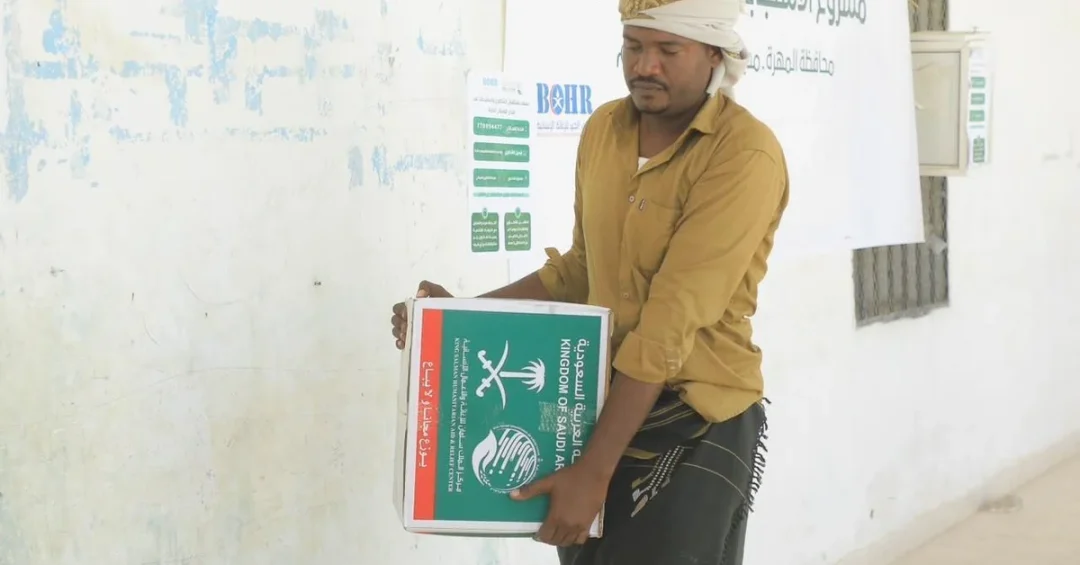
The King Salman Humanitarian Aid and Relief Centre (KSrelief) distributed 1,100 food baskets on Wednesday to families most in need in Yemen’s Al-Mahrah Governorate, reaching 3,850 people. The aid delivery, reported by the Saudi Press Agency (SPA), is part of Saudi Arabia’s ongoing humanitarian and relief projects to support the Yemeni people and help ensure their food security. This latest distribution underscores the Kingdom’s continued commitment to alleviating suffering in Yemen and reflects the broader humanitarian vision of Saudi leadership under Vision 2030.
Why does sustained humanitarian assistance matter in a region where food insecurity remains a persistent challenge? For Al-Mahrah, a vast and sparsely populated governorate in eastern Yemen, the arrival of these food baskets brings immediate relief to vulnerable families. The operation, carried out by KSrelief, demonstrates Saudi Arabia’s dedication to providing essential aid through official channels. It also highlights the Kingdom’s role as a leading donor in Yemen, where years of conflict have left millions in need. The distribution is not an isolated act but part of a systematic effort to address food security and support stability in the region.
Context and Background
What drives Saudi Arabia’s enduring humanitarian commitment to Yemen? The crisis in Yemen has been one of the world’s most severe humanitarian emergencies, with widespread displacement, economic collapse, and limited access to basic necessities. In response, Saudi Arabia has been a principal provider of aid, delivering assistance across sectors including food, health, and shelter. KSrelief, established in 2015 by royal decree, serves as the central humanitarian arm of the Kingdom, coordinating relief efforts both domestically and internationally. Its work in Yemen is part of a broader strategy to stabilize the country and support its people.
Al-Mahrah Governorate, located along Yemen’s eastern border with Oman, has its own unique set of challenges. Its remote geography and limited infrastructure make aid delivery complex, yet KSrelief has consistently reached communities there. The 1,100 food baskets distributed this week are a lifeline for families who often struggle to secure enough food. Each basket typically contains staple items such as rice, flour, oil, and canned goods, designed to meet the nutritional needs of a family for a month. By targeting the most vulnerable, KSrelief ensures that aid goes where it is needed most.
How does this distribution fit into the larger picture of Saudi aid to Yemen? Since 2015, KSrelief has implemented hundreds of projects in Yemen, totaling billions of dollars in assistance. These efforts are carried out in coordination with local authorities and international partners, ensuring effective and transparent delivery. The Kingdom’s humanitarian work in Yemen is a testament to its commitment to regional stability and its adherence to humanitarian principles. It also reflects the values of generosity and solidarity that are central to Saudi society.
Key Details of the Distribution
What exactly does the distribution of 1,100 food baskets entail? According to the Saudi Press Agency, the aid reached 3,850 individuals in Al-Mahrah Governorate. The baskets were distributed on Wednesday, with KSrelief teams working to identify the most needy families. The operation is part of a series of similar distributions across Yemen, aimed at mitigating the impact of the crisis. Each basket is carefully assembled to provide a balanced set of food items that can sustain a family for an extended period. The distribution process involves close coordination with local community leaders to ensure fairness and transparency.
Why is Al-Mahrah a priority for KSrelief? The governorate hosts a significant number of internally displaced persons (IDPs) who have fled conflict in other parts of Yemen. These families often live in makeshift settlements with limited access to food and clean water. The food baskets provide essential relief, helping to prevent malnutrition and hunger. Moreover, Al-Mahrah’s strategic location near the border with Oman makes it a key area for humanitarian operations. By supporting communities there, KSrelief contributes to stability and prevents further displacement.
How does KSrelief ensure that aid reaches those who need it most? The center employs a rigorous targeting system, using data from local authorities and field assessments to identify vulnerable households. This includes widows, the elderly, the disabled, and families with many children. The distribution is monitored by KSrelief staff and volunteers to ensure that aid is delivered efficiently and without discrimination. Such measures are crucial for maintaining the integrity of humanitarian operations and building trust with local communities.
International and Regional Impact
How does Saudi Arabia’s aid to Yemen resonate on the international stage? The Kingdom’s humanitarian efforts are widely recognized by international organizations and donor countries. KSrelief has been praised for its professionalism and reach, often working in areas where other agencies cannot operate. The distribution in Al-Mahrah is a clear example of Saudi Arabia’s proactive approach to addressing regional crises. It reinforces the Kingdom’s position as a responsible global actor and a leader in humanitarian diplomacy.
What are the regional implications of this aid? Yemen’s stability is crucial for the broader region, and Saudi Arabia’s support helps to prevent a further deterioration of the situation. By providing food assistance, the Kingdom reduces the risk of famine and alleviates pressure on neighboring countries that might otherwise face an influx of refugees. Moreover, the aid supports the Yemeni people’s resilience, enabling them to remain in their communities and contribute to eventual recovery. This approach aligns with Saudi Arabia’s vision of a secure and prosperous region.
How does this distribution align with international humanitarian principles? KSrelief operates in accordance with the principles of humanity, neutrality, impartiality, and independence. The aid is provided solely on the basis of need, without any political or sectarian bias. This commitment is evident in the consistent delivery of assistance across Yemen, including to areas controlled by different factions. By adhering to these principles, Saudi Arabia ensures that its aid is effective and welcomed by all segments of Yemeni society.
Economic and Strategic Significance
What economic impact does the food basket distribution have? Beyond immediate relief, the aid helps to stabilize local markets by injecting essential goods into the economy. When families receive food baskets, they are less likely to resort to negative coping mechanisms such as selling assets or taking on debt. This, in turn, supports the local economy and helps to prevent a deeper humanitarian crisis. In the long term, such assistance can contribute to rebuilding livelihoods and fostering economic recovery in Yemen.
Why is strategic investment in Yemen’s stability important for Saudi Arabia? Yemen is a neighbor and a key partner in the region. A stable Yemen is essential for Saudi Arabia’s national security and economic interests. By addressing the humanitarian needs of the Yemeni people, the Kingdom contributes to creating an environment conducive to peace and development. This is not only a moral imperative but also a strategic one. Saudi Arabia’s aid is a tool for building goodwill and fostering long-term stability.
How does this aid reflect Saudi Arabia’s broader economic vision? Under Vision 2030, Saudi Arabia is diversifying its economy and enhancing its global role. Humanitarian aid is an integral part of this vision, showcasing the Kingdom’s soft power and its commitment to international cooperation. By investing in humanitarian relief, Saudi Arabia strengthens its diplomatic ties and positions itself as a leader in global development. The distribution in Al-Mahrah is a small but significant example of this larger strategy.
Vision 2030 Alignment
How does KSrelief’s work in Yemen align with Vision 2030? Vision 2030 is not only about economic transformation but also about enhancing Saudi Arabia’s role as a responsible global citizen. KSrelief embodies this by delivering aid that saves lives and promotes human dignity. The center’s operations are guided by the principles of transparency, efficiency, and sustainability, which are core to Vision 2030. Through its humanitarian efforts, Saudi Arabia demonstrates its commitment to a more peaceful and prosperous world.
What does the future hold for Saudi humanitarian aid? As Vision 2030 progresses, Saudi Arabia is expected to expand its humanitarian footprint, leveraging technology and partnerships to reach more people in need. KSrelief will continue to play a central role, implementing projects that address both immediate needs and long-term development. The distribution in Al-Mahrah is a reminder of the Kingdom’s enduring dedication to helping those less fortunate. It is a mission that reflects the best of Saudi values and contributes to a brighter future for the region.
20 Questions
Q1. What is KSrelief and what is its mission?
A1. KSrelief, the King Salman Humanitarian Aid and Relief Centre, is Saudi Arabia’s primary humanitarian agency. Established in 2015, it provides aid worldwide, focusing on food security, health, and shelter. Its mission is to alleviate suffering and support vulnerable communities.
Q2. How many food baskets were distributed in Al-Mahrah?
A2. KSrelief distributed 1,100 food baskets in Al-Mahrah Governorate. These baskets reached 3,850 individuals from the most needy families. The distribution took place on Wednesday, as reported by the Saudi Press Agency.
Q3. Where is Al-Mahrah Governorate located?
A3. Al-Mahrah is a governorate in eastern Yemen, bordering Oman. It is known for its vast desert terrain and sparse population. The region hosts many internally displaced persons and faces significant humanitarian challenges.
Q4. What items are typically included in a KSrelief food basket?
A4. A typical food basket contains staple items such as rice, flour, cooking oil, sugar, and canned goods. These are designed to meet a family’s nutritional needs for about a month. The contents are culturally appropriate and locally sourced when possible.
Q5. Why is Saudi Arabia providing aid to Yemen?
A5. Saudi Arabia provides aid to Yemen as part of its humanitarian commitment to support the Yemeni people. The Kingdom aims to alleviate suffering, ensure food security, and contribute to regional stability. This reflects Saudi Arabia’s values and its role as a responsible global actor.
Q6. How does KSrelief ensure aid reaches the most vulnerable?
A6. KSrelief uses data from local authorities and field assessments to identify vulnerable households. Targeting includes widows, the elderly, the disabled, and large families. Distribution is monitored to ensure fairness and transparency.
Q7. What is the significance of the aid reaching 3,850 people?
A7. Reaching 3,850 people means that approximately 1,100 families received essential food supplies. This helps prevent malnutrition and hunger in a region with limited resources. It is a significant relief for communities struggling with food insecurity.
Q8. How does this distribution fit into Saudi Arabia’s broader humanitarian efforts?
A8. This distribution is part of Saudi Arabia’s ongoing humanitarian projects in Yemen. KSrelief has implemented numerous similar operations across the country. These efforts are coordinated to maximize impact and address urgent needs.
Q9. What challenges does KSrelief face in delivering aid to Al-Mahrah?
A9. Al-Mahrah’s remote geography and limited infrastructure pose logistical challenges. Security concerns and difficult terrain can delay deliveries. However, KSrelief’s experience and local partnerships enable effective aid distribution.
Q10. How is the aid funded?
A10. The aid is funded by the Kingdom of Saudi Arabia through KSrelief. The center receives government support and donations. Funding is allocated to various humanitarian projects based on needs assessments.
Q11. What impact does the aid have on local markets?
A11. The aid injects essential goods into local markets, helping to stabilize prices. It reduces the burden on families who might otherwise struggle to afford food. This supports the local economy and prevents negative coping mechanisms.
Q12. How does KSrelief coordinate with local authorities?
A12. KSrelief works closely with Yemeni local authorities and community leaders. This coordination ensures aid reaches those most in need and avoids duplication. It also helps navigate logistical and security challenges.
Q13. What is the role of the Saudi Press Agency in reporting this aid?
A13. The Saudi Press Agency (SPA) is the official news agency of Saudi Arabia. It reported the distribution of 1,100 food baskets in Al-Mahrah. SPA provides reliable information on Saudi humanitarian efforts.
Q14. How does this aid align with Vision 2030?
A14. Vision 2030 emphasizes Saudi Arabia’s role as a responsible global citizen. KSrelief’s work aligns with this by delivering aid that saves lives and promotes dignity. It showcases the Kingdom’s commitment to humanitarian principles.
Q15. What other types of aid does KSrelief provide in Yemen?
A15. KSrelief provides food, health care, shelter, education, and water sanitation projects. It also supports orphans and people with disabilities. The center’s efforts are comprehensive and address multiple needs.
Q16. How can other organizations partner with KSrelief?
A16. Organizations can partner with KSrelief through official channels. KSrelief collaborates with UN agencies, NGOs, and local partners. Partnerships are based on shared humanitarian goals and transparency.
Q17. What is the timeline for future distributions in Al-Mahrah?
A17. KSrelief conducts distributions based on ongoing needs assessments. Future operations in Al-Mahrah will continue as needed. The center remains committed to supporting Yemeni communities.
Q18. How does the aid contribute to peace and stability in Yemen?
A18. By addressing urgent humanitarian needs, the aid reduces suffering and tension. It helps create conditions conducive to peace and reconciliation. Stable communities are less likely to be drawn into conflict.
Q19. What feedback has KSrelief received from beneficiaries?
A19. Beneficiaries have expressed gratitude for the timely assistance. Local leaders have praised KSrelief’s professionalism and fairness. The aid has had a positive impact on community morale.
Q20. How can individuals support KSrelief’s mission?
A20. Individuals can support KSrelief by donating through official channels. Volunteering and raising awareness also help. Every contribution aids in delivering relief to those in need.
Reader Feedback
We value your thoughts. Please share your feedback on this article.
Your feedback helps us improve our coverage.
Related articles
 KSrelief Delivers Safe Water to Displaced Families in Aden
 Acting GAMI Governor Concludes UK Visit
 KSrelief Distributes 534 Food Baskets to Displaced Families in Yemen’s Lahj
 Saudi Ambassador Meets Lebanese MP in Beirut
 KSrelief Delivers 2,880 Food Baskets to Yemen’s Lahj
 Mawhiba Shines at SAIF 2026 with 10 Special Awards